
Find your fireplace across the Annapolis Valley.
Wood, gas, pellet, and electric fireplace resources for every community between the North and South Mountains—from Annapolis Royal to Bridgetown and Middleton. Pick a fuel and we'll help you find a local dealer who actually works in this valley, not someone reading a script from Halifax.
Every Project Starts From One of These Five Situations
Maple and birch country wedged between two mountains, where a heat pump alone won't get you through February.
Annapolis sits in the heart of the Annapolis Valley, hemmed in by the North Mountain and South Mountain ridges and opening onto the Bay of Fundy tides at its western end. It's a rural stretch—just under 1,900 people call the region home—built on sugar maple, yellow birch, red oak, and red spruce forests that have heated Annapolis Valley farmhouses for two centuries. Winter lows average around -10.4°C, milder on paper than Fredericton's harder cold snaps a few hours north, but the damp Fundy air makes that cold feel deeper, and the heating season here runs a full five months from late October into March.
What actually shapes hearth decisions in Annapolis is Nova Scotia's electricity bill. The province carries some of the highest power rates in the country, which is why so many households here run a wood stove or insert alongside a heat pump rather than leaning on electric baseboard alone—the wood stove carries the coldest nights while the heat pump handles shoulder-season efficiency. Natural gas mains reach only limited corridors around Halifax, so most gas installs out here are actually propane, tank-fed and just as clean-burning. Any wood appliance installed today falls under the CSA B365 code enforced by the municipal building department, and insurers commonly ask for a WETT inspection before they'll write or renew a policy on a home with a wood stove—both are routine steps a good local dealer walks you through rather than obstacles. Below, pick a fuel to see local retailers, service technicians, and fuel suppliers serving Annapolis Royal, Bridgetown, Middleton, Lawrencetown, and the smaller communities in between.
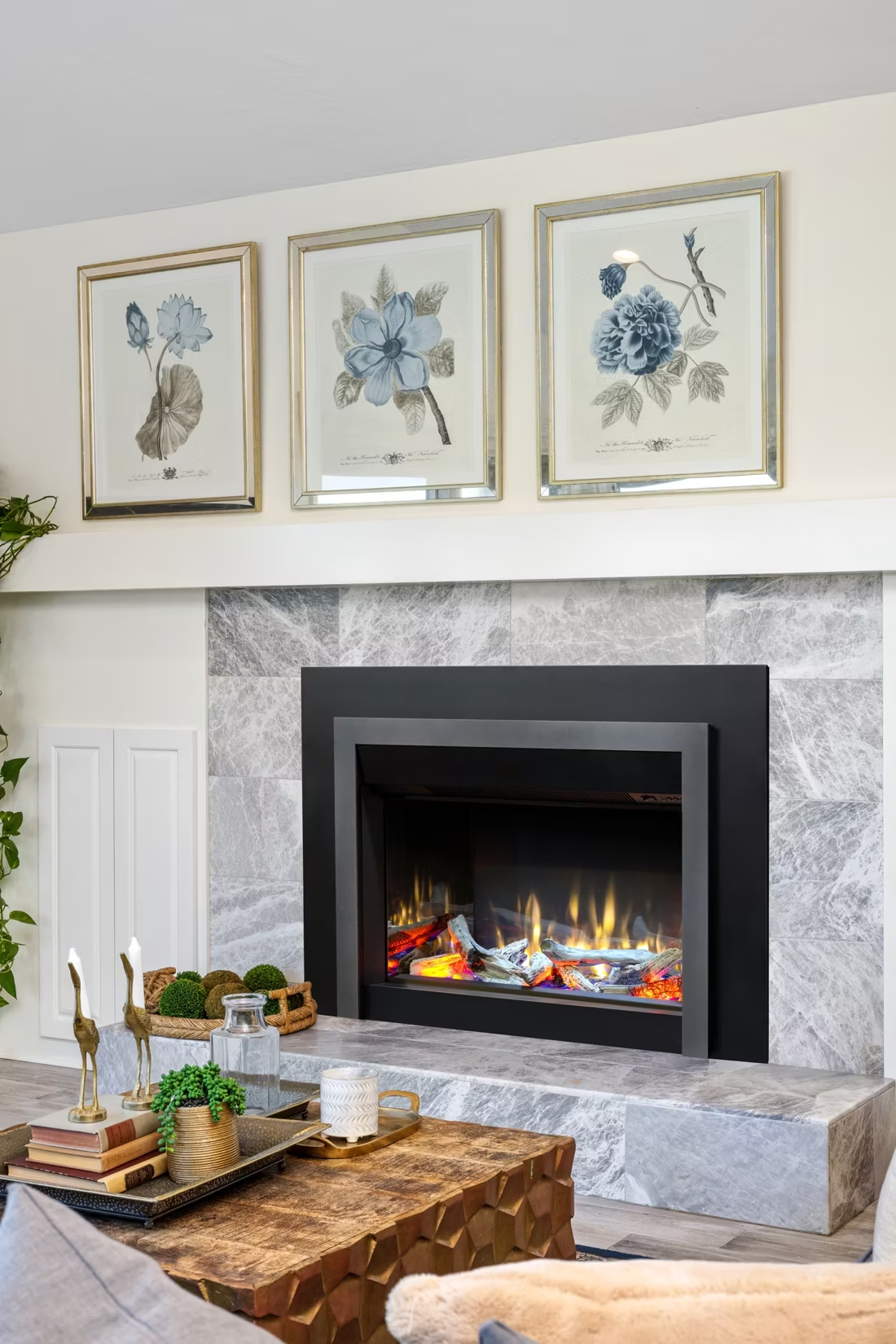
Four fuels. One honest answer for Annapolis.
Three steps. No salesperson until you're ready.
Tell us about your project
Your postal code, your situation, and the fuel you're leaning toward—or let the answers point you to one.
See what's actually available
The brands dealers within 100 miles genuinely carry—real options, never a catalog mirage.
Get your dealer & Project Guide
A trusted local dealer, plus the free Project Guide & Parts List that names every component of the job.
Frequently Asked Questions
Which fireplace fuel makes the most sense for a home in Annapolis?
Given how expensive Nova Scotia power is, wood remains the backbone heating fuel for a lot of Annapolis households—a cast-iron or steel stove burning seasoned sugar maple or yellow birch will comfortably carry a home through a -10°C night for a fraction of what electric resistance heat costs. Pellet stoves have a solid local following too, helped by two Nova Scotia-based producers, Shaw Resources and Scotia Atlantic Biomass, supplying the region without a long haul. Gas is workable, but be honest about which gas: mains natural gas doesn't reach out here, it's concentrated in corridors close to Halifax, so a 'gas fireplace' in Annapolis almost always means a propane unit fed by a tank on your property. Electric fireplaces are common as a supplemental, ambiance-focused add-on in a living room or bedroom, but on their own they won't carry a farmhouse through a Fundy Valley winter—most homeowners pair one with wood or a heat pump rather than relying on it alone.
Do I need a WETT inspection to install or insure a wood stove in Annapolis?
Most home insurers serving Annapolis will ask for a WETT inspection before they'll write or renew coverage on a house with a wood stove, insert, or fireplace, and it's a smart step to book even if your insurer hasn't asked yet. The inspection checks clearances, chimney condition, and that the installation follows the CSA B365 code that governs solid-fuel appliances across Nova Scotia. New installs typically get inspected right after the work is done; a resale home with an existing wood appliance often needs a fresh WETT report before closing. A local dealer who's handled dozens of these installs across the valley will usually coordinate the inspection as part of the job rather than leaving you to track down an inspector yourself.
What permits do I need for a new fireplace or stove installation?
Installation permits for wood, gas, or pellet appliances go through your municipal building department, and the work itself has to meet the CSA B365 installation code regardless of fuel type. Propane installs also need sign-off from a licensed gas fitter on the tank and line work. If you're planning to cut your own firewood rather than buy it, harvesting on Crown Land requires a permit through Nova Scotia Natural Resources—private woodlot cutting doesn't need that permit, but Crown Land does. Electric fireplace installs usually skip the permit process unless you're adding a new circuit for a built-in unit. Most retailers we help Annapolis homeowners find handle the paperwork directly, so it's rarely something you're chasing down on your own.
How much does a fireplace or stove installation typically cost in Annapolis?
Costs depend heavily on fuel and how much venting or gas-line work is involved. Wood stove or insert installations typically run $4,000-$9,000 CAD, including a WETT-compliant chimney setup; full masonry chimney work for new construction can push past $12,000 CAD. Propane fireplaces, inserts, and stoves generally land at $5,000-$11,000 CAD once you factor in the tank and line. Pellet stove or insert installs typically run $4,000-$7,500 CAD. Electric fireplaces are the budget option—$300-$3,000 CAD for the unit, plus $500-$1,200 CAD in labor for anything beyond a simple plug-in placement. Your dealer can walk through exact numbers once they've seen your chimney, wall, and electrical setup.
Can I find a dealer who services my specific community, not just Bridgetown or Middleton?
Annapolis is sparsely populated—under 1,900 people across a lot of ground—so most retailers and service techs are based in Bridgetown or Middleton and drive out from there. Coverage regularly extends to Annapolis Royal, Lawrencetown, Round Hill, Clementsport, and the smaller roads climbing the North and South Mountains, though a farther property may carry a modest trip fee. Booking your annual chimney sweep or propane inspection in late summer, before the first real cold snap, gets you ahead of the fall rush when every dealer in the valley is booked solid installing stoves before the snow flies.
Is a wood stove still worth it given how expensive Nova Scotia electricity is, or should I just switch to a heat pump?
Most Annapolis households don't treat this as an either-or choice—they run both. A heat pump handles the shoulder seasons and moderate days efficiently, while a wood stove burning dense hardwood like red oak or sugar maple takes over on the coldest nights, when a heat pump's output drops and its efficiency along with it. That pairing is common enough across Nova Scotia that most hearth retailers in the valley are used to sizing a stove specifically as a backup-and-cold-snap unit rather than a full-time primary heater, which changes what size and burn time you actually need. If you're building new or doing a major renovation, it's worth discussing both systems with your dealer at the same time so the stove, chimney, and heat pump placement all work together instead of being planned in isolation.
How many BTUs do I need in a fireplace?
Wrong question—and the industry's favorite way to confuse you. More BTUs isn't better if the fireplace cooks you out of the room you spent thousands to enjoy. Think in terms you can verify: how many square feet the unit heats, whether it's primary or backup heat, and whether you want it running overnight. Those three answers size a fireplace correctly every time.
Will we actually use a fireplace once we have one?
In my own home, the room with the fireplace has never been the same—it became the social hub. Game nights, holidays, date nights after the kids are down: the fire is where the house gathers. There's a reason people in this industry joke that we're really in the romance and entertainment business. You won't wonder whether you'll use it; you'll wonder how the room worked before.
Can I install a fireplace myself?
If you're putting a fire in your house on purpose, it's best to work with an expert. Unless you're genuinely experienced in framing, gas line, vent pipe, and the national code on clearances to combustibles, have a professional do it—and ideally the same company that sells you the fireplace, so warranty, service, and liability all live under one roof.
Why is my open fireplace making my house colder?
Open fireplaces suck—literally. As the fire burns, it consumes air your furnace already paid to heat and pulls it out through the chimney, so the house is actually colder after the fire goes out than before you lit it. An insert fixes this: it seals the chimney, puts fixed glass across the front, and turns that hole in your house into a real heat source.
Stove and Fireplace Dealers in Annapolis
Listings include WhyFire partner dealers, dealers we have verified as authorized for the brands we recommend, and established local businesses that carry hearth products. Every listing shows which one it is. The ones marked Preferred run on WhyFire's software, so they can show you real pricing and book your appointment right here. No manufacturer pays for placement. How we verify dealers →
Country Stoves & Sunrooms
Find a trusted dealer in the Annapolis Valley.
Pick your fuel below and we'll put together a free Project Guide & Parts List—the right unit, the vent kit it needs, and the local Annapolis-area dealer we recommend for your project.
Find Your Fireplace →