
Consistent, thermostat-like heat for Annapolis Valley winters.
With winter lows averaging -10.4°C and a heating season that stretches well past five months, homes across the Annapolis Valley need heat that runs itself. We'll help you find a local dealer who can size a pellet appliance to your home and tell you honestly whether it beats the cost of running electric heat at Nova Scotia's rates.
Every Project Starts From One of These Five Situations
Built around local woodlots and Canada's highest power rates.
The Annapolis region runs along the Annapolis River and Bay of Fundy dykelands, through Annapolis Royal, Bridgetown, Middleton, Kingston, and Lawrencetown, with farmland, orchards, and working woodlots filling the valley in between. Climate zone 6A here means real winter, not a coastal afterthought: overnight lows average -10.4°C, and the cold settles in from November through April. Local woodlots supply sugar maple, yellow birch, red oak, and red spruce, the same species that stock area sawmills and firewood dealers, and that biomass also feeds the pellet mills that keep regional stoves running.
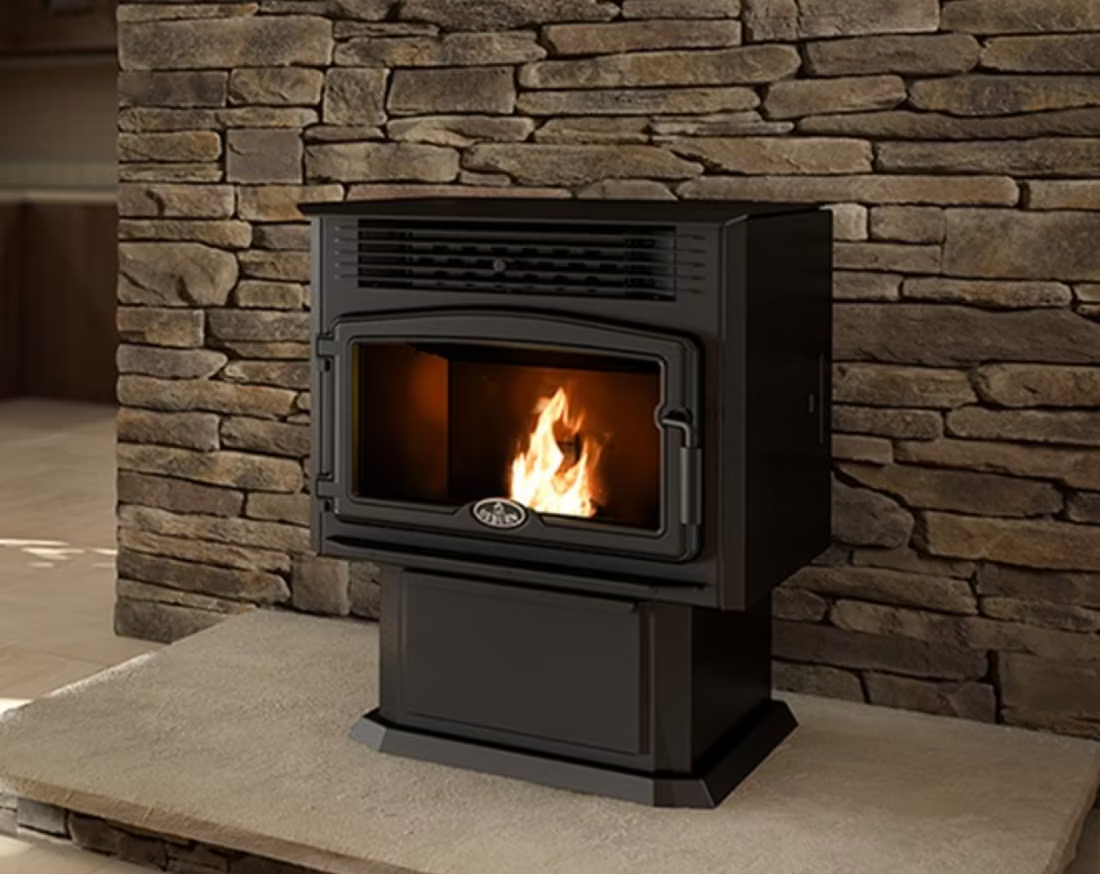
Nova Scotia has some of the highest electricity rates in the country, and it shows up in local heating decisions: pairing a heat pump for shoulder-season heat with a wood or pellet appliance for the depths of winter has become a standard combination across the valley, not a niche one. Mains natural gas, where it exists in Nova Scotia, is largely confined to Halifax-area corridors well over an hour from Annapolis Royal, so it is not a realistic option for most households here. A pellet stove or insert fills that gap: automatic feed, thermostatic control, and none of the daily splitting and stacking a wood stove asks for, while still burning fuel milled from the same forests as the valley's cordwood.
Three steps. No salesperson until you're ready.
Tell us about your project
Your postal code, your situation, and the fuel you're leaning toward—or let the answers point you to one.
See what's actually available
The brands dealers within 100 miles genuinely carry—real options, never a catalog mirage.
Get your dealer & Project Guide
A trusted local dealer, plus the free Project Guide & Parts List that names every component of the job.
Frequently Asked Questions
How much does a pellet stove installation cost in the Annapolis region?
Most pellet stove and insert installations here run $6,000 to $10,000, which covers the appliance, venting through an exterior wall, and any hearth pad work needed to meet clearance requirements. Older farmhouses around Bridgetown and Middleton, where an existing wood chimney needs adapting or a new electrical circuit has to be run for the auger and combustion blower, tend to land toward the upper end. A straightforward install into a modern build with an existing exterior wall path and nearby outlet comes in lower.
How do I size a pellet stove for a valley farmhouse versus a newer build?
Square footage is the starting point, but construction age matters just as much in the Annapolis Valley. Older dyke-land farmhouses with less insulation and single-pane original windows often need a larger-capacity unit to hold -10.4°C overnight lows than a newer, tightly built home of the same size. A local dealer will walk the space, check ceiling height and layout, and size the appliance to your actual heat loss rather than a generic square-footage chart, since an undersized stove will run flat-out all winter and an oversized one short-cycles and wastes fuel.
Do I need a permit, and does insurance require an inspection?
Yes to the permit: new installations go through your municipal building department, and the work has to meet the CSA B365 installation code regardless of whether you're in Annapolis Royal, Bridgetown, or a rural township. On the insurance side, a WETT inspection is commonly required for wood-burning appliances and many Nova Scotia insurers now ask for the same sign-off on pellet installations before they'll cover the home, so it's worth confirming with your carrier before the work starts rather than after.
Where does pellet fuel come from around here, and how much does it cost?
Regional supply comes primarily from Shaw Resources and Scotia Atlantic Biomass, both processing Nova Scotia and Maritime softwood and hardwood residue into bagged pellets, and local pricing typically runs $400 to $575 CAD per ton depending on the season and how far a supplier has to truck it into the valley. Most Annapolis-area households buy several tons before the first cold stretch in November, since pellets store best dry and off a concrete floor, and running low mid-winter can mean scrambling for whatever a hardware store in Middleton or Bridgetown still has on the shelf.
What happens to a pellet stove during a power outage?
A pellet stove needs electricity to run its auger and combustion blower, so it goes cold in an outage unless you have backup power, which is a real consideration in a rural valley where storms off the Bay of Fundy can knock out lines for a day or more. Some households here keep a small battery backup or generator sized just for the stove; others treat pellet as their primary convenient heat and keep a wood stove or fireplace as the outage backup, since cordwood cut from local sugar maple or yellow birch needs no power at all.
Does a pellet stove actually save money against Nova Scotia's electricity rates?
For most Annapolis Valley homes, yes, at least for the coldest months. Nova Scotia's electricity rates are among the highest in Canada, and running electric baseboard or resistance heat through a full winter gets expensive fast. A pellet stove burning fuel in the $400 to $575 per ton range typically costs less per unit of heat than straight electric resistance heat, which is why so many households here pair a heat pump for milder shoulder-season days with a pellet or wood appliance for January and February, rather than relying on electric heat alone through the whole season.
Is natural gas or propane a better option than pellet in the Annapolis region?
Mains natural gas in Nova Scotia is essentially limited to corridors around Halifax, well outside the Annapolis Valley, so it isn't a realistic option for most homes here. Propane is available by delivery and works for a gas fireplace conversion, but tank rental and per-litre propane costs make it pricier to run than pellet for anyone using the appliance as a serious heat source rather than occasional ambiance. That gap is a big part of why pellet stoves have a steady following here even though wood remains the traditional default fuel.
How much maintenance does a pellet stove need through an Annapolis Valley winter?
Plan on emptying the ash pan roughly weekly during steady winter use, a deeper cleaning of the burn pot and heat exchanger tubes every few weeks, and a full professional service once a year, ideally before the valley's first frost in October or November. Compared with a wood stove burning red oak or red spruce, a pellet unit produces far less ash and creosote, but the auger, hopper, and blower components still need periodic attention to keep the burn efficient through a five-month heating season.
Are there rebates available for a pellet stove upgrade in Nova Scotia?
Efficiency Nova Scotia periodically runs home energy incentive programs that cover efficient heating upgrades, including pairing a heat pump with a wood or pellet appliance, so it's worth checking current program details before you commit to a system. Given how much Nova Scotia's electricity rates factor into the payback math on a pellet install, a rebate on either the pellet appliance or a companion heat pump can meaningfully shorten the time it takes the upgrade to pay for itself.
Why do fireplace quotes vary so much?
Because a fireplace is an iceberg—there's more behind the wall than in front of it. A low quote often covers only the unit; the full scope includes vent pipe, gas line or electrical, framing, and the tile or stone that has to come off and go back on. Make every bidder price the whole job. If a dealer can't speak to the full scope with confidence, that's your signal to keep looking.
Is it worth replacing an old fireplace that still sort of works?
Ask three questions: Is it ugly? Is it drafty? Does it actually work? Most old fireplaces fail at least two. Beyond looks, an old unit leaks air around the damper year-round and—if it's gas with a standing pilot—quietly burns a couple hundred dollars a year. A modern replacement seals the wall, heats the room, and changes how the whole space gets used.
Do I need a permit to install a fireplace?
In most jurisdictions, yes—fireplace and stove installations involve venting, clearances, and often gas or electrical work that gets permitted and inspected. That's a feature, not a hassle: the inspection protects your family and your homeowner's insurance. A professional installer pulls the permit, installs to code, and stands behind the inspection. If someone suggests skipping it, keep looking.
What do I measure to size a fireplace insert?
Four numbers tell you what fits: the front width, the front height, the back width, and the overall depth of your existing fireplace opening. Grab a tape measure, jot those down, and snap a photo of the wall—those two things do more to move your project forward than anything else you can do today.
Stove and Fireplace Dealers in Annapolis
Listings include WhyFire partner dealers, dealers we have verified as authorized for the brands we recommend, and established local businesses that carry hearth products. Every listing shows which one it is. The ones marked Preferred run on WhyFire's software, so they can show you real pricing and book your appointment right here. No manufacturer pays for placement. How we verify dealers →
Country Stoves & Sunrooms
Pellet Brands Stocked Around Annapolis
Typical price runs $400-$575 per ton—buy early-season for the best rates. Manufacturers will point you to the nearest stocking dealer.
Shaw Resources
Scotia Atlantic Biomass
Get your free Project Guide & Parts List for a pellet stove in the Annapolis region.
Tell us about your home, its heating setup, and how you plan to use the stove, and we'll help you find a local dealer who can help with your Annapolis Valley pellet project, plus send a free Project Guide & Parts List covering the exact equipment, vent kit, and next steps.
Find Your Fireplace →