
Warm up any room in Traill County—no chimney required.
Zone heat for finished basements, additions, and rental units across the Red River Valley—no venting, no gas line, no chimney sweep. Find the right unit and connect with a trusted local dealer.
Every Project Starts From One of These Five Situations
Instant heat, zero venting, built for Red River Valley winters.
Traill County sits in the flat farmland of the Red River Valley in eastern North Dakota, with Hillsboro as the county seat and Mayville, Portland, and Hatton spread across the grid of section roads. At Climate Zone 7 and 9,628 heating degree days, this is among the coldest inhabited stretches of the Lower 48—on par with Fargo, thirty miles south, or International Falls, Minnesota. Winter lows average -4°F, and open-valley wind chill routinely pushes well below that. In a county this cold, propane and natural gas furnaces carry the primary heating load, with some rural properties supplementing with wood stoves burning local ash, oak, or cottonwood. Electric fireplaces here aren't trying to replace that system—they're solving a different problem entirely.
The real demand in Traill County is zone heat: a finished basement far from the furnace duct run, a bonus room over a detached garage, a converted granary or outbuilding on an ag property, or a rental unit in Hillsboro or Mayville where a landlord wants ambiance without a gas line or masonry chimney. Because Traill County has no air quality restrictions or burn curtailment periods, electric units add heat and atmosphere without any of the regulatory considerations that come with wood or gas. Most plug-in models run on a standard 120V outlet; built-in wall units drawing more wattage may need a dedicated circuit run by a licensed electrician—power that's typically supplied through Cass County Electric Cooperative or Otter Tail Power Company, depending on where in the county you sit.
Three steps. No salesperson until you're ready.
Tell us about your project
Your zip code, your situation, and the fuel you're leaning toward—or let the answers point you to one.
See what's actually available
The brands dealers within 100 miles genuinely carry—real options, never a catalog mirage.
Get your dealer & Project Guide
A trusted local dealer, plus the free Project Guide & Parts List that names every component of the job.
Frequently Asked Questions
How much does an electric fireplace installation cost in Traill County?
A plug-in electric insert or mantel unit typically runs $300 to $900 installed, since most models simply slide into an existing opening or stand-alone cabinet and connect to a standard outlet. Recessed wall units or linear built-ins that require framing and a dedicated 20-amp circuit run higher—usually $900 to $1,500 once an electrician is involved. Costs in Traill County stay on the lower end of that range compared to wood or gas installs, since there's no venting, no gas line, and no chimney work involved regardless of whether you're in Hillsboro, Mayville, or out on a farmstead between the two.
What size electric fireplace do I need for my room?
Electric fireplaces are rated by wattage rather than BTU output the way wood or gas units are, and most standard 1,500-watt heaters comfortably supplement a 400 to 500 square foot room—enough for a finished basement rec room or a bonus room over a garage. For larger open spaces, or older farmhouses with less insulation common on Traill County ag properties, plan on either a higher-wattage unit or accepting that the fireplace is ambiance-plus-supplemental heat rather than a primary source. None of these units are sized to carry a whole home through a -20°F January stretch, and no reputable local dealer will tell you otherwise.
Do I need an electrician to install an electric fireplace?
For a plug-in unit on a standard outlet, no—most homeowners handle that themselves. For a recessed wall unit, a linear built-in, or any model that calls for a dedicated circuit, yes: a licensed electrician should run that circuit and tie it into your panel correctly. Local installers who sell these units in Hillsboro and Mayville typically coordinate the electrical work as part of the project rather than leaving you to find a separate trade, which is worth asking about up front.
Will an electric fireplace keep my house warm during a power outage?
No—and this matters more in Traill County than in most places. Winter storms across the Red River Valley regularly knock out rural electric service for hours at a time, and an electric fireplace, unlike a wood stove, goes dark the moment the power does. If you're relying on a propane furnace or wood stove as primary heat, an electric fireplace is a fine supplement for everyday comfort, but it shouldn't be your only backup plan for a genuine outage during a -20°F cold snap. Most rural households here already keep a wood or propane backup for exactly that reason.
What's the difference between an electric insert, a built-in wall unit, and a freestanding electric fireplace?
An electric insert is sized to slide into an existing fireplace opening—useful if you have an old masonry or zero-clearance wood fireplace you want to convert without touching the chimney. A built-in wall unit is a recessed, linear model installed into framed drywall, common in newer construction or remodels, and usually needs a dedicated circuit. A freestanding or mantel-style unit is furniture—plug it in, position it, done—and it's the most common choice for renters and for quick installs in Traill County's older farmhouses and in-town homes.
Do I need a permit to install an electric fireplace in Traill County?
Generally no, for a simple plug-in unit. If your project involves adding a new dedicated electrical circuit, framing a wall opening, or altering existing wiring, an electrical permit is typically required and is handled through the Traill County Building Department for rural properties, or through the applicable city office in Hillsboro, Mayville, Portland, or Hatton. Local electricians and hearth dealers who regularly work in the county can confirm what your specific project requires before work starts.
What's the best electric fireplace for a Traill County home?
For genuine supplemental heat in a county with 9,628 heating degree days, look for units with a full 1,500-watt heater rating rather than decorative-only models, and consider a linear built-in if you're finishing a basement or bonus room that needs more consistent warmth. Brands like Dimplex and Napoleon offer models with realistic flame effects and heaters strong enough to matter on a cold Red River Valley afternoon. If the goal is pure ambiance in a room that's already heated by your propane furnace, a lower-wattage mantel unit is plenty.
How much does it cost to run an electric fireplace in Traill County?
At typical Cass County Electric Cooperative or Otter Tail Power residential rates in the eleven-to-thirteen-cents-per-kilowatt-hour range, a standard 1,500-watt electric fireplace costs roughly 16 to 20 cents an hour to run on the heater setting, or a fraction of a cent if you're just running the flame effect without heat. That's meaningfully cheaper per hour than most propane heating in the county, though it's supplemental output, not a substitute for your furnace's total BTU capacity during a hard freeze.
Electric vs. propane or wood—which is right for my home?
In Traill County, propane and wood carry the real heating load—propane through a furnace or boiler, wood through a stove burning local ash, oak, or cottonwood, both capable of running (or at least being lit) without grid power. Electric fireplaces don't compete with either for whole-home heat; they add fast, clean, no-maintenance warmth to a specific room, with zero venting, zero ash, and zero chimney upkeep. The right answer for most homes here is propane or wood for the furnace and backup heat, plus an electric unit wherever you want ambiance or a heat boost in a basement, addition, or rental unit without running new gas line or masonry.
Can I put a TV above my fireplace?
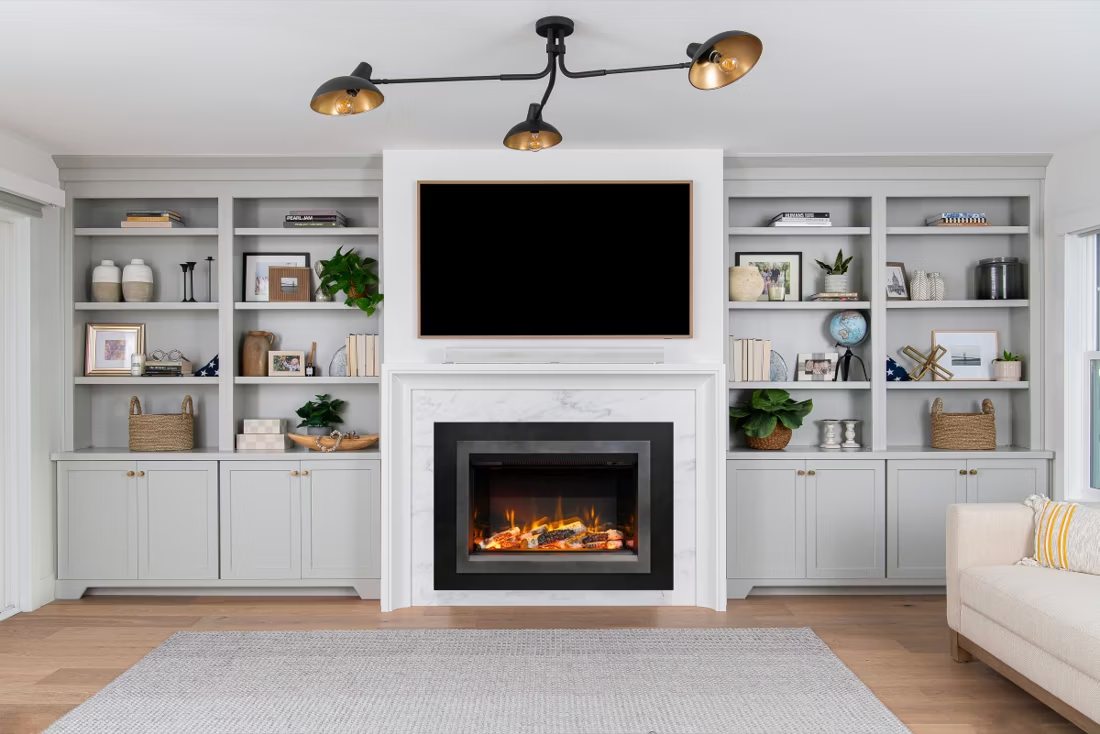
Yes—with an asterisk. Fireplaces are hot and TVs don't like heat. Either put a mantel between them to deflect rising warmth, or choose a fireplace with heat-management technology that creates a cool zone on the wall above—the wall stays around 125 degrees, barely warm, while the room still gets full heat. If you like clean lines and don't want a mantel, heat management is the answer.
Does an electric fireplace need a vent or chimney?
No—that's its superpower. An electric fireplace needs a wall and an outlet, period. No vent pipe, no gas line, no clearances to design around, which is why it works in bedrooms, offices, apartments, and walls where venting a gas or wood unit would be impractical or impossible. Installation is typically the simplest and least expensive of any fireplace type.
How much should I budget for a fireplace?
For an average home—covering the fireplace, the vent pipe, and basic installation—a budget between $3,900 and $5,500 gives you a lot of options across wood, gas, and pellet. By the time you add finish work, gas line, and electrical, the average complete installation lands between $5,000 and $12,000 all-in. In a remodel or new build, a good rule is to put about 2.5% of the total project cost toward the fireplace.
What is an in-home preview and do I need one?
It's a visit where a hearth professional measures your space, confirms the model you picked actually works in your home, and walks the specs—framing, gas line, venting, finish work—before anything is ordered. Some details you just can't know until you see the house. Never make a down payment without one; it's the single most-skipped step that burns buyers.
Find your electric fireplace in Traill County.
Tell us a bit about your home and room, and we'll match you with the right electric fireplace or insert—plus a free Project Guide & Parts List with the exact parts and your recommended local dealer.
Find Your Fireplace →