
Supplemental heat that keeps up with Zone 7 winters.
From Cando to Bisbee, Rocklake, and the open prairie in between, Towner County homes need heat that doesn't depend on a propane truck making it down the road in a blizzard. An electric fireplace won't replace your furnace, but it adds instant, no-venting warmth exactly where you need it.
Every Project Starts From One of These Five Situations
Electric heat that earns its place in North Dakota's coldest climate zone.
Towner County is home to just over 1,400 people spread across a stretch of north-central North Dakota prairie—Cando as the county seat, with Bisbee, Egeland, Rocklake, Sarles, and Hansboro dotting the rest of the map. The county sits in Climate Zone 7, the most severe cold-climate designation in the continental IECC system, putting it in the same company as International Falls, Minnesota, for sheer winter punishment. Oak, cottonwood, and ash grow in shelterbelts and river-bottom stands here, but this is open prairie country, not forest—which is a big part of why wood stoves never became a common primary heat source, and why we flag wood as not applicable for most Towner County homes.
Most homes in the county lean on propane as the workhorse fuel, with electric baseboard or forced-air backup in many older farmhouses. An electric fireplace or insert fits into that picture as zone heat, not whole-home heat: it warms up a living room, a finished basement, or a mobile home addition instantly, with no chimney, no gas line, and no venting to plan around. That matters here in a very practical way—when an Alberta clipper closes the roads for a day or two, an electric fireplace running off the local rural electric cooperative's grid still works, even if the propane delivery doesn't show up on schedule.
Three steps. No salesperson until you're ready.
Tell us about your project
Your zip code, your situation, and the fuel you're leaning toward—or let the answers point you to one.
See what's actually available
The brands dealers within 100 miles genuinely carry—real options, never a catalog mirage.
Get your dealer & Project Guide
A trusted local dealer, plus the free Project Guide & Parts List that names every component of the job.
Frequently Asked Questions
How much does an electric fireplace installation cost in Towner County?
A plug-in electric insert or freestanding stove that just needs a standard outlet typically runs $300 to $800 installed, since there's no venting or gas line to run. A built-in linear electric fireplace or a larger unit that needs a dedicated 240-volt circuit—common in additions, finished basements, or mobile homes where a rural electrician has to run new wiring—usually lands between $1,500 and $3,500 once framing and trim work are included. Given the distances between towns like Cando and Rocklake, expect a modest travel charge from any installer covering the rural stretches of the county.
Are wood stoves common in Towner County?
Not really, and that's worth being upfront about. Oak, cottonwood, and ash do grow in the county's shelterbelts and along its river bottoms, but Towner County is open prairie, not timberland, so cordwood was never the default heat source here the way it is in forested parts of the country. A small number of rural homeowners still keep a wood stove for backup heat or ambiance, but most of the county's heating load runs on propane and electric, which is why we mark wood as not applicable for the typical Towner County install.
What about pellet stoves—are those an option here?
Pellet stoves are technically available—brands like Lignetics and Indeck Energy Services distribute into this part of the upper Midwest—but they're not a common installation in Towner County. Pellet appliances need electricity to run the auger and blower, and in a Climate Zone 7 county where winter storms can knock out power for a day or more, that's a real limitation on their own without a generator. Most homeowners here who want a hopper-fed appliance end up choosing it as a secondary unit rather than their main heat strategy.
Is propane or natural gas more common in Towner County?
Propane is the standard fuel across almost all of Towner County—there's no natural gas pipeline network reaching most of these communities, so tanks and delivery trucks are the norm from Cando out to Bisbee and Egeland. Gas fireplaces and inserts here are almost always propane-fired rather than natural gas. Electric fireplaces pair naturally with a propane furnace setup: propane carries the whole-home heating load, and electric covers the room you're actually sitting in without running the furnace harder than it needs to.
Will my electric fireplace still work if the power goes out?
No—and this is the honest trade-off compared to wood. An electric fireplace depends entirely on the grid, so during a winter storm outage from the local rural electric cooperative, it goes dark along with everything else in the house. Many Towner County homeowners who install an electric fireplace for daily zone heat still keep a propane furnace or a backup generator in place for genuine outage coverage. It's worth discussing your backup plan with your installer, especially if you're out past Rocklake or Sarles where restoration times can run longer than in Cando.
Do I need a permit to install an electric fireplace in Towner County?
A simple plug-in unit generally doesn't require a permit anywhere in the county. A built-in electric fireplace that needs new wiring or a dedicated circuit typically does need an electrical permit through Towner County's building and zoning office, and the work should be done by a licensed electrician regardless of whether a permit is pulled. Most dealers who sell built-in units in this part of the state will handle the permitting conversation with you as part of the quote.
What's the difference between an electric insert, a wall-mounted unit, and a freestanding electric stove?
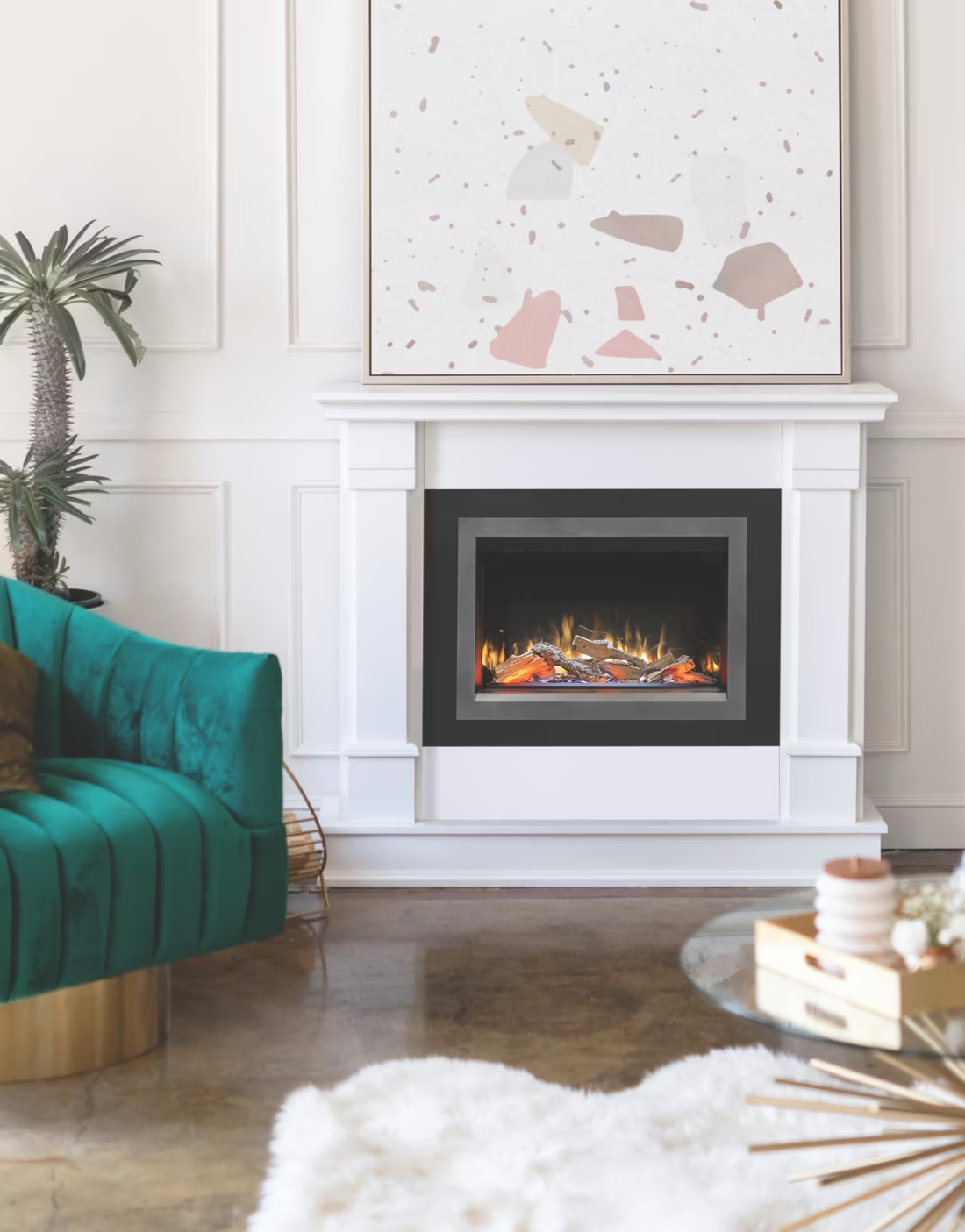
An electric insert drops into an existing masonry or wood-burning fireplace opening, giving you flame effect and heat without touching your existing chimney. A wall-mounted or built-in linear unit is designed for new construction or a remodel, framed into a wall like a flat-screen TV. A freestanding electric stove sits on the floor and can go almost anywhere there's an outlet—a common choice for additions, garages converted to living space, or older farmhouses around Towner County where running new wiring to a wall unit isn't practical.
What size electric fireplace do I need for a Zone 7 climate?
Size the unit for the room, not the whole house—that's the key adjustment for Climate Zone 7. A standard 1,500-watt electric fireplace puts out roughly 5,000 BTUs, enough to noticeably warm a single living room or bedroom, but it isn't meant to carry a whole farmhouse through a January cold snap on its own. For larger open rooms or additions, look at units rated for the specific square footage rather than assuming bigger is always better—oversizing an electric unit just runs up the electric bill without adding real comfort.
Electric vs. propane fireplace—which makes more sense for my home?
Propane offers real heat output, works during a power outage, and can serve as genuine backup heat for a Towner County winter—which matters given how storm-prone this stretch of North Dakota is. Electric offers instant on-off convenience, zero venting or gas line work, and a much lower installed cost, but it goes dark the moment the grid does. Many homeowners here end up with both: propane for the whole-home load and outage security, electric for the room they actually live in day to day. A local dealer can walk through both options against your specific floor plan.
Can I put a TV above my fireplace?
Yes—with an asterisk. Fireplaces are hot and TVs don't like heat. Either put a mantel between them to deflect rising warmth, or choose a fireplace with heat-management technology that creates a cool zone on the wall above—the wall stays around 125 degrees, barely warm, while the room still gets full heat. If you like clean lines and don't want a mantel, heat management is the answer.
Does an electric fireplace need a vent or chimney?
No—that's its superpower. An electric fireplace needs a wall and an outlet, period. No vent pipe, no gas line, no clearances to design around, which is why it works in bedrooms, offices, apartments, and walls where venting a gas or wood unit would be impractical or impossible. Installation is typically the simplest and least expensive of any fireplace type.
What is an in-home preview and do I need one?
It's a visit where a hearth professional measures your space, confirms the model you picked actually works in your home, and walks the specs—framing, gas line, venting, finish work—before anything is ordered. Some details you just can't know until you see the house. Never make a down payment without one; it's the single most-skipped step that burns buyers.
Can a fireplace actually lower my heating bill?
Yes—by creating a comfort zone. A furnace heats every square foot of the house just to warm the one room you're in; a gas fireplace on low burns roughly a sixth of the gas a typical furnace does. Set the furnace around 55–60 degrees as a baseline, then heat the rooms your family actually uses. Families who heat this way commonly save $20–$60 a month.
Find your electric fireplace in Towner County.
Tell us a bit about your home and we'll put together a free Project Guide & Parts List—the right electric fireplace or insert for your space, matched with a trusted local dealer who can install it right.
Find Your Fireplace →