
Find your electric fireplace in Sioux County.
No chimney, no gas line, no venting—just plug-in warmth for homes and cabins across Sioux County, from Fort Yates to the ranchland along Lake Oahe. Find the right unit and connect with a trusted local dealer.
Every Project Starts From One of These Five Situations
Heat and ambiance without touching the walls.
Sioux County sits along the Missouri River and Lake Oahe in south-central North Dakota, home to most of the Standing Rock Sioux Reservation and a population of under 1,500 spread across wide, open ranchland. Fort Yates, the county seat, and the small communities around it sit in climate zone 6A—winters here run as harsh as Bismarck-Mandan, about 40 miles north, with long stretches of single-digit and sub-zero lows. Cottonwood, oak, and ash along the river bottoms have supplied wood heat here for generations, but for outbuildings, additions, manufactured homes, and rooms where running a chimney or gas line isn't practical, an electric fireplace is often the simplest fix.
Rural electric service in Sioux County runs through the local cooperative network that serves Morton, Grant, and Sioux counties, and most homes are already wired for the modest draw an electric fireplace needs. There's no building permit friction tied to venting or masonry—Sioux County's permitting through the courthouse in Fort Yates is far lighter for electric units than for wood or gas—and with no local air quality restrictions on the books, there's no burn-ban conflict to worry about either. The trade-off worth understanding up front: an electric fireplace is a supplemental or ambiance heat source, not a substitute for a furnace in a 6A climate. It shines as the finishing touch on a remodel, a heat boost for a drafty back bedroom, or year-round ambiance without wood mess or chimney upkeep.
Three steps. No salesperson until you're ready.
Tell us about your project
Your zip code, your situation, and the fuel you're leaning toward—or let the answers point you to one.
See what's actually available
The brands dealers within 100 miles genuinely carry—real options, never a catalog mirage.
Get your dealer & Project Guide
A trusted local dealer, plus the free Project Guide & Parts List that names every component of the job.
Frequently Asked Questions
How much does an electric fireplace installation cost in Sioux County?
A plug-in electric insert or freestanding unit can run as little as $300 to $800 installed, since most simply plug into an existing outlet with no electrician needed. A built-in electric fireplace or a unit requiring a new dedicated 120V or 240V circuit—common in older farmhouses around Fort Yates with outdated panels—typically runs $800 to $2,500 once a licensed electrician is involved. Homes on older rural service, which is common throughout the county, sometimes need a panel assessment first; a local electrician or your installer can tell you quickly whether your existing wiring will handle the load.
Do I need special wiring for an electric fireplace?
Most smaller electric fireplaces and inserts run on a standard 120V household outlet and draw no more than a space heater—no rewiring needed. Larger built-in units, or installations where the fireplace will be run continuously as supplemental heat through a Sioux County winter, sometimes call for a dedicated 20-amp circuit so the unit isn't sharing a breaker with other appliances. If your home is on older wiring, which is common in older farmhouses and mobile homes throughout the county, it's worth having an electrician confirm the panel has capacity before you buy a unit that draws more than the circuit can handle.
Will my electric fireplace work during a power outage?
No—electric fireplaces require power to run the heating element, blower, and flame effect, so they go dark the moment the electricity does. In a rural county like Sioux, where winter storms can knock out cooperative power for hours or longer, an electric fireplace should be treated as a comfort and ambiance feature rather than emergency backup heat. Homes that want heat during outages typically pair an electric fireplace with a wood stove elsewhere in the house, or keep a generator on hand for critical circuits.
Electric vs. wood—which makes more sense for my Sioux County home?
Wood—burned in oak, cottonwood, or ash cut from the river bottoms—remains the primary heat source for many rural Sioux County homes, especially ones without reliable natural gas or homes that want heat independent of the power grid. Electric fireplaces don't compete with that; they solve a different problem. They're the right call for an addition, a cabin near Lake Oahe used seasonally, a manufactured home where venting a chimney is impractical, or simply a room where you want the look and glow of a fire without smoke, ash, or a masonry hearth. Many households here end up with both—wood for real heat, electric for a second room or a low-maintenance accent.
Where can I find someone to install an electric fireplace near Fort Yates?
Given Sioux County's population of under 1,500, most dedicated hearth retailers are based out of Bismarck-Mandan, roughly 40 to 50 minutes north, and will travel into the county for installs. For simpler plug-in units, any licensed local electrician can confirm your outlet or circuit is adequate. For built-in units requiring framing, a mantel, or a new circuit, working with a dealer who coordinates the electrician and the carpentry in one visit saves a lot of back-and-forth for homes this far from a hearth showroom.
Do I need a permit to install an electric fireplace in Sioux County?
Electric fireplaces are one of the lightest-permitted hearth projects because there's no venting, chimney, or gas line involved. A plug-in unit typically requires no permit at all. A built-in unit tied into new electrical wiring may need an electrical permit through the county, particularly if a new circuit or panel work is involved—your installer or electrician can confirm what Sioux County's permitting office in Fort Yates requires for your specific project.
Can an electric fireplace actually heat a room in a North Dakota winter?
To a point. Most electric fireplaces top out around 1,500 watts, roughly 5,000 BTU—enough to noticeably warm a small to medium room, but not enough to be a home's primary heat source through a Sioux County winter with the kind of sustained cold that zone 6A brings. Think of it as zone heat: it can take the edge off a room your furnace struggles to reach, or let you turn the thermostat down elsewhere in the house while keeping one room comfortable. For anyone hoping an electric fireplace will replace a furnace, it won't—pair it with your existing heating system rather than in place of it.
What's the difference between an electric fireplace and a heat pump?
They're not the same category of product, even though both run on electricity. An electric fireplace uses resistance heating (like a space heater) to produce warmth, plus an LED or mirror-based flame effect for looks—it's built for ambiance first, supplemental heat second. A heat pump is a whole-home HVAC system designed to move heat efficiently and can serve as primary heating and cooling. If you're looking to replace your furnace, that's an HVAC contractor conversation, not a hearth one. If you want the look and feel of a fireplace with some bonus warmth in one room, that's where an electric fireplace fits.
Are electric fireplaces a good fit for manufactured or mobile homes?
Often, yes—and it's one of the more common reasons rural Sioux County households look at electric units. Manufactured homes typically can't support a masonry chimney or the clearances a wood stove needs, and running new gas line is often impractical. A plug-in or built-in electric fireplace avoids both problems: no venting, minimal clearance to combustibles, and installation that doesn't touch the home's structural envelope. The main thing to check is the home's electrical panel capacity, since older manufactured homes sometimes have limited amperage available for a new circuit.
Can I put a TV above my fireplace?
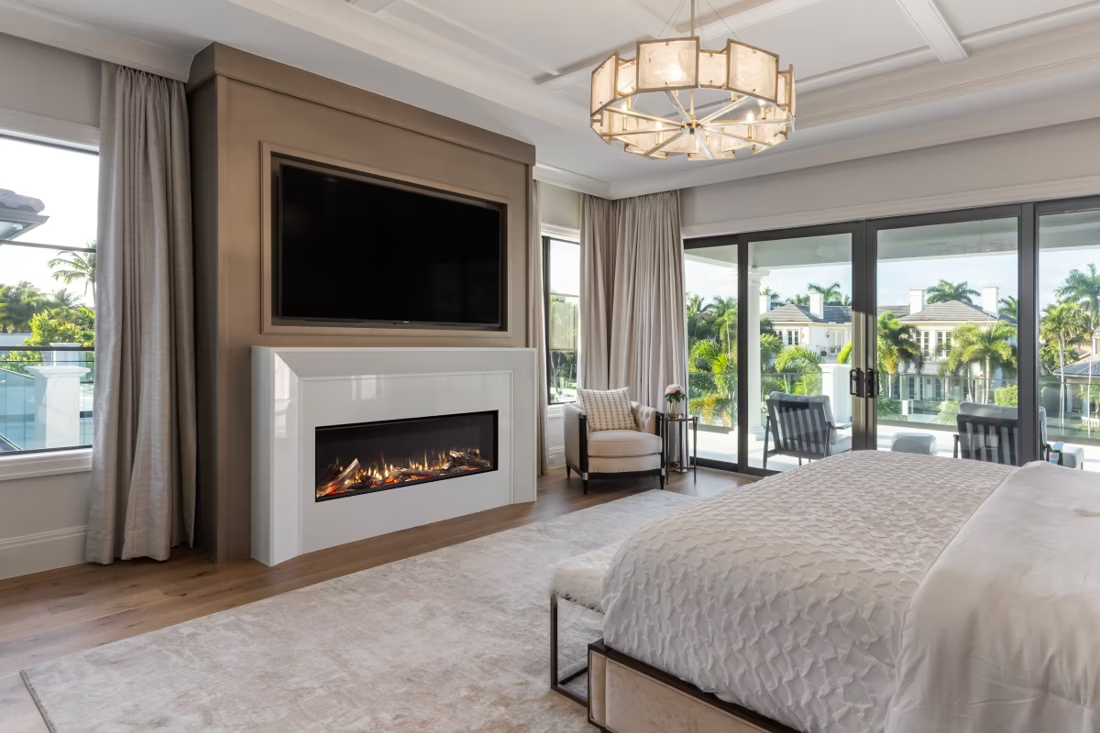
Yes—with an asterisk. Fireplaces are hot and TVs don't like heat. Either put a mantel between them to deflect rising warmth, or choose a fireplace with heat-management technology that creates a cool zone on the wall above—the wall stays around 125 degrees, barely warm, while the room still gets full heat. If you like clean lines and don't want a mantel, heat management is the answer.
Do electric fireplaces actually produce heat?
Yes—most put out around 4,800–5,000 BTUs from a standard outlet, which comfortably warms a bedroom, office, or den as a comfort-zone heater. What they won't do is carry a whole house the way wood, gas, or pellet can. Think of electric as ambiance-first with honest supplemental heat: flames on with no heat in July, flames plus warmth in January.
Does a fireplace add value to my home?
On average, a fireplace adds back to the home about the same amount you spent installing it. Add the monthly savings from heating the rooms you actually use instead of the whole house—often hundreds of dollars a year—and the value case is strong before you even count what a fire does for how your family uses the room.
What is an in-home preview and do I need one?
It's a visit where a hearth professional measures your space, confirms the model you picked actually works in your home, and walks the specs—framing, gas line, venting, finish work—before anything is ordered. Some details you just can't know until you see the house. Never make a down payment without one; it's the single most-skipped step that burns buyers.
Find your electric fireplace in Sioux County.
Tell us a bit about your home and we'll put together a free Project Guide & Parts List—the right electric fireplace for your space, the exact parts involved, and a trusted local dealer to install it.
Find Your Fireplace →