
Plug-in warmth for Sheridan County's long, hard winters.
With just 487 residents spread across McClusky, Denhoff, Goodrich, and the open prairie between them, Sheridan County doesn't have a hearth shop on every corner. No venting, no chimney, no gas line—just a unit that plugs in and warms the room you're in. We'll match you with a trusted local dealer who can size it right for a Zone 7 winter.
Every Project Starts From One of These Five Situations
The simplest heat source in a county built around harsh winters.
Sheridan County sits on the Missouri Coteau in north-central North Dakota, and it's classified Zone 7—the same brutal-cold tier as International Falls, Minnesota, with winter stretches where the mercury sits well below zero for days at a time. With only 487 people spread across McClusky and a handful of small unincorporated communities, most homes here are older farmhouses, single-wides, or ranch houses without the density of a town center. Firewood—oak, cottonwood, ash cut from shelterbelts and river bottoms—still heats plenty of homes, but electric fireplaces have carved out a real niche as a no-fuss way to add heat to a bedroom, den, or basement without running a flue through a roof already fighting 40-below wind chill.
Most Sheridan County homes rely on propane or fuel oil furnaces as their primary heat source—there's no natural gas distribution network out here, and the rural electric cooperative that serves the county wasn't built to carry whole-home electric heat loads through a Zone 7 winter on its own. That's exactly where an electric fireplace earns its place: zone heating a specific room, cutting the propane bill during shoulder-season cold snaps, or adding ambiance to a remodel without touching the chimney. A plug-in unit needs nothing more than a standard outlet; a built-in with a dedicated circuit is a straightforward job for a licensed electrician and, in most cases, a quick permit through the county.
Three steps. No salesperson until you're ready.
Tell us about your project
Your zip code, your situation, and the fuel you're leaning toward—or let the answers point you to one.
See what's actually available
The brands dealers within 100 miles genuinely carry—real options, never a catalog mirage.
Get your dealer & Project Guide
A trusted local dealer, plus the free Project Guide & Parts List that names every component of the job.
Frequently Asked Questions
How much does an electric fireplace installation cost in Sheridan County?
A plug-in electric fireplace insert or freestanding unit typically runs $300 to $1,500 installed—often it's simply set in place and plugged into an existing outlet, with no permit required. A built-in electric fireplace or a wall-mounted unit wired to its own dedicated circuit runs closer to $1,500 to $3,500 once you factor in the electrician's time to run new wire, especially in older Sheridan County farmhouses where the electrical panel may need a subpanel or additional breaker space. Rural installs sometimes carry a small travel charge given how spread out the county is between McClusky and outlying farms.
Can an electric fireplace actually heat a room in a North Dakota winter?
Yes, for the room it's in—most electric fireplaces put out 4,000 to 5,000 BTU, enough to comfortably heat 400 to 1,000 square feet depending on insulation and ceiling height. That's plenty for a bedroom, home office, or finished basement. What it won't do is replace your propane or fuel oil furnace on a night when it's 25 below with a howling northwest wind—Sheridan County's Zone 7 winters call for whole-home heat that only a properly sized furnace can deliver. Think of the electric fireplace as a supplement that lets you turn the thermostat down a couple degrees in the rooms you actually live in, not a substitute for central heat.
Will my electric fireplace still work if the power goes out?
No—and this matters more in Sheridan County than in most places. Electric fireplaces require power to run the fan and heating element, and rural stretches of the county are among the first to lose electricity in a Missouri Coteau blizzard, sometimes for a day or more. If you're choosing between electric and a wood or propane appliance for backup heat during outages, wood wins that comparison outright. Many Sheridan County homeowners land on both: wood or propane for outage resilience, electric for everyday convenience and zone heating where running a flue doesn't make sense.
Do I need a permit to install an electric fireplace in Sheridan County?
A simple plug-in unit generally doesn't require a permit since no new wiring or venting is involved. If you're installing a built-in unit that needs a new dedicated circuit, that electrical work typically needs to be pulled through the county—in a county this size, that usually means checking with the Sheridan County Auditor's office, which handles building-related permitting for unincorporated areas, or having your licensed electrician coordinate directly with the state electrical inspection process. Either way, a qualified installer will know exactly what paperwork, if any, applies to your specific project.
What's the difference between an electric fireplace, insert, and stove?
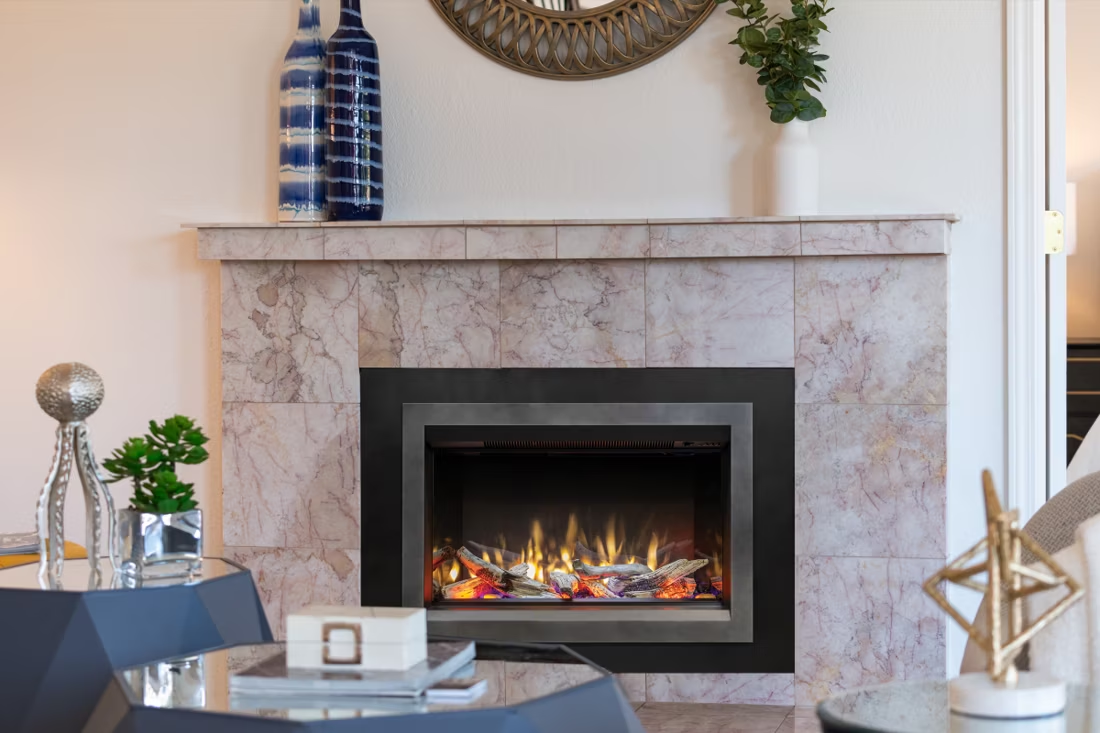
An electric fireplace is typically a wall-mounted or built-in unit designed to look like a traditional fireplace, often with a flame-effect display. An electric insert is sized to slide into an existing masonry or wood-fireplace opening, letting you keep the mantel and surround while swapping out an old, drafty firebox for a sealed, efficient heater. An electric stove is a freestanding cabinet-style unit that mimics a wood or pellet stove's look but plugs into a standard outlet. For Sheridan County homes with an old, rarely used masonry fireplace, an insert is often the easiest upgrade—no chimney work, no cutting permit trips to the woodlot, just cleaner, controllable heat.
What size electric fireplace do I need for my home?
Match the unit's BTU output to the specific room, not your whole square footage—a 4,600 BTU unit comfortably heats a 400-square-foot bedroom, while a larger 750-1,000 square foot open living area calls for a unit closer to the top of the typical 5,000 BTU range, or two zoned units. Older Sheridan County homes with less insulation and single-pane windows should size up slightly. A local dealer can walk your specific room and recommend the right unit rather than guessing off a box label.
What does it cost to run an electric fireplace day to day?
Running a typical 1,500-watt electric fireplace heater for several hours a day adds a modest amount to your monthly bill from the local rural electric cooperative—real numbers depend on your specific rate, but electric fireplaces are generally the cheapest hearth appliance to operate hour-for-hour precisely because they're 100% efficient at the point of use, with no flue losses. The tradeoff in Sheridan County is that electricity costs more per BTU than the propane most homes already burn for primary heat, which is why electric fireplaces work best as supplemental, room-specific heat rather than an attempt to heat an entire farmhouse.
Is an electric fireplace a good fit if I'm not on natural gas or don't want to deal with wood?
Yes—this is exactly the gap electric fills in Sheridan County. There's no natural gas distribution network here, propane requires a tank and delivery contract, and wood means cutting or buying cordwood and keeping up with a chimney. An electric fireplace sidesteps all of that: no fuel storage, no venting, no ash, and it can go virtually anywhere there's an outlet or a circuit. It won't replace your primary furnace, but for a den, bedroom, or a fireplace-less room that's always cold, it's the lowest-hassle option available in the county.
Electric vs. wood—which makes more sense for my Sheridan County home?
Wood—cut locally from oak, cottonwood, or ash along the shelterbelts and river bottoms—still makes sense for households that want real backup heat during power outages and don't mind the work of splitting, stacking, and tending a fire. It also holds up better than electric on the coldest nights when you actually need serious BTU output. Electric wins on convenience: no chimney, no ash, no permit for a simple plug-in unit, and instant on-off control from a remote. In a county this rural, it's common to see both in the same house—wood or propane carrying the load through the worst of winter, electric handling everyday ambiance and zone heat in the rooms used most.
Can I put a TV above my fireplace?
Yes—with an asterisk. Fireplaces are hot and TVs don't like heat. Either put a mantel between them to deflect rising warmth, or choose a fireplace with heat-management technology that creates a cool zone on the wall above—the wall stays around 125 degrees, barely warm, while the room still gets full heat. If you like clean lines and don't want a mantel, heat management is the answer.
Do electric fireplaces actually produce heat?
Yes—most put out around 4,800–5,000 BTUs from a standard outlet, which comfortably warms a bedroom, office, or den as a comfort-zone heater. What they won't do is carry a whole house the way wood, gas, or pellet can. Think of electric as ambiance-first with honest supplemental heat: flames on with no heat in July, flames plus warmth in January.
Can I install a fireplace myself?
If you're putting a fire in your house on purpose, it's best to work with an expert. Unless you're genuinely experienced in framing, gas line, vent pipe, and the national code on clearances to combustibles, have a professional do it—and ideally the same company that sells you the fireplace, so warranty, service, and liability all live under one roof.
What is an in-home preview and do I need one?
It's a visit where a hearth professional measures your space, confirms the model you picked actually works in your home, and walks the specs—framing, gas line, venting, finish work—before anything is ordered. Some details you just can't know until you see the house. Never make a down payment without one; it's the single most-skipped step that burns buyers.
Find your electric fireplace in Sheridan County.
Tell us a bit about your home and your heating situation, and we'll match you with a trusted local dealer serving Sheridan County—plus a free Project Guide & Parts List with the exact unit, wiring needs, and installation plan for your space.
Find Your Fireplace →