
Add plug-in warmth from Forman to Milnor.
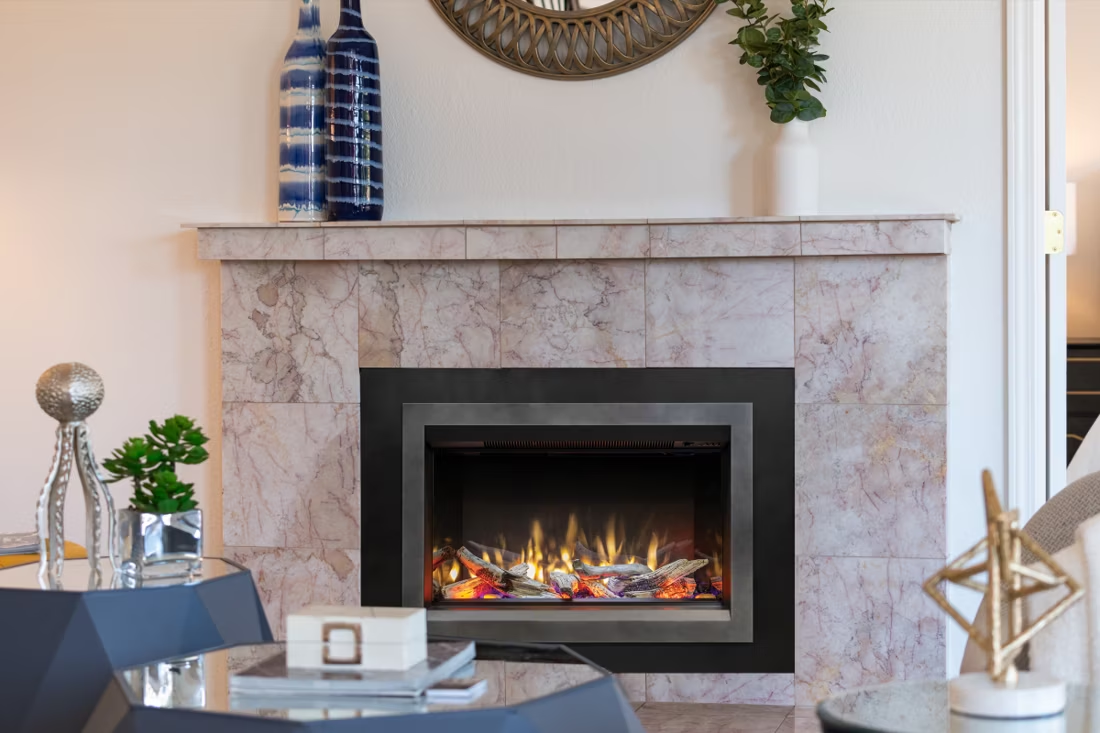
No chimney, no gas line, no venting—just a fireplace that plugs into your Dakota Valley Electric Cooperative service and warms the room you're actually in. Find the right unit and connect with a trusted local installer.
Every Project Starts From One of These Five Situations
No venting, no fuel deliveries, just heat.
Sargent County spans roughly 2,450 residents across Forman (the county seat), Milnor, Rutland, Gwinner, Cayuga, and Havana, tucked into climate zone 6A in the southeastern corner of North Dakota. Winters here run long—lows well below zero aren't unusual between November and February, similar to what Fargo sees an hour up the road—and the heating season can stretch from October into April. Cottonwood, ash, and oak grow along the Wild Rice River bottomlands, and plenty of rural households still keep a wood stove or propane furnace as their main line of defense against that cold.
Electric fireplaces fit into that picture as supplemental, low-maintenance heat rather than a replacement for the furnace—a way to warm a finished basement in a Gwinner farmhouse, a bonus room over the garage, or a lake place near Silver Lake without running a chimney or a gas line. Dakota Valley Electric Cooperative, headquartered right in Milnor, supplies most of the county's power, and a basic plug-in unit draws on existing household wiring with no permitting hassle at all. The tradeoff is honest: electric fireplaces go dark when the power does, so in a county where blizzards can knock out lines for a day or more, most homeowners pair one with—not instead of—an existing wood or propane heat source.
Three steps. No salesperson until you're ready.
Tell us about your project
Your zip code, your situation, and the fuel you're leaning toward—or let the answers point you to one.
See what's actually available
The brands dealers within 100 miles genuinely carry—real options, never a catalog mirage.
Get your dealer & Project Guide
A trusted local dealer, plus the free Project Guide & Parts List that names every component of the job.
Frequently Asked Questions
How much does an electric fireplace installation cost in Sargent County?
A straightforward plug-in electric fireplace—the kind you set into an existing wall opening or built-in cabinet—installs for close to the cost of the unit itself, typically $300 to $700, since it runs off a standard 120V outlet and needs no permit or electrician. A built-in wall or mantel unit that requires a dedicated circuit runs $800 to $2,500 once you add cabinetry, trim, and an electrician's time to run a new 20-amp line—common for finished basements or bonus rooms in Forman, Milnor, and Rutland homes where the existing wiring wasn't planned for a heat-producing appliance. Because there's no chimney, no gas line, and no venting to size, electric is consistently the least expensive fireplace fuel to install in the county.
Do I need a permit to install an electric fireplace in Sargent County?
In most cases, no. A plug-in electric fireplace that draws on an existing outlet doesn't trigger a building permit through the Sargent County Building Department. If you're having a built-in unit hardwired with a new dedicated circuit—the more common route for a mantel-style fireplace in a finished space—your electrician will typically pull an electrical permit as part of that work, the same as they would for adding an outlet in a kitchen remodel. There's no combustion involved, so none of the inspection burden that comes with a wood stove or gas line applies here.
Will an electric fireplace heat my whole house through a Sargent County winter?
No—and it's worth being direct about that. Sargent County sits in climate zone 6A, with winters that regularly send lows well below zero and a heating season that stretches from October into April, not far off from what nearby Fargo sees. Straight electric resistance heat is expensive to run as a primary heat source in that kind of cold. Electric fireplaces here work best as zone heat—warming a converted basement, a sunroom, or a bonus room over the garage—while the furnace, propane system, or wood stove carries the rest of the house. Think of it as a supplement to your existing heat, not a replacement for it.
Electric vs. wood—which makes more sense for my Sargent County home?
Wood heat has deep roots here, where cottonwood, ash, and oak grow along the Wild Rice River bottomlands and a lot of rural households keep a wood stove as backup heat for exactly the kind of ice storms that take down power lines. Electric fireplaces can't do that job—they go dark the moment the grid does, so they're not a storm-preparedness tool. What they're good at is convenience: no splitting, hauling, or ash cleanup, and a flip-of-a-switch flame in a room where running a chimney isn't practical, like a finished basement or an addition. Plenty of homes here run both—wood or propane for real heat and outage backup, electric for a low-maintenance secondary room.
What size electric fireplace do I need?
Most electric fireplaces draw around 1,500 watts (roughly 4,700 to 5,100 BTU) on the heat setting, which is enough to comfortably warm a single room in the 300 to 600 square foot range—a den, a converted porch, or a bonus room above a garage in a Gwinner or Havana farmhouse. They won't push heat into adjoining rooms the way a wood stove's radiant output does, so if you're trying to warm an open floor plan, you may want two smaller units rather than one large one, or a unit with a stronger blower to circulate air.
Is my electric service reliable enough to depend on for heat?
Sargent County is served primarily by Dakota Valley Electric Cooperative, headquartered right in Milnor, and rural service is generally solid—but winter storms do knock out power in this part of southeastern North Dakota, sometimes for a day or more in a bad blizzard. That's the one honest tradeoff with electric fireplaces: unlike a wood stove or a propane unit with a standing pilot, an electric fireplace is dead the moment the power goes out. If backup heat during outages matters to you, it's worth keeping a wood or propane appliance in the house alongside an electric unit rather than relying on electric alone.
What's the difference between an electric insert, a built-in, and a freestanding electric stove?
An electric fireplace insert drops into an existing fireplace opening or a cabinet cutout and is the easiest option if you already have a mantel or surround you want to keep. A built-in (or wall-mount) unit is designed to be framed into new construction or a remodel, with the heater and flame effect flush with the wall. A freestanding electric stove looks like a small wood stove and can sit anywhere near an outlet—a popular choice for a rental unit or a lake cabin near Silver Lake that doesn't have a chimney at all. All three run off standard household wiring; the difference is mostly aesthetic and how much carpentry is involved.
Where can I find someone to install an electric fireplace near me?
Because installation is electrical rather than mechanical, you're looking for a licensed electrician rather than a hearth specialist—local electricians serving Forman, Milnor, and Gwinner (home to the Bobcat plant and the county's largest workforce) handle this kind of dedicated-circuit work regularly. For the unit itself, most homeowners order through a hearth or furniture retailer and have their electrician handle the hookup separately, which is a different process than the single-vendor install you'd use for a gas or wood appliance.
Electric vs. pellet—which is the better supplemental heat source?
Pellet stoves—sold regionally under brands like Lignetics and Indeck Energy Services—burn compressed wood pellets and put out real heat, but they still need electricity to run the auger and blower, so like electric fireplaces, they go down in a power outage unless you've got a battery backup. The difference is heat output and fuel handling: a pellet stove can genuinely help heat a Sargent County home through a cold snap and needs a hopper filled with bagged pellets, while an electric fireplace is lower-maintenance zone heat with no fuel to store or ash to empty, but a smaller heating footprint. For a single room, electric is simpler. For real supplemental heat across more square footage, pellet has more capacity.
Can I put a TV above my fireplace?
Yes—with an asterisk. Fireplaces are hot and TVs don't like heat. Either put a mantel between them to deflect rising warmth, or choose a fireplace with heat-management technology that creates a cool zone on the wall above—the wall stays around 125 degrees, barely warm, while the room still gets full heat. If you like clean lines and don't want a mantel, heat management is the answer.
Do electric fireplaces actually produce heat?
Yes—most put out around 4,800–5,000 BTUs from a standard outlet, which comfortably warms a bedroom, office, or den as a comfort-zone heater. What they won't do is carry a whole house the way wood, gas, or pellet can. Think of electric as ambiance-first with honest supplemental heat: flames on with no heat in July, flames plus warmth in January.
Does a fireplace add value to my home?
On average, a fireplace adds back to the home about the same amount you spent installing it. Add the monthly savings from heating the rooms you actually use instead of the whole house—often hundreds of dollars a year—and the value case is strong before you even count what a fire does for how your family uses the room.
Can a fireplace actually lower my heating bill?
Yes—by creating a comfort zone. A furnace heats every square foot of the house just to warm the one room you're in; a gas fireplace on low burns roughly a sixth of the gas a typical furnace does. Set the furnace around 55–60 degrees as a baseline, then heat the rooms your family actually uses. Families who heat this way commonly save $20–$60 a month.
Find your electric fireplace in Sargent County.
Tell us about your room and we'll match you with a trusted local dealer or electrician and send over a free Project Guide & Parts List—the exact unit, circuit requirements, and installer recommendation for your Sargent County home.
Find Your Fireplace →