
Warmth that keeps up with a zone 7 winter.
Propane-powered gas heat for the small towns and ranch homes of Renville County—from Mohall to Sherwood—where winters run brutal and reliable heat isn't optional. Find the right fireplace or insert and connect with a trusted local dealer.
Every Project Starts From One of These Five Situations
Propane heat for one of the harshest climates in the Lower 48.
Renville County sits along the Canadian border in north-central North Dakota, home to roughly 1,359 residents spread across Mohall, the county seat, and small communities like Sherwood near the border crossing. The county is classified as climate zone 7—the same brutal category as International Falls, Minnesota—which puts it a notch colder than most of North Dakota, including Fargo and Bismarck to the south. Long stretches of subzero nights and open-prairie wind make heating reliability less a comfort question than a survival one for the ranches and farmhouses scattered across the county.
With a population this small, Renville County has essentially no municipal natural gas infrastructure reaching most homes—propane is the standard fuel, delivered by tank rather than pipeline, and it already feeds most furnaces, ranges, and water heaters in the county. That makes a propane gas fireplace or insert an easy addition: it runs off the same tank you already have, with no new utility line to trench across frozen ground. Direct-vent propane units deliver instant heat at the flip of a switch, and models with battery-backup ignition keep working through the power outages that often accompany the worst prairie storms.
Three steps. No salesperson until you're ready.
Tell us about your project
Your zip code, your situation, and the fuel you're leaning toward—or let the answers point you to one.
See what's actually available
The brands dealers within 100 miles genuinely carry—real options, never a catalog mirage.
Get your dealer & Project Guide
A trusted local dealer, plus the free Project Guide & Parts List that names every component of the job.
Frequently Asked Questions
How much does a gas fireplace installation cost in Renville County?
Most propane fireplace and insert installations in Renville County run in the $4,000 to $9,500 range, depending on the unit, whether you're converting an existing masonry fireplace or building new, and whether the home already has a propane tank and regulator sized for the added load. Homes already running propane appliances (furnace, range, water heater) are typically on the lower end since the fuel supply is already in place. New construction or a first-time propane tank installation pushes costs toward the higher end. Given the distances between towns in a county this size, expect a modest travel charge from installers based out of Minot or Bottineau.
Can I convert my existing wood fireplace to gas?
Yes, and it's a common request in a county where hauling and splitting oak, cottonwood, or ash from the Souris River bottoms gets old fast once a January cold snap sets in. A propane insert can usually be fitted into an existing masonry fireplace using a stainless liner run through your current chimney, which keeps installation costs down and preserves the look of the original hearth. Expect the conversion to run similarly to a standard insert install—roughly $4,000 to $8,500—with the propane tank and line being the main variable if one isn't already on the property.
Is natural gas available in Renville County, or is it all propane?
Piped natural gas service is limited to essentially nonexistent across most of Renville County—with a population under 1,400 spread across open ranch country, there's no municipal gas system reaching the majority of homes. Propane is the default fuel for gas fireplaces here, supplied by regional propane companies serving Mohall, Sherwood, and the rural addresses in between. If you're unsure whether your specific property has gas access, your local dealer can confirm during a site visit—but for planning purposes, assume propane.
Will my gas fireplace work during a power outage?
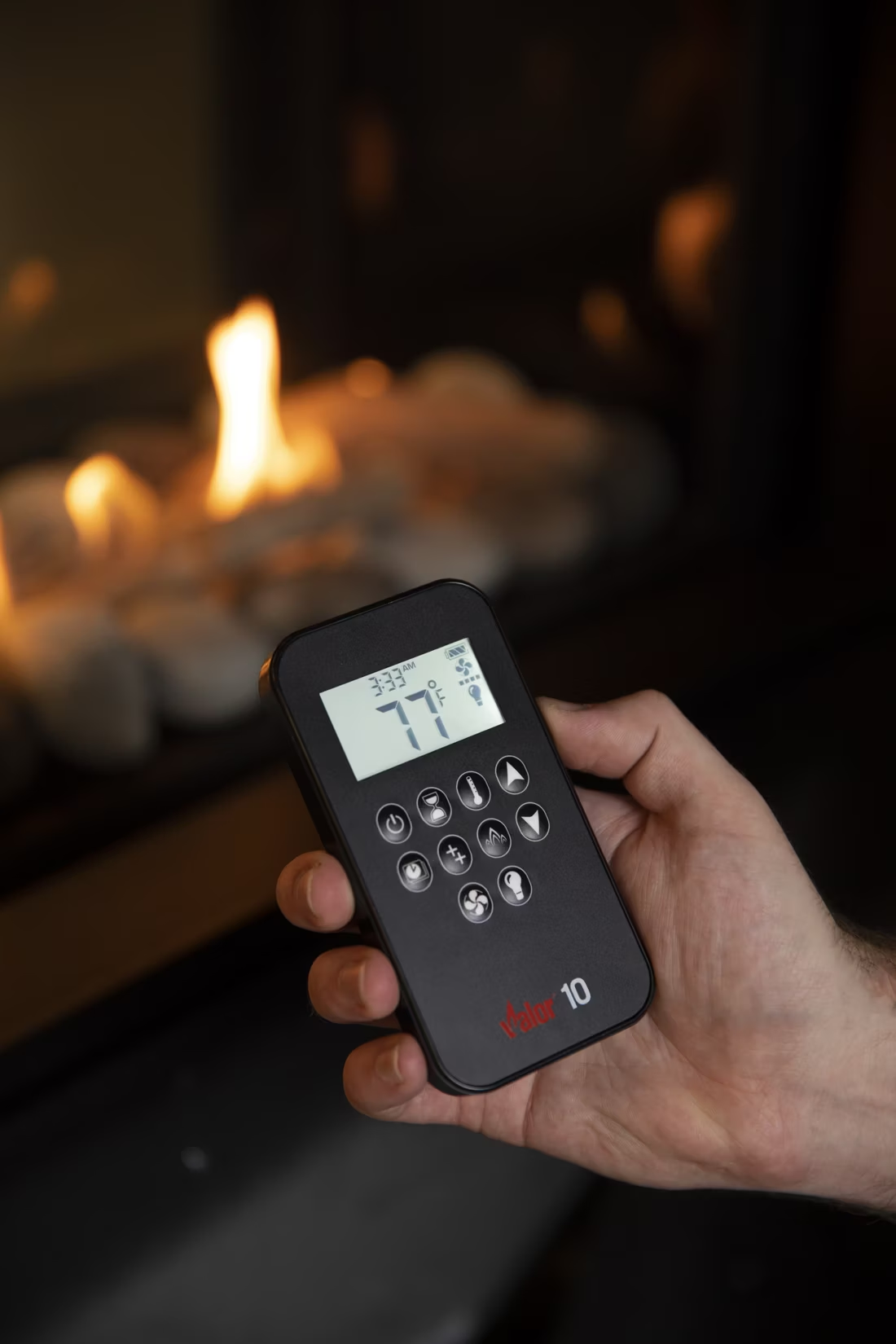
This matters more in Renville County than almost anywhere—a zone 7 winter storm that knocks out power is also the exact moment you need reliable heat. Most modern propane fireplaces with IPI (intermittent pilot ignition) run on a battery backup that kicks in automatically when the power drops, so the unit lights and runs normally off the batteries. Valor fireplaces take a different approach: their pilot generates its own electricity through the thermocouple, so there's no battery to remember or replace. For a county where the nearest lineman may be an hour out during a blizzard, that self-powering feature is worth asking about.
Should I choose a vented or vent-free gas fireplace?
Vented (direct-vent) propane fireplaces draw combustion air from outside and exhaust it back outside through a sealed pipe—they're the standard recommendation almost everywhere, including Renville County. Vent-free units burn fuel directly into the room and release some moisture and combustion byproducts indoors, which is a bigger concern in a zone 7 climate where homes are built tight to survive the cold; that tightness already limits natural air exchange, so adding indoor combustion moisture can contribute to condensation issues on windows and in wall cavities. Direct-vent units avoid that tradeoff entirely and are the better fit for the tightly sealed, well-insulated homes this climate demands.
Do I need a permit to install a gas fireplace in Renville County?
Yes—gas line and hearth appliance installations typically require a building permit at the county level, and any propane line work should be done by a licensed installer familiar with local code. Given the county's small size, most installers and propane suppliers who work here handle the permitting directly as part of the job rather than leaving it to the homeowner. If you're building new or doing a larger remodel, plan on your propane supplier and hearth dealer coordinating the tank placement, line run, and appliance install together.
What's the best gas fireplace for Renville County's climate?
Look for a direct-vent propane insert or fireplace with a higher BTU output rating—zone 7 winters demand more sustained heat output than a typical suburban install elsewhere in the country, and undersized units will run constantly without keeping up on the coldest nights. Models with a continuous or standing pilot and battery-backup ignition are worth the small extra cost given how often prairie storms threaten the power grid here. A local dealer can size the unit correctly based on your home's square footage and how much of the heating load the fireplace needs to carry versus your furnace.
Is wood heat a realistic option in Renville County?
Wood is uncommon as a primary or even significant supplemental heat source in Renville County today, even though oak, cottonwood, and ash grow along the Souris River corridor and some longtime residents still keep a woodpile out of habit. With propane already running most homes and no real local wood-supply infrastructure or air quality restrictions pushing people toward burning, gas has become the practical default. A handful of rural homeowners still run a wood stove for backup heat or ambiance, but it's the exception rather than the rule.
Gas vs. electric fireplace—which makes more sense here?
A propane gas fireplace delivers real heat output and can serve as genuine supplemental or even primary heat for a room, which matters in a zone 7 climate where every heat source is doing real work. An electric fireplace, by contrast, is essentially a plug-in appliance—no venting, no gas line, and a much lower install cost, typically under $1,000—but it's better suited to ambiance or light zone heating in a well-insulated room than to carrying real heating load on a subzero night. For a detached shop, a spare bedroom, or a seasonal cabin in the county, electric can make sense. For a main living space in a Renville County farmhouse, propane gas is the more practical workhorse.
Why is my open fireplace making my house colder?
Open fireplaces suck—literally. As the fire burns, it consumes air your furnace already paid to heat and pulls it out through the chimney, so the house is actually colder after the fire goes out than before you lit it. An insert fixes this: it seals the chimney, puts fixed glass across the front, and turns that hole in your house into a real heat source.
Can I put a TV above my fireplace?
Yes—with an asterisk. Fireplaces are hot and TVs don't like heat. Either put a mantel between them to deflect rising warmth, or choose a fireplace with heat-management technology that creates a cool zone on the wall above—the wall stays around 125 degrees, barely warm, while the room still gets full heat. If you like clean lines and don't want a mantel, heat management is the answer.
Can a fireplace actually lower my heating bill?
Yes—by creating a comfort zone. A furnace heats every square foot of the house just to warm the one room you're in; a gas fireplace on low burns roughly a sixth of the gas a typical furnace does. Set the furnace around 55–60 degrees as a baseline, then heat the rooms your family actually uses. Families who heat this way commonly save $20–$60 a month.
Can I install a fireplace myself?
If you're putting a fire in your house on purpose, it's best to work with an expert. Unless you're genuinely experienced in framing, gas line, vent pipe, and the national code on clearances to combustibles, have a professional do it—and ideally the same company that sells you the fireplace, so warranty, service, and liability all live under one roof.
Find your gas fireplace in Renville County.
Tell us about your home and your propane setup, and we'll match you with a trusted local dealer and send over your free Project Guide & Parts List—a plan built for your gas fireplace project in Renville County, right down to the vent kit.
Find Your Fireplace →