
Electric heat for Oliver County's coldest weeks.
No gas line, no chimney, no venting—just a zone-heat option that works in a county of 554 people where the nearest hearth showroom might be a 40-minute drive. Find the right unit and connect with a trusted local dealer.
Every Project Starts From One of These Five Situations
Simple heat, no gas line, no chimney.
Oliver County sits along the Missouri River in south-central North Dakota, with Center as the county seat and a population under 600 spread across farms, ranches, and a handful of small communities. It's Zone 6A country—the kind of continental cold where lows drop well below zero for stretches and heating systems have to work hard from November through March. Most homes here run on propane or a rural electric cooperative for their base heat, since piped natural gas infrastructure doesn't reach most of this county the way it does closer to Bismarck.
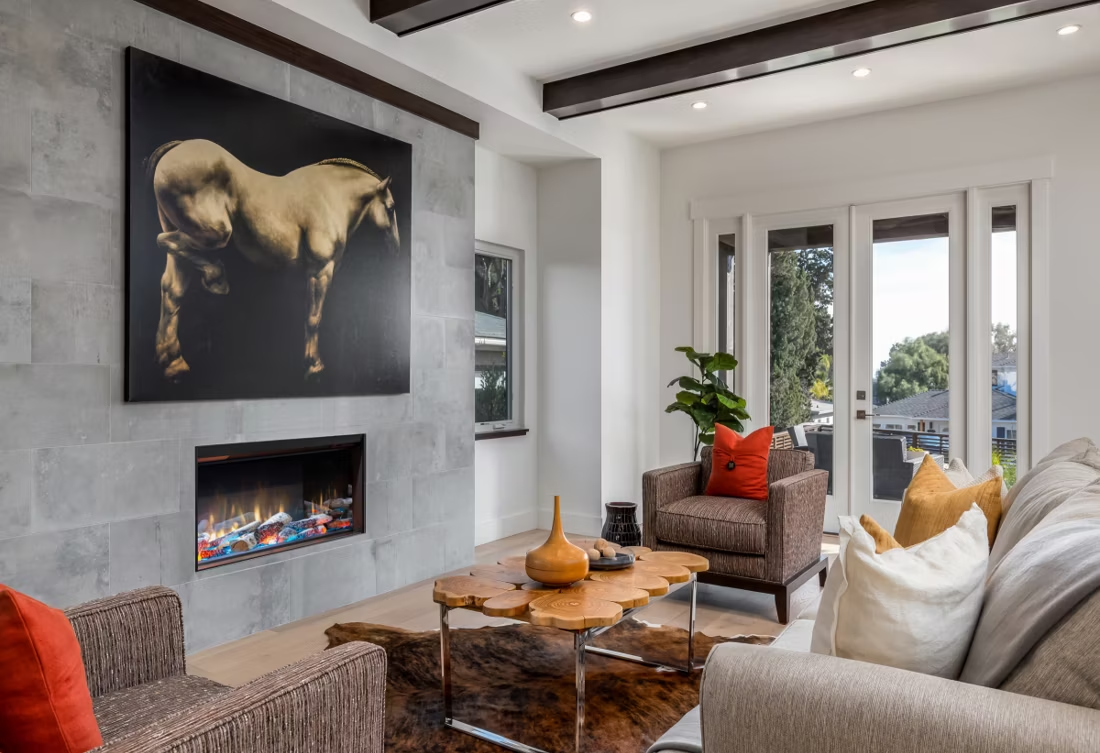
That mix of rural electric service and propane-dependent heating is exactly where electric fireplaces earn their place. There's no gas line to run, no chimney to maintain, and no fuel to store—you plug it in or wire it to a dedicated circuit and it works, whether it's going into a farmhouse living room, a manufactured home addition, or a basement rec room. For a county this sparsely populated, that simplicity matters: fewer moving parts means fewer reasons to wait on a technician who has to drive out from Bismarck or Mandan.
Three steps. No salesperson until you're ready.
Tell us about your project
Your zip code, your situation, and the fuel you're leaning toward—or let the answers point you to one.
See what's actually available
The brands dealers within 100 miles genuinely carry—real options, never a catalog mirage.
Get your dealer & Project Guide
A trusted local dealer, plus the free Project Guide & Parts List that names every component of the job.
Frequently Asked Questions
How much does an electric fireplace installation cost in Oliver County?
Plug-in electric inserts and mantel units are the least expensive option, typically running $300 to $800 for the unit itself with no professional installation required—you're just plugging into an existing outlet. Built-in wall units and linear electric fireplaces that need a dedicated 20-amp circuit usually run $1,200 to $3,500 installed, with the higher end reflecting longer wire runs common in older farmhouses around Center and Hannover where the electrical panel may be a good distance from the install location. A licensed electrician handles the circuit work; the fireplace itself doesn't need venting or a chimney, which keeps labor simpler than a wood or gas project.
Will an electric fireplace actually heat my home during a North Dakota winter?
Not as a primary heat source in Zone 6A—a typical 1,500-watt electric fireplace puts out around 5,000 BTU, enough to comfortably heat one room but not a whole farmhouse or double-wide when temperatures are well below zero. Most Oliver County homeowners use electric fireplaces as zone heat: warming the room they're actually using so the propane furnace or electric baseboard system can run less. If you're looking for whole-home backup heat during a hard freeze, a wood stove or larger propane appliance is the better primary option, with the electric unit handling the room you live in day to day.
Electric vs. wood—which makes more sense out here?
Wood has real advantages in Oliver County: local oak, cottonwood, and ash are available from farm woodlots and river bottom timber along the Missouri, and a wood stove keeps working even if the power is out—which matters on the long single-phase rural lines that serve much of the county and can take a while to restore after an ice storm. Electric fireplaces can't do that; they're only as reliable as the grid. What electric offers instead is zero maintenance—no chimney sweep, no ash, no cutting or hauling—and instant installation in rooms where running a flue just isn't practical. Many households here end up with both: wood or propane for real winter heat, electric for the room they want warm and tidy without tending a fire.
Do I need a permit to install an electric fireplace in Oliver County?
Oliver County doesn't have a dedicated building permit department the way larger counties do—building and electrical questions for unincorporated areas typically route through the Oliver County Auditor's Office, and North Dakota's state electrical inspection program covers wiring work. A simple plug-in electric fireplace generally doesn't trigger any permit at all since it's just using an existing outlet. If you're having an electrician add a dedicated circuit for a built-in unit, that wiring work should go through a licensed electrician who can confirm what, if anything, needs to be filed for your specific property.
Electric vs. pellet stove—which fits a rural county like this better?
Pellet stoves burn bags of compressed wood pellets from brands like Lignetics or regional suppliers such as Indeck Energy Services, and they put out real heat—but they depend on a steady pellet supply, and Oliver County doesn't have a big-box store or hearth retailer in-county, so stocking up usually means a trip toward Bismarck or Mandan. Electric fireplaces skip that logistics problem entirely: no bags to store, no hopper to load, just power. For a full-time residence where you're already making regular supply runs, pellet heat can make sense. For a weekend property, a smaller home, or anyone who wants heat with zero fuel handling, electric is the simpler answer.
What kind of electric fireplace works best in a manufactured or modular home?
A lot of housing in Oliver County is manufactured or modular, and that changes what's safe to install. Wall-mounted linear electric units and recessed inserts designed for zero-clearance mounting are the right fit—they don't require the same combustible-material clearances as a wood or gas appliance, and they're light enough to mount on typical manufactured-home wall framing without added structural support. A freestanding electric stove works too if you'd rather not mount into the wall. Either way, confirm the unit's listed clearances against your specific wall construction before mounting—a local dealer can walk through this in a few minutes.
Will my electric fireplace still work if the power goes out?
No—and this is worth being direct about. Electric fireplaces need grid power to run, and rural distribution lines serving a county this sparsely populated can take longer to restore after a winter storm than lines closer to Bismarck. If backup heat during an outage matters to you, pair the electric fireplace with a wood stove, a propane heater, or a generator sized to keep the electric unit and your furnace's blower running. Don't count on the electric fireplace itself as your outage plan.
Where does an electric fireplace make the most sense in an Oliver County home?
Rooms without an easy path to the outdoors for venting are the classic case—a finished basement, an interior addition, a sunroom converted from a porch, or a home office where running a flue or gas line would mean tearing into walls unnecessarily. It's also a good fit for renters or anyone who might move, since a plug-in unit or even a mounted linear fireplace can come with you. In a county built mostly around farmhouses and older rural housing stock, electric fireplaces are frequently the lowest-disruption way to add heat and ambiance to a room that was never built with a chimney in mind.
Electric vs. propane fireplace—which should I choose?
Propane is the standard fuel for most heating appliances in Oliver County since natural gas mains don't reach most of the area, and a propane fireplace puts out considerably more heat than an electric unit—genuinely useful supplemental heat on a hard winter night. But propane fireplaces need venting to the outside and either a tank or a line run from an existing tank, which adds cost and installation complexity. Electric fireplaces skip all of that: no tank, no venting, no gas line—just power. If you want real heat output and already have propane service, a propane fireplace is worth considering. If you want the simplest possible install in a room without easy outside access, electric is usually the more practical choice.
Do electric fireplaces actually produce heat?
Yes—most put out around 4,800–5,000 BTUs from a standard outlet, which comfortably warms a bedroom, office, or den as a comfort-zone heater. What they won't do is carry a whole house the way wood, gas, or pellet can. Think of electric as ambiance-first with honest supplemental heat: flames on with no heat in July, flames plus warmth in January.
Does an electric fireplace need a vent or chimney?
No—that's its superpower. An electric fireplace needs a wall and an outlet, period. No vent pipe, no gas line, no clearances to design around, which is why it works in bedrooms, offices, apartments, and walls where venting a gas or wood unit would be impractical or impossible. Installation is typically the simplest and least expensive of any fireplace type.
How much should I budget for a fireplace?
For an average home—covering the fireplace, the vent pipe, and basic installation—a budget between $3,900 and $5,500 gives you a lot of options across wood, gas, and pellet. By the time you add finish work, gas line, and electrical, the average complete installation lands between $5,000 and $12,000 all-in. In a remodel or new build, a good rule is to put about 2.5% of the total project cost toward the fireplace.
Can a fireplace actually lower my heating bill?
Yes—by creating a comfort zone. A furnace heats every square foot of the house just to warm the one room you're in; a gas fireplace on low burns roughly a sixth of the gas a typical furnace does. Set the furnace around 55–60 degrees as a baseline, then heat the rooms your family actually uses. Families who heat this way commonly save $20–$60 a month.
Find your electric fireplace in Oliver County.
Tell us a bit about your home and we'll put together a free Project Guide & Parts List—the right electric fireplace or insert for your space, the wiring it needs, and a trusted local dealer near Oliver County to install it.
Find Your Fireplace →