
Instant warmth, powered by Mercer County's own grid.
Zone heat for a county where average winter lows sit around 3°F and the local power grid runs on lignite coal generated right here. Find the right electric fireplace or insert, and connect with a trusted local dealer.
Every Project Starts From One of These Five Situations
A fireplace that plugs in, powered by cheap local electricity.
Mercer County is home to about 6,670 people spread across Beulah, Stanton, Golden Valley, Hazen, and the farmland between them, in a stretch of west-central North Dakota that logs roughly 8,446 heating degree days a year and averages a 3°F winter low—colder than a typical season in International Falls, Minnesota. Wood species like cottonwood, ash, and oak grow along the Missouri and Knife rivers, but wood-burning has never been a real fixture of how homes here get heated, and pellet stoves are just as rare. What the county does have in abundance is cheap electricity: Mercer County sits at the center of North Dakota's lignite coal industry, with the Antelope Valley Station and Coyote Station near Beulah feeding the regional grid, and Basin Electric Power Cooperative holding an ownership stake in generation right in the county. That access to low-cost power is exactly what makes an electric fireplace a genuinely practical add rather than a novelty, even in a climate this cold.
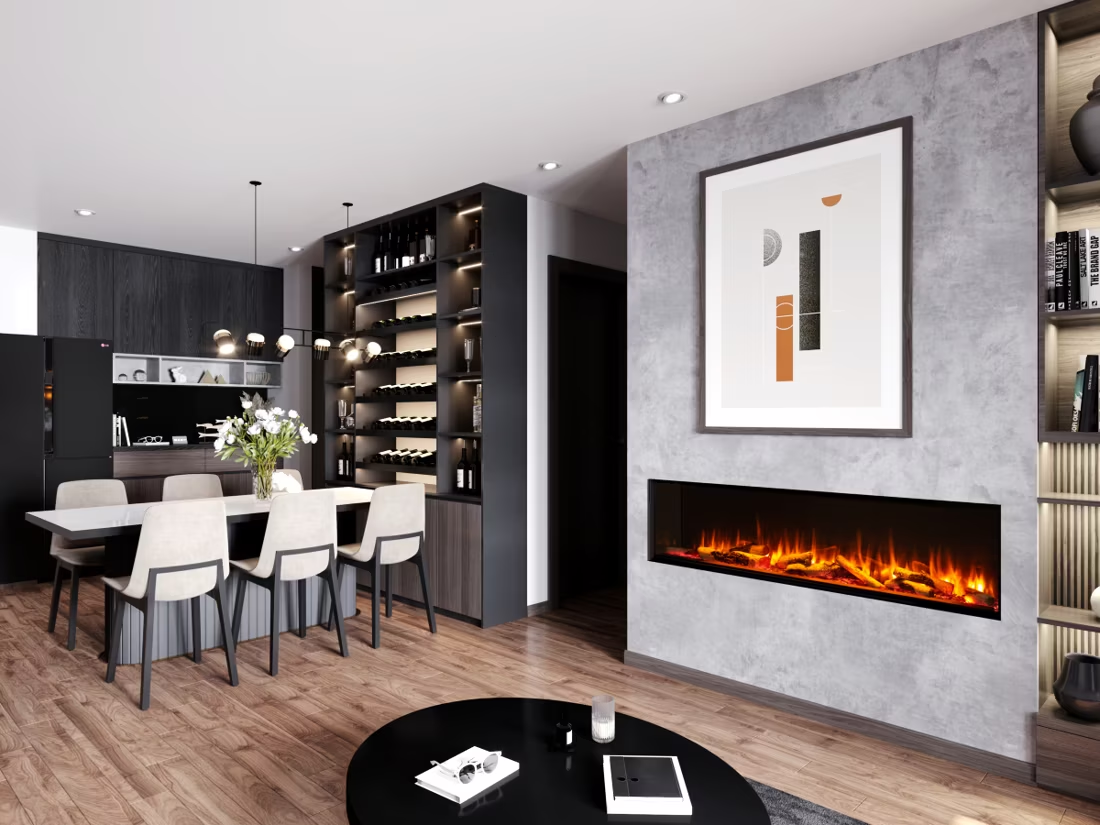
An electric fireplace here isn't going to replace your furnace—at 8,446 HDD, primary heat in Mercer County comes from natural gas or propane, and that's not changing. What electric does well is zone heat: warming up the living room, a finished basement, or a bedroom addition without running new gas line or building a chimney. Plug-in inserts need nothing more than an outlet. Built-in wall units typically need a dedicated 20-amp circuit, which means an electrician and, in some cases, a heads-up to the Mercer County building department. Either way, it's the fastest, least invasive hearth project available in a county where most other heating work means coordinating gas fitters and venting contractors.
Three steps. No salesperson until you're ready.
Tell us about your project
Your zip code, your situation, and the fuel you're leaning toward—or let the answers point you to one.
See what's actually available
The brands dealers within 100 miles genuinely carry—real options, never a catalog mirage.
Get your dealer & Project Guide
A trusted local dealer, plus the free Project Guide & Parts List that names every component of the job.
Frequently Asked Questions
How much does an electric fireplace installation cost in Mercer County?
Cost depends almost entirely on which style you choose. A freestanding or wall-mount plug-in unit is the cheapest path—no wiring changes, no permit, just the unit itself, generally in the low hundreds to around a thousand dollars depending on size and finish. A built-in electric insert or a fireplace mantel package that needs its own dedicated circuit adds electrician labor on top of the unit cost, since most manufacturers spec a dedicated 20-amp circuit for larger units. For a county this rural, expect a small trip charge if your electrician or installer is coming from Beulah, Hazen, or further out toward Bismarck.
Will an electric fireplace actually heat my home through a Mercer County winter?
Not as a primary source, and any honest local installer will tell you that up front. At 8,446 heating degree days and average lows around 3°F, Mercer County homes need a furnace running on natural gas or propane to carry the load through winter. An electric fireplace is a supplemental, zone-heat appliance—it will comfortably warm a single room (most units are rated for 400–1,000 square feet) and take the edge off a chilly living room or bonus room, but it's not sized or intended to heat a whole house in this climate.
Do I need a permit for an electric fireplace in Mercer County?
It depends on the install. A plug-in freestanding or wall-mount unit that uses an existing outlet typically doesn't require any permit—there's no gas line, no venting, and no new wiring. A built-in unit that requires a new dedicated circuit is electrical work, which generally does require a permit through the Mercer County building department, and should be pulled by a licensed electrician regardless of whether you check the box. Most local dealers coordinate this as part of the install so you're not the one calling the county.
What's the difference between an electric fireplace, insert, and stove?
An electric fireplace is usually a built-in unit set into a wall or mantel surround, designed to look like a traditional fireplace. An electric insert is sized to slide into an existing masonry firebox—a common choice if you have an old wood-burning fireplace in a Mercer County farmhouse that you'd rather not maintain a chimney for. An electric stove is a freestanding cabinet-style unit that sits on the floor and mimics a wood stove's look, without any venting requirement at all. For homes without an existing fireplace opening, a built-in or freestanding unit is the simpler path; for homes with an old masonry fireplace, an insert repurposes what's already there.
Is electric fireplace heat expensive to run in Mercer County?
Less than you'd expect in most parts of the country. Mercer County sits inside North Dakota's lignite coal generation belt, and local electric cooperatives—Mor-Gran-Sou Electric Cooperative serves much of the surrounding area—pass through some of the lowest residential electric rates in the region. Running a 1,500-watt electric fireplace for a few hours a night to take the chill off a living room is a modest add to a monthly bill here compared to markets paying coastal electric rates. It's still not a substitute for your furnace on a below-zero night, but as supplemental heat it's genuinely affordable.
What size electric fireplace do I need?
Match the unit to the room, not the house. Most electric fireplaces are rated to comfortably heat 400 to 1,000 square feet, which covers a typical Mercer County living room, den, or bedroom addition. Larger great rooms or open-concept main floors may need two zones—a larger insert plus a secondary unit—rather than one oversized fireplace. Since electric units don't need clearance for venting the way gas or wood appliances do, sizing is mostly about wattage and room volume, which a local dealer can walk through in a few minutes.
Can an electric fireplace work during a power outage?
No—and this is worth being clear-eyed about in a county this cold. Electric fireplaces run on household power, so if the grid goes down, so does the fireplace, along with your furnace's blower and igniter in most setups. Mercer County's local generation keeps outages relatively infrequent, but winter ice and wind events still happen. If backup heat during an outage matters to your household, that's a case for a propane appliance or a generator, not an electric fireplace—electric here is best understood as everyday zone heat, not emergency heat.
Electric vs. gas—which is right for my home in Mercer County?
Gas (natural gas where available, propane elsewhere in the county) is the right call for anything approaching primary heat—it works during outages with the right ignition system, puts out real BTUs, and is what most Mercer County furnaces already run on. Electric wins on installation simplicity and running cost for supplemental use: no gas line, no venting, no permit for a plug-in unit, and cheap power thanks to local coal generation. Plenty of homes here end up with both—a gas furnace or fireplace carrying the real heat load, and an electric unit in a bedroom or basement for quick, no-fuss warmth.
Where can I find a local dealer for electric fireplaces in Mercer County?
With a county population under 7,000, dealer options are naturally thinner than in a metro area—some homeowners in Beulah, Stanton, and Hazen end up working with retailers based closer to Bismarck, about an hour east. That's exactly the gap Find My Fireplace is built to close: tell us about your space and we'll match you with a trusted local dealer who actually installs in Mercer County, rather than leaving you to guess which big-box listing ships and installs out this way.
Can I put a TV above my fireplace?
Yes—with an asterisk. Fireplaces are hot and TVs don't like heat. Either put a mantel between them to deflect rising warmth, or choose a fireplace with heat-management technology that creates a cool zone on the wall above—the wall stays around 125 degrees, barely warm, while the room still gets full heat. If you like clean lines and don't want a mantel, heat management is the answer.
Does an electric fireplace need a vent or chimney?
No—that's its superpower. An electric fireplace needs a wall and an outlet, period. No vent pipe, no gas line, no clearances to design around, which is why it works in bedrooms, offices, apartments, and walls where venting a gas or wood unit would be impractical or impossible. Installation is typically the simplest and least expensive of any fireplace type.
Does a fireplace add value to my home?
On average, a fireplace adds back to the home about the same amount you spent installing it. Add the monthly savings from heating the rooms you actually use instead of the whole house—often hundreds of dollars a year—and the value case is strong before you even count what a fire does for how your family uses the room.
How much should I budget for a fireplace?
For an average home—covering the fireplace, the vent pipe, and basic installation—a budget between $3,900 and $5,500 gives you a lot of options across wood, gas, and pellet. By the time you add finish work, gas line, and electrical, the average complete installation lands between $5,000 and $12,000 all-in. In a remodel or new build, a good rule is to put about 2.5% of the total project cost toward the fireplace.
Find your electric fireplace in Mercer County.
Tell us about your space and we'll match you with a trusted local dealer and send over a free Project Guide & Parts List—the exact parts, including any wiring needs, for your electric fireplace project in Mercer County.
Find Your Fireplace →