
Warm, reliable heat for Golden Valley County's open-prairie winters.
From Beach to Sentinel Butte, propane and natural gas fireplaces deliver steady, wind-proof heat across one of North Dakota's least populated counties. Find the right unit and connect with a trusted local dealer.
Every Project Starts From One of These Five Situations
Instant heat when the wind never stops.
Golden Valley County sits in the North Dakota Badlands along the Little Missouri River breaks, with a population under 1,200 spread across Beach, Sentinel Butte, and the open ranchland between them. The county falls in IECC climate zone 6A, the same severe-cold band that covers Duluth, Minnesota and Burlington, Vermont—sub-zero nights, brutal wind chill off the open prairie, and a heating season that runs deep into spring. There's little windbreak out here beyond the badland draws, and homes take a beating from wind-driven cold that makes even a well-insulated house feel drafty by February.
With that little population comes limited natural gas infrastructure—most homes outside Beach's core service area run on propane, delivered and stored in a tank on the property, rather than piped natural gas. Either fuel powers a direct-vent gas fireplace or insert that lights instantly, holds a steady temperature through a Badlands cold front, and doesn't ask you to split, haul, or feed anything. For a county this rural, where the nearest big-box hearth store is a long drive to Dickinson or Glendive, working with a local propane and hearth dealer who can size the unit, run the line, and stand behind the install matters more than catalog browsing ever will.
Three steps. No salesperson until you're ready.
Tell us about your project
Your zip code, your situation, and the fuel you're leaning toward—or let the answers point you to one.
See what's actually available
The brands dealers within 100 miles genuinely carry—real options, never a catalog mirage.
Get your dealer & Project Guide
A trusted local dealer, plus the free Project Guide & Parts List that names every component of the job.
Frequently Asked Questions
How much does a gas fireplace installation cost in Golden Valley County?
Expect somewhere between $4,000 and $9,500 for a typical direct-vent gas fireplace or insert installation in Golden Valley County, with the spread driven mostly by whether a propane tank already exists on the property. Homes with an existing propane tank and regulator in place land on the lower end; homes needing a new tank set and buried line run higher. Because natural gas service is limited to parts of Beach, most installations in the county are propane-fueled, and your dealer will size the regulator and orifices accordingly. A firm number comes after an in-home look at your venting path and gas source.
Is natural gas or propane more common for gas fireplaces here?
Propane is the standard fuel for most of Golden Valley County. Natural gas mains reach only limited areas in and around Beach; outside that footprint, propane delivered by tank is how homes heat, cook, and now increasingly run gas fireplaces. If you're on propane already for your furnace or range, adding a fireplace usually just means tapping into the existing line and tank capacity—no new infrastructure needed. Rural properties without an existing tank will need one installed, which a local propane supplier handles alongside the fireplace dealer.
Will my gas fireplace still work if the power goes out?
Most direct-vent gas fireplaces will, provided they use a battery-backed ignition system rather than one that draws all its power from house current. Units with intermittent pilot ignition (IPI) run on AA batteries that kick in the moment the power drops, so the fireplace lights on demand just like normal. Given how exposed Golden Valley County is to prairie wind and ice, and how far help can be from a rural place like Sentinel Butte, that battery backup is worth asking about directly. Some manufacturers, like Valor, generate their own power through the pilot's thermocouple with no batteries required at all—a detail your local dealer can walk you through for any model you're considering.
What's the difference between a gas fireplace, insert, and stove?
A gas fireplace is a built-in unit framed into a wall—the right call for new construction or a full remodel. A gas insert drops into an existing masonry fireplace opening and uses that chimney or a liner as the vent path, turning a drafty old hearth into a sealed, efficient heat source. A gas stove is a freestanding cabinet-style unit that sits on the floor, useful in homes without an existing fireplace opening. For older ranch and farmhouses around Golden Valley County with an existing wood-burning fireplace that's rarely used, a gas insert is usually the simplest upgrade.
Do I need a permit to install a gas fireplace in Golden Valley County?
Unincorporated Golden Valley County doesn't run a full building permit program the way an urban county does, but any propane line work still has to be done by a licensed gas fitter, and your propane supplier will handle tank placement rules around setbacks from structures and property lines. If your project is inside Beach city limits, check with the city before starting—some municipal codes require a permit for gas appliance installs even where the county doesn't. Your dealer can tell you exactly what applies to your address.
Vented or vent-free—which makes sense in this climate?
Vented, direct-vent units are the better fit for Golden Valley County's zone 6A winters. They draw combustion air from outside and exhaust it back outside through sealed pipe, so they don't add moisture or combustion byproducts to a tightly sealed, well-insulated home—which matters more here than in milder climates, since houses built for these winters are sealed tight against the wind. Vent-free units are legal in North Dakota with proper sizing and an oxygen depletion sensor, but most local dealers steer rural cold-climate customers toward direct-vent for both air quality and consistent heat output on the coldest nights.
How often does a gas fireplace need servicing?
Plan on an annual inspection, ideally before the county's first hard freeze. A technician checks the burner, pilot assembly, gas connections, and venting, and cleans the glass and interior—usually $150 to $250. It's a much smaller job than chimney sweeping, but skipping it is how pilot and ignition problems go unnoticed until the coldest week of the year, which in this county can mean a week well below zero.
Is wood heat an option in Golden Valley County?
It's uncommon, and honestly not a great fit for most of the county. Golden Valley County is open prairie and Badlands terrain with sparse tree cover—the oak, cottonwood, and ash that do grow here are concentrated in the Little Missouri River breaks, not spread across the ranchland most residents live on. A handful of rural homeowners with river-bottom access still burn wood as backup heat, but sourcing enough cordwood locally takes real effort. For most homes in the county, gas or electric is the far more practical primary or supplemental heat source.
Gas vs. electric fireplace—which is better for a Golden Valley County home?
Gas delivers real heat output—enough to matter on a sub-zero Badlands night—and, with battery-backed ignition, can run without house power. Electric fireplaces are simpler to install (often just a standard outlet, no venting or gas line), cost less upfront, and work well as supplemental or ambiance heat in a bedroom or den, backed by reliable service from the local electric cooperative. For a primary heat source in a county where wind chill routinely drives temperatures well below zero, gas is the stronger choice; electric fits well as a low-cost add-on in a secondary room.
Can I put a TV above my fireplace?
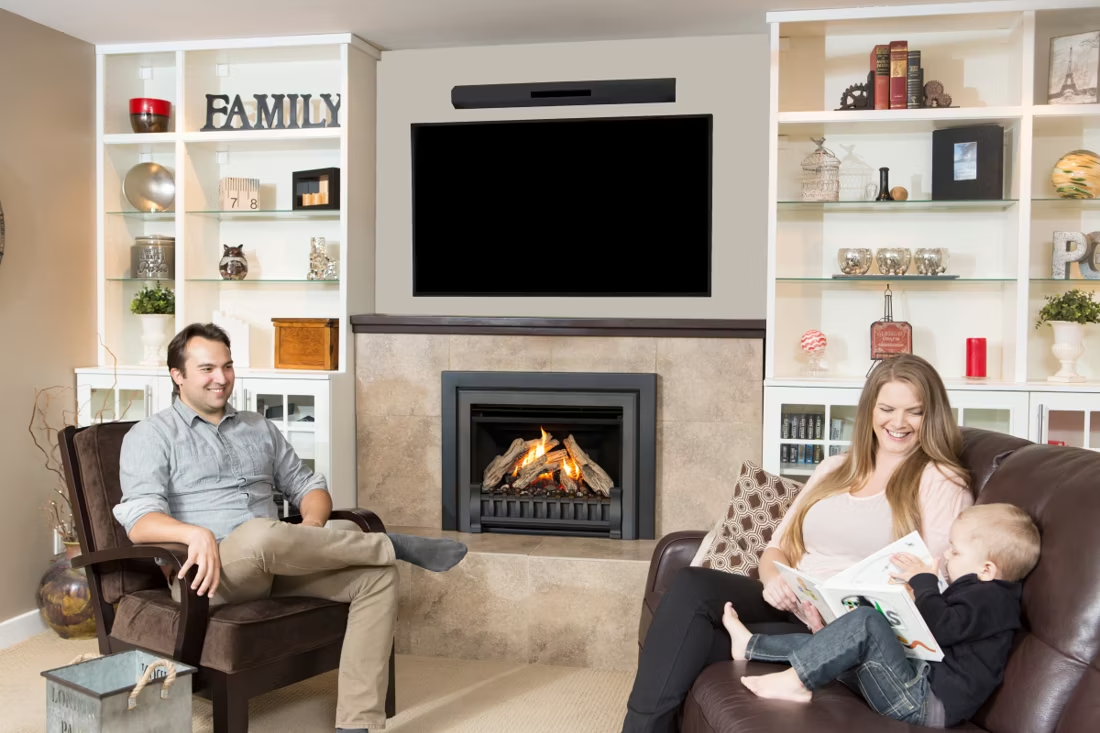
Yes—with an asterisk. Fireplaces are hot and TVs don't like heat. Either put a mantel between them to deflect rising warmth, or choose a fireplace with heat-management technology that creates a cool zone on the wall above—the wall stays around 125 degrees, barely warm, while the room still gets full heat. If you like clean lines and don't want a mantel, heat management is the answer.
Why is a fireplace insert so efficient?
An insert does two things: it seals the chimney completely, so you stop losing air you already paid to heat, and it radiates warmth into the room through the firebox and glass. Most add a heat-exchange fan that pulls cool room air underneath, wraps it around the hot firebox, and pushes it back out warm. Your home is more efficient before you've even lit the first fire.
What is an in-home preview and do I need one?
It's a visit where a hearth professional measures your space, confirms the model you picked actually works in your home, and walks the specs—framing, gas line, venting, finish work—before anything is ordered. Some details you just can't know until you see the house. Never make a down payment without one; it's the single most-skipped step that burns buyers.
Can I install a fireplace myself?
If you're putting a fire in your house on purpose, it's best to work with an expert. Unless you're genuinely experienced in framing, gas line, vent pipe, and the national code on clearances to combustibles, have a professional do it—and ideally the same company that sells you the fireplace, so warranty, service, and liability all live under one roof.
Get your Golden Valley County gas fireplace Project Guide & Parts List.
Tell us about your home and your propane or natural gas setup, and we'll match you with a trusted local dealer and send a free Project Guide & Parts List—the exact parts, vent kit, and recommended installer for your Golden Valley County project.
Find Your Fireplace →