
No chimney. No propane line. Just heat that works in Dunn County's brutal winters.
For farmhouses, oil-patch rentals, and modular homes scattered across Dunn County, an electric fireplace is the simplest thing to install and the safest thing to hand off to a renter. Find the right unit and get matched with a local dealer who can wire it in correctly.
Every Project Starts From One of These Five Situations
The easiest heat source in a county this spread out.
Dunn County is home to just 1,666 people spread across a lot of western North Dakota—Killdeer, Dunn Center, Manning, and Halliday, plus the ranches and Bakken oil-patch housing in between. Zone 6A winters here mean long stretches below zero and wind that makes any drafty old farmhouse feel colder than the thermometer says. Most homes run on propane or a wood stove as primary heat, and that's not changing—but electric fireplaces have carved out a real role as supplemental warmth in a living room, a finished basement, or a bedroom in one of the modular homes that went up during the oil boom around Killdeer.
Electric is the one fuel on this page that doesn't touch your chimney, your propane tank, or your wood supply. There's no venting to size, no permit for a plug-in unit, and no combustion—which matters in a county with no listed air quality concerns and no interest in adding any. Power comes through rural electric cooperatives serving the area, and while the grid is generally solid outside of ice storms and blizzards, an electric fireplace should be treated as a supplement, not a substitute for whatever's keeping your pipes from freezing when the lines go down.
Three steps. No salesperson until you're ready.
Tell us about your project
Your zip code, your situation, and the fuel you're leaning toward—or let the answers point you to one.
See what's actually available
The brands dealers within 100 miles genuinely carry—real options, never a catalog mirage.
Get your dealer & Project Guide
A trusted local dealer, plus the free Project Guide & Parts List that names every component of the job.
Frequently Asked Questions
How much does an electric fireplace installation cost in Dunn County?
A plug-in electric fireplace or stove-style heater runs $150 to $600 including delivery—no electrician needed, just a standard outlet. A wall-mounted linear unit or a built-in that requires a dedicated circuit typically runs $1,000 to $3,000 once you factor in the unit, a licensed electrician for the wiring, and any wall framing or trim work. Retrofitting an electric insert into an existing masonry fireplace in one of Dunn County's older farmhouses usually lands in the middle of that range, since it's mostly a drop-in job with an outlet extension.
Will an electric fireplace actually heat a room in a Dunn County winter?
It'll take the edge off, but be realistic about what it's for. Most electric fireplace inserts and heaters are rated around 1,500 watts, roughly 5,000 BTU—enough to warm a single room or supplement a furnace, not enough to carry a whole house through a Zone 6A cold snap on its own. For the coldest stretches of a Dunn County winter, treat the electric unit as zone heat for the room you're actually sitting in, with propane or a wood stove doing the heavy lifting for the rest of the house.
Do I need a permit to install an electric fireplace in Dunn County?
A plug-in unit needs no permit—it's an appliance, not construction. A built-in unit that involves cutting into a wall, running a new circuit, or altering framing typically needs an electrical permit, and depending on whether you're inside Killdeer's city limits or out in unincorporated Dunn County, that permit goes through slightly different channels. Any local dealer handling a built-in install should be able to tell you exactly which office to call and usually pulls the permit as part of the job.
What's the difference between an electric fireplace, insert, and heater?
A freestanding electric stove or heater sits on the floor and plugs in anywhere—the most common choice for a rental or a room without an existing fireplace. An electric insert is built to slide into an existing masonry fireplace opening, which is common in Dunn County's older farmhouses that originally burned wood. A wall-mounted linear electric fireplace is the flattest option, usually recessed or surface-mounted for a modern look in a newer build or one of the manufactured homes around Killdeer. All three run on standard household voltage; only the larger built-ins typically need a dedicated 20-amp circuit.
Will my electric fireplace work during a power outage?
No—and this matters more in Dunn County than most places, because ice storms and blizzards can knock out rural power lines for hours at a time. An electric fireplace goes dark the moment the grid does. If you're relying on it as a real heat source rather than pure ambiance, keep a propane heater or a wood stove as your actual outage backup—that's the honest tradeoff for a heat source with no venting, no fuel storage, and no combustion byproducts to worry about.
What's the best type of electric fireplace for a Dunn County home?
For older farmhouses around Manning or Dunn Center with an existing masonry fireplace that's no longer in regular use, an electric insert is a clean way to get instant heat and glow back out of that opening without touching the chimney. For the modular and manufactured homes common in Killdeer's oil-patch housing stock, a wall-mounted linear unit is usually the better fit—low profile, easy to wire during a remodel, and nothing to vent through a wall built for minimal penetrations. A local dealer can walk your specific layout and tell you which makes more sense.
What does it cost to run an electric fireplace in Dunn County?
Most units run around 1,500 watts on the heat setting. At typical rural electric cooperative rates in this part of North Dakota—roughly 10 to 12 cents per kilowatt-hour—that works out to about 15 to 18 cents an hour of heater use, closer to a penny or two an hour if you're just running the flame effect without heat. Running one for a few hours a night through a Dunn County winter adds up to a modest line item, not a significant one, especially compared to keeping a whole house on electric heat.
Electric vs. wood—which makes more sense in Dunn County?
Wood is the resilience play: oak, cottonwood, and ash are all available along the river bottoms in and around the county, a wood stove keeps burning when the power's out, and plenty of Dunn County households already have the setup and the habit. Electric is the convenience play: no cutting, no ash, no chimney to maintain, and it's the safer, simpler choice for a rental property or a bedroom where you just want reliable warmth at the flip of a switch. A lot of local homes run both—wood or propane as the real heat source, electric for the room where convenience matters most.
Electric vs. propane—which fuel should I pick for a new fireplace?
Propane is the standard heating fuel for most homes out here and a propane fireplace can genuinely carry a room through a cold snap with real BTU output, even during a power outage if it's set up right. Electric can't compete on raw heat output or outage resilience, but it wins on simplicity—no tank, no gas line, no combustion venting, and a much lower installed cost for a plug-in unit. If you already have a propane tank and lines run to the house, adding a propane fireplace is often the better long-term heat investment; if you just want ambiance and a little supplemental warmth in a specific room without touching your fuel setup, electric is the easier yes.
Does an electric fireplace need a vent or chimney?
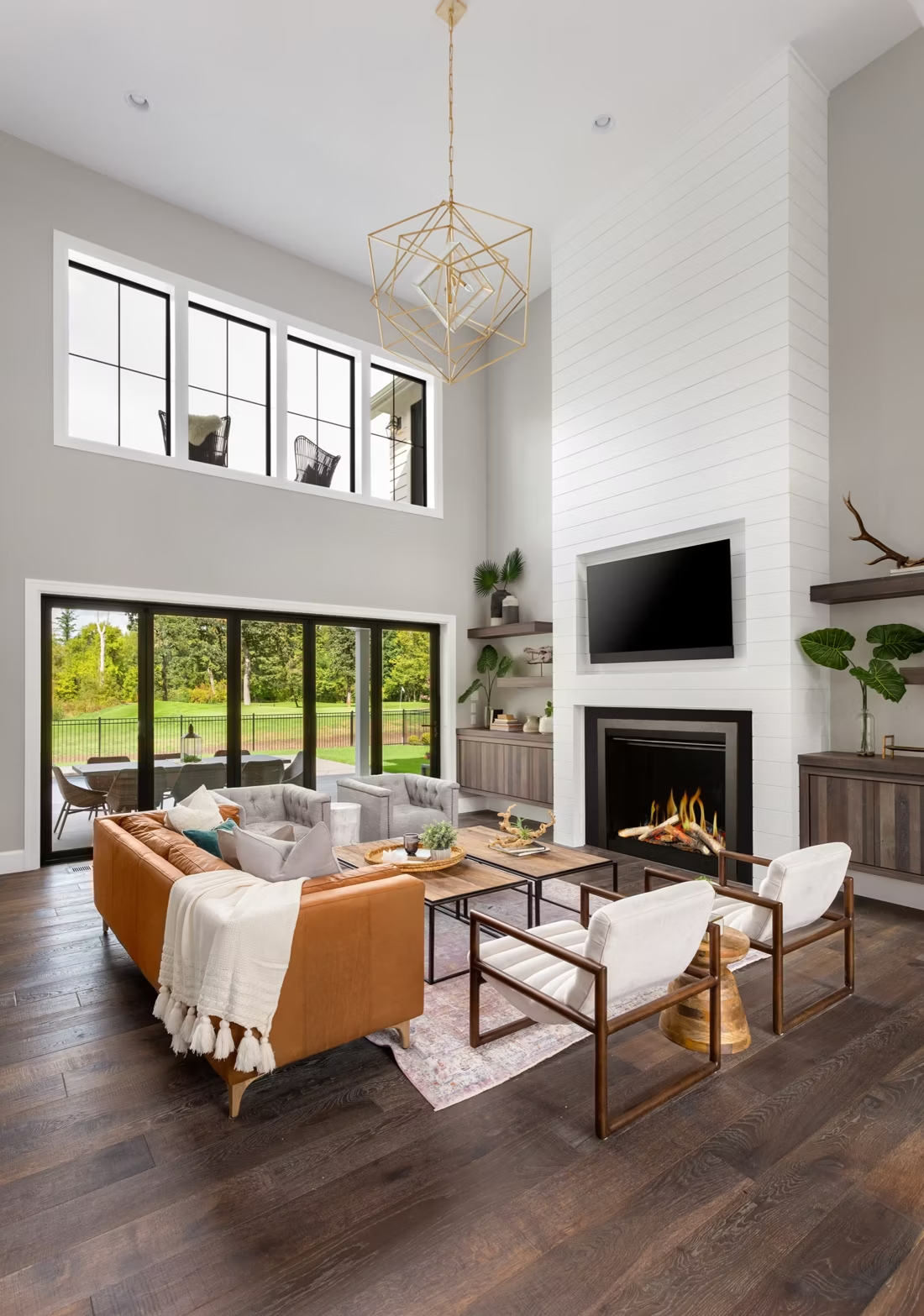
No—that's its superpower. An electric fireplace needs a wall and an outlet, period. No vent pipe, no gas line, no clearances to design around, which is why it works in bedrooms, offices, apartments, and walls where venting a gas or wood unit would be impractical or impossible. Installation is typically the simplest and least expensive of any fireplace type.
Can I put a TV above my fireplace?
Yes—with an asterisk. Fireplaces are hot and TVs don't like heat. Either put a mantel between them to deflect rising warmth, or choose a fireplace with heat-management technology that creates a cool zone on the wall above—the wall stays around 125 degrees, barely warm, while the room still gets full heat. If you like clean lines and don't want a mantel, heat management is the answer.
How much should I budget for a fireplace?
For an average home—covering the fireplace, the vent pipe, and basic installation—a budget between $3,900 and $5,500 gives you a lot of options across wood, gas, and pellet. By the time you add finish work, gas line, and electrical, the average complete installation lands between $5,000 and $12,000 all-in. In a remodel or new build, a good rule is to put about 2.5% of the total project cost toward the fireplace.
Can I install a fireplace myself?
If you're putting a fire in your house on purpose, it's best to work with an expert. Unless you're genuinely experienced in framing, gas line, vent pipe, and the national code on clearances to combustibles, have a professional do it—and ideally the same company that sells you the fireplace, so warranty, service, and liability all live under one roof.
Find your electric fireplace in Dunn County.
Tell us about your home and we'll match you with a trusted local dealer and send over a free Project Guide & Parts List—the right unit, the wiring it needs, and what it'll take to get it installed correctly.
Find Your Fireplace →