
Gas heat that fits Yadkin County's mild Piedmont winters.
From Yadkinville to the vineyards and farmland along the Yadkin River, homeowners across the county are turning to gas for instant, low-maintenance heat. Find the right unit and get matched with a trusted local dealer.
Every Project Starts From One of These Five Situations
Convenient heat for a county built on vineyards and farmland.
Yadkin County sits in the North Carolina Piedmont, climate zone 4A, with a moderate winter heating load and winter lows averaging 25°F—nowhere near the brutal stretch a place like Buffalo, NY sees with a heating season nearly twice as demanding, but cold enough that homes across Yadkinville, East Bend, and Boonville run the furnace regularly from December through February. With just under 8,000 residents spread across farmland, working vineyards, and small towns, a lot of the county's housing stock is older, single-family homes with an existing fireplace that's rarely used because tending a wood fire on a Tuesday night isn't practical.
Natural gas service in Yadkin County is limited and tends to cluster closer to Yadkinville; most rural homes and farms throughout the county rely on propane, delivered by regional suppliers serving the broader Yadkin Valley. Either fuel source works for a modern gas fireplace or insert—a local dealer will configure the unit for whichever you have. The appeal is the same either way: flip a switch and get real heat, no wood splitting, no ash, and (with the right ignition system) a fireplace that still works when a Piedmont ice storm knocks out power.
Three steps. No salesperson until you're ready.
Tell us about your project
Your zip code, your situation, and the fuel you're leaning toward—or let the answers point you to one.
See what's actually available
The brands dealers within 100 miles genuinely carry—real options, never a catalog mirage.
Get your dealer & Project Guide
A trusted local dealer, plus the free Project Guide & Parts List that names every component of the job.
Frequently Asked Questions
How much does a gas fireplace installation cost in Yadkin County?
Most gas fireplace and insert installations in Yadkin County run roughly $3,500 to $9,000, depending on the unit, whether you're converting an existing wood fireplace or building new, and whether a gas line needs to be run or extended. A direct-vent insert dropped into an existing masonry fireplace with gas already nearby sits toward the low end. A new built-in unit in a room without existing venting or gas service—including a propane tank setup for rural properties outside natural gas range—runs higher. A local dealer will give you a firm number after seeing your chimney or wall situation in person.
Can I convert my existing wood fireplace to gas?
Yes, and it's one of the most common requests from Yadkin County homeowners with an older fireplace that mostly sits unused. A gas insert typically slides into your existing masonry opening with a stainless liner run up the chimney for venting. If you're on propane—common outside the Yadkinville area—the installer sets up the correct regulator and orifice for that fuel; if you have natural gas nearby, that's usually the simpler and cheaper route. Either way, you keep the look of your existing hearth and gain instant, thermostat-controlled heat without splitting or hauling wood.
Do I need natural gas, or can I use propane?
Propane is the more common choice for most of Yadkin County, since natural gas lines are concentrated closer to Yadkinville and don't reach most of the county's farms and rural properties. If you already have a propane tank for a water heater or range, adding a fireplace is usually a straightforward tap-in. If you don't have gas service of any kind, a new or exchange propane tank is a normal part of the install. Nearly every gas fireplace on the market today can be set up for either fuel—your dealer just configures the orifice and regulator to match what you have.
Will my gas fireplace work during a power outage?
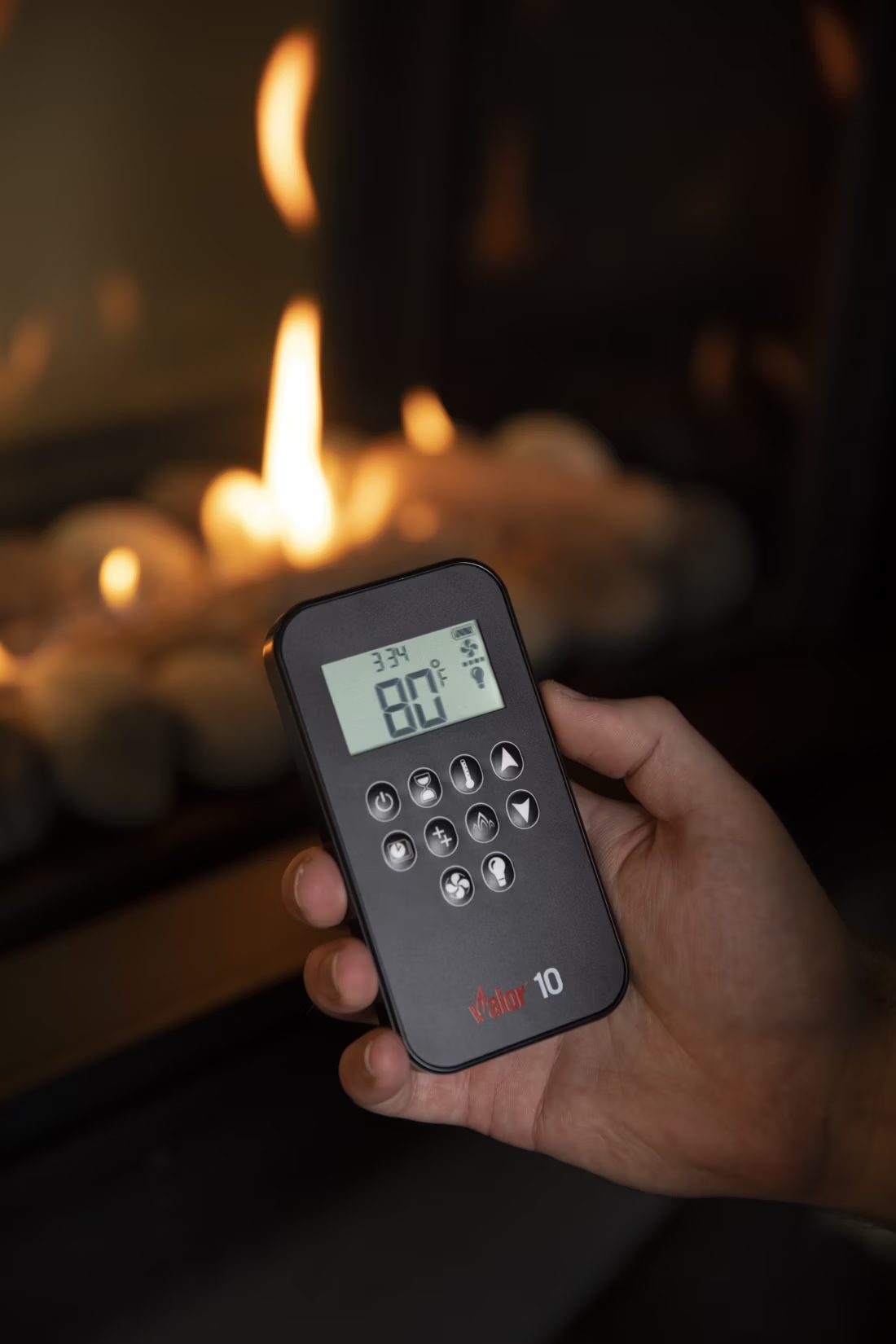
Most will, as long as you pick the right ignition system. Units with IPI (intermittent pilot ignition) run on a small battery backup that kicks in automatically when the power goes out, so the fireplace still lights on demand. Valor fireplaces skip the battery question entirely—their pilot generates its own electricity through the thermocouple, so there's nothing to remember or replace. For Yadkin County, where ice storms and downed lines during Piedmont winter weather can cut power for a day or more, that reliability matters more than it might in a milder climate. Ask about the ignition system specifically when comparing units.
What's the difference between a gas fireplace, gas insert, and gas stove?
A gas fireplace is a fully built-in unit framed into a wall—the right call for new construction or a remodel without an existing hearth. A gas insert is built to drop into an existing masonry fireplace opening, using the chimney as a venting path while sealing off the old open-hearth inefficiency. A gas stove is freestanding, sitting on the floor like a wood stove but running on gas or propane, and works well in a room that has no existing fireplace at all. Given how much of Yadkin County's housing stock has an older wood-burning fireplace already in place, an insert is usually the most cost-effective upgrade.
Do I need a permit to install a gas fireplace in Yadkin County?
Yes—a building permit and a gas permit are both typically required for a new gas fireplace or insert installation through Yadkin County Building Inspections. The gas line work needs a licensed gas-fitter, which is part of why it's worth using an established local hearth dealer rather than a general handyman: they coordinate the gas hookup, venting, and inspection sign-off as one job instead of leaving you to chase down separate trades.
What's the difference between vented and vent-free gas fireplaces?
Vented (direct-vent) gas fireplaces pull combustion air from outside and exhaust the byproducts back outside through a sealed pipe—they're the cleanest, safest option and the standard recommendation almost everywhere. Vent-free units burn gas directly into the room with no outside venting; they're legal in North Carolina but come with strict room-size and ventilation requirements, plus an oxygen depletion sensor as a safety cutoff. For Yadkin County homes, direct-vent units are by far the more common install and the one most local dealers will steer you toward, since they deliver real heat without any tradeoff on indoor air quality.
How often should my gas fireplace be serviced?
Plan on an annual inspection, ideally before the first cold snap of the season. A technician checks the burner, pilot assembly, venting, and gas connections, and cleans the glass and interior—a much lighter job than sweeping a wood chimney, but still important for safe operation. Most local gas appliance techs charge in the $150 to $200 range for a standard annual visit.
Gas vs. wood—which is right for my home?
Yadkin County has no shortage of good local firewood—oak, hickory, maple, and pine are all common on county land and farm woodlots—so wood remains a practical, low-cost option for anyone willing to split and stack it. Gas wins on convenience: no wood handling, consistent heat at the flip of a switch, and a cleaner look without soot or ash. For a lot of homeowners here, the old wood fireplace becomes the gas insert for everyday living-room use, while a separate wood stove or outdoor setup stays around for backup heat or weekend use. Either way, a local dealer can walk you through what fits your specific fireplace opening and fuel access.
Can I put a TV above my fireplace?
Yes—with an asterisk. Fireplaces are hot and TVs don't like heat. Either put a mantel between them to deflect rising warmth, or choose a fireplace with heat-management technology that creates a cool zone on the wall above—the wall stays around 125 degrees, barely warm, while the room still gets full heat. If you like clean lines and don't want a mantel, heat management is the answer.
What do I measure to size a fireplace insert?
Four numbers tell you what fits: the front width, the front height, the back width, and the overall depth of your existing fireplace opening. Grab a tape measure, jot those down, and snap a photo of the wall—those two things do more to move your project forward than anything else you can do today.
Does a fireplace add value to my home?
On average, a fireplace adds back to the home about the same amount you spent installing it. Add the monthly savings from heating the rooms you actually use instead of the whole house—often hundreds of dollars a year—and the value case is strong before you even count what a fire does for how your family uses the room.
How much should I budget for a fireplace?
For an average home—covering the fireplace, the vent pipe, and basic installation—a budget between $3,900 and $5,500 gives you a lot of options across wood, gas, and pellet. By the time you add finish work, gas line, and electrical, the average complete installation lands between $5,000 and $12,000 all-in. In a remodel or new build, a good rule is to put about 2.5% of the total project cost toward the fireplace.
Find your gas fireplace in Yadkin County.
Tell us a bit about your home and fuel access, and we'll match you with a trusted local dealer and a free Project Guide & Parts List—the exact parts, vent kit, and recommended installer for your Yadkin County gas project.
Find Your Fireplace →