
Instant ambiance for Wilson County's short, mild winters.
With only 3,062 heating degree days and winter lows averaging 33°F, Wilson County doesn't need a wood-burning system working overtime—it needs clean, no-venting supplemental heat that looks good year-round. I'll match you with a trusted local dealer who knows which electric unit and circuit setup actually fits your home.
Every Project Starts From One of These Five Situations
A short heating season built for supplemental, no-hassle warmth.
Wilson County sits in North Carolina's eastern Coastal Plain, home to about 52,123 people across the city of Wilson and smaller communities like Elm City, Black Creek, Lucama, and Stantonsburg. In climate zone 3A, with 3,062 heating degree days and a winter low average of 33°F, the heating season here is short and mild compared to northern climates—Minneapolis, MN logs more than double Wilson County's heating degree days in a typical year. Most homes rely on heat pumps or gas furnaces for primary heat, which leaves electric fireplaces to do exactly what they're best at: adding real, controllable warmth and a fire-like look to a den, bedroom, or sunroom without a chimney, a gas line, or anything to vent.
Oak, hickory, maple, and pine are the wood species you'll find in Wilson County's older stands and firewood lots, but wood-burning appliances aren't a growth category here—the mild climate and lack of any air quality restrictions simply don't create the demand you'd see farther north. That absence of burn-ban complexity works in electric's favor: a plug-in unit needs no permit at all, and even a built-in wall insert with a dedicated 20-amp circuit is a straightforward job for a licensed electrician under Wilson Energy's service territory or Duke Energy Progress in the county's outlying areas. For downtown Wilson's older homes with an existing but unused masonry fireplace, an electric insert is also a common way to get the look back without touching the chimney.
Three steps. No salesperson until you're ready.
Tell us about your project
Your zip code, your situation, and the fuel you're leaning toward—or let the answers point you to one.
See what's actually available
The brands dealers within 100 miles genuinely carry—real options, never a catalog mirage.
Get your dealer & Project Guide
A trusted local dealer, plus the free Project Guide & Parts List that names every component of the job.
Frequently Asked Questions
How much does an electric fireplace installation cost in Wilson County?
A freestanding or plug-in electric fireplace, including a basic mantel or media console conversion, typically runs $150 to $600 installed, since it plugs into a standard household outlet and needs no electrical work. A built-in wall unit or a recessed insert that requires a dedicated 20-amp circuit, wall framing, and a licensed electrician runs higher—usually $800 to $2,500 depending on wall type and how far the unit sits from the existing panel. Homes in older downtown Wilson neighborhoods converting an existing masonry firebox into an electric insert tend to land in the middle of that range, since there's no chimney work needed, just the insert and a trim kit.
Do I need a permit to install an electric fireplace in Wilson County?
It depends on the unit. A plug-in electric fireplace or insert that runs off an existing outlet generally doesn't require a permit, since no new wiring is involved. A built-in wall unit that needs a new dedicated circuit does require an electrical permit, whether you're inside Wilson city limits (through the City of Wilson's Inspections Department) or in unincorporated Wilson County. Most local dealers coordinate the electrician and the permit as part of the installation, which is worth confirming up front so you're not left scheduling that piece yourself.
Can an electric fireplace heat my whole room, or is it just for looks?
Most electric fireplaces put out real heat—typically 4,600 to 5,000 BTU from a standard 1,500-watt heater element—enough to noticeably warm a bedroom, den, or home office, especially given Wilson County's mild 33°F average winter low. It's not sized to replace your heat pump or furnace as primary heat, and it isn't meant to; think of it as zone heating for the room you're actually sitting in, with the flame effect running independently if you want ambiance without the heater on. For a county where the heating season is genuinely short, that supplemental role covers a lot of ground.
What's the difference between an electric insert, a wall-mount, and a mantel package?
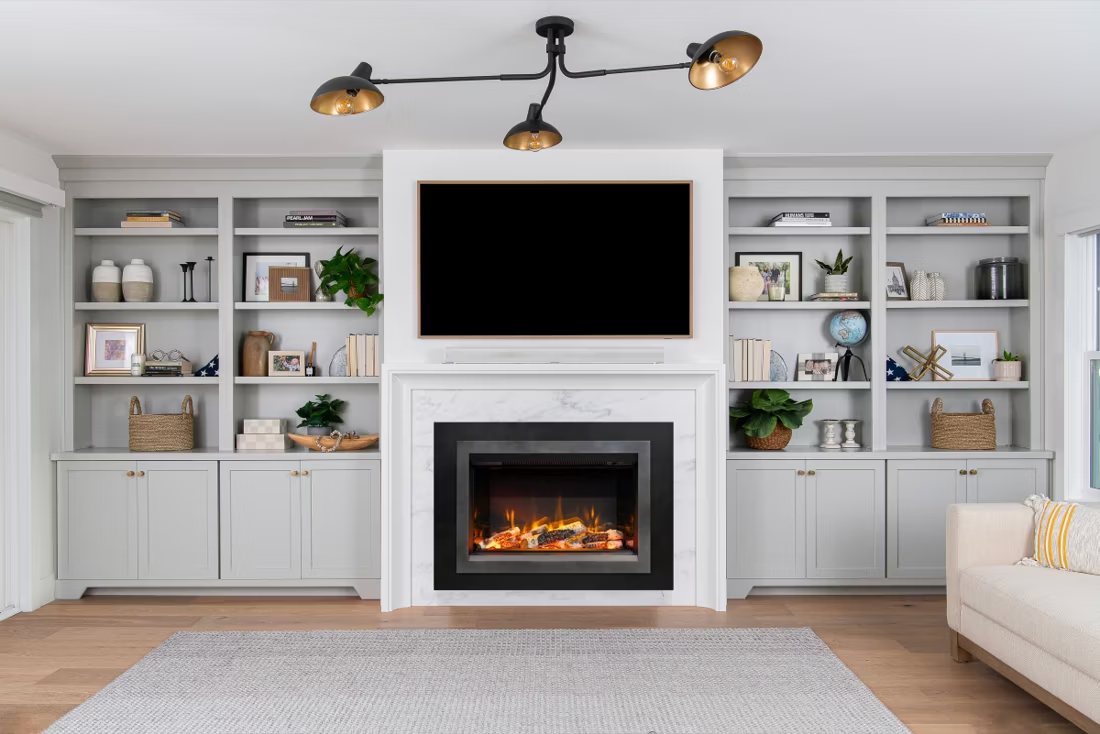
An insert drops into an existing fireplace opening or a framed cavity and is the right call for converting an old wood-burning firebox in an older Wilson home. A wall-mount unit hangs flush or recessed into drywall, similar to mounting a TV, and works well in newer construction or a remodel where you're not tied to an existing opening. A mantel package pairs a freestanding or insert unit with a surrounding cabinet and doesn't require any wall modification at all, making it the easiest option for renters or manufactured homes across the county's rural areas. A local dealer can walk your space and tell you which configuration actually fits the wall and the wiring you have.
Can I convert my old wood fireplace to electric in an older Wilson County home?
Yes, and it's a common project in Wilson's historic downtown neighborhoods where original masonry fireplaces sit unused. An electric insert slides into the existing firebox opening, so you keep the mantel and surround while gaining a fire-like flame effect and supplemental heat with no venting, no chimney liner, and no creosote to manage. Since there's no combustion involved, there's also no need to address the old flue—some homeowners cap it, others leave it as-is purely for looks. Costs generally land at the lower to middle end of the $150–$2,500 range, since chimney work isn't part of the job.
Will running an electric fireplace add much to my Wilson Energy bill?
Not dramatically. A standard 1,500-watt electric fireplace running on high costs roughly 15 to 20 cents per hour at typical Wilson Energy residential rates, so a few hours of evening use over a mild Coastal Plain winter adds up to a modest monthly increase rather than anything close to a heat pump's draw. Most units also let you run the flame effect with the heater off, which uses only a few watts—useful if you want the look on a 60-degree December evening without paying to heat a room that doesn't need it.
Are electric fireplaces a good fit for manufactured or mobile homes in the county?
Yes—electric is generally the most practical fireplace option for the manufactured and mobile homes common across rural Wilson County, from Elm City to Stantonsburg. There's no chimney or venting to add, no combustion air requirement, and no clearance-to-combustible issues the way there are with wood or gas units, which simplifies both the installation and any inspection tied to HUD-code manufactured housing. A plug-in or low-profile wall-mount unit is usually the simplest path, and a local dealer familiar with manufactured home wiring can confirm whether your panel supports a dedicated circuit if you want a built-in unit instead.
How much maintenance does an electric fireplace need?
Very little compared to a wood or gas system—there's no chimney to sweep, no gas line to inspect, and no combustion byproducts to manage. Occasional dusting of the unit and vents, a periodic wipe of the glass front, and replacing the LED light components every several years (most are rated for 20,000+ hours) covers it. Because there's no annual safety inspection requirement the way there is with venting appliances, electric fireplaces tend to be the lowest-upkeep option for Wilson County homeowners who want the look without an ongoing service routine.
Electric vs. gas—which makes more sense for a Wilson County home?
Gas fireplaces put out significantly more heat and can genuinely take the edge off a cold snap, which matters if you're heating a larger living area or want a backup heat source during an ice storm power outage—though a gas unit needs venting and, in most of the county outside Wilson city limits, propane rather than natural gas. Electric fireplaces skip the venting and fuel supply questions entirely, install faster and cheaper, and work in any room with an outlet, but they won't function during a power outage and put out less raw heat. Given Wilson County's short, mild heating season, many homeowners choose electric for secondary rooms—bedrooms, dens, additions—and reserve gas for a main living area where more consistent heat output matters.
Can I put a TV above my fireplace?
Yes—with an asterisk. Fireplaces are hot and TVs don't like heat. Either put a mantel between them to deflect rising warmth, or choose a fireplace with heat-management technology that creates a cool zone on the wall above—the wall stays around 125 degrees, barely warm, while the room still gets full heat. If you like clean lines and don't want a mantel, heat management is the answer.
What fireplace styles should I know before shopping?
Four cover most of the market: screen-front traditional (mesh front, open feel, fits craftsman homes), traditional door set (the classic look you grew up with), modern linear (wide, low, the statement piece for entertaining), and clean face contemporary (no trim—your tile or stone runs right to the fire's edge). Walk in knowing those four terms and you're ahead of most buyers.
How much should I budget for a fireplace?
For an average home—covering the fireplace, the vent pipe, and basic installation—a budget between $3,900 and $5,500 gives you a lot of options across wood, gas, and pellet. By the time you add finish work, gas line, and electrical, the average complete installation lands between $5,000 and $12,000 all-in. In a remodel or new build, a good rule is to put about 2.5% of the total project cost toward the fireplace.
Does a fireplace add value to my home?
On average, a fireplace adds back to the home about the same amount you spent installing it. Add the monthly savings from heating the rooms you actually use instead of the whole house—often hundreds of dollars a year—and the value case is strong before you even count what a fire does for how your family uses the room.
Stove and Fireplace Dealers in Wilson County
Get your free Project Guide & Parts List for an electric fireplace in Wilson County.
Tell me about your room, your wall or existing fireplace opening, and how you want to use it, and I'll match you with a trusted local Wilson County dealer and send a free Project Guide & Parts List—the exact unit, mounting or insert kit, and recommended installer for your electric fireplace project.
Find Your Fireplace →