
Ambiance and easy heat for Wake County's mild winters.
No chimney, no gas line, no venting—just plug-in or hardwired warmth that fits Wendell's short, mild heating season. Find the right unit and connect with a trusted local dealer.
Every Project Starts From One of These Five Situations
A mild climate that favors simple, flexible heat.
Wendell sits in the Piedmont at about 289 feet of elevation, with an average winter low near 31°F and a fairly light overall winter heating load a year—a fraction of what a place like Duluth, MN or Fargo, ND sees in a single season. Most winters here bring a handful of genuinely cold nights rather than months of sustained cold, which changes the math on what kind of hearth appliance actually makes sense. Homeowners in this fast-growing Wake County town generally aren't trying to heat a whole house through a February deep freeze—they want ambiance, a warm focal point in a living room or primary bedroom, and occasional real heat on the coldest nights.
Wendell is served by both Duke Energy Progress and Duke Energy Carolinas depending on which part of town you're in, with residential rates running roughly 13.9 to 15.5 cents per kWh. That matters for electric fireplaces because, unlike wood or gas, there's no fuel to haul or line to run—just a standard outlet or a dedicated 120V/240V circuit. That makes electric units especially popular in Wendell's growing new-construction neighborhoods where builders skip masonry chimneys entirely, as well as in older homes near downtown where adding gas service or a wood-burning flue isn't practical.
Three steps. No salesperson until you're ready.
Tell us about your project
Your zip code, your situation, and the fuel you're leaning toward—or let the answers point you to one.
See what's actually available
The brands dealers within 100 miles genuinely carry—real options, never a catalog mirage.
Get your dealer & Project Guide
A trusted local dealer, plus the free Project Guide & Parts List that names every component of the job.
Frequently Asked Questions
How much does an electric fireplace installation cost in Wendell?
A plug-in electric insert or freestanding unit that uses an existing outlet typically runs $500 to $1,500 installed, including the unit and any surround work. A built-in wall unit or mantel-style fireplace that requires a dedicated 240V circuit, an electrician, and some framing or trim carpentry usually lands between $1,500 and $4,000, depending on the size of the unit and how much finish carpentry is involved. Because there's no venting or chimney to size, electric installs in Wendell are generally the fastest and least invasive of any fuel type—often a one-day job.
Do I need a permit to install an electric fireplace in Wendell?
A simple plug-in unit that draws from an existing outlet typically doesn't require a permit. If your installer is adding a new dedicated circuit or doing any wiring work—common with built-in wall units—that electrical work needs to be pulled through the Town of Wendell's Planning & Inspections Department (or Wake County, depending on your address) and performed by a licensed electrician. Most local dealers coordinate this as part of the installation, so it's rarely something you have to manage yourself.
How much does it cost to run an electric fireplace with Duke Energy rates?
Most electric fireplaces draw about 1,500 watts on the heat setting. At Duke Energy Progress rates (around 15.5 cents per kWh) that's roughly 23 cents an hour to run on full heat; at Duke Energy Carolinas rates (around 13.9 cents per kWh) it's closer to 21 cents an hour. Run it on flame-only mode without heat and the draw drops to under 100 watts—just a few cents an hour—which is how a lot of Wendell homeowners use these units for most of the year: ambiance now, real heat only on the handful of genuinely cold nights.
Electric vs. gas fireplace—which is right for my Wendell home?
Gas fireplaces are common in this part of Wake County and deliver more consistent, higher-output heat—a real option if you're trying to offset a heat pump on a cold January night. But gas requires a line, venting, and a larger installation project. Electric units skip all of that: no gas line, no venting, no combustion byproducts, and they can go almost anywhere with an outlet or a simple circuit. For Wendell's short, mild heating season, electric is usually the lower-cost, lower-hassle choice for supplemental warmth and ambiance, while gas makes more sense as a primary heat source in larger or older homes.
What's the difference between an electric insert, a built-in wall unit, and a freestanding electric fireplace?
An electric insert is sized to fit into an existing masonry or wood-burning fireplace opening—a good option for Wendell's older homes near downtown that have a fireplace but no interest in burning wood. A built-in wall unit is framed into new construction or a remodel, similar to how a TV might be recessed into a wall, and is popular in the town's newer subdivisions. A freestanding unit sits on the floor like furniture, plugs into a standard outlet, and can move with you—the simplest option if you're renting or not ready to commit to a permanent install.
Is an electric fireplace enough heat for a Wendell winter?
For most rooms, yes. With average winter lows around 31°F and only occasional dips into the teens or single digits, a properly sized electric unit (most put out 4,000–5,000 BTUs) can comfortably supplement a room's existing heat pump or furnace. It's not designed to heat an entire house through an extended cold snap the way a wood stove might in a colder climate—but that's rarely the ask here. Most Wendell homeowners are using electric units to take the edge off a chilly living room or bedroom without running the whole-house system harder than it needs to.
Are electric fireplaces safe around kids and pets?
Generally yes, and it's one of the reasons they're popular in family homes around Wendell. Most models use LED flame technology behind cool-touch glass, so there's no open flame, no hot glass surface, and no combustion byproducts to worry about. Some units also let you run the flame effect with the heater off, which is a common setup for families who want the look of a fire without the heat output running constantly. That said, always check the specific model's surface temperature rating if young kids or pets will be near it regularly.
Which utility serves my home in Wendell—does it matter for an electric fireplace?
Wendell is split between Duke Energy Progress and Duke Energy Carolinas depending on where in town you are, and the two carry slightly different residential rates (roughly 15.5 cents vs. 13.9 cents per kWh). It doesn't change how the fireplace installs, but it's worth knowing which utility bills you when you're estimating operating cost—check a recent bill or Duke Energy's utility lookup by address if you're not sure.
Can I put an electric insert into my old wood-burning fireplace?
Yes, and it's a common project for Wendell's older homes, particularly near downtown where masonry fireplaces built decades ago are still common. Wood-burning setups are fairly rare here now—most homeowners aren't cutting or storing oak, hickory, or pine cordwood for daily heat the way you'd see in a colder climate—so converting an unused wood-burning opening to an electric insert is often the simplest way to get a working, attractive fireplace back without dealing with chimney repairs, creosote, or sourcing firewood. A local dealer can confirm your existing opening's dimensions and recommend an insert that fits without any masonry work.
Can I put a TV above my fireplace?
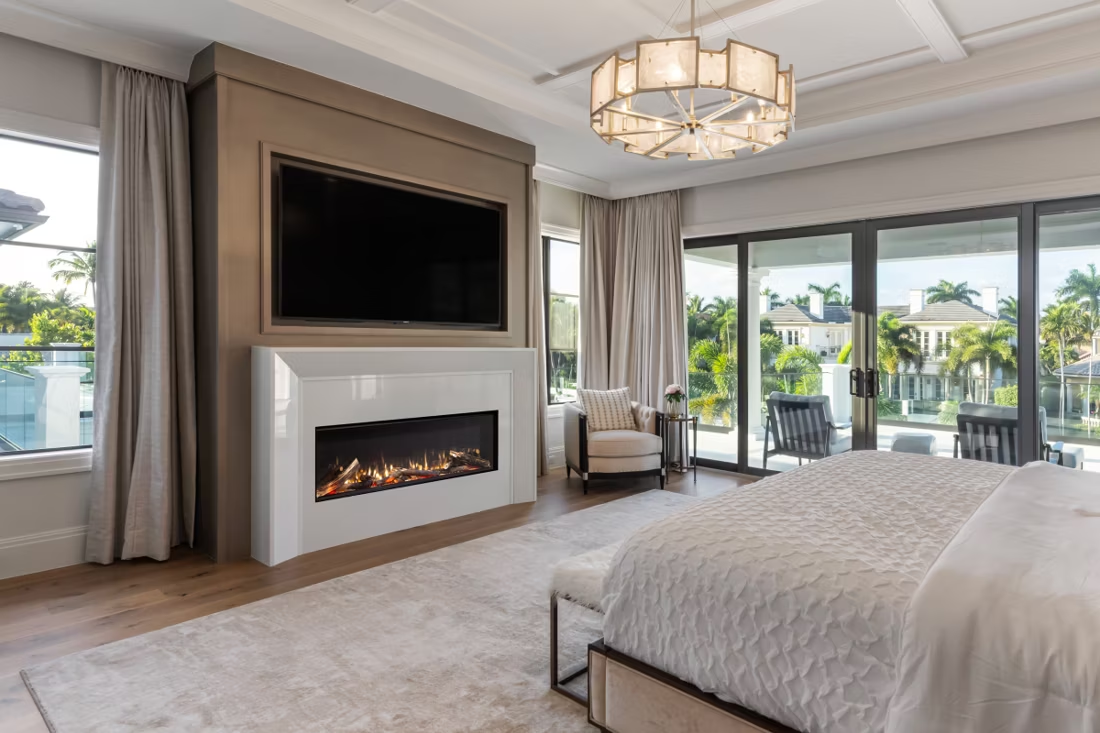
Yes—with an asterisk. Fireplaces are hot and TVs don't like heat. Either put a mantel between them to deflect rising warmth, or choose a fireplace with heat-management technology that creates a cool zone on the wall above—the wall stays around 125 degrees, barely warm, while the room still gets full heat. If you like clean lines and don't want a mantel, heat management is the answer.
Do electric fireplaces actually produce heat?
Yes—most put out around 4,800–5,000 BTUs from a standard outlet, which comfortably warms a bedroom, office, or den as a comfort-zone heater. What they won't do is carry a whole house the way wood, gas, or pellet can. Think of electric as ambiance-first with honest supplemental heat: flames on with no heat in July, flames plus warmth in January.
Can I install a fireplace myself?
If you're putting a fire in your house on purpose, it's best to work with an expert. Unless you're genuinely experienced in framing, gas line, vent pipe, and the national code on clearances to combustibles, have a professional do it—and ideally the same company that sells you the fireplace, so warranty, service, and liability all live under one roof.
Can a fireplace actually lower my heating bill?
Yes—by creating a comfort zone. A furnace heats every square foot of the house just to warm the one room you're in; a gas fireplace on low burns roughly a sixth of the gas a typical furnace does. Set the furnace around 55–60 degrees as a baseline, then heat the rooms your family actually uses. Families who heat this way commonly save $20–$60 a month.
Nearby Dealers
Hearth shops serving Wendell and the surrounding area. Every listing shows whether it is a WhyFire partner, a dealer we have verified as authorized for the brands we recommend, or a local business carrying hearth products. No manufacturer pays for placement. How we verify dealers →
Oak City Fireplace & Outdoor Living
Steve Marcom Services
Viridien Patio + Fireplace
Pro Source Of Raleigh
Fireside Distributors Inc
Smoke Alert
The Fireplace Depot
Parker Gas
Brandco Incorporated
L.g. Jordan Oil & Gas Co.
Home Flame
Electric Service in Wendell
An electric fireplace's heater draws about 1,500 watts—pennies per hour at local rates.
Duke Energy Progress - (Nc)
Duke Energy Carolinas, LLC
Find your electric fireplace in Wendell.
Tell us about your home and we'll match you with a trusted local dealer and send you a free Project Guide & Parts List—the exact parts and recommended installer for your Wendell electric fireplace project.
Find Your Fireplace →