
Gas heat built for Watauga County's Blue Ridge winters.
From Boone to Blowing Rock to Beech Mountain, Watauga County sits high enough that a gas fireplace earns its keep. Find the right unit and get matched with a trusted local dealer.
Every Project Starts From One of These Five Situations
Reliable heat for a county that sits above 3,000 feet.
Watauga County is High Country—Boone sits around 3,333 feet, Beech Mountain climbs past 5,500 feet as one of the highest towns east of the Mississippi, and the terrain between them (Valle Crucis, Vilas, Sugar Grove, Foscoe) rises and falls fast. At 5,688 heating degree days and an average winter low of 22°F, this county runs meaningfully colder than most of North Carolina—not Duluth, Minnesota cold, but cold enough that a fireplace here is doing real heating work from October through April, not just holiday ambiance.
Natural gas service is limited in this part of the mountains—Piedmont Natural Gas reaches parts of the town of Boone, but most of the county, including Blowing Rock, Beech Mountain, and the rural stretches around Valle Crucis and Sugar Grove, runs on propane through regional suppliers. That matters less than you'd think for the fireplace itself: nearly every gas insert or fireplace on the market runs on either fuel with the right orifice setup. Given how much of Watauga County's housing stock is second homes and vacation rentals near the ski resorts (Beech Mountain, Sugar Mountain, Appalachian Ski Mtn), gas fireplaces get an extra vote here—owners and renters get instant heat without anyone on-site to tend a fire, and battery-backup units keep working through the ice storms that periodically knock out power at elevation.
Three steps. No salesperson until you're ready.
Tell us about your project
Your zip code, your situation, and the fuel you're leaning toward—or let the answers point you to one.
See what's actually available
The brands dealers within 100 miles genuinely carry—real options, never a catalog mirage.
Get your dealer & Project Guide
A trusted local dealer, plus the free Project Guide & Parts List that names every component of the job.
Frequently Asked Questions
How much does a gas fireplace installation cost in Watauga County?
Most gas fireplace or insert installations in Watauga County run $4,000 to $10,000, depending on the unit, whether you're running natural gas or propane, and how much venting or gas line work is involved. A direct-vent insert into an existing masonry fireplace at a Boone-area home already plumbed for gas sits toward the low end. New construction, a fresh propane tank installation, or a build on Beech Mountain or up a steep gravel drive near Seven Devils—where access adds time for the crew—pushes toward the higher end. Get a firm number from a local installer after they've seen the site.
Can I convert my existing wood fireplace to gas?
Yes, and it's a common project in Watauga County's older mountain homes, many of which were built around a masonry fireplace that burned local oak or hickory for decades. A gas insert typically slides into that existing firebox and uses the current chimney as its venting path with a stainless liner, which keeps costs down compared to a full rebuild. Expect $4,500 to $9,000 for the conversion, with propane conversions running slightly higher if a new tank or regulator setup is needed. The masonry surround stays as-is; only the firebox changes.
Do I need natural gas, or should I plan on propane?
For most of Watauga County, plan on propane. Piedmont Natural Gas has a limited service footprint within the town of Boone, but Blowing Rock, Beech Mountain, Valle Crucis, Vilas, and the rural county beyond mostly rely on propane delivered by regional suppliers. If you're inside Boone city limits and already have a gas water heater or furnace, check with Piedmont before assuming you need a tank. Everywhere else, a propane tank—buried, above-ground, or a smaller portable cylinder for a single fireplace—is the standard setup, and any local dealer can size one for your unit.
Will my gas fireplace still work if the power goes out?
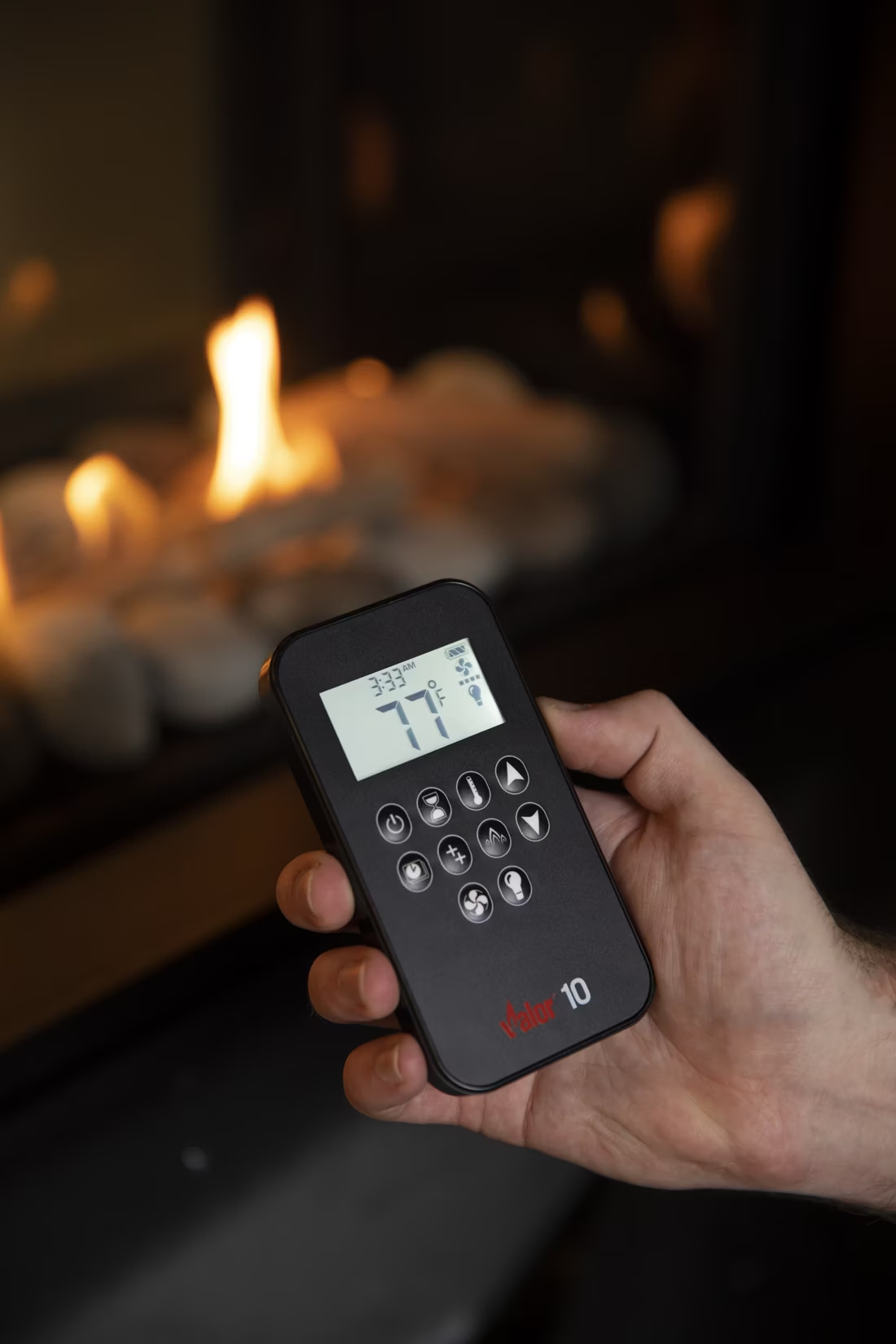
Most modern gas fireplaces will, which matters here—ice storms and high-elevation winter weather knock out power in Watauga County more often than in the Piedmont. Units with IPI (intermittent pilot ignition) run on AA batteries as backup and light on demand even with the grid down; you just need to keep fresh batteries in the unit. Valor fireplaces take a different approach—their pilot generates its own electricity through the thermocouple, so there's no battery to remember at all. For a second home on Beech Mountain that sits empty for stretches, that self-powering design is worth asking your dealer about specifically.
What's the difference between a gas fireplace, gas insert, and gas stove?
A gas fireplace is a built-in unit framed into a wall—the right call for new construction or a remodel without an existing chimney. A gas insert drops into an existing masonry firebox and uses the current chimney to vent, which fits the many older homes around Boone and Valle Crucis that already have a fireplace. A gas stove is freestanding, sits on its own hearth pad, and can go almost anywhere with the right clearances—a good option for a cabin or addition that never had a fireplace at all. Most Watauga County retrofits are inserts; new builds lean toward built-in fireplaces.
Do I need a permit to install a gas fireplace in Watauga County?
Yes—Watauga County Planning & Inspections requires a building permit for the installation and a separate permit for any gas line work, which has to be done by a licensed gas-fitter regardless of whether you're on natural gas or propane. Most hearth dealers who sell and install fireplaces in the county handle this paperwork as part of the job, coordinating the gas line, venting, and inspection together rather than leaving you to manage separate trades.
What's the difference between vented and vent-free gas fireplaces, and does elevation matter?
Vented (direct-vent) fireplaces draw combustion air from outside and exhaust it back outside through sealed venting—they're the cleanest and most universally code-compliant option. Vent-free units burn directly into the room and rely on an oxygen depletion sensor (ODS) to shut off before oxygen levels drop too far; they're legal in North Carolina but come with strict room-sizing rules. At Watauga County's elevation—Boone around 3,300 feet, Beech Mountain over 5,000—ambient oxygen levels are already lower than at sea level, which is a real factor in how consistently an ODS performs. For that reason, most local dealers steer high-elevation customers toward direct-vent units rather than vent-free, especially for primary living spaces.
How often should a gas fireplace be serviced?
Plan on an annual inspection—a technician checks the burner, pilot, venting, and gas connections, and cleans the glass and interior. It's a lighter lift than wood-stove chimney sweeping but just as important, particularly for propane units where regulator and line integrity matter. Local gas appliance service providers in the Boone area typically charge $150 to $250 for this visit, usually scheduled in late summer before the unit sees heavy fall and winter use.
Gas vs. wood—which makes more sense in Watauga County?
Wood has deep roots here—oak, hickory, maple, and pine are all common locally, and cutting permits through the Nantahala-Pisgah National Forests run about $20 per cord during the May-to-October season, which keeps fuel costs low for anyone willing to cut and split their own. Wood also works without power, a real plus during mountain ice storms. Gas wins on convenience: instant heat with no hauling, no ash, and no one needing to be on-site to tend a fire—which lines up well with how many Watauga County properties function as vacation rentals or seasonal second homes. Plenty of full-time residents keep both: wood for backup heat and atmosphere, gas for the daily, no-fuss fire in the main living space.
Is my gas fireplace wasting gas?
If it was installed more than 15 years ago, probably. Older gas fireplaces keep a standing pilot light burning all the time, and that little flame can cost a couple hundred dollars a year. Newer models use pilot-on-demand ignition—the pilot lights only when you use the fireplace and goes out when you turn it off.
Are new gas fireplaces really better than old ones?
Two ways, and they're both big. Looks: modern gas fireplaces are realistic enough that it's hard to believe they aren't burning wood. Cost: old units burn a standing pilot year-round (roughly $200 a year), while new ones use pilot-on-demand ignition and modern burners. Add remote controls and thermostat operation, and the day-to-day experience isn't close.
Does a fireplace add value to my home?
On average, a fireplace adds back to the home about the same amount you spent installing it. Add the monthly savings from heating the rooms you actually use instead of the whole house—often hundreds of dollars a year—and the value case is strong before you even count what a fire does for how your family uses the room.
Can I install a fireplace myself?
If you're putting a fire in your house on purpose, it's best to work with an expert. Unless you're genuinely experienced in framing, gas line, vent pipe, and the national code on clearances to combustibles, have a professional do it—and ideally the same company that sells you the fireplace, so warranty, service, and liability all live under one roof.
Stove and Fireplace Dealers in Watauga County
Find your gas fireplace in Watauga County.
Tell us about your home and we'll put together a free Project Guide & Parts List for your Watauga County gas project—the right unit, the exact parts including the vent kit, and a trusted local dealer to install it.
Find Your Fireplace →