
Gas warmth built for Union County's mild winters.
From Monroe to Waxhaw to Indian Trail, gas fireplaces give Union County homes instant comfort and backup heat without the split wood. Find the right unit and connect with a trusted local dealer.
Every Project Starts From One of These Five Situations
Comfort heat for Charlotte's fastest-growing suburb.
Union County sits in USDA climate zone 3A, with an average winter low around 32°F and a mild, short heating season—a fraction of what a mountain county like Ashe or Watauga sees, and nowhere near the cold-climate demands of a place like Bozeman or Duluth. That mild profile, spread across Monroe, Waxhaw, Indian Trail, Weddington, Stallings, and the county's fast-growing subdivisions, means most homes don't need a fireplace to survive winter. What they want is comfort heat: something that takes the chill off a 35-degree morning, warms up a great room in the evening, and looks good doing it in a newer build.
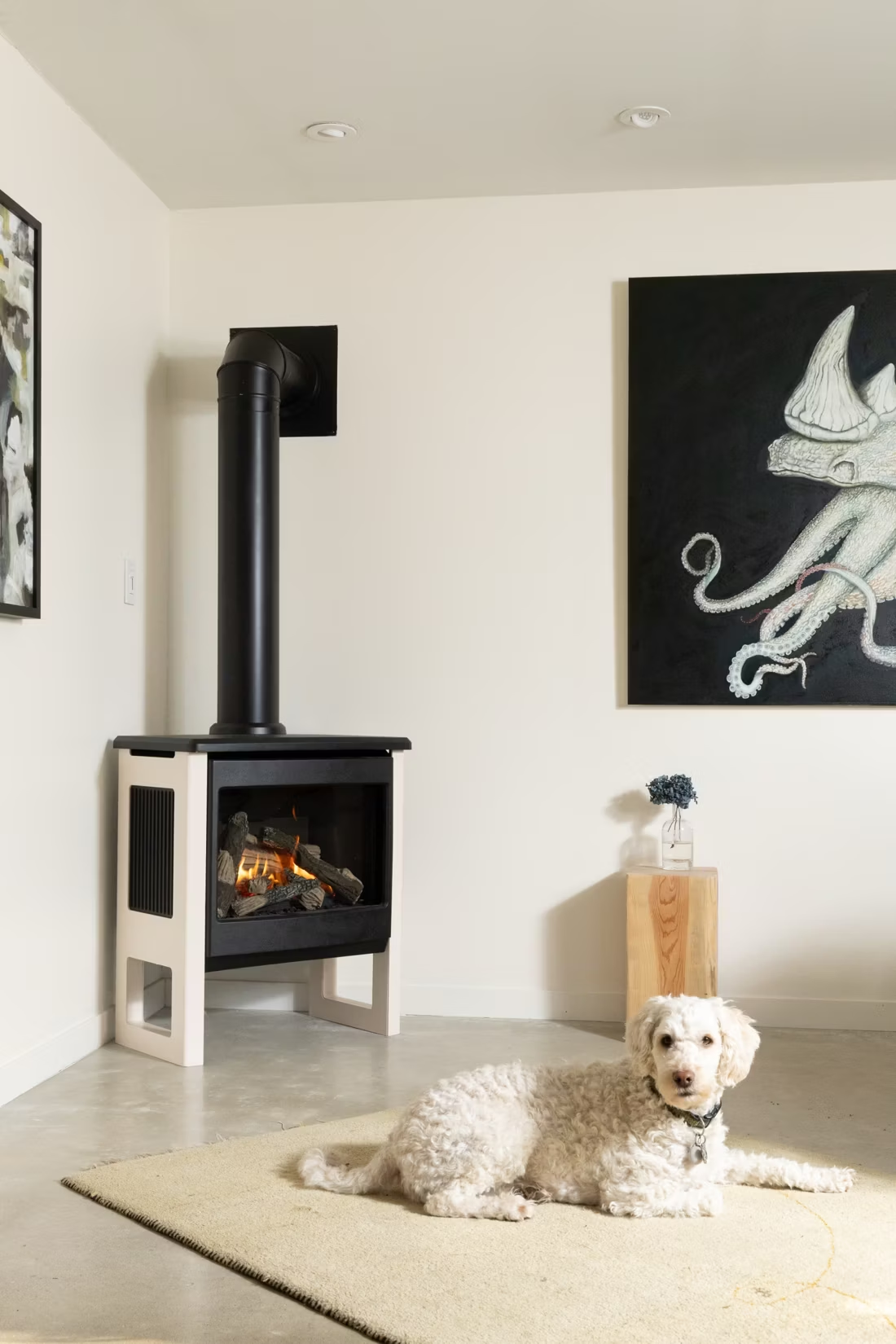
That's exactly where gas fireplaces fit. Piedmont Natural Gas serves most of the county's incorporated towns, so homes in and around Monroe, Waxhaw, and Indian Trail typically have a gas line already run to the house. Out in the more rural stretches—Lanes Creek, New Salem, Sandy Ridge, and other unincorporated areas—propane is the standard fuel, delivered and stored in a tank on the property. Either way, a direct-vent gas fireplace gives you heat at the flip of a switch, no ash or creosote to manage, and in Union County's occasional ice storms, a real source of heat if the power grid takes a hit. It's also a fixture of new construction here—builders across the county's newer neighborhoods routinely spec gas fireplaces as a standard feature in great rooms.
Three steps. No salesperson until you're ready.
Tell us about your project
Your zip code, your situation, and the fuel you're leaning toward—or let the answers point you to one.
See what's actually available
The brands dealers within 100 miles genuinely carry—real options, never a catalog mirage.
Get your dealer & Project Guide
A trusted local dealer, plus the free Project Guide & Parts List that names every component of the job.
Frequently Asked Questions
How much does a gas fireplace installation cost in Union County?
Most gas fireplace installations in Union County run between $4,000 and $9,500, depending on the unit, the venting path, and whether new gas line work is required. A direct-vent gas insert going into an existing masonry fireplace in an older Monroe or Waxhaw home—where a gas line often already reaches the house—tends to land on the lower end. New construction installs, or homes needing a fresh gas line run out to a great room or a propane tank set for a rural property near Lanes Creek or New Salem, run higher. A local dealer will give you a firm number after seeing the space in person.
Can I convert my existing wood fireplace to gas?
Yes, and it's a common project in Union County's older housing stock, particularly the brick ranch and colonial homes scattered through Monroe's historic neighborhoods and Waxhaw's older streets. A gas insert typically drops into the existing masonry firebox with a stainless liner run up the current chimney, so you keep the look of the fireplace while gaining real, consistent heat output. Expect $4,000 to $8,500 depending on whether the home is already on natural gas through Piedmont Natural Gas or needs a propane line and tank setup instead.
Do I need natural gas, or can I use propane?
Either works, and which one you use mostly comes down to where in Union County you live. Piedmont Natural Gas provides service through most of Monroe, Waxhaw, Indian Trail, Stallings, and Weddington, so homes in those towns can usually tie into an existing gas line. In the unincorporated, more rural parts of the county—around Lanes Creek, New Salem, or Sandy Ridge—propane is the standard, supplied by a regional propane company with a tank installed on the property. Nearly every gas fireplace model on the market can be configured for either fuel; your installer sets the correct orifice and regulator for whichever you have.
Will my gas fireplace work during a power outage?
Most modern gas fireplaces will, which matters in Union County given how ice storms and severe thunderstorms periodically knock out power across the Piedmont. Units with IPI (intermittent pilot ignition) run on a battery backup—typically AA batteries built into the unit—that takes over automatically when the power drops, so the fireplace still lights on demand. Valor fireplaces handle it differently: their on-demand pilot generates its own electricity through the thermocouple, so there's no battery to remember to replace. Either way, ask your local dealer which ignition system a given model uses before you buy.
What's the difference between a gas fireplace, gas insert, and gas stove?
A gas fireplace is a fully built-in unit, framed into a wall—the common choice in Union County's new-construction great rooms. A gas insert is sized to slide into an existing masonry firebox, turning an old wood-burning fireplace into a sealed, efficient gas unit that vents through the existing chimney. A gas stove is a freestanding cabinet-style unit that sits on the floor, useful for a room without any existing fireplace or chimney. For the county's many pre-2000 homes with an existing masonry fireplace, an insert is usually the simplest upgrade; new builds are typically better suited to a built-in fireplace.
Do I need a permit to install a gas fireplace in Union County?
Yes—Union County requires a building permit and a separate gas permit for new gas fireplace installations, issued through the county's building standards office (or through the town if you're inside Monroe, Waxhaw, or another incorporated municipality with its own inspections department). The gas line connection has to be run or tied in by a licensed gas fitter. Most local hearth dealers coordinate the permitting, the gas line work, and the inspection as part of the installation, so you're not left managing separate trades yourself.
What's the difference between vented and vent-free gas fireplaces?
Vented gas fireplaces—direct-vent or B-vent—pull combustion air from outside and exhaust the byproducts back outside through a sealed vent. Vent-free units burn gas directly into the room with no outside venting at all, which makes them cheaper to install but means they release some water vapor and combustion byproducts into your living space. Vent-free fireplaces are legal in North Carolina but come with strict room-size and ventilation requirements. For Union County homes, direct-vent units are by far the more common recommendation—they heat well, install almost anywhere with an exterior wall, and don't raise any indoor air quality questions. A local dealer can walk you through both if you're weighing the tradeoff.
How often should my gas fireplace be serviced?
Plan on an annual inspection, ideally in early fall before the fireplace sees regular use through Union County's cooler months. A certified technician checks the burner, pilot assembly, venting, and any gas connections, and cleans the glass and interior. It's a quicker job than chimney sweeping on a wood system, but skipping it is how small issues—a dirty pilot, a failing thermocouple—turn into no-heat calls on the coldest night of the year. Expect to pay somewhere in the $150–$250 range for a standard annual service call.
Gas vs. wood—which is right for my home?
With Union County's mild climate—average winter lows around 32°F and only a short, light heating season—neither fuel is doing the heavy lifting a furnace does elsewhere in the state. Wood, split from local oak, hickory, maple, or pine, gives you the traditional fire experience and works without electricity, which appeals to homeowners on larger rural lots who already have access to firewood. Gas gives you push-button heat with none of the splitting, stacking, or ash cleanup, which is why it's become the default choice in the county's newer subdivisions and townhome communities. For most Union County households, gas wins on convenience and fits the way the county is building right now; wood still has a following among longtime rural residents who value self-sufficiency and already have a wood supply.
What's the difference between an insert and a zero-clearance fireplace?
An insert is a fireplace that slides into a pre-existing wood-burning fireplace—if you don't have one, there's nothing to insert it into. A zero-clearance fireplace is built into a framed wall, which makes it the answer for remodels and new construction. Simple test: existing masonry fireplace means insert; blank or framed wall means zero-clearance.
Why is a fireplace insert so efficient?
An insert does two things: it seals the chimney completely, so you stop losing air you already paid to heat, and it radiates warmth into the room through the firebox and glass. Most add a heat-exchange fan that pulls cool room air underneath, wraps it around the hot firebox, and pushes it back out warm. Your home is more efficient before you've even lit the first fire.
How much should I budget for a fireplace?
For an average home—covering the fireplace, the vent pipe, and basic installation—a budget between $3,900 and $5,500 gives you a lot of options across wood, gas, and pellet. By the time you add finish work, gas line, and electrical, the average complete installation lands between $5,000 and $12,000 all-in. In a remodel or new build, a good rule is to put about 2.5% of the total project cost toward the fireplace.
Can I install a fireplace myself?
If you're putting a fire in your house on purpose, it's best to work with an expert. Unless you're genuinely experienced in framing, gas line, vent pipe, and the national code on clearances to combustibles, have a professional do it—and ideally the same company that sells you the fireplace, so warranty, service, and liability all live under one roof.
Stove and Fireplace Dealers in Union County
Find your gas fireplace in Union County.
Tell us a bit about your home and we'll put together a free Project Guide & Parts List for your Union County gas fireplace project, including the vent kit and parts you'll need, and match you with a trusted local dealer to install it.
Find Your Fireplace →