
Warm up your Smoky Mountains cabin—no chimney required.
From Bryson City to the rental cabins scattered along Fontana Lake and the Nantahala Gorge, electric fireplaces give Swain County homes and short-term rentals push-button ambiance and supplemental heat without venting, gas lines, or firewood. Find the right unit and connect with a trusted local dealer.
Every Project Starts From One of These Five Situations
The easiest heat source for a county built on cabins.
Swain County is small—just over 3,200 year-round residents—and unusually shaped by geography: the majority of the county's land sits inside the Great Smoky Mountains National Park and the Nantahala National Forest, leaving a narrow band of private land along the Tuckasegee and Little Tennessee rivers where Bryson City, Almond, and the edge of the Qualla Boundary sit. Much of that private land is short-term rental cabins built for visitors to the park, Fontana Lake, and the Nantahala Gorge. Winters here are moderate by Southern Appalachian standards—average lows near 26°F and 4,173 heating degree days put the county in climate zone 4A, colder than the Carolina coast but nowhere near the deep freezes of Duluth or Fargo.
That combination—a rental-heavy housing stock and a climate where heat pumps already carry the primary heating load—is exactly where electric fireplaces earn their place. There's no chimney to build, no gas line to run, and no combustion byproducts to vent, which matters for cabin owners who need a fast, low-liability install between guest turnovers. Plug-in inserts and built-in wall units both work off standard household wiring, and a local electrician or hearth dealer can have one running the same day. For homeowners who'd rather burn oak, hickory, or maple cut under a Nantahala-Pisgah National Forest permit ($20 per cord, May through October), wood is still very much part of the county's heating culture—but for cabins, rentals, and homes without an existing chimney, electric is usually the simpler answer.
Three steps. No salesperson until you're ready.
Tell us about your project
Your zip code, your situation, and the fuel you're leaning toward—or let the answers point you to one.
See what's actually available
The brands dealers within 100 miles genuinely carry—real options, never a catalog mirage.
Get your dealer & Project Guide
A trusted local dealer, plus the free Project Guide & Parts List that names every component of the job.
Frequently Asked Questions
How much does an electric fireplace installation cost in Swain County?
Plug-in electric fireplace inserts that use an existing outlet run as low as $300 to $800 installed, since there's no venting or gas line involved—just placement and a cosmetic surround if you want one. Built-in wall units or larger mantel packages that require a dedicated 20-amp circuit typically run $1,200 to $2,500, with the higher end covering electrical work for cabins where the panel needs a new breaker run. Given how many properties in Swain County are short-term rentals along Fontana Lake or near the Nantahala Gorge, several local electricians and hearth dealers are used to quick turnarounds between guest bookings.
What size electric fireplace do I need for my cabin or home?
Most electric fireplace inserts run on a standard 1,500-watt heating element, which comfortably supplements a 400 to 500 square foot room—enough for a cabin living area or a primary bedroom. Larger open-concept great rooms, common in newer rental cabins built around Fontana Lake and Deep Creek, often need either a higher-output built-in unit or a second zone elsewhere in the house, since one 1,500-watt unit won't carry a whole open floor plan on its own. Because Swain County's winters are moderate (4,173 heating degree days, average lows around 26°F), most owners treat electric fireplaces as supplemental or ambiance heat rather than the home's primary source, which changes the sizing math from a wood or gas installation.
Where can I find electric fireplace installers near me in Swain County?
Swain County's small year-round population means most dealers serving Bryson City, Almond, and the surrounding cabin communities are based here or in nearby Jackson County towns like Sylva. Look for an installer who's comfortable working in vacation rental properties—sizing for guest-facing living rooms, wiring a dedicated circuit if needed, and finishing the work quickly between bookings. Any qualified local electrician can handle the wiring; a hearth dealer adds value on unit selection, mantel integration, and matching the fireplace to the look of the cabin.
What's the difference between an electric fireplace, insert, and stove?
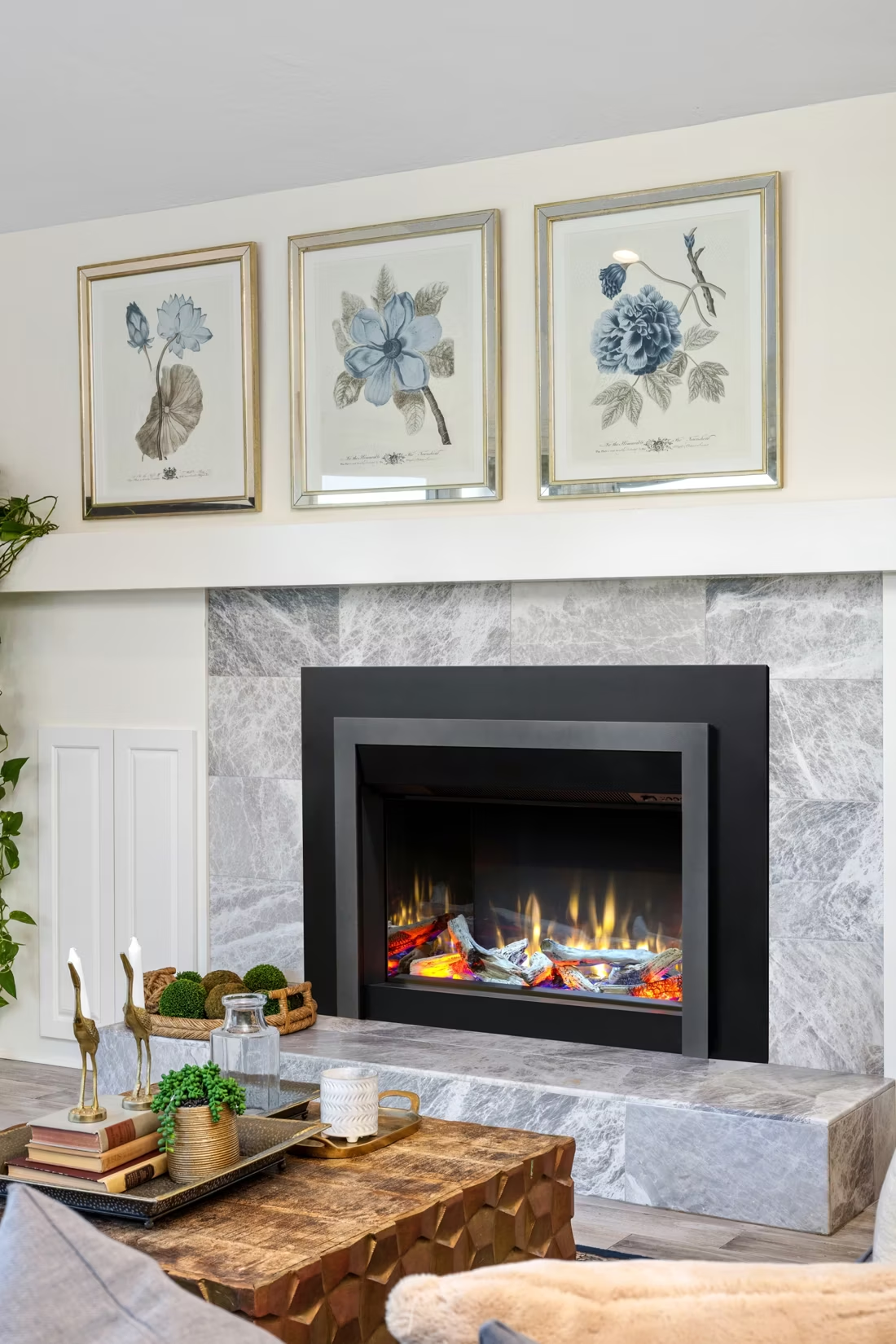
An electric fireplace is typically a built-in unit set into a wall or mantel surround, often the centerpiece of a cabin's main living space. An electric insert is sized to slide into an existing masonry firebox or zero-clearance frame, which works well if a Swain County property has an old wood fireplace that's no longer used or permitted for a rental. An electric stove is a freestanding cabinet-style unit that mimics a wood stove's look without any of the venting or clearance requirements. All three plug into standard household wiring or a dedicated circuit—none of them require a chimney, flue, or gas line, which is a big part of why they're common in short-term rental conversions here.
Do I need a permit to install an electric fireplace in Swain County?
A plug-in electric fireplace insert generally doesn't require a building permit since there's no venting, gas line, or structural change involved. If your installer needs to run a new dedicated circuit from your panel—common for larger built-in units—that electrical work typically requires an electrical permit, which most licensed electricians pull as part of the job. This is a much lighter permitting lift than a wood stove (which needs a building permit and EPA-certified unit) or a gas fireplace (which needs both a building and gas line permit), which is one more reason electric is an easy fit for rental cabin owners managing multiple properties.
What's the best electric fireplace for a Swain County rental cabin?
For short-term rentals, look for units with a simple remote or app control, an adjustable thermostat, and LED flame technology that doesn't rely on fragile moving parts—guests will operate these with no instructions, so reliability matters more than novelty features. Brands like Dimplex and Napoleon make widely available electric inserts and built-ins with a realistic flame effect and low-maintenance electronics that hold up well to frequent guest turnover. For primary residences rather than rentals, the same units work fine—the main decision is built-in versus plug-in insert, driven by whether you're renovating an existing fireplace opening or adding heat to a new wall.
Will my electric fireplace work during a power outage?
No—unlike a wood stove or a battery-backed gas fireplace, an electric fireplace stops working the moment the power goes out, and it won't restart until service is restored. That matters in Swain County, where mountain terrain and winter ice storms can knock out power to rural lines around Almond, Nantahala, and the Deep Creek area for longer stretches than in town. If you're relying on a fireplace as backup heat during outages rather than just ambiance, a wood stove or a propane unit with battery-backed ignition is a better complement to an electric fireplace, not a replacement for one.
Electric vs. wood—which is right for my Swain County property?
Wood offers real heat output, the option to burn oak, hickory, or maple cut under a $20-per-cord Nantahala-Pisgah National Forest permit, and heat that keeps working when the power doesn't. Electric offers instant on-off operation, zero smoke or ash, no chimney to maintain, and dramatically simpler installation and insurance considerations—which is a real factor for short-term rental owners, since many rental insurance policies and platform guidelines treat open-flame wood appliances as higher risk than electric units. For a primary residence in Swain County where heat pumps already handle the bulk of winter heating, either fuel works well as a supplement. For a rental cabin, electric is usually the lower-hassle, lower-liability choice.
How much does it cost to run an electric fireplace in Swain County?
A typical 1,500-watt electric fireplace costs roughly 15 to 25 cents per hour to run at full heat, depending on your electric rate—Swain County homes are served either by Duke Energy or a rural electric cooperative, and rates vary somewhat between the two. Run several hours a day through a mild Swain County winter (average lows around 26°F), that adds up to a modest addition to a monthly bill, generally far less than heating an entire home with electric resistance heat, since most owners run these units on the flame-only setting for ambiance and reserve full heat mode for supplemental warmth in the room they're actually using.
Can I put a TV above my fireplace?
Yes—with an asterisk. Fireplaces are hot and TVs don't like heat. Either put a mantel between them to deflect rising warmth, or choose a fireplace with heat-management technology that creates a cool zone on the wall above—the wall stays around 125 degrees, barely warm, while the room still gets full heat. If you like clean lines and don't want a mantel, heat management is the answer.
Do electric fireplaces actually produce heat?
Yes—most put out around 4,800–5,000 BTUs from a standard outlet, which comfortably warms a bedroom, office, or den as a comfort-zone heater. What they won't do is carry a whole house the way wood, gas, or pellet can. Think of electric as ambiance-first with honest supplemental heat: flames on with no heat in July, flames plus warmth in January.
Can a fireplace actually lower my heating bill?
Yes—by creating a comfort zone. A furnace heats every square foot of the house just to warm the one room you're in; a gas fireplace on low burns roughly a sixth of the gas a typical furnace does. Set the furnace around 55–60 degrees as a baseline, then heat the rooms your family actually uses. Families who heat this way commonly save $20–$60 a month.
How much should I budget for a fireplace?
For an average home—covering the fireplace, the vent pipe, and basic installation—a budget between $3,900 and $5,500 gives you a lot of options across wood, gas, and pellet. By the time you add finish work, gas line, and electrical, the average complete installation lands between $5,000 and $12,000 all-in. In a remodel or new build, a good rule is to put about 2.5% of the total project cost toward the fireplace.
Find the right electric fireplace for your Swain County home.
Tell us about your home or cabin and we'll match you with a trusted local dealer and a free Project Guide & Parts List—the exact parts and installation plan for your electric fireplace project in Swain County.
Find Your Fireplace →