
Warmth without the woodpile, wiring headaches, or vent work.
Rocky Mount's coastal-plain winters rarely demand a full heating system overhaul. Find the right electric fireplace or insert and connect with a trusted local dealer who can wire it in correctly.
Every Project Starts From One of These Five Situations
A mild climate makes electric an easy fit.
Rocky Mount sits at just 90 feet of elevation on the coastal plain of eastern North Carolina, where winter lows average 31°F and the heating season runs light—about 3,380 heating degree days a year, roughly a third of what a city like Fargo, ND racks up. That's mild enough that wood and pellet stoves see little demand here; most Nash County homes never need a heat source rated for sustained sub-zero nights. Electric fireplaces, on the other hand, fit this climate well: they supplement a heat pump or central system on the handful of genuinely cold nights each winter, add zone heat to a sunroom or bonus room, and don't ask you to store fuel or maintain a chimney.
Rocky Mount is one of the few North Carolina cities that runs its own municipal electric utility. Depending on your address, you'll be served either by City of Rocky Mount Electric (residential rate around $0.1218/kWh) or by Duke Energy Progress (around $0.1554/kWh) in the surrounding county. That difference matters when you're comparing the running cost of a 1,500-watt insert against a gas unit, and it's one of the first things a local dealer will ask about before recommending a model.
Three steps. No salesperson until you're ready.
Tell us about your project
Your zip code, your situation, and the fuel you're leaning toward—or let the answers point you to one.
See what's actually available
The brands dealers within 100 miles genuinely carry—real options, never a catalog mirage.
Get your dealer & Project Guide
A trusted local dealer, plus the free Project Guide & Parts List that names every component of the job.
Frequently Asked Questions
How much does an electric fireplace installation cost in Rocky Mount?
It depends heavily on which type you choose. A freestanding plug-in electric fireplace runs $150 to $600 for the unit itself and needs nothing more than a standard 120V outlet—no installer required. A built-in wall insert or a recessed unit set into an existing mantel typically runs $800 to $3,000 once you factor in a licensed electrician running a dedicated circuit, any framing or trim carpentry, and mounting. Homes in older Rocky Mount neighborhoods with knob-and-tube or aluminum wiring sometimes need panel work first, which can add to the total. A local dealer can give you a firm number after seeing your electrical panel and the wall you're working with.
Which electric utility will serve my fireplace, and does the rate matter?
Rocky Mount is split between two providers: City of Rocky Mount Electric, which runs its own municipal system at roughly $0.1218 per kWh, and Duke Energy Progress, which serves surrounding parts of Nash County at roughly $0.1554 per kWh. That's about a 28% difference in operating cost for the same unit. If you're deciding between two fireplace models with different wattage ratings, or trying to estimate what daily use will add to your bill, check your utility bill first—the answer changes depending on which side of the service boundary your address falls on.
Do I need a permit to install an electric fireplace in Rocky Mount?
A plug-in freestanding unit that uses an existing outlet doesn't require a permit. A built-in insert or wall-mounted unit that needs a new dedicated circuit does require an electrical permit, pulled through the City of Rocky Mount Inspections Department if your address is inside city limits, or Nash County Central Permitting if you're in an unincorporated area. Most licensed electricians and hearth dealers handle this paperwork as part of the installation, so it's rarely something you need to file yourself.
What's the difference between a plug-in electric fireplace and a built-in insert?
A plug-in unit is freestanding or mounted on the wall, runs off a standard outlet, and can be moved or removed with no construction involved—a good option for renters or anyone in Rocky Mount's apartment and rental market. A built-in insert is recessed into a wall, mantel, or existing masonry fireplace opening, typically wired to its own circuit for more consistent heat output, and installed by an electrician or hearth dealer as a permanent fixture. If you're converting an old, unused wood-burning fireplace into something functional again, an insert that fits the existing firebox opening is usually the cleaner solution.
Can an electric fireplace actually heat a room, or is it just for ambiance?
Most electric fireplaces and inserts are rated around 1,500 watts, which translates to roughly 5,000 BTUs—enough to comfortably heat a 400 to 600 square foot room as supplemental heat, not a whole house. Given Rocky Mount's mild winters (an average low of 31°F and just 3,380 heating degree days), that's usually plenty to take the edge off a bonus room, sunroom, or home office on the coldest nights without running a heat pump harder than it needs to. If you're trying to replace your primary heat source rather than supplement it, talk to a local dealer about a larger insert or a different fuel type.
Electric vs. gas fireplace—which is right for my Rocky Mount home?
Gas fireplaces are also common in this area and deliver more heat output with the ambiance of a real flame, but they require a gas line, venting, and typically a higher install cost. Electric fireplaces cost less to install, need no venting or gas connection at all, and can go almost anywhere there's an outlet or a circuit—which makes them a fast, low-disruption option for a sunroom, bedroom, or rental unit. Given how mild Rocky Mount winters run, plenty of homeowners here choose electric specifically because they don't need gas-level heat output for more than a few weeks a year.
What size electric fireplace or insert do I need?
Sizing is mostly about the opening you're filling and the room's square footage. A 23-26 inch insert suits a small den or bedroom; 30-40 inch units are the standard for a typical living room fireplace surround; 50-inch-plus linear units are chosen more for visual impact in an open-concept great room than for heat output, since wattage is capped by the electrical code regardless of the unit's width. A local dealer measuring your existing firebox opening or wall space will steer you toward the right width and the right wattage for the room.
How much does it cost per hour to run an electric fireplace in Rocky Mount?
A typical 1,500-watt unit running on heat mode draws 1.5 kWh per hour. At the City of Rocky Mount's municipal rate of $0.1218/kWh, that's about 18 cents an hour. At the Duke Energy Progress rate of $0.1554/kWh, it's closer to 23 cents an hour. Run it flame-only without the heater, and the draw drops to well under 100 watts—a fraction of a cent per hour—which is common on the mild evenings that make up most of a Rocky Mount winter.
How long do electric fireplace inserts last, and what maintenance do they need?
Most electric fireplace inserts last 10 to 15 years with basic upkeep—periodically vacuuming dust from the heater vents, wiping down the glass or lens covering the flame effect, and replacing the LED light strip or flame motor if it eventually dims or sticks, which are usually inexpensive parts rather than a full unit replacement. There's no chimney, no venting, and no combustion byproducts to worry about, so annual professional service isn't required the way it is for a gas or wood appliance. A quick visual check each fall before heavy winter use is generally all that's needed.
Can I put a TV above my fireplace?
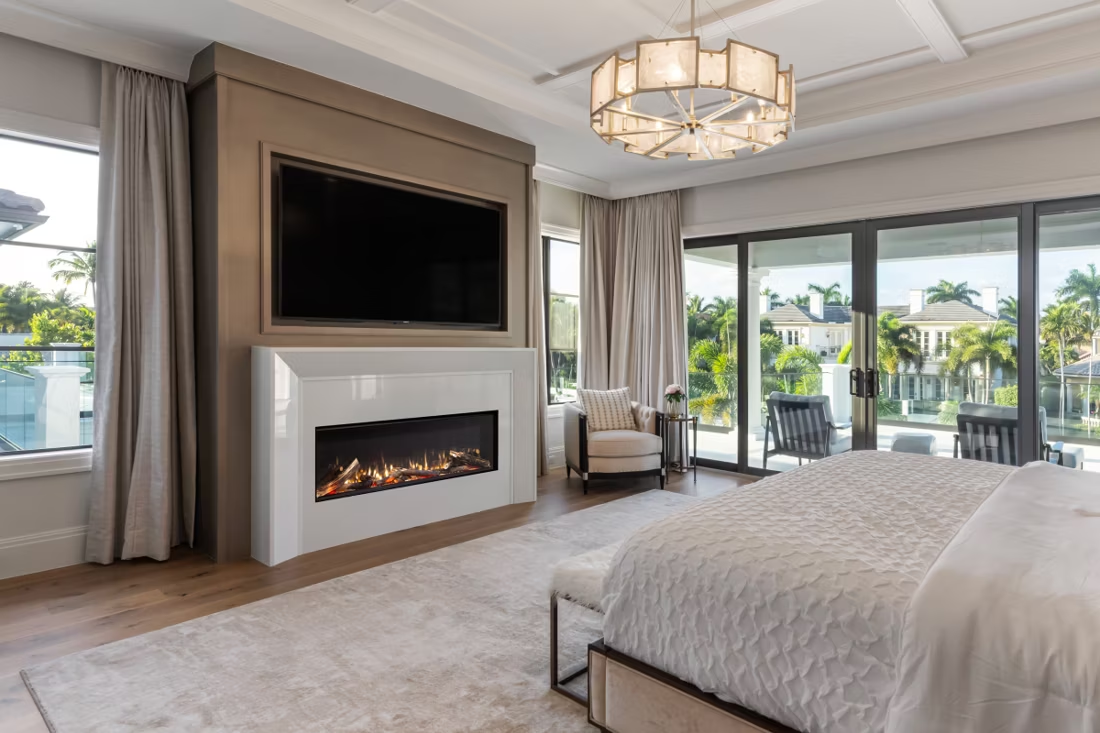
Yes—with an asterisk. Fireplaces are hot and TVs don't like heat. Either put a mantel between them to deflect rising warmth, or choose a fireplace with heat-management technology that creates a cool zone on the wall above—the wall stays around 125 degrees, barely warm, while the room still gets full heat. If you like clean lines and don't want a mantel, heat management is the answer.
Do electric fireplaces actually produce heat?
Yes—most put out around 4,800–5,000 BTUs from a standard outlet, which comfortably warms a bedroom, office, or den as a comfort-zone heater. What they won't do is carry a whole house the way wood, gas, or pellet can. Think of electric as ambiance-first with honest supplemental heat: flames on with no heat in July, flames plus warmth in January.
What is an in-home preview and do I need one?
It's a visit where a hearth professional measures your space, confirms the model you picked actually works in your home, and walks the specs—framing, gas line, venting, finish work—before anything is ordered. Some details you just can't know until you see the house. Never make a down payment without one; it's the single most-skipped step that burns buyers.
How much should I budget for a fireplace?
For an average home—covering the fireplace, the vent pipe, and basic installation—a budget between $3,900 and $5,500 gives you a lot of options across wood, gas, and pellet. By the time you add finish work, gas line, and electrical, the average complete installation lands between $5,000 and $12,000 all-in. In a remodel or new build, a good rule is to put about 2.5% of the total project cost toward the fireplace.
Nearby Dealers
Hearth shops serving Rocky Mount and the surrounding area.
Electric Service in Rocky Mount
An electric fireplace's heater draws about 1,500 watts—pennies per hour at local rates.
Duke Energy Progress - (Nc)
City Of Rocky Mount - (Nc)
Find your electric fireplace in Rocky Mount.
Tell us a bit about your home and we'll put together a free Project Guide & Parts List—sized for your space and your utility rate—and match you with a trusted local dealer in Rocky Mount.
Find Your Fireplace →