
Reliable Gas Heat for Guilford County's Milder Winters.
Instant, clean heat for Guilford County's mild Piedmont winters—whether your home runs on natural gas or propane. Find the right fireplace or insert and connect with a trusted local dealer.
Every Project Starts From One of These Five Situations
A convenience-first climate for gas heat.
Pleasant Garden sits in the North Carolina Piedmont at about 808 feet elevation, with winter lows averaging around 30°F and a winter heating season that's just a fraction of what a place like Minneapolis or Duluth MN deals with in a single season. Winters here are short and generally mild, which means most homeowners aren't asking a fireplace to keep the house alive through a January cold snap the way someone in the northern Plains might. Instead, gas fireplaces here tend to do zone-heating and ambiance duty: warming up a living room or den on the handful of genuinely cold nights, without the homeowner needing to think about it.
Because Pleasant Garden is a small, largely residential community outside Greensboro, natural gas mains don't reach every neighborhood the way they do closer to the city center—plenty of homes here run on propane instead, delivered by regional bulk suppliers. Electric service comes from a mix of Duke Energy Progress and Duke Energy Carolinas depending on which side of the county line you're on. Whichever fuel supply your street has, the appeal is the same: flip a switch, get real heat and a real flame, and skip the wood-splitting and ash cleanup that a hardwood-heavy county like Guilford is otherwise well suited for.
Three steps. No salesperson until you're ready.
Tell us about your project
Your zip code, your situation, and the fuel you're leaning toward—or let the answers point you to one.
See what's actually available
The brands dealers within 100 miles genuinely carry—real options, never a catalog mirage.
Get your dealer & Project Guide
A trusted local dealer, plus the free Project Guide & Parts List that names every component of the job.
Frequently Asked Questions
How much does a gas fireplace installation cost in Pleasant Garden?
A typical gas fireplace installation in Pleasant Garden runs roughly $3,500 to $8,500, depending on whether you're adding a direct-vent unit to a home with no existing fireplace, converting an existing masonry firebox to a gas insert, or need new gas line or propane tank work done. Homes already piped for gas or already running a propane tank sit toward the lower end. Because natural gas mains don't reach every Pleasant Garden street, a new propane tank set and buried line is often the biggest swing factor—budget an extra $500 to $1,500 if you don't already have propane service at the house.
Do I need natural gas, or is propane the standard here?
Pleasant Garden sits between Greensboro and the open county line, and natural gas mains don't run down every street the way they do closer to downtown Greensboro. Some homes nearer the city limits can tap natural gas, but a good number of Pleasant Garden properties—especially larger rural lots—run on propane delivered by regional bulk suppliers instead. It's worth a quick call to check what's already run to your street before you shop, but either fuel works fine: nearly every gas fireplace on the market can be configured for natural gas or propane.
What permits do I need to install a gas fireplace in Pleasant Garden?
Gas fireplace installs here fall under Guilford County's permitting process through the Guilford County Inspections Division, since Pleasant Garden doesn't run its own separate building department. A licensed gas technician pulls the permit for any new gas line work, and the fireplace itself typically needs a mechanical or building permit depending on whether it's new construction or a retrofit into an existing firebox. Most established hearth dealers handle this paperwork as part of the installation, so you're not coordinating it yourself.
Will my gas fireplace still work if the power goes out?
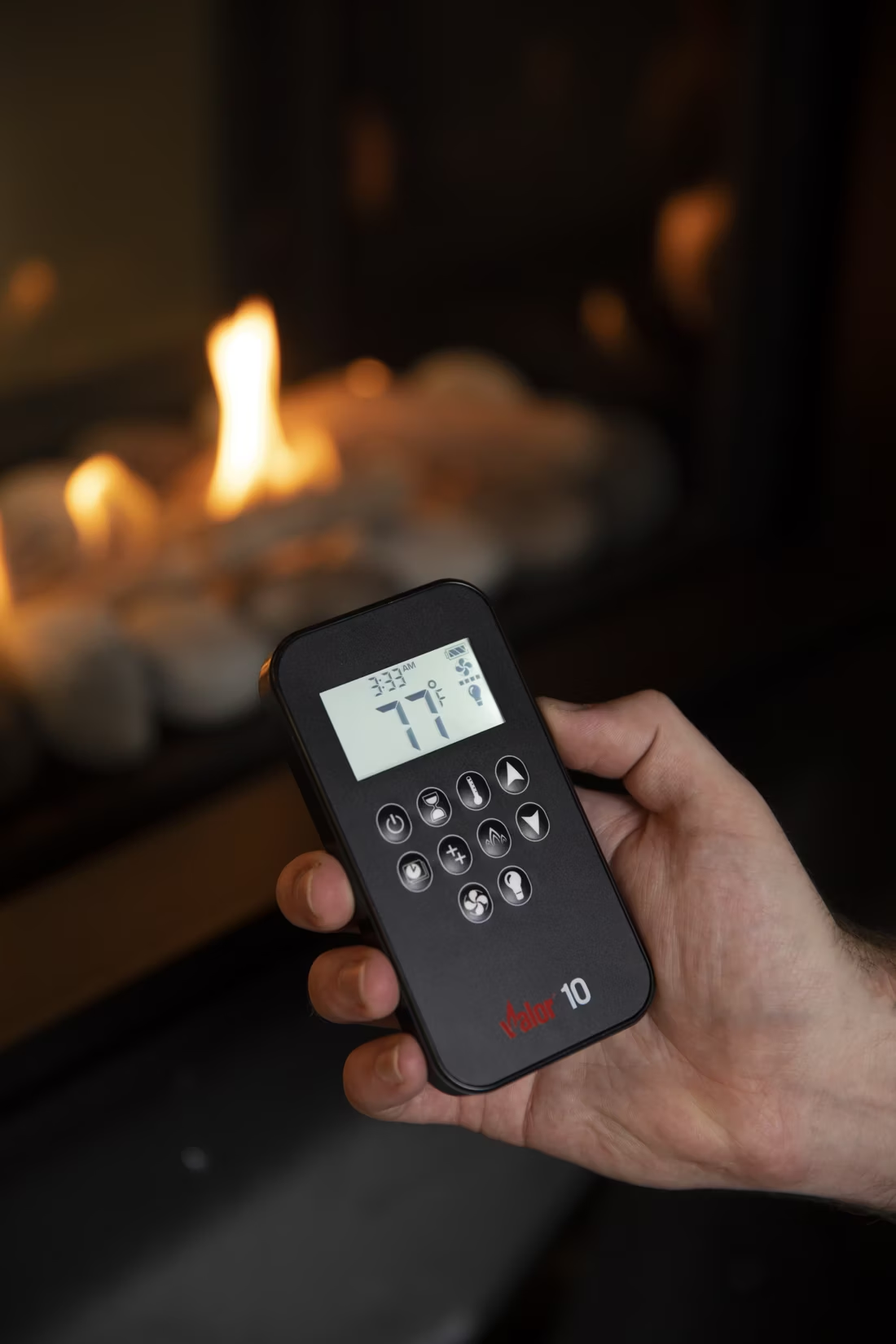
Most gas fireplaces use intermittent pilot ignition (IPI) with a battery backup, so they'll light and run fine during an outage—useful during the occasional winter ice storm that knocks out power across Guilford County. Valor fireplaces handle it a little differently: their pilot assembly generates its own electricity through a thermocouple, so there's no battery to remember at all. Ask your local dealer which ignition system a given model uses if backup heat during storms matters to you.
What's the difference between a gas fireplace, insert, and stove?
A gas fireplace is a fully built-in unit framed into a wall—the right fit for Pleasant Garden's newer construction homes that don't have an existing chimney. A gas insert slides into an existing masonry firebox and uses the existing chimney, relined with stainless steel, as its vent path—a common upgrade for the area's older brick-fireplace homes. A gas stove is a freestanding cast-iron or steel unit that sits on the floor like a wood stove but runs on gas or propane, often chosen for sunrooms, additions, or garages where a full fireplace surround isn't practical.
Can I add a gas fireplace to a home that doesn't have a chimney?
Yes—this is one of the more common installs in Pleasant Garden's newer subdivisions, where many homes are built without a masonry chimney at all. A direct-vent gas fireplace solves that: it draws combustion air from outside and exhausts through a sealed pipe that runs out a side wall or up through the roof, with no traditional chimney needed. That makes it possible to add a fireplace to nearly any room in a newer build going up around Pleasant Garden.
Gas vs. wood—which makes more sense for a Pleasant Garden home?
Guilford County's hardwood forests supply plenty of oak, hickory, and maple for firewood, with pine easy to come by too, so wood heat is genuinely viable here. But with a winter heating season that's roughly a third as demanding as a colder city like Duluth MN sees, most Pleasant Garden households don't need wood's higher heat output to get through winter. Gas tends to win out for convenience: instant on-off, no splitting or stacking, no ash. Plenty of local homes keep both—gas in the main living room for everyday use, a wood stove or fireplace elsewhere for backup heat and atmosphere.
How often does a gas fireplace need to be serviced?
An annual inspection is recommended for any gas fireplace or insert, ideally scheduled in early fall before the first cold snap. A certified gas technician checks the burner, pilot assembly, venting, and gas connections, and cleans the glass and interior—typically running $150 to $225 in the Greensboro/Guilford County area. It's a much lighter lift than sweeping a wood-burning chimney, but skipping it is still the most common cause of pilot and ignition problems later on.
Should I get a vented or vent-free gas fireplace?
Vented (direct-vent) gas fireplaces exhaust combustion byproducts outside through a sealed pipe and are the most common choice in Pleasant Garden—they put out real heat and don't affect indoor air quality. Vent-free gas fireplaces burn directly into the room with no external venting; North Carolina allows them, but they come with strict room-size and ventilation rules and work better as supplemental heat in a den or bonus room than as a primary living-area unit. Given how mild winters are here, either option can work, but most local dealers steer main living spaces toward direct-vent units and save vent-free for smaller secondary rooms.
Why is my open fireplace making my house colder?
Open fireplaces suck—literally. As the fire burns, it consumes air your furnace already paid to heat and pulls it out through the chimney, so the house is actually colder after the fire goes out than before you lit it. An insert fixes this: it seals the chimney, puts fixed glass across the front, and turns that hole in your house into a real heat source.
What do I measure to size a fireplace insert?
Four numbers tell you what fits: the front width, the front height, the back width, and the overall depth of your existing fireplace opening. Grab a tape measure, jot those down, and snap a photo of the wall—those two things do more to move your project forward than anything else you can do today.
What is an in-home preview and do I need one?
It's a visit where a hearth professional measures your space, confirms the model you picked actually works in your home, and walks the specs—framing, gas line, venting, finish work—before anything is ordered. Some details you just can't know until you see the house. Never make a down payment without one; it's the single most-skipped step that burns buyers.
Can a fireplace actually lower my heating bill?
Yes—by creating a comfort zone. A furnace heats every square foot of the house just to warm the one room you're in; a gas fireplace on low burns roughly a sixth of the gas a typical furnace does. Set the furnace around 55–60 degrees as a baseline, then heat the rooms your family actually uses. Families who heat this way commonly save $20–$60 a month.
Nearby Dealers
Hearth shops serving Pleasant Garden and the surrounding area. Every listing shows whether it is a WhyFire partner, a dealer we have verified as authorized for the brands we recommend, or a local business carrying hearth products. No manufacturer pays for placement. How we verify dealers →
Ash Busters Chimney Service
Blossman Gas And Appliance
Casual Furniture World
Central Gas
Builder's Fireplace & Stone
Amick's Superstore
Briles Oil And Gas
Randolph Oil Company
Big Apple Farm Supply
Southern States Cooperative
Conklin Oil & Propane, Inc.
Payne Oil Company Inc.
Campbell Oil Company
Find the right gas fireplace for your Pleasant Garden home.
Tell us about your home and we'll match you with a trusted local dealer and put together a free Project Guide & Parts List—the exact parts, including the vent kit, for your gas fireplace project in Pleasant Garden.
Find Your Fireplace →