
Instant Warmth Without a Chimney in Pamlico County.
From Bayboro to Oriental to the shores of the Pamlico River, electric fireplaces bring real flame and instant heat to a low-lying coastal county with mild winters—no venting, no gas line, no wood to split. Get matched with a local dealer who can wire it right.
Every Project Starts From One of These Five Situations
A low-maintenance heat source for a low-lying coastal county.
Pamlico County sits on the flat coastal plain of eastern North Carolina, bounded by the Pamlico River and Pamlico Sound, with a population under 5,300 spread across Bayboro, Oriental, Grantsboro, Alliance, and Arapahoe. Climate zone 3A means winters here are mild by any national standard—hard freezes are the exception, not the rule, and most homes need heat for supplemental warmth on cool, damp evenings rather than as a survival necessity through a long winter. That's a very different heating equation than a mountain county three hours west, and it's exactly the kind of climate where electric fireplaces earn their keep.
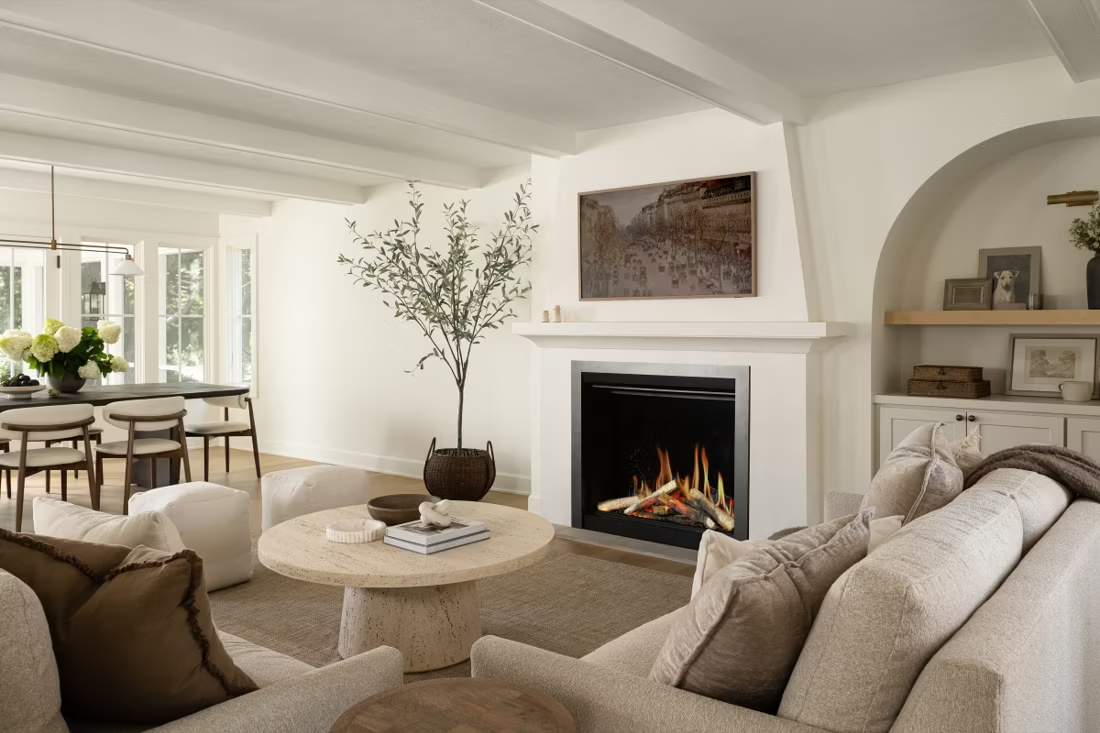
With no chimney, no gas line, and no combustion byproducts to vent, an electric fireplace or insert can go almost anywhere in a Pamlico County home—including waterfront cottages, rental properties around Oriental's sailing community, and older homes where running new gas service or adding masonry isn't practical on a barrier-adjacent, flood-prone lot. Power here comes through Tideland EMC, and while electric heat depends on that grid staying up (worth a thought during hurricane season), day-to-day it's the simplest fireplace option to install, run, and maintain in a county where winter heating demand is genuinely modest.
Three steps. No salesperson until you're ready.
Tell us about your project
Your zip code, your situation, and the fuel you're leaning toward—or let the answers point you to one.
See what's actually available
The brands dealers within 100 miles genuinely carry—real options, never a catalog mirage.
Get your dealer & Project Guide
A trusted local dealer, plus the free Project Guide & Parts List that names every component of the job.
Frequently Asked Questions
How much does an electric fireplace installation cost in Pamlico County?
A plug-in electric insert or freestanding unit that uses an existing wall outlet typically runs $300 to $1,000 installed, since there's no chimney work, no gas line, and often no permit required. A built-in wall unit or a linear electric fireplace that needs a dedicated 120V or 240V circuit run by a licensed electrician costs more—usually $1,500 to $4,000 depending on how far the wiring has to travel and whether any wall framing or trim work is involved. In a county like Pamlico with a lot of older coastal homes and cottages, the wiring run is often the biggest cost variable, not the fireplace itself.
What size electric fireplace or insert do I need for my home?
Because Pamlico County's mild climate means most electric fireplaces are working as zone heat rather than whole-home heat, sizing is more about the room than the square footage of the house. A 26–40 inch insert or wall unit comfortably heats a single living room or den in most Bayboro or Grantsboro homes. Larger open floor plans, or homes near the water with higher ceilings and less insulation, do better with a 50-inch-plus linear unit or two smaller units in separate rooms. Since electric heaters don't need combustion air or venting clearances, a local dealer can usually size and place the unit based on room layout alone, without the chimney and clearance constraints that come with wood or gas.
Where can I find installers for an electric fireplace near me?
Because Pamlico County is a small, rural county, options for hearth retailers and licensed electricians are more limited locally than in nearby New Bern across the Neuse River in Craven County, which has several established hearth dealers who serve Pamlico County customers. For a plug-in unit, any licensed electrician can confirm the outlet is properly grounded and rated. For a built-in unit needing a new dedicated circuit, look for an electrician familiar with fireplace installations specifically—they'll know to check load capacity on the home's panel, which matters in older Pamlico County homes that haven't been rewired in decades.
What's the difference between an electric fireplace, insert, and stove?
An electric fireplace is typically a built-in or wall-mounted unit designed to look like a traditional fireplace, often with a linear or widescreen flame display. An electric insert is sized to slide into an existing masonry fireplace opening, which works well for older Pamlico County homes with a fireplace that was built for wood but is rarely used. An electric stove is a freestanding unit styled like a wood or pellet stove, useful when you want a stove aesthetic without any venting requirements. All three plug into standard household wiring or a dedicated circuit—none require a chimney, flue, or outside vent.
Do I need a permit to install an electric fireplace in Pamlico County?
A plug-in electric fireplace or insert that uses an existing outlet generally doesn't require a permit, since no new wiring or gas work is involved. If you're adding a built-in unit that requires a new dedicated circuit, that electrical work typically does require a permit through Pamlico County's building inspections office, and it should be pulled by the licensed electrician doing the wiring—not skipped. This is a much lighter permitting lift than a wood stove or gas fireplace install, which is part of why electric is an easy add for a rental cottage or vacation property in the county.
Is electric heat actually enough for Pamlico County winters?
For most of the county, yes. Climate zone 3A winters here are mild—closer to the heating needs of coastal South Carolina than to the deep-freeze demands of a place like Burlington, Vermont or Duluth, Minnesota. Electric fireplaces aren't typically sized to be a home's sole heat source anywhere, but as supplemental or zone heat for a den, sunroom, or waterfront cottage that only needs warming on the occasional cold, damp night, an electric unit is genuinely sufficient in Pamlico County in a way it wouldn't be in a colder climate zone. Pair it with your existing central heat for the handful of nights each winter that dip into the 20s.
Will my electric fireplace still work if the power goes out?
No—and this is the one honest tradeoff worth knowing before you buy. Electric fireplaces require grid power to run the heater and flame effect, so during a Tideland EMC outage (which happens most often here during tropical storms and hurricanes moving through the Pamlico Sound), the unit goes dark along with everything else. If backup heat during storm season matters to you, some Pamlico County homeowners keep a wood stove or vented gas unit in one room specifically for outages, and use electric elsewhere for everyday convenience and ambiance.
Is electric a good fit for a rental cottage or vacation home in Pamlico County?
It's often the best fit. Around Oriental's sailing and boating community and along the waterfront in Arapahoe and Whortonsville, electric fireplaces are popular in rental cottages and second homes because there's no wood to stock, no gas tank to monitor between visits, and no chimney to inspect before each rental turnover. A remote-controlled electric insert can be left off between guests with zero maintenance risk—no creosote, no pilot light, no fuel to run out while the property sits empty.
Electric vs. gas fireplace—which is right for my Pamlico County home?
Gas delivers more heat output and, with a battery-backup ignition system, can keep running during a power outage—a real advantage in a hurricane-prone county. Electric costs less to install, needs no gas line or propane tank, and works in homes and cottages where running gas service isn't practical or worth the cost for occasional supplemental heat. Given Pamlico County's mild winters and modest overall heating demand, many homeowners choose electric for its simplicity and low upfront cost, and reserve gas or wood for homes where storm-season backup heat is a priority.
Can I put a TV above my fireplace?
Yes—with an asterisk. Fireplaces are hot and TVs don't like heat. Either put a mantel between them to deflect rising warmth, or choose a fireplace with heat-management technology that creates a cool zone on the wall above—the wall stays around 125 degrees, barely warm, while the room still gets full heat. If you like clean lines and don't want a mantel, heat management is the answer.
Does an electric fireplace need a vent or chimney?
No—that's its superpower. An electric fireplace needs a wall and an outlet, period. No vent pipe, no gas line, no clearances to design around, which is why it works in bedrooms, offices, apartments, and walls where venting a gas or wood unit would be impractical or impossible. Installation is typically the simplest and least expensive of any fireplace type.
What is an in-home preview and do I need one?
It's a visit where a hearth professional measures your space, confirms the model you picked actually works in your home, and walks the specs—framing, gas line, venting, finish work—before anything is ordered. Some details you just can't know until you see the house. Never make a down payment without one; it's the single most-skipped step that burns buyers.
Can a fireplace actually lower my heating bill?
Yes—by creating a comfort zone. A furnace heats every square foot of the house just to warm the one room you're in; a gas fireplace on low burns roughly a sixth of the gas a typical furnace does. Set the furnace around 55–60 degrees as a baseline, then heat the rooms your family actually uses. Families who heat this way commonly save $20–$60 a month.
Find your electric fireplace in Pamlico County.
Tell us about your home and we'll match you with a trusted local dealer and send over a free Project Guide & Parts List—the right electric fireplace or insert for your space, with the exact parts and installer recommendation for Pamlico County.chore_placeholder_removed_field_below
Find Your Fireplace →