
Reliable Warmth for Newton's Mild but Chilly Winters.
Newton doesn't see brutal cold, but foothill mornings in the 30s call for real heat. Find the right gas fireplace or insert and get matched with a trusted local dealer.
Every Project Starts From One of These Five Situations
Foothills heat that turns on with a switch.
At 932 feet in the Catawba County foothills, Newton has a fairly mild winter heating season with average winter lows near 31°F—nothing close to the deep-freeze winters of places like Burlington, VT or Duluth, MN. That milder profile is exactly why wood and pellet heating never took hold here the way they have in colder, more rural parts of the country; most Newton homeowners want supplemental, on-demand warmth rather than an all-winter primary heat source. A gas fireplace fits that need well: instant heat on a cold snap morning, off again by afternoon, no ash and no wood to stack.
Electric service in Newton comes through Duke Energy Carolinas or the City of Newton's own municipal utility, but the city does not operate a gas utility of its own. That means natural gas access varies block by block—some in-town neighborhoods have a natural gas main nearby, while homes further out in unincorporated Catawba County typically run on propane delivered and stored in a tank on the property. Either fuel works fine for a modern gas fireplace or insert; a local dealer will confirm what's actually available at your address before recommending a unit.
Three steps. No salesperson until you're ready.
Tell us about your project
Your zip code, your situation, and the fuel you're leaning toward—or let the answers point you to one.
See what's actually available
The brands dealers within 100 miles genuinely carry—real options, never a catalog mirage.
Get your dealer & Project Guide
A trusted local dealer, plus the free Project Guide & Parts List that names every component of the job.
Frequently Asked Questions
How much does a gas fireplace installation cost in Newton?
Most gas fireplace and insert installations in the Newton area run $3,500 to $9,000, with the spread driven mainly by whether a gas line already reaches the hearth. A direct-vent insert into an existing masonry fireplace with gas already run to the house sits at the lower end. Homes needing a new propane tank set, a gas line extension from the meter, or venting through an exterior wall for a new-construction fireplace land toward the higher end. A local dealer will walk your home before quoting a firm number.
Should I use natural gas or propane for my fireplace?
It depends on where in Catawba County you live. Newton's municipal utility handles electricity, not gas, so natural gas service—where it exists—comes through a regional provider and tends to be concentrated closer to the city core. Many homes outside that footprint, especially in unincorporated parts of the county, run on propane from an above-ground or buried tank. Both fuels work in nearly any modern gas fireplace or insert; your installer sets the correct orifice and regulator for whichever you have. If you're unsure which is available at your address, that's one of the first things a local dealer will check.
Will a gas fireplace still work if the power goes out?
Most will, with the right ignition system. Units with intermittent pilot ignition (IPI) run on a small battery backup that kicks in automatically when the power drops, so the fireplace still lights on demand. Valor fireplaces go a step further—their pilot generates its own electricity through the thermocouple, so there's no battery to remember at all. That matters in Catawba County, where ice storms and downed lines during winter systems can knock out Duke Energy service for a day or more. Ask your local dealer about the ignition system on any model you're considering.
Can I convert an old masonry fireplace to gas?
Yes, and it's a common project for Newton's older housing stock, particularly homes built before the 1980s that still have a wood-burning masonry fireplace they rarely use. A gas insert drops into the existing firebox and vents through a stainless liner run up the original chimney, so you keep the look of the fireplace while gaining real, controllable heat. Costs typically run $4,000 to $8,500 depending on whether the home is already plumbed for natural gas or needs a propane setup, plus any liner or damper work the chimney needs first.
What's the difference between a gas fireplace, insert, and stove?
A gas fireplace is a built-in unit framed into a wall—the right call for new construction or a remodel with no existing hearth. A gas insert slides into an existing masonry firebox and uses the chimney as its vent path, which suits most of Newton's older homes with an underused wood fireplace. A gas stove is a freestanding cast-iron or steel unit that sits on the floor, useful in a room with no chimney or fireplace opening at all. Most Newton homeowners upgrading an existing fireplace land on an insert; new rooms or additions usually call for a built-in unit.
Do I need a permit to install a gas fireplace in Newton?
Yes. New gas fireplace installations require a building permit and a mechanical/gas permit, handled through Catawba County Building Services or the City of Newton's building inspections office depending on where the property sits. The gas line connection itself has to be run or inspected by a licensed gas fitter. Most established hearth dealers coordinate all of this as part of the installation, so you're not left managing separate trades and inspections yourself.
Are vent-free gas fireplaces allowed in North Carolina?
Yes, vent-free (unvented) gas fireplaces are legal in North Carolina, subject to room-size minimums and an oxygen depletion sensor built into the unit. They burn without any chimney or outside venting, so combustion byproducts release into the room—fine for occasional use in a large enough space, less ideal as a daily heat source in a smaller room. Vented direct-vent units, which draw outside air and exhaust outside, are the more common recommendation for full-time heating use and don't come with the same indoor air quality tradeoffs. A local dealer can walk you through both for your specific room.
How often does a gas fireplace need to be serviced?
Plan on an annual inspection, ideally in early fall before regular use starts. A technician checks the burner, pilot assembly, venting, and gas connections, and cleans the glass and interior—a much shorter visit than a wood chimney sweep, but it's what keeps the ignition system and safety shutoffs working correctly. Expect to pay roughly $125 to $200 for a standard annual service call in the Newton area.
Gas vs. electric fireplace—which makes more sense in Newton?
Gas delivers real, sustained heat output and the option to keep running through a power outage—a genuine plus given occasional ice-storm outages on the Duke Energy Carolinas grid. Electric fireplaces cost far less to install (often $400 to $1,200 versus several thousand for gas) and run on a standard outlet, but at Duke's residential rate of about 14 cents per kWh, they're best treated as ambiance and light supplemental heat rather than a primary source for a cold snap. Given Newton's mild-but-real winters, many homeowners choose gas for the main living space and consider electric only for a bedroom or den where a simple plug-in unit is enough.
What's the difference between an insert and a zero-clearance fireplace?
An insert is a fireplace that slides into a pre-existing wood-burning fireplace—if you don't have one, there's nothing to insert it into. A zero-clearance fireplace is built into a framed wall, which makes it the answer for remodels and new construction. Simple test: existing masonry fireplace means insert; blank or framed wall means zero-clearance.
Can I put a TV above my fireplace?
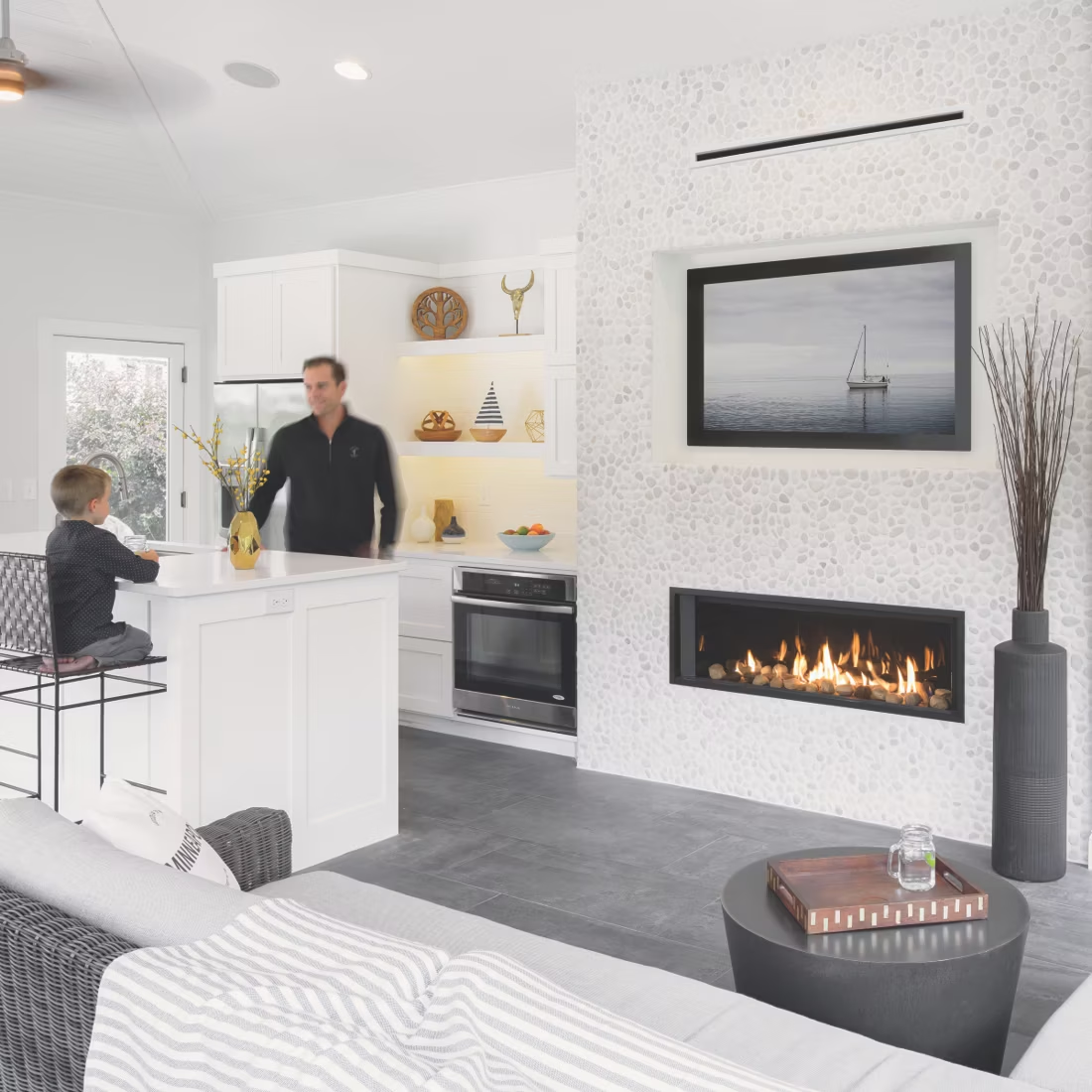
Yes—with an asterisk. Fireplaces are hot and TVs don't like heat. Either put a mantel between them to deflect rising warmth, or choose a fireplace with heat-management technology that creates a cool zone on the wall above—the wall stays around 125 degrees, barely warm, while the room still gets full heat. If you like clean lines and don't want a mantel, heat management is the answer.
Can I install a fireplace myself?
If you're putting a fire in your house on purpose, it's best to work with an expert. Unless you're genuinely experienced in framing, gas line, vent pipe, and the national code on clearances to combustibles, have a professional do it—and ideally the same company that sells you the fireplace, so warranty, service, and liability all live under one roof.
What is an in-home preview and do I need one?
It's a visit where a hearth professional measures your space, confirms the model you picked actually works in your home, and walks the specs—framing, gas line, venting, finish work—before anything is ordered. Some details you just can't know until you see the house. Never make a down payment without one; it's the single most-skipped step that burns buyers.
Nearby Dealers
Hearth shops serving Newton and the surrounding area. Every listing shows whether it is a WhyFire partner, a dealer we have verified as authorized for the brands we recommend, or a local business carrying hearth products. No manufacturer pays for placement. How we verify dealers →
Blossman Gas, Inc.
Quality Propane
Carolina Fireplace & Granite
Sawmills Hardware And Supply
High Country Fireplaces
Blossman Gas And Appliance
Queen City Sweeps, LLC
Lkn Chimney Sweep
SirVent Of Charlotte
Find your gas fireplace in Newton.
Tell us about your home and whether you're on natural gas or propane, and we'll match you with a trusted local dealer plus a free Project Guide & Parts List—the exact parts, including the vent kit, for your Newton gas fireplace project.
Find Your Fireplace →