
Real Gas Heat for Morrisville's Mild Piedmont Winters.
Winter lows in Morrisville average around 32°F—enough for real zone heat and ambiance, not a wood-burning tradition. Find the right gas fireplace or insert, and connect with a trusted local dealer.
Every Project Starts From One of These Five Situations
Comfort heat, sized for a Piedmont winter.
Morrisville sits in Wake County's Piedmont region at just 325 feet elevation, in climate zone 4A—mixed-humid, with average winter lows hovering around 32°F and a mild, short heating season typical of the region. That's a fraction of the winter heating load a place like Burlington, Vermont racks up (a much longer, harsher heating season), and it explains why wood heat never became a local tradition here the way it did in the mountains or out West. Winters in Morrisville are short and mild, more likely to bring an occasional ice storm than a deep freeze.
That mild climate, combined with a housing stock dominated by newer master-planned communities near Research Triangle Park, Perimeter Park, and the Cary border, makes gas the fuel of choice for homeowners who want real flame and genuine heat without a chimney, firewood, or ash cleanup. Many Morrisville homes were built without a masonry fireplace at all, so a direct-vent gas fireplace is often added fresh into a great room rather than retrofitted into an old hearth. Natural gas service in the area comes primarily through Dominion Energy North Carolina, and homeowners outside the service footprint typically run on propane instead.
Three steps. No salesperson until you're ready.
Tell us about your project
Your zip code, your situation, and the fuel you're leaning toward—or let the answers point you to one.
See what's actually available
The brands dealers within 100 miles genuinely carry—real options, never a catalog mirage.
Get your dealer & Project Guide
A trusted local dealer, plus the free Project Guide & Parts List that names every component of the job.
Frequently Asked Questions
How much does a gas fireplace installation cost in Morrisville?
Costs vary widely depending on whether you're retrofitting an existing masonry fireplace or adding one to a home that never had one—common in Morrisville's newer subdivisions. A direct-vent gas insert into an existing fireplace with a nearby gas line typically runs $3,500 to $6,500. A new built-in gas fireplace in a great room addition or remodel, with framing, exterior venting, and a fresh gas line run from Dominion Energy North Carolina service, usually lands between $6,000 and $10,000. Local dealers will size the job and give you a firm number after walking the space.
Can I convert my wood-burning fireplace to gas?
If your home has an existing masonry fireplace—more common in Morrisville's older neighborhoods closer to downtown—yes, a gas insert with a stainless liner run through your existing chimney is a straightforward retrofit, usually in the $4,000 to $7,500 range. But a lot of Morrisville's housing stock was built in the last two decades without a masonry fireplace at all, in which case there's nothing to convert—you'd be adding a new direct-vent unit instead, which a local installer can walk you through.
Is natural gas available in Morrisville, or do I need propane?
Most of Morrisville is served by natural gas through Dominion Energy North Carolina, so if your home already has gas for a water heater, range, or furnace, adding a fireplace is usually a simple tie-in. Some homes on the edges of town, particularly toward rural Wake County, run on propane instead, either with an existing tank or a new one installed by a local supplier. Either fuel works in the same gas fireplace models—your installer just sets the orifice and regulator to match.
Will a gas fireplace still work if the power goes out?
Most modern gas fireplaces will, yes. Units with IPI (intermittent pilot ignition) run on battery backup that kicks in the moment Duke Energy Progress or Duke Energy Carolinas service drops, so the fireplace lights on demand just like normal. That matters in the Triangle, where ice storms—not blizzards—are the more likely cause of a multi-day outage. Valor fireplaces take a different approach: their pilot's thermocouple generates its own electricity, so there's no battery to remember at all. Ask your local dealer about the ignition system on any unit you're considering.
Gas fireplace, insert, or gas stove—what's the difference?
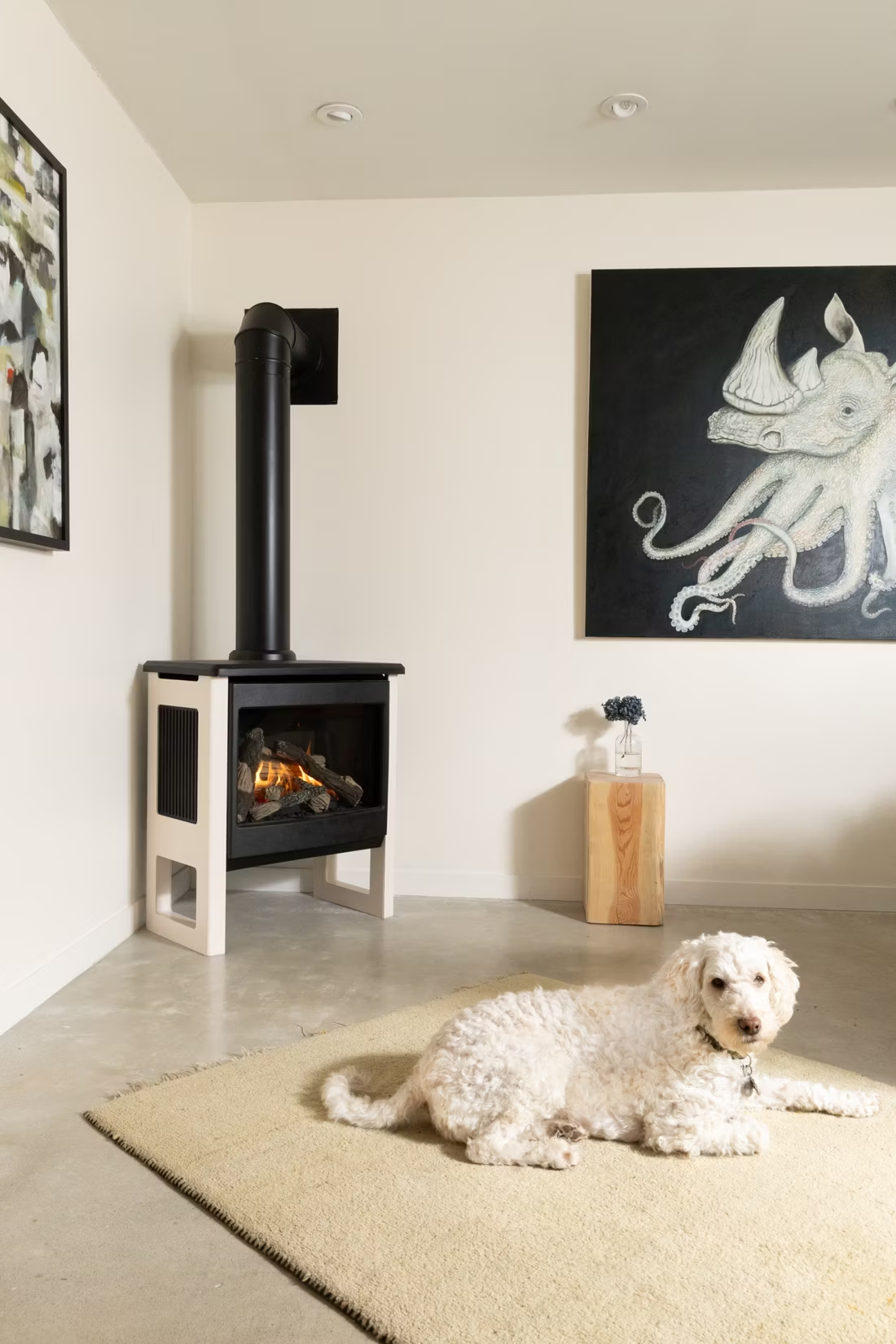
A gas fireplace is a fully built-in unit framed into a wall—the common choice in Morrisville's newer great-room floor plans that were never built with a hearth. A gas insert drops into an existing masonry fireplace opening and uses the chimney as its vent path, which works well for the town's older homes that do have a traditional fireplace. A gas stove is a freestanding cabinet-style unit that sits on the floor and vents through a wall or ceiling, a good fit for a sunroom, bonus room, or garage conversion with no fireplace opening to work with at all.
Do I need a permit to install a gas fireplace in Morrisville?
Yes. The Town of Morrisville requires both a building permit and a mechanical/gas permit for a new gas fireplace installation, and the gas line itself has to be run or connected by a licensed gas contractor. Most established hearth dealers handle the permitting and inspection scheduling as part of the install, so you're not left coordinating separate trades. If you're outside town limits in unincorporated Wake County, the permit runs through Wake County's Inspections & Permits Department instead.
Are vent-free gas fireplaces allowed in North Carolina?
Yes, vent-free (unvented) gas fireplaces are permitted in North Carolina, but they come with room-sizing minimums, oxygen depletion sensors, and combustion-air requirements that a code-compliant install has to meet. For Morrisville's open-concept great rooms, common in the newer subdivisions around RTP, a direct-vent unit sealed and vented to the outside is usually the better real-world choice: it delivers more heat, keeps combustion byproducts out of the living space, and doesn't run into the square-footage restrictions that can rule out vent-free units in a large open floor plan.
How often does a gas fireplace need to be serviced?
Plan on an annual inspection, ideally before the first cool snap in October or November. A technician checks the burner, pilot assembly, gas connections, and venting, and cleans the glass and interior—a much lighter job than wood chimney sweeping, but still important. Local gas appliance service providers in the Morrisville and greater Raleigh-Cary area typically charge $150 to $250 for the visit.
Should I get a gas fireplace or an electric one for a Morrisville home?
With such a short, mild heating season and winter lows that rarely dip much below freezing, either fuel can genuinely keep a Morrisville living room comfortable—this isn't a climate that forces the decision the way a place like Fargo, North Dakota does. Gas delivers real heat output, useful during the occasional ice-storm outage, and the look of an actual flame; electric units need no venting or gas line at all, install in an afternoon, and run efficiently off Duke Energy Progress or Duke Energy Carolinas service for around 14 to 16 cents per kWh. For a primary living space where you want genuine warmth, gas usually wins; for a bedroom, basement, or rental where simplicity matters most, electric is hard to beat. Wood and pellet stoves, by contrast, are rare here—the mild climate and the lack of masonry fireplaces in most newer Morrisville homes mean there's little local demand or infrastructure for either.
Why is a fireplace insert so efficient?
An insert does two things: it seals the chimney completely, so you stop losing air you already paid to heat, and it radiates warmth into the room through the firebox and glass. Most add a heat-exchange fan that pulls cool room air underneath, wraps it around the hot firebox, and pushes it back out warm. Your home is more efficient before you've even lit the first fire.
What's the difference between an insert and a zero-clearance fireplace?
An insert is a fireplace that slides into a pre-existing wood-burning fireplace—if you don't have one, there's nothing to insert it into. A zero-clearance fireplace is built into a framed wall, which makes it the answer for remodels and new construction. Simple test: existing masonry fireplace means insert; blank or framed wall means zero-clearance.
Can a fireplace actually lower my heating bill?
Yes—by creating a comfort zone. A furnace heats every square foot of the house just to warm the one room you're in; a gas fireplace on low burns roughly a sixth of the gas a typical furnace does. Set the furnace around 55–60 degrees as a baseline, then heat the rooms your family actually uses. Families who heat this way commonly save $20–$60 a month.
How much should I budget for a fireplace?
For an average home—covering the fireplace, the vent pipe, and basic installation—a budget between $3,900 and $5,500 gives you a lot of options across wood, gas, and pellet. By the time you add finish work, gas line, and electrical, the average complete installation lands between $5,000 and $12,000 all-in. In a remodel or new build, a good rule is to put about 2.5% of the total project cost toward the fireplace.
Nearby Dealers
Hearth shops serving Morrisville and the surrounding area. Every listing shows whether it is a WhyFire partner, a dealer we have verified as authorized for the brands we recommend, or a local business carrying hearth products. No manufacturer pays for placement. How we verify dealers →
Original Grills - Outdoor Kitchen & Grill Store
Brandco Incorporated
L.g. Jordan Oil & Gas Co.
Fireside Distributors Inc
Pro Source Of Raleigh
Smoke Alert
Viridien Patio + Fireplace
Oak City Fireplace & Outdoor Living
The Fireplace Depot
Energy United Propane- Creedmoor
Steve Marcom Services
Home Flame
Find your gas fireplace in Morrisville.
Tell us about your home and we'll match you with a trusted local dealer and a free Project Guide & Parts List—the exact parts, including the vent kit, for your Morrisville gas fireplace project.
Find Your Fireplace →