
Electric warmth for Blue Ridge mountain homes.
No chimney, no gas line, no venting—just plug in and go. For cabins, additions, and second homes scattered across Madison County's ridges and river valleys, electric is often the fastest path to a working fireplace. Find the right unit and connect with a trusted local dealer.
Every Project Starts From One of These Five Situations
Simple, no-venting heat for cabins, additions, and mountain retreats.
Madison County sits in the French Broad River valley and the surrounding Blue Ridge foothills, home to about 3,978 year-round residents spread thin across Marshall, Mars Hill, Hot Springs, and unincorporated mountain communities. Winters here aren't brutal by Appalachian standards—climate zone 4A, an average winter low near 24°F, and a solid five-month heating season—but they're cold enough that a cabin, sunroom, or finished basement without existing ductwork or a chimney needs something more than a space heater. That's usually where electric fireplaces come in.
Wood heat runs deep in Madison County—oak, hickory, maple, and pine are all cut locally, and the Nantahala-Pisgah National Forests issue cutting permits (around $20 per cord, May through October) to residents who still heat with cordwood. But electric fireplaces have carved out a real niche alongside that tradition: short-term rental cabins near Hot Springs that need a fireplace look without the liability of an open flame, additions and finished basements where running a chimney or gas line isn't practical, and older farmhouses where a wall-mounted unit adds heat to one cold room without touching the rest of the house. Because Madison County's rural power lines (largely served by French Broad Electric Membership Corporation, with Duke Energy Progress in parts of the county) can go down in ice storms and high winds, most homeowners here treat electric as supplemental or ambiance heat rather than their only line of defense against a cold snap.
Three steps. No salesperson until you're ready.
Tell us about your project
Your zip code, your situation, and the fuel you're leaning toward—or let the answers point you to one.
See what's actually available
The brands dealers within 100 miles genuinely carry—real options, never a catalog mirage.
Get your dealer & Project Guide
A trusted local dealer, plus the free Project Guide & Parts List that names every component of the job.
Frequently Asked Questions
How much does an electric fireplace installation cost in Madison County?
Plug-in electric inserts and freestanding units are the cheapest entry point—often $300 to $900 including the unit itself, with no permit or electrician needed since they run on a standard household outlet. Built-in wall units and mantel packages that require dedicated wiring run higher, typically $1,000 to $2,500 installed, and that jumps toward $3,500 if an electrician has to run new circuit line to a remote room—which is common in older Madison County farmhouses and cabins that weren't wired with a fireplace location in mind. Local dealers can walk you through which tier makes sense once they see the room.
Can I put an electric insert into my existing masonry fireplace?
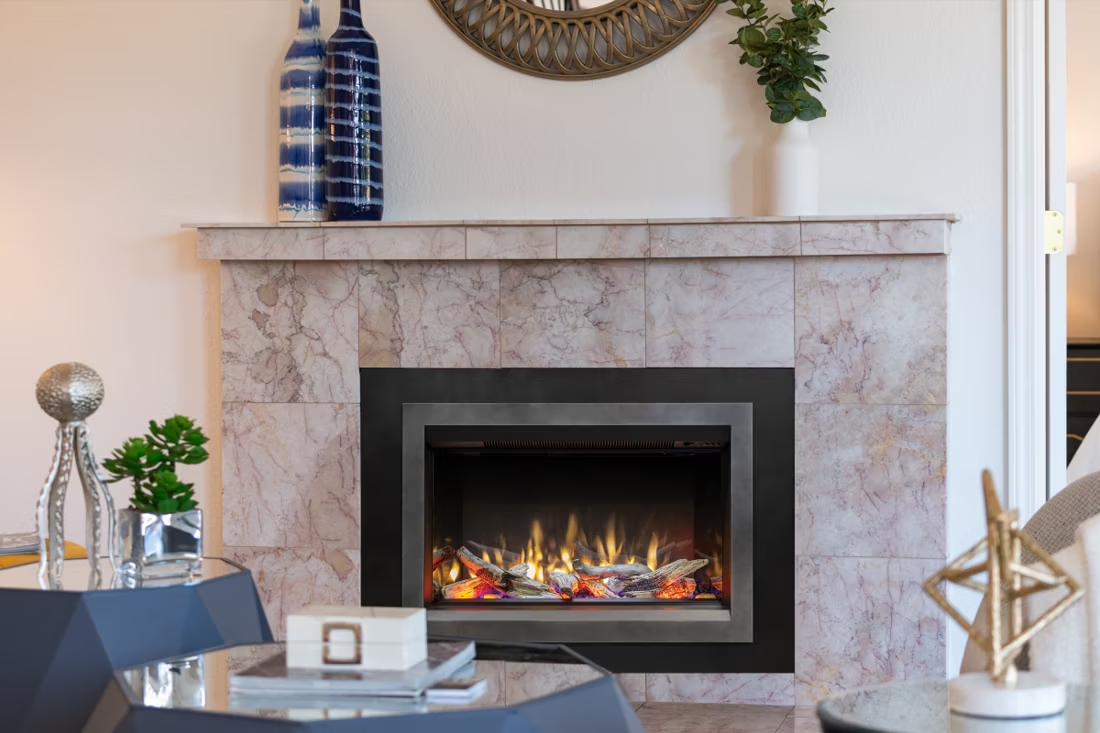
Yes, and it's a common project in Madison County's older homes around Marshall and Mars Hill that still have a working or non-working masonry fireplace. An electric insert slides into the existing firebox opening, plugs into a nearby outlet (or a new dedicated circuit for larger units), and gives you flame-effect heat without cleaning a chimney or hauling firewood. It won't heat the whole house the way a wood-burning fireplace once did, but it solves the ambiance problem instantly and is often the cheapest way to make a disused fireplace functional again.
Will an electric fireplace actually heat my Madison County home?
Most electric fireplaces are rated around 4,600 to 5,000 BTU—enough to noticeably warm a single room (roughly 400 to 1,000 square feet depending on insulation and ceiling height) but not enough to replace a furnace or heat pump on a genuinely cold night in the mountains. With winter lows averaging 24°F across the county, and colder still at higher elevations toward Hot Springs and the ridgelines, an electric fireplace works best as zone heat for a specific room—a sunroom addition, a home office, a finished basement—rather than a whole-home solution. Homeowners looking for a bigger heat contribution usually pair electric with their existing HVAC rather than relying on it alone.
Will my electric fireplace work if the power goes out?
No—this is the honest tradeoff, and it matters more in Madison County than in flatter parts of North Carolina. Ice storms and downed lines along mountain roads can knock out French Broad EMC or Duke Energy service for hours or, occasionally, days, and an electric fireplace goes dark the moment power drops, with no battery backup option like some gas units offer. If you're in a remote cabin or a home where winter power outages are a real concern, many Madison County homeowners keep a wood stove or gas unit as backup heat and use electric strictly for supplemental warmth and ambiance in the rooms that need it.
What's the difference between an electric insert, a wall-mounted unit, and a mantel package?
An electric insert is built to slide into an existing fireplace opening—the natural choice for older Madison County homes with an unused masonry firebox. A wall-mounted unit hangs flush or recessed into a wall, popular in additions, rentals, and cabins without an existing fireplace. A mantel package pairs an electric firebox with a surrounding mantel and shelf, giving you a fireplace-and-mantel look in a room that never had one—common in finished basements and modern-built cabins around Mars Hill. All three plug in or wire the same way; the difference is really about what look and location you're working with.
Do I need a permit to install an electric fireplace in Madison County?
Plug-in units that use a standard outlet don't require a permit. Built-in wall units or inserts that need a new dedicated circuit do require an electrical permit, since it's new wiring work—Madison County's permitting office handles this, and most licensed electricians pull the permit as part of the job. If you're converting an existing masonry fireplace to electric, there's typically no separate fireplace permit involved, just the electrical work if new wiring is needed. A local dealer can tell you upfront whether your chosen unit needs an electrician or just an outlet.
What's the best electric fireplace for a Madison County cabin or rental?
For short-term rentals and cabins near Hot Springs and along the French Broad, look for units with a realistic flame effect and a simple remote or app control—guests want the look and easy operation more than raw heat output. Freestanding electric stoves and inserts from brands like Dimplex and Amantii hold up well in rental turnover and are simple enough that a cleaning crew or property manager can operate them without instructions. For a primary residence where you want the fireplace to actually contribute heat to a room, prioritize a model with a stated BTU rating near the top of the range (4,500-5,000 BTU) and a thermostat function so it cycles off once the room's warm rather than running constantly.
How much maintenance does an electric fireplace need?
Very little compared to wood or gas. There's no chimney to sweep, no gas line to inspect, and no combustion byproducts to worry about. Maintenance is mostly dusting the unit, occasionally replacing the LED light strip or heating element after years of use (most last 10+ years), and making sure vents on the back or bottom of the unit aren't blocked by furniture. There's no annual inspection requirement the way there is for a wood stove or gas appliance in Madison County—it's one of the reasons electric appeals to rental property owners who don't want an annual service call on their calendar.
Electric vs. wood—which makes sense for my Madison County home?
Wood is still the workhorse for primary heat in rural Madison County—oak, hickory, and maple burn hot and long, cutting permits through the Nantahala-Pisgah National Forests run about $20 per cord, and a wood stove keeps working straight through a French Broad EMC outage during an ice storm. Electric can't do any of that, but it wins on convenience: no ash, no chimney, no permit hassle for a plug-in unit, and instant on-off operation that suits a rental cabin, a finished basement, or a room where running a flue simply isn't practical. Plenty of homes in the county end up with both—wood or a wood stove for real winter heat, electric for the guest room, sunroom, or rental unit where ambiance is the whole point.
Does an electric fireplace need a vent or chimney?
No—that's its superpower. An electric fireplace needs a wall and an outlet, period. No vent pipe, no gas line, no clearances to design around, which is why it works in bedrooms, offices, apartments, and walls where venting a gas or wood unit would be impractical or impossible. Installation is typically the simplest and least expensive of any fireplace type.
Can I put a TV above my fireplace?
Yes—with an asterisk. Fireplaces are hot and TVs don't like heat. Either put a mantel between them to deflect rising warmth, or choose a fireplace with heat-management technology that creates a cool zone on the wall above—the wall stays around 125 degrees, barely warm, while the room still gets full heat. If you like clean lines and don't want a mantel, heat management is the answer.
What is an in-home preview and do I need one?
It's a visit where a hearth professional measures your space, confirms the model you picked actually works in your home, and walks the specs—framing, gas line, venting, finish work—before anything is ordered. Some details you just can't know until you see the house. Never make a down payment without one; it's the single most-skipped step that burns buyers.
Can a fireplace actually lower my heating bill?
Yes—by creating a comfort zone. A furnace heats every square foot of the house just to warm the one room you're in; a gas fireplace on low burns roughly a sixth of the gas a typical furnace does. Set the furnace around 55–60 degrees as a baseline, then heat the rooms your family actually uses. Families who heat this way commonly save $20–$60 a month.
Stove and Fireplace Dealers in Madison County
Find your electric fireplace in Madison County.
Tell us a bit about your home—cabin, addition, or an old masonry fireplace you'd like to convert—and we'll put together a free Project Guide & Parts List with the exact unit and a local dealer who can install it right.
Find Your Fireplace →