
Add ambient warmth to your Johnston County home, no chimney required.
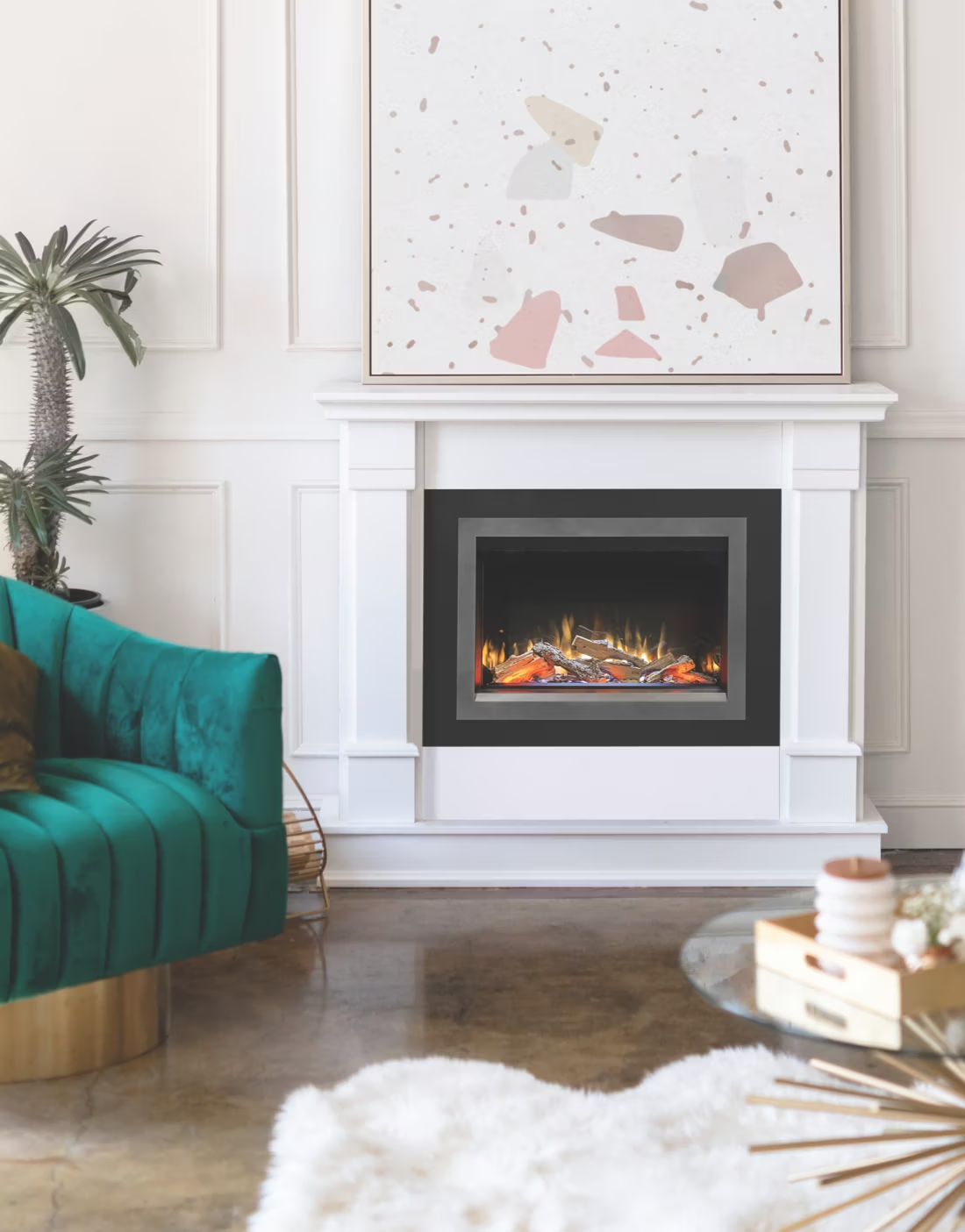
From new townhomes in Clayton to older brick ranches in Smithfield and Selma, electric fireplaces give Johnston County homeowners real ambiance and a supplemental heat boost without venting, gas lines, or firewood. Find the right unit and connect with a trusted local dealer.
Every Project Starts From One of These Five Situations
The easiest fireplace upgrade for Johnston County's fastest-growing neighborhoods.
Johnston County sits in climate zone 3A, with an average winter low around 30°F and a mild, short heating season—mild enough that most homes here lean on central HVAC as the primary system and don't need a wood stove or a gas insert cranking out 40,000 BTU to survive the season. That's exactly the kind of climate where electric fireplaces earn their keep: a 1,500-watt unit can comfortably take the edge off a bonus room in Clayton or a den in Four Oaks on the handful of nights each winter that actually dip near freezing, without the homeowner needing to think about venting, fuel storage, or chimney clearances.
Johnston County's growth—new subdivisions ringing Clayton, Smithfield, and Selma, plus townhomes and apartments throughout the Highway 70 and I-40 corridors—has pushed a lot of demand toward electric. Renters and condo owners who can't cut into a wall for gas line or Class A chimney pipe can still get a linear electric fireplace or a plug-in insert that drops into an existing firebox. And because there are no local air quality restrictions on wood burning in Johnston County, the choice here really comes down to convenience and application rather than any regulatory push—electric wins on ease of install, not because wood or gas are off the table.
Three steps. No salesperson until you're ready.
Tell us about your project
Your zip code, your situation, and the fuel you're leaning toward—or let the answers point you to one.
See what's actually available
The brands dealers within 100 miles genuinely carry—real options, never a catalog mirage.
Get your dealer & Project Guide
A trusted local dealer, plus the free Project Guide & Parts List that names every component of the job.
Frequently Asked Questions
How much does an electric fireplace cost to install in Johnston County?
A basic plug-in electric insert or freestanding unit runs $200 to $600 and needs nothing more than a standard 120V outlet—most homeowners install it themselves in an afternoon. Step up to a built-in linear electric fireplace with a custom mantel or a wall-recessed unit, and installed cost typically runs $1,500 to $4,000 depending on the size of the unit, whether it needs a dedicated 240V circuit, and whether you're building out a surround or mantel around it. Because Johnston County's mild winters mean electric is almost always a supplemental or accent purchase rather than a whole-home heat source, most homeowners here land on the lower-to-middle end of that range.
Do I need a permit to install an electric fireplace in Johnston County?
A simple plug-in electric fireplace that runs off a standard outlet typically doesn't require a permit—there's no venting, no gas line, and no structural change involved. If you're having a built-in unit wired on a dedicated 240V circuit, that electrical work usually does require a permit through the county building department, and it should be pulled by a licensed electrician regardless of the permit question. Most local dealers can either handle the wiring themselves or refer you to an electrician who routinely does this work.
How much does it cost to run an electric fireplace day to day?
Most electric fireplaces draw around 1,500 watts on the heat setting (less on ambiance-only/no-heat mode). Running one for a few hours most evenings during Johnston County's cooler months—call it November through February, given how mild and short the county's heating season is—typically adds somewhere in the range of $10 to $25 a month to a Duke Energy Progress bill, depending on your specific rate plan and how much you run it. That's a fraction of what it costs to heat a whole house, which is exactly why most homeowners here use electric as a supplemental, zone-heating tool rather than a primary system.
Is an electric fireplace enough heat for a Johnston County home, or is it just for looks?
Both, depending on how you use it. A 1,500-watt electric fireplace puts out roughly 5,000 BTU of real heat—enough to comfortably warm a single room (a bedroom, den, or bonus room) on a cold night, but not enough to heat an entire house the way a central system or a wood stove would. Given Johnston County's average winter low around 30°F, that room-level output is usually plenty for the handful of genuinely cold stretches each winter. Homeowners who want the fireplace look running year-round but only need the heat function occasionally often appreciate that most units let you run the flame effect with the heater switched off.
Can I put an electric fireplace in an apartment or rental in Johnston County?
Yes—this is one of the most common electric fireplace installs in the county's growing rental and condo market around Clayton and Smithfield. A plug-in electric insert or a freestanding unit requires no venting, no gas line, and no permanent alteration to the unit, so it's typically allowed even under standard lease terms (though it's worth checking with a landlord or HOA before a wall-mounted or built-in installation). This makes electric the practical default for anyone who wants fireplace ambiance without the structural changes wood or gas installs require.
What's the best electric fireplace for Johnston County's climate?
Because winters here are mild—average lows near 30°F and less than half the winter heating load of a true cold-climate region—most Johnston County homeowners don't need maximum-output units. A mid-size linear electric fireplace or insert from a brand like Dimplex or Napoleon, in the 1,400 to 1,500-watt range, comfortably handles supplemental heat for a single room. If you're converting an old wood-burning fireplace in an older Smithfield or Selma home, an electric insert sized to your existing firebox opening is usually the simplest option—a local dealer can measure the opening and confirm fit.
Can an electric fireplace be installed into an existing masonry fireplace?
Yes—this is a popular option for Johnston County's older housing stock, particularly homes in Smithfield, Selma, and Benson built with a traditional wood-burning masonry fireplace. An electric insert slides into the existing firebox opening, plugs into a nearby outlet (or is wired to a dedicated circuit for larger units), and instantly converts a fireplace that hasn't been used in years into a low-maintenance heat and ambiance source—no chimney sweep, no creosote, no cutting permits. It's often the fastest, least invasive fireplace upgrade available for an older home.
Electric vs. gas—which is right for my Johnston County home?
Gas fireplaces put out significantly more heat (often 20,000+ BTU) and can serve as genuine supplemental or even primary zone heat, but they require venting or a vent-free setup, a gas line or propane tank, and a more involved install. Electric fireplaces are lower output, but install in minutes to hours with no venting and no fuel line, and cost far less upfront. For a Johnston County homeowner in a newer subdivision without existing gas service, or anyone converting a room where running gas line isn't practical, electric is usually the simpler and more cost-effective answer. For a primary living space where you want real heat output on the coldest nights, gas is worth the extra install complexity.
Electric vs. wood—which makes more sense here?
Wood is still a strong option in Johnston County—local hardwoods like oak, hickory, and maple are widely available and burn hot and long, and there are no local air quality restrictions limiting wood burning. But wood requires a chimney, storage space, and regular tending, which is a lot of infrastructure for a climate where average winter lows only reach about 30°F. Electric skips all of that: no venting, no wood stacked in the yard, no ash cleanup—just supplemental warmth and ambiance when you want it. For a primary heat source in an older farmhouse or a rural property, wood still has its place. For most in-town homes, townhomes, and newer builds around Clayton and Four Oaks, electric is the lower-friction choice.
Can I put a TV above my fireplace?
Yes—with an asterisk. Fireplaces are hot and TVs don't like heat. Either put a mantel between them to deflect rising warmth, or choose a fireplace with heat-management technology that creates a cool zone on the wall above—the wall stays around 125 degrees, barely warm, while the room still gets full heat. If you like clean lines and don't want a mantel, heat management is the answer.
Do electric fireplaces actually produce heat?
Yes—most put out around 4,800–5,000 BTUs from a standard outlet, which comfortably warms a bedroom, office, or den as a comfort-zone heater. What they won't do is carry a whole house the way wood, gas, or pellet can. Think of electric as ambiance-first with honest supplemental heat: flames on with no heat in July, flames plus warmth in January.
Does a fireplace add value to my home?
On average, a fireplace adds back to the home about the same amount you spent installing it. Add the monthly savings from heating the rooms you actually use instead of the whole house—often hundreds of dollars a year—and the value case is strong before you even count what a fire does for how your family uses the room.
What is an in-home preview and do I need one?
It's a visit where a hearth professional measures your space, confirms the model you picked actually works in your home, and walks the specs—framing, gas line, venting, finish work—before anything is ordered. Some details you just can't know until you see the house. Never make a down payment without one; it's the single most-skipped step that burns buyers.
Stove and Fireplace Dealers in Johnston County
Find your electric fireplace in Johnston County.
Tell us a bit about your home and we'll put together a free Project Guide & Parts List—the right electric unit for your space, matched with a trusted local Johnston County dealer who can install it correctly.
Find Your Fireplace →