
Real Fire Look, Zero Venting Required.
From Lake Norman condos in Mooresville to older homes near downtown Statesville, electric fireplaces fit where a chimney or gas line can't. Find the right unit and connect with a trusted local dealer.
Every Project Starts From One of These Five Situations
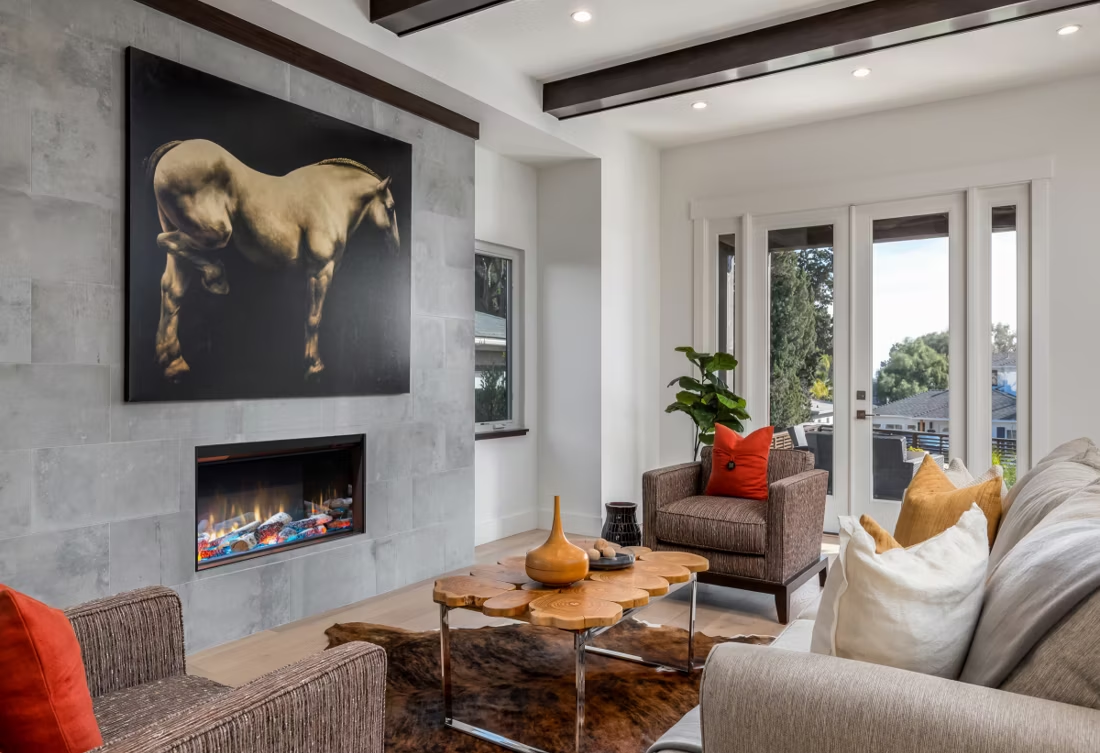
Ambiance and supplemental heat without the chimney work.
Iredell County runs from the booming Lake Norman waterfront around Mooresville and Troutman up to Statesville's historic downtown, and the county has added tens of thousands of residents over the past two decades—much of it in condos, townhomes, and new-construction subdivisions with no existing chimney or fireplace box. Winters here sit in climate zone 4A, with an average winter low around 27°F and roughly 3,755 heating degree days—noticeably milder than the mountain counties to the west. That combination matters: most Iredell County homes need supplemental heat and ambiance in the living room, not a primary wood-burning system built to survive sub-zero nights.
Oak, hickory, maple, and pine are all abundant locally, and wood heat remains common in the county's older farmhouses and rural properties. But for a lakefront condo, a Mooresville townhome under HOA restrictions, or a Statesville home addition without ductwork to extend, electric is often the only realistic option—no gas line, no masonry chimney, no combustion permit, and no restriction from an HOA that prohibits open flame appliances. Power comes through Duke Energy or the EnergyUnited cooperative depending on where you sit in the county, and a 120V or 240V electric unit runs on either without any special setup beyond a properly rated circuit.
Three steps. No salesperson until you're ready.
Tell us about your project
Your zip code, your situation, and the fuel you're leaning toward—or let the answers point you to one.
See what's actually available
The brands dealers within 100 miles genuinely carry—real options, never a catalog mirage.
Get your dealer & Project Guide
A trusted local dealer, plus the free Project Guide & Parts List that names every component of the job.
Frequently Asked Questions
How much does an electric fireplace installation cost in Iredell County?
Plug-in electric inserts and freestanding stoves are the least expensive option—many run $300 to $900 installed, since they just need a standard outlet and no electrician. Wall-mounted or built-in electric fireplaces that require a dedicated 20-amp circuit or in-wall wiring typically run $800 to $2,500 depending on whether an electrician needs to run new wire, especially in older Statesville homes with dated panels. Custom mantels or full media-wall installations with a recessed electric unit can push higher once carpentry is factored in. Local dealers will quote a firm price after seeing your wall and panel setup.
Will an electric fireplace actually heat my room, or is it just for looks?
Most electric fireplaces and inserts include a built-in heater rated around 4,600–5,000 BTU (roughly equivalent to a 1,500-watt space heater), enough to noticeably warm a single room—a den, bonus room, or bedroom—but not a whole house. Given Iredell County's relatively mild winters (average lows around 27°F, about 3,755 heating degree days), that's usually the right amount of heat: supplemental warmth on the coldest nights rather than a primary heating system. Some models let you run the flame effect with the heater off, which is popular in the shoulder seasons here when a fire feels nice but the room doesn't need extra heat.
Do I need a permit for an electric fireplace in Iredell County?
A plug-in electric insert or freestanding unit that uses a standard outlet typically doesn't require a permit. If you're installing a built-in unit that needs a new dedicated circuit or in-wall wiring, that electrical work generally does require a permit through your local building inspections office—the county handles unincorporated areas out of Statesville, while Mooresville and Troutman each have their own inspections departments for work inside town limits. Most electricians who handle these installs pull the permit as part of the job.
What's the difference between an electric fireplace, insert, and stove?
An electric fireplace is typically a built-in or wall-mounted unit designed to look like a framed hearth—common in new construction and remodels around Mooresville's newer subdivisions. An electric insert is sized to slide into an existing masonry fireplace opening, which works well for older Statesville homes that already have a fireplace but don't want the maintenance or draft of burning wood. An electric stove is a freestanding unit styled like a traditional wood stove, popular for renters and condo owners who want the look without any construction. All three plug into standard household power or a dedicated circuit, depending on the model.
Can I install an electric fireplace in a Lake Norman condo or townhome?
Yes, and it's one of the more common reasons buyers around Mooresville and Troutman choose electric in the first place. Many HOA communities near the lake restrict or outright prohibit wood-burning or gas appliances due to fire codes tied to shared walls and multi-unit construction, but electric units generally fall outside those restrictions since there's no combustion, no venting, and no gas line. Check your specific HOA's covenants before buying, but in most cases an electric insert or wall-mounted unit is the only fireplace option approved for condo and townhome living in the Lake Norman corridor.
What's the best electric fireplace for Iredell County homes?
For most Iredell County living spaces, a mid-size electric insert or built-in unit with a realistic LED flame effect and 4,600–5,000 BTU heater covers the job—enough supplemental warmth for a den or living room on a 27°F night without overheating a well-insulated newer home. Brands like Dimplex and Napoleon are widely available through regional dealers and offer app or remote control, adjustable flame brightness, and separate heat/flame settings so you can run ambiance-only through the summer. For a condo or rental where a plug-in unit makes more sense than a hardwired build, a freestanding electric stove gives you the same flame technology without any electrical work.
How much does it cost to run an electric fireplace in Iredell County?
Running the heater on a typical 1,500-watt unit costs a few cents to around 20 cents per hour depending on your rate with Duke Energy or EnergyUnited, whichever serves your address. Running the flame effect alone with the heater off costs a fraction of that, since the LED lighting draws very little power. For a household using the heater as supplemental warmth on cold evenings rather than as a primary heat source, the added cost to a monthly electric bill is typically modest—most of the expense in an electric fireplace project is the upfront unit and any electrical work, not the ongoing operating cost.
Electric vs. wood—which is right for my Iredell County home?
Wood remains a practical choice for rural Iredell County properties with land and access to local oak, hickory, or maple, and it keeps working during a power outage—a real advantage given how ice storms occasionally knock out power in the Piedmont. Electric offers instant on-off convenience, zero ash or creosote, no chimney maintenance, and it's often the only option allowed in HOA-governed communities around Lake Norman. If you already have a working masonry fireplace and want to keep it usable during outages, wood or a wood insert makes sense; if you're in a condo, a newer subdivision home, or just want simple supplemental warmth without upkeep, electric is the easier path.
Electric vs. gas—which is right for my Iredell County home?
Gas delivers more real heat output and a closer approximation of a live flame, but it requires either a natural gas line or a propane tank, plus venting for most models and a gas-line permit. Electric skips all of that—no fuel line, no venting, no combustion permit—which makes it faster and cheaper to install, particularly in a condo, an addition without existing gas service, or a home where running a new gas line isn't practical. For primary supplemental heat in a room used daily through the winter, gas edges out electric on raw heat output; for simplicity, lower upfront cost, and flexibility to install almost anywhere in the house, electric usually wins for Iredell County homeowners.
Do electric fireplaces actually produce heat?
Yes—most put out around 4,800–5,000 BTUs from a standard outlet, which comfortably warms a bedroom, office, or den as a comfort-zone heater. What they won't do is carry a whole house the way wood, gas, or pellet can. Think of electric as ambiance-first with honest supplemental heat: flames on with no heat in July, flames plus warmth in January.
Can I put a TV above my fireplace?
Yes—with an asterisk. Fireplaces are hot and TVs don't like heat. Either put a mantel between them to deflect rising warmth, or choose a fireplace with heat-management technology that creates a cool zone on the wall above—the wall stays around 125 degrees, barely warm, while the room still gets full heat. If you like clean lines and don't want a mantel, heat management is the answer.
What is an in-home preview and do I need one?
It's a visit where a hearth professional measures your space, confirms the model you picked actually works in your home, and walks the specs—framing, gas line, venting, finish work—before anything is ordered. Some details you just can't know until you see the house. Never make a down payment without one; it's the single most-skipped step that burns buyers.
Can a fireplace actually lower my heating bill?
Yes—by creating a comfort zone. A furnace heats every square foot of the house just to warm the one room you're in; a gas fireplace on low burns roughly a sixth of the gas a typical furnace does. Set the furnace around 55–60 degrees as a baseline, then heat the rooms your family actually uses. Families who heat this way commonly save $20–$60 a month.
Stove and Fireplace Dealers in Iredell County
Find your electric fireplace in Iredell County.
Tell us a bit about your home and we'll match you with the right electric fireplace, insert, or stove—plus a free Project Guide & Parts List and a trusted local dealer to install it.
Find Your Fireplace →