
Ambiance and heat—no chimney required—across Gaston County.
From the mill towns along the Catawba to the new townhomes going up in Belmont and Mount Holly, electric is the easiest fireplace to add to a Gaston County home. Find the right unit and connect with a trusted local dealer.
Every Project Starts From One of These Five Situations
The easiest fireplace to add to any room.
Gaston County sits in North Carolina's Piedmont, climate zone 3A, with a winter low average around 31°F and a mild heating season overall—much lighter winter heating demand compared to the mountains or the Midwest. Duke Energy serves electric accounts throughout the county, from Gastonia and Belmont to Mount Holly, Cramerton, Dallas, Stanley, and Cherryville. Because winters here rarely demand a whole-home wood-burning setup the way colder climates do, a lot of local homeowners want fireplace ambiance and zone warmth without a chimney, a gas line, or venting of any kind—and that's exactly what electric delivers.
Gaston County has also grown fast as part of the Charlotte metro, with new construction going up along the river towns and infill townhomes in Belmont's Eagle Island area and Mount Holly's riverfront. Many of those units—condos, apartments, and HOA-restricted townhomes—don't allow solid-fuel or gas appliances at all, which makes electric the default option. It's also the easiest retrofit for older millhouses in Dallas or Cherryville with a bricked-up fireplace that hasn't burned wood in years: an electric insert drops into that opening with no liner work and no masonry inspection. Whether it's a linear built-in for a new open floor plan or a simple plug-in insert for a rental, electric fireplaces install in an afternoon rather than a multi-day project.
Three steps. No salesperson until you're ready.
Tell us about your project
Your zip code, your situation, and the fuel you're leaning toward—or let the answers point you to one.
See what's actually available
The brands dealers within 100 miles genuinely carry—real options, never a catalog mirage.
Get your dealer & Project Guide
A trusted local dealer, plus the free Project Guide & Parts List that names every component of the job.
Frequently Asked Questions
How much does an electric fireplace installation cost in Gaston County?
Most electric fireplace projects in Gaston County run $300 to $2,500. A plug-in insert that drops into an existing masonry opening sits at the low end—no wiring changes needed. A built-in linear unit that requires a dedicated 120V or 240V circuit, wall framing, or a mantel surround runs toward the higher end, since it involves an electrician in addition to the fireplace dealer. Because there's no chimney, no vent pipe, and no gas line to run, electric installs are consistently the least expensive fireplace option across the county, whether you're in Gastonia or out toward Cherryville.
Do I need a permit for an electric fireplace in Gaston County?
It depends on the unit and where in the county you're located. A simple plug-in electric insert or freestanding unit generally doesn't require a permit anywhere in Gaston County. A built-in unit that needs a new dedicated circuit or any electrical panel work typically does require an electrical permit—and because Gastonia, Belmont, Mount Holly, Cramerton, Dallas, and Stanley each run their own building departments, while unincorporated parts of the county fall under Gaston County Code Enforcement, the exact process varies by address. Most local dealers know which jurisdiction a given address falls under and can tell you upfront whether a permit applies.
Can I convert my existing wood fireplace to electric?
Yes, and it's a common project in the older mill housing stock around Dallas, Cherryville, and Gastonia's historic neighborhoods, where many brick fireplaces haven't held a real fire in decades. An electric insert fits into the existing masonry opening with no chimney liner, no cap work, and no sweep required—you're essentially using the opening as a frame for the unit. If the fireplace already has a switched outlet nearby, the conversion can be done in a single visit; if not, a licensed electrician runs a new circuit as part of the install.
Will an electric fireplace actually heat a room, or is it just for looks?
Most electric fireplaces put out 5,000 to 9,000 BTUs—enough to noticeably warm a single room, but not designed to replace your central heat. Given Gaston County's mild winters (average low around 31°F and a fairly light heating season overall), that's usually plenty for supplemental warmth in a den, sunroom, or bedroom on the coldest nights. If you're hoping to zone-heat a larger open floor plan common in newer Belmont and Mount Holly builds, talk to a local dealer about a larger linear unit or multiple smaller units rather than expecting one fireplace to cover it all.
What happens to my electric fireplace during a power outage?
It won't run—electric fireplaces need power for both the heater and the flame effect, so an ice storm or downed line courtesy of a rough Piedmont winter will take it offline along with everything else on the Duke Energy grid. Since Gaston County's heating season is relatively short and mild, most homeowners treat electric as a convenience and ambiance feature rather than backup heat. If emergency heat during outages is a real priority for your household, a wood or gas unit is worth discussing alongside electric—a lot of local homes end up with electric in the main living space and a wood-burning option elsewhere for exactly that reason.
What's the difference between an electric fireplace, insert, and stove?
An electric fireplace is typically a built-in unit set into a wall, mantel surround, or entertainment center—common in new-construction living rooms across Gaston County. An electric insert is sized to slide into an existing masonry fireplace opening, which is the more common retrofit for older homes in Gastonia and Cherryville. An electric stove is a freestanding cabinet-style unit that sits on the floor and looks like a traditional wood stove but plugs into a standard outlet—a good option for a room with no fireplace opening at all, like a finished basement or converted sunroom.
What's the best type of electric fireplace for a Gaston County home?
For newer open-concept builds around Belmont and Mount Holly, a linear built-in with realistic LED flame technology from brands like Dimplex or Napoleon tends to fit the wide, low sightlines of modern living rooms. For older brick-and-frame homes in Gastonia, Cramerton, or Dallas with a traditional fireplace opening, a standard-size insert that matches the existing masonry proportions usually looks more at home. If ambiance matters as much as heat—and in a mild climate like this it often does—ask a local dealer to show you units in person, since flame realism varies a lot between price tiers.
Electric vs. gas vs. wood—which is right for my Gaston County home?
Wood offers the most authentic experience and works without power, using local oak, hickory, and pine, but it means chimney maintenance and ash cleanup. Gas offers instant real heat at the flip of a switch but requires a gas line or propane tank and venting work. Electric requires neither—no chimney, no gas line, no venting—and installs in almost any room in an afternoon, but it depends entirely on grid power and puts out less heat than the other two. Given Gaston County's mild heating season, a lot of homeowners choose electric for secondary rooms and save wood or gas for the primary living space.
Are electric fireplaces a good fit for Gaston County's apartments and condos?
Very much so. New apartment and townhome developments around Belmont's Eagle Island and Mount Holly's riverfront, along with older rental conversions in Gastonia, frequently restrict or outright prohibit solid-fuel and gas appliances due to insurance and HOA rules. Electric fireplaces sidestep that entirely—many plug into a standard outlet, don't require landlord-approved venting modifications, and can be removed without leaving a trace if you move. It's the fireplace option with the fewest strings attached in multi-unit housing.
Can I put a TV above my fireplace?
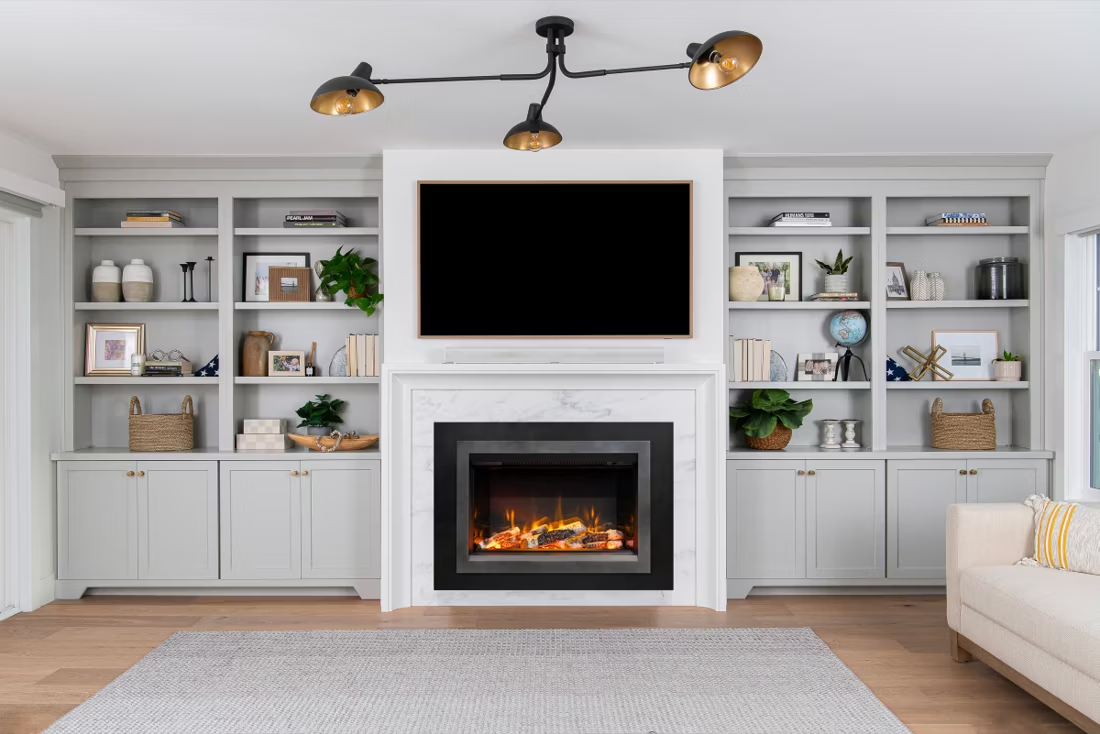
Yes—with an asterisk. Fireplaces are hot and TVs don't like heat. Either put a mantel between them to deflect rising warmth, or choose a fireplace with heat-management technology that creates a cool zone on the wall above—the wall stays around 125 degrees, barely warm, while the room still gets full heat. If you like clean lines and don't want a mantel, heat management is the answer.
Do electric fireplaces actually produce heat?
Yes—most put out around 4,800–5,000 BTUs from a standard outlet, which comfortably warms a bedroom, office, or den as a comfort-zone heater. What they won't do is carry a whole house the way wood, gas, or pellet can. Think of electric as ambiance-first with honest supplemental heat: flames on with no heat in July, flames plus warmth in January.
What is an in-home preview and do I need one?
It's a visit where a hearth professional measures your space, confirms the model you picked actually works in your home, and walks the specs—framing, gas line, venting, finish work—before anything is ordered. Some details you just can't know until you see the house. Never make a down payment without one; it's the single most-skipped step that burns buyers.
How much should I budget for a fireplace?
For an average home—covering the fireplace, the vent pipe, and basic installation—a budget between $3,900 and $5,500 gives you a lot of options across wood, gas, and pellet. By the time you add finish work, gas line, and electrical, the average complete installation lands between $5,000 and $12,000 all-in. In a remodel or new build, a good rule is to put about 2.5% of the total project cost toward the fireplace.
Stove and Fireplace Dealers in Gaston County
Listings include WhyFire partner dealers, dealers we have verified as authorized for the brands we recommend, and established local businesses that carry hearth products. Every listing shows which one it is. The ones marked Preferred run on WhyFire's software, so they can show you real pricing and book your appointment right here. No manufacturer pays for placement. How we verify dealers →
High Country Fireplaces
Viridien Patio + Fireplace
Carolina Fireplace & Granite
Quality Propane
Ron Steel Plumbing
EarthCore Industries
Charlotte Grill Co.
Queen City Sweeps, LLC
Piedmont Chimney & HVAC LLC
Kamin Fireplace & Service
Viridien Patio + Fireplace
Future Energy Of Shelby
Queen City Fireplace & Outdoor
Home Flame
Find your electric fireplace in Gaston County.
Tell us a bit about your home and we'll match you with the right electric fireplace or insert, plus a free Project Guide & Parts List with your recommended local Gaston County dealer.
Find Your Fireplace →