
Instant heat and ambiance for Franklin County homes.
No chimney, no gas line, no wood to split—just plug in or wire up and go. Find the right electric fireplace for your Louisburg, Franklinton, Bunn, or Youngsville home, and connect with a trusted local dealer.
Every Project Starts From One of These Five Situations
Mild Piedmont winters make electric an easy fit.
Franklin County sits in climate zone 4A with a moderate winter heating season and an average winter low near 28°F—cold enough for regular fires, but nowhere near the deep-freeze territory of places like Fargo or Bismarck. That moderate profile is exactly why electric fireplaces have found a real niche here, especially in newer construction around Youngsville and the Wake Forest-adjacent growth corridor, in townhomes and apartments without masonry chimneys, and in older Louisburg and Franklinton homes where owners want supplemental warmth in a den or bedroom without opening up a wall for venting.
Duke Energy Progress serves much of the county's town centers, while Wake Electric Membership Corporation covers many of the rural stretches between Bunn and the Franklinton area—either way, electric fireplaces run on standard household power and don't require the gas line work or masonry chimney that wood and gas units need. For a county where oak, hickory, and maple are the traditional firewood species but not everyone wants to split and stack it, electric offers real flame-effect ambiance and 1,500-watt supplemental heat with none of the maintenance.
Three steps. No salesperson until you're ready.
Tell us about your project
Your zip code, your situation, and the fuel you're leaning toward—or let the answers point you to one.
See what's actually available
The brands dealers within 100 miles genuinely carry—real options, never a catalog mirage.
Get your dealer & Project Guide
A trusted local dealer, plus the free Project Guide & Parts List that names every component of the job.
Frequently Asked Questions
How much does an electric fireplace installation cost in Franklin County?
Plug-in electric fireplaces and inserts are the least expensive hearth option in Franklin County—many units run $300 to $1,200 installed since they simply plug into an existing outlet with no new wiring, venting, or permit involved. Built-in wall units or larger mantel-style fireplaces that require a dedicated 20-amp circuit run higher, typically $800 to $2,500 once an electrician runs new wiring, especially in older Louisburg or Franklinton homes with older panels that need updating first. Local dealers can tell you within a few minutes of looking at your space and your panel whether you're looking at a simple plug-in job or an electrical upgrade.
How much heat does an electric fireplace actually put out?
Most electric fireplaces are rated around 1,500 watts, which translates to roughly 5,000 BTUs—enough to comfortably warm a 400 to 1,000 square foot room depending on insulation and ceiling height. Given Franklin County's relatively mild winter lows (averaging around 28°F), that's usually plenty for supplemental heat in a bedroom, den, or home office without straining the circuit. Electric units are not typically sized to be a home's sole heat source the way a wood stove or gas insert might be in a colder climate—they're best thought of as zone heat plus ambiance, layered on top of your existing HVAC.
Do I need a permit for an electric fireplace in Franklin County?
A simple plug-in electric fireplace or insert that uses an existing outlet generally doesn't require a permit. If your installation involves adding a new dedicated circuit, running wire through a wall for a built-in unit, or upgrading your electrical panel, that electrical work does require a permit through the Franklin County Inspections Department, and it needs to be pulled by a licensed electrician. Most hearth dealers who install built-in electric units either handle this coordination directly or work alongside a licensed electrician who does.
Will an electric fireplace work during a power outage?
No—electric fireplaces require power to run the heater and flame-effect display, so they shut off during an outage just like the rest of your home's electrical system. This is worth factoring in for rural parts of Franklin County served by Wake Electric Membership Corporation, where storm-related outages can occasionally run longer than in town. If backup heat during outages is a priority, a wood stove or a gas fireplace with battery-backup ignition is a better complement to an electric unit rather than a replacement for one.
Electric vs. gas vs. wood—which is right for my Franklin County home?
Wood offers the most authentic fire and works without electricity, and with oak, hickory, and maple common throughout the county, fuel is easy to source locally. Gas delivers instant, consistent heat at the flip of a switch but requires either natural gas service or a propane tank plus proper venting. Electric is the simplest and least expensive to install—no venting, no fuel storage, no chimney—but it's supplemental heat only, not a primary or backup heat source. For Franklin County's mild winters, a lot of homeowners choose electric specifically for rooms where running a flue isn't practical, like an interior bedroom, a finished basement, or a rental property, and rely on central HVAC or a wood stove elsewhere for real cold-weather heat.
What's the best type of electric fireplace for Franklin County's climate?
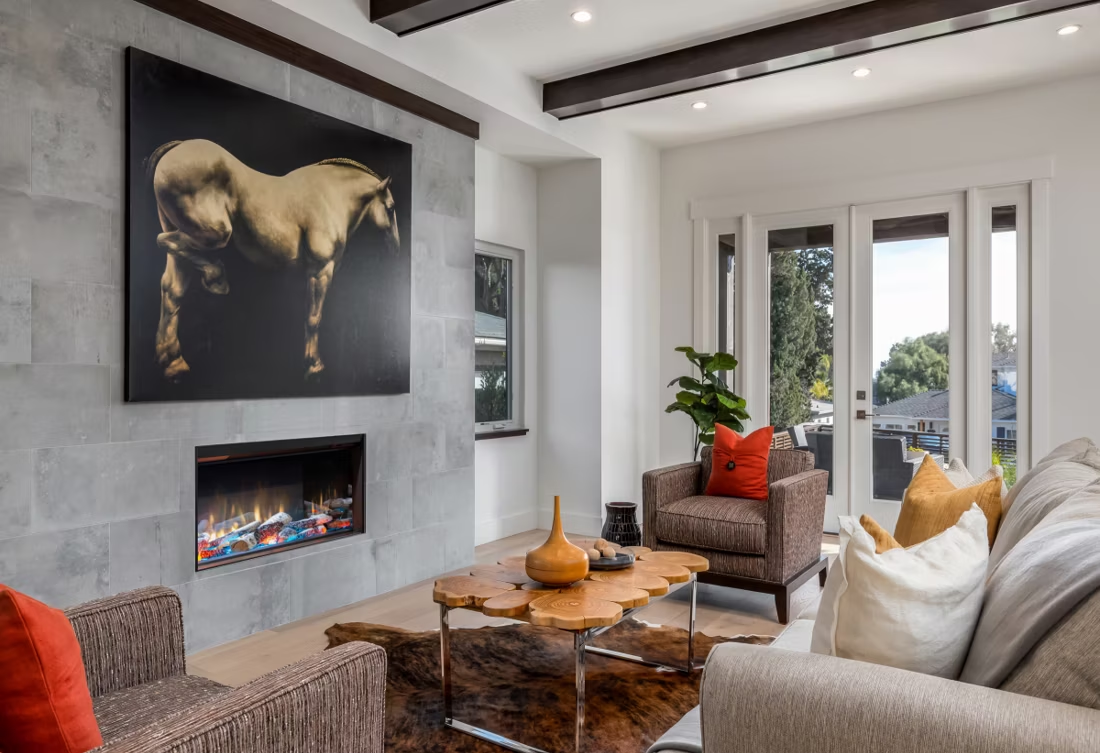
Because Franklin County's heating season is moderate—well below what cold-climate states see—most homeowners here are choosing electric fireplaces for ambiance and light supplemental warmth rather than as a primary heat source. Wall-mounted linear units with realistic LED flame effects are popular in newer homes and townhomes going up around Youngsville and the Wake Forest-adjacent growth areas, while insert-style electric units that slot into an existing masonry opening are a common upgrade in older Louisburg homes where the fireplace hasn't been used for wood in years. Either style works fine in this climate; the choice usually comes down to whether you have an existing fireplace opening to fill or a bare wall to build into.
How much maintenance does an electric fireplace need?
Very little—this is one of the biggest advantages over wood or gas. There's no chimney to sweep, no annual gas line inspection, and no ash to clean up. Maintenance is mostly limited to occasionally dusting the unit, cleaning the glass front, and replacing LED light strips every several years as they dim with age. Built-in units with a blower fan may need the fan cleaned periodically to keep it running quietly. There's no annual service visit required the way there is with wood or gas appliances.
Where can I buy and install an electric fireplace in Franklin County?
Local hearth and fireplace dealers carry electric units and can advise on sizing and placement, while licensed electricians handle any new circuit work for built-in models. For homes in Louisburg, Franklinton, Bunn, or Youngsville, many dealers will do an in-home visit to check your outlet situation, panel capacity, and wall framing before recommending a specific model. Big-box plug-in units are widely available too, but a local dealer will steer you toward a unit sized correctly for your room and flag any electrical issues before they become a problem.
Electric vs. pellet stove—which makes more sense for my home?
Pellet stoves burn compressed wood pellets—regionally available from brands like Lignetics, Hamer Pellet Fuel, and Greenway Renewable Energy—and can serve as genuine supplemental or even primary heat, but they need a vent, a hopper to load, and periodic ash cleanup. Electric fireplaces skip all of that: no venting, no fuel to store, no ash, just an outlet or a dedicated circuit. For Franklin County homeowners in condos, rentals, or homes where running a vent pipe isn't practical, electric is the clear choice. If you're looking for meaningful heat output and don't mind the pellet hopper and occasional cleaning, a pellet stove will out-heat an electric unit on a cold night.
Can I put a TV above my fireplace?
Yes—with an asterisk. Fireplaces are hot and TVs don't like heat. Either put a mantel between them to deflect rising warmth, or choose a fireplace with heat-management technology that creates a cool zone on the wall above—the wall stays around 125 degrees, barely warm, while the room still gets full heat. If you like clean lines and don't want a mantel, heat management is the answer.
Do electric fireplaces actually produce heat?
Yes—most put out around 4,800–5,000 BTUs from a standard outlet, which comfortably warms a bedroom, office, or den as a comfort-zone heater. What they won't do is carry a whole house the way wood, gas, or pellet can. Think of electric as ambiance-first with honest supplemental heat: flames on with no heat in July, flames plus warmth in January.
Can a fireplace actually lower my heating bill?
Yes—by creating a comfort zone. A furnace heats every square foot of the house just to warm the one room you're in; a gas fireplace on low burns roughly a sixth of the gas a typical furnace does. Set the furnace around 55–60 degrees as a baseline, then heat the rooms your family actually uses. Families who heat this way commonly save $20–$60 a month.
How much should I budget for a fireplace?
For an average home—covering the fireplace, the vent pipe, and basic installation—a budget between $3,900 and $5,500 gives you a lot of options across wood, gas, and pellet. By the time you add finish work, gas line, and electrical, the average complete installation lands between $5,000 and $12,000 all-in. In a remodel or new build, a good rule is to put about 2.5% of the total project cost toward the fireplace.
Stove and Fireplace Dealers in Franklin County
Find your electric fireplace in Franklin County.
Tell us a bit about your home and we'll match you with the right electric fireplace or insert—plus a free Project Guide & Parts List with your recommended local dealer.
Find Your Fireplace →