
Reliable heat for Piedmont winters, without the woodpile.
With a moderate overall heating season and winter lows averaging in the mid-20s, Davie County doesn't need a wood-burning commitment to stay warm—it needs a fireplace that lights instantly and holds steady through a Piedmont cold snap. I'll match you with a vetted local dealer who knows whether your address sits on natural gas or propane.
Every Project Starts From One of These Five Situations
Heat that starts with a switch, not a match.
Davie County is a mostly rural stretch of the Piedmont Triad, from Mocksville and Bermuda Run out to Advance, Cooleemee, and Farmington. Winters here are moderate by national standards—average lows sit around 25°F and the county sees a moderate overall heating season—but with no air quality restrictions like winter inversion advisories to contend with, gas appliances run clean and unrestricted all season. For homeowners who don't want to source, split, and stack oak, hickory, maple, or pine every fall, a gas fireplace or insert delivers the same living-room heat without any of that labor.
Fuel access varies by exactly where you sit in the county: Piedmont Natural Gas service reaches parts of Mocksville and the more built-up corridors near Bermuda Run, while much of the county's rural acreage—around Advance, Cooleemee, and Farmington—relies on propane delivered and stored in a tank on the property. Either fuel works fine in a modern direct-vent gas fireplace or insert; the main difference is which gas line or tank setup your installer plans around, and a local dealer will know which option actually serves your street before you ever pick a unit.
Three steps. No salesperson until you're ready.
Tell us about your project
Your zip code, your situation, and the fuel you're leaning toward—or let the answers point you to one.
See what's actually available
The brands dealers within 100 miles genuinely carry—real options, never a catalog mirage.
Get your dealer & Project Guide
A trusted local dealer, plus the free Project Guide & Parts List that names every component of the job.
Frequently Asked Questions
How much does a gas fireplace installation cost in Davie County?
Most gas fireplace and insert installations in Davie County run in the $3,500 to $9,500 range. A gas insert dropped into an existing masonry firebox with a nearby gas line or propane hookup lands toward the lower end. A new direct-vent fireplace built into a wall for a remodel or new construction, including venting and a fresh gas line run, sits higher. Rural properties around Advance or Farmington that need a new propane tank set and a longer line run typically land toward the top of that range. A local dealer will quote a firm number after seeing the space and confirming which fuel serves the address.
Can I convert my wood fireplace to gas?
Yes, and it's a common upgrade in older Mocksville and Cooleemee homes built around a traditional masonry fireplace. A gas insert fits into the existing firebox and vents through a stainless liner run up the current chimney, so the fireplace keeps its look while gaining thermostat-controlled heat and losing the need to season oak or hickory every year. Expect the job to run $4,000 to $8,000 depending on whether the home is already on natural gas or needs a propane line run, and whether the existing flue needs relining work before the insert goes in.
Is my home on natural gas or will I need propane?
It depends on where in the county you are. Piedmont Natural Gas serves parts of Mocksville and the denser areas near Bermuda Run, so if your home already has a gas water heater or furnace there, a fireplace can usually tie into that same line. Outside that footprint—most of the county's rural acreage around Advance, Farmington, and Cooleemee—there's no gas main, and propane from a local bulk supplier is the standard fuel, either off an existing tank or a new one your propane company sets. A hearth dealer can confirm your address before you settle on a unit, since some models are configured differently for natural gas versus propane.
Will a gas fireplace still work if the power goes out?
Most will. Units with intermittent pilot ignition (IPI) run on a small battery backup that kicks in automatically when power drops, so the fireplace still lights and heats on demand. Fireplaces with a millivolt or standing-pilot system, common on simpler models, don't need electricity at all to run the burner—only the optional blower needs power. For Davie County's ice-storm-prone winters, when downed lines around the more rural parts of the county can mean a day or more without power, that distinction is worth asking your dealer about directly.
What's the difference between a gas fireplace, insert, and stove?
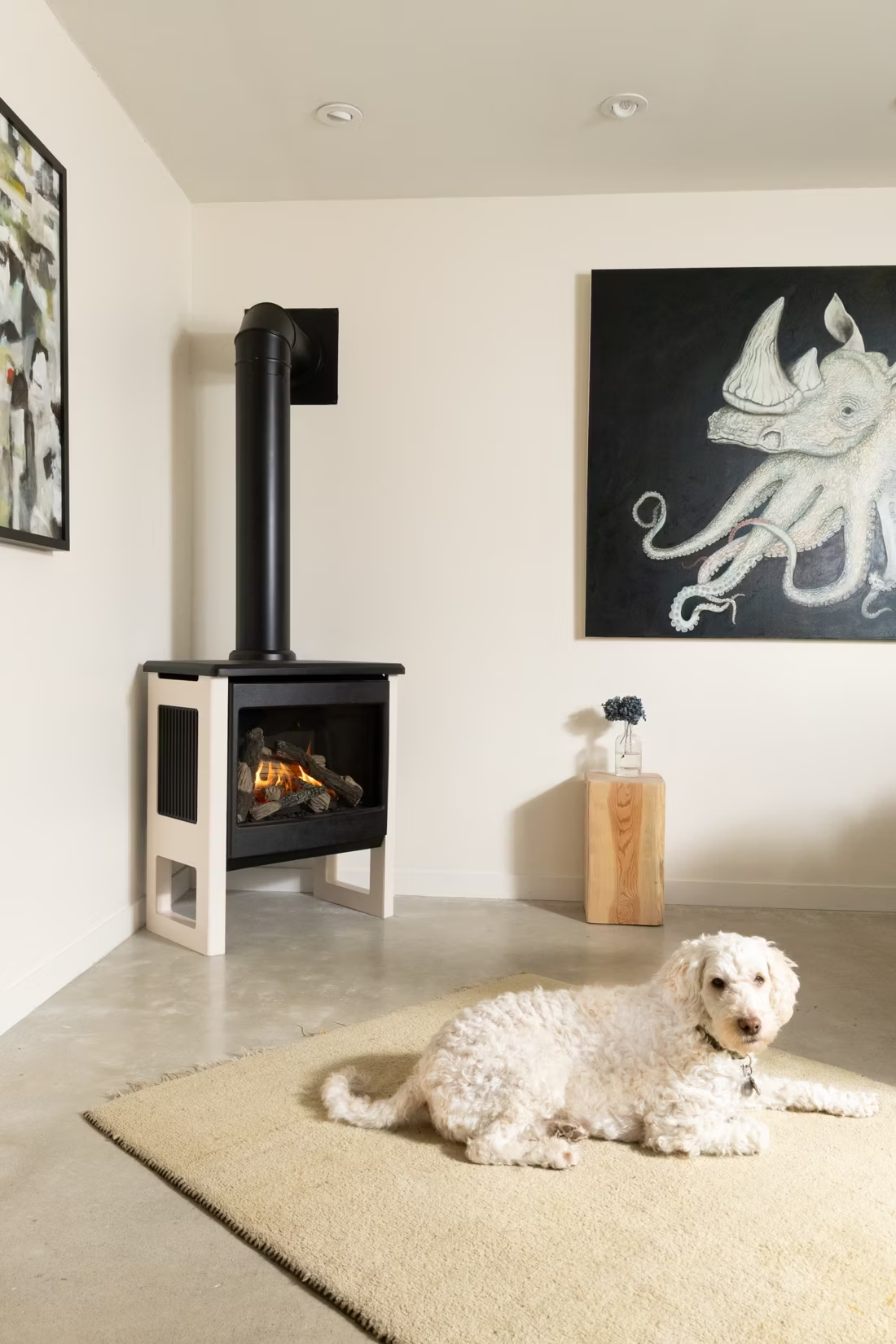
A gas fireplace is a fully built-in unit framed into a wall, the right call for new construction or a full remodel. A gas insert slides into an existing masonry firebox and uses the current chimney as its vent path, which is the more common project in Davie County's older housing stock around Mocksville and Cooleemee. A gas stove is a freestanding, cabinet-style unit that sits on the floor like a wood stove but runs on gas, a good option for a room or manufactured home with no existing chimney to work with. A local dealer can walk the space and tell you which configuration actually fits.
Do I need a permit to install a gas fireplace in Davie County?
Yes. Davie County Building Inspections requires a building permit for the fireplace installation and a separate gas permit for any new or modified gas line, whether you're inside Mocksville town limits or out in unincorporated county land. The gas line work has to be done by a licensed gas-fitter, which is a good reason to go through a full-service hearth dealer rather than piecing the job together yourself—a certified installer coordinates the gas work, the venting, and the inspection sign-off as one job.
Should I get a vented or vent-free gas fireplace?
Vented (direct-vent) units pull outside air for combustion and exhaust it back outside through a sealed pipe, keeping everything out of the living space. Vent-free units burn directly into the room and are legal to install in North Carolina, but they come with strict room-size minimums and require an oxygen depletion sensor. With no air quality restrictions in Davie County, either option is technically on the table, but most local dealers still steer homeowners toward direct-vent models for the cleaner indoor air and the flexibility to place the fireplace anywhere in the home, not just a large enough room.
How often should a gas fireplace be serviced?
Plan on an annual inspection, ideally in early fall before the first cold snap. A technician checks the burner, pilot assembly, gas connections, and venting, and cleans the glass—a much shorter visit than a wood chimney sweep, generally $150 to $250 from a local gas appliance technician. It's worth doing every year even in a moderate Piedmont winter like Davie County's, since a unit that sits unused for stretches of a mild season can develop pilot or igniter issues you won't notice until the first real cold night.
Gas or wood—which makes more sense in Davie County?
Wood is still a strong option here—oak, hickory, maple, and pine are all locally available, and a wood stove or fireplace works with zero dependence on the power grid, which matters during ice storms. But with a moderate overall heating season and average lows in the mid-20s, Davie County's winters don't require the sustained, all-day burning that colder climates do, which is exactly why gas fits so well as a primary heat source in the living room: instant on, thermostat control, and no ash to manage. Many households here run gas for daily convenience and keep a wood stove or fireplace as backup heat for outages or the occasional deep cold snap.
What's the difference between an insert and a zero-clearance fireplace?
An insert is a fireplace that slides into a pre-existing wood-burning fireplace—if you don't have one, there's nothing to insert it into. A zero-clearance fireplace is built into a framed wall, which makes it the answer for remodels and new construction. Simple test: existing masonry fireplace means insert; blank or framed wall means zero-clearance.
Is my gas fireplace wasting gas?
If it was installed more than 15 years ago, probably. Older gas fireplaces keep a standing pilot light burning all the time, and that little flame can cost a couple hundred dollars a year. Newer models use pilot-on-demand ignition—the pilot lights only when you use the fireplace and goes out when you turn it off.
Can a fireplace actually lower my heating bill?
Yes—by creating a comfort zone. A furnace heats every square foot of the house just to warm the one room you're in; a gas fireplace on low burns roughly a sixth of the gas a typical furnace does. Set the furnace around 55–60 degrees as a baseline, then heat the rooms your family actually uses. Families who heat this way commonly save $20–$60 a month.
How much should I budget for a fireplace?
For an average home—covering the fireplace, the vent pipe, and basic installation—a budget between $3,900 and $5,500 gives you a lot of options across wood, gas, and pellet. By the time you add finish work, gas line, and electrical, the average complete installation lands between $5,000 and $12,000 all-in. In a remodel or new build, a good rule is to put about 2.5% of the total project cost toward the fireplace.
Stove and Fireplace Dealers in Davie County
Get your free Project Guide & Parts List for a gas fireplace in Davie County.
Tell me about your home and whether you're on natural gas or propane, and I'll match you with a trusted local Davie County dealer and send a free Project Guide & Parts List—the exact parts, including the vent kit, for your gas project.
Find Your Fireplace →