
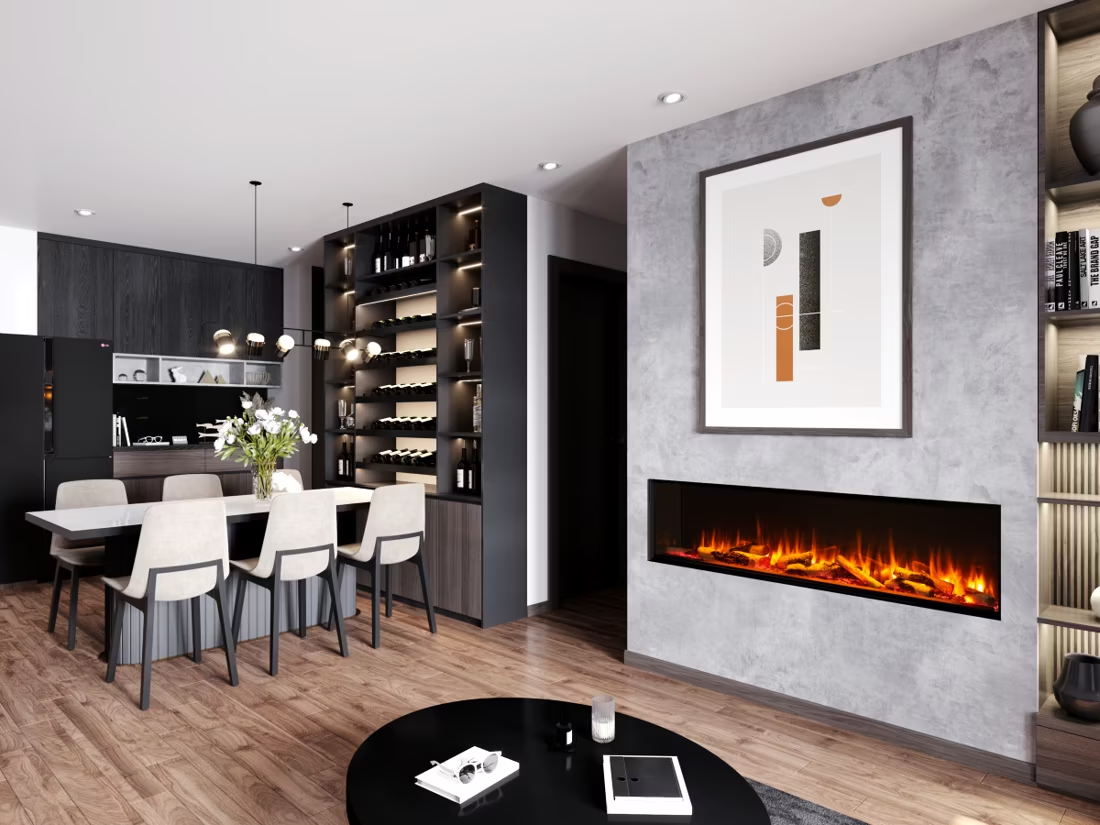
Add real warmth to your Davidson County home—no chimney required.
From downtown Lexington lofts to Thomasville bungalows and everything along the Piedmont, electric fireplaces bring instant heat and ambiance without masonry work or venting. Find the right unit and connect with a trusted local dealer.
Every Project Starts From One of These Five Situations
Mild winters, maximum flexibility.
Davidson County sits in Climate Zone 3A—mixed-humid, with an average winter low around 32°F and a modest, mild winter heating load overall. That's a fraction of what a place like Burlington, Vermont racks up, and it means most homes here aren't leaning on a single fireplace to survive the winter. Instead, the appeal of electric heat in Lexington, Thomasville, and the smaller communities scattered across the county is flexibility: zone heat for a chilly bonus room, ambiance in a den that already has central HVAC, or a safe supplemental option in a rental or a historic downtown building where a masonry chimney was never in the plan to begin with.
There's no air quality restriction on wood or gas burning in Davidson County, so electric isn't filling a regulatory gap here the way it does in some cities—it's a practical choice. Many of the county's older homes near Lexington's courthouse square or Thomasville's furniture-district streets were built without a fireplace or flue at all, and running new gas line or masonry work into a 1920s storefront conversion is often more trouble than it's worth. An electric insert or built-in unit solves that instantly: plug it in or have an electrician run a dedicated circuit, and you have real, adjustable heat and flame effect the same day.
Three steps. No salesperson until you're ready.
Tell us about your project
Your zip code, your situation, and the fuel you're leaning toward—or let the answers point you to one.
See what's actually available
The brands dealers within 100 miles genuinely carry—real options, never a catalog mirage.
Get your dealer & Project Guide
A trusted local dealer, plus the free Project Guide & Parts List that names every component of the job.
Frequently Asked Questions
How much does an electric fireplace installation cost in Davidson County?
Plug-in electric fireplaces and freestanding stoves are the least expensive route—often $300 to $1,000 installed, since no wiring changes are needed beyond a standard outlet. Built-in wall units and mantel packages that require a dedicated 120V or 240V circuit typically run $1,200 to $3,500 once you include the electrician's time to run new wiring, especially in older Lexington or Thomasville homes with older panels. Custom surrounds or recessed installations in new construction can push toward the higher end. Local dealers will quote a firm price after seeing your wall, your panel, and your framing.
Will an electric fireplace actually heat my room, or is it just for looks?
Most electric fireplaces sold today include a real heating element—typically a 1,500-watt resistance or infrared heater capable of warming 400 to 1,000 square feet, depending on the model and your ceiling height. Given Davidson County's mild winters (an average low around 32°F and a season that stays fairly mild overall), that's usually enough to comfortably supplement a room's existing heat, or fully heat a smaller addition, sunroom, or converted garage. It won't replace a heat pump on a 20-degree night, but as zone heat for the rooms you actually spend time in, it does real work—not just flame effect.
Who installs electric fireplaces near me in Davidson County?
Plug-in units don't require a licensed installer at all—any local hearth retailer can deliver and set one up. For built-in or wall-recessed units that need new wiring, you'll want a licensed electrician, and many local hearth dealers either employ one or work directly with an electrical contractor as part of the install package. That combination matters: the dealer sizes the unit and surround correctly, and the electrician handles the code-compliant circuit, so you're not coordinating two separate trades on your own.
What's the difference between an electric insert, an electric stove, and a built-in wall unit?
An electric insert is designed to slide into an existing masonry fireplace opening, which is common in older Lexington homes that have a chimney they no longer want to burn wood in. An electric stove is a freestanding cabinet-style unit that mimics a wood stove's look but plugs into a standard outlet—a popular choice for a den or bonus room with no existing fireplace. A built-in wall unit is recessed into new framing or an existing wall cavity, typically wired on its own circuit, and is the go-to for new construction or a full remodel where you want a clean, linear look. For most Davidson County homes with an old masonry fireplace already in place, an insert is the simplest upgrade.
Do I need a permit to install an electric fireplace in Davidson County?
A simple plug-in unit doesn't require a permit anywhere in the county. If your installation involves running new wiring or adding a dedicated circuit for a built-in unit, that electrical work does require a permit—through Davidson County Building & Land Development in unincorporated areas, or through the City of Lexington or City of Thomasville building departments if you're inside city limits. Most electricians pull this permit as a routine part of the job, so it rarely falls on the homeowner to handle directly.
What's the best electric fireplace for a Davidson County home?
Because Davidson County's climate is mild rather than extreme, the priority for most homeowners here is heat output flexibility and flame realism rather than brute BTU capacity. Look for a unit with a true heating element rated for your room size, an adjustable thermostat, and—if it's going into an existing fireplace opening—a trim kit sized correctly for your firebox. LED flame technology has improved enough that many higher-end units from mainstream hearth brands look convincing even up close, which matters more here than raw wattage, since you're rarely trying to heat a whole house with it.
What does it cost to run an electric fireplace in Davidson County?
Most electric fireplaces draw around 1,500 watts on the heat setting. At typical Duke Energy Carolinas or EnergyUnited residential rates in this part of the Piedmont, running one for a few hours an evening costs somewhere in the range of 20 to 40 cents per hour of heated operation—noticeably cheaper than running central heat to warm one room, and with none of the standby cost of a pilot light. Flame-only mode with the heater off draws only a few watts, so leaving it on for ambiance costs almost nothing.
Electric vs. gas fireplace—which is right for my Davidson County home?
Gas delivers more heat output and the visual presence of a larger, more realistic flame, and it makes sense where you already have a gas line or want a primary heat source for a main living area. Electric wins on installation simplicity—no venting, no gas line, and often no permit at all—and on flexibility, since a unit can go almost anywhere there's an outlet. For a lot of Davidson County projects, especially in older homes downtown or additions without existing gas service, electric ends up being the faster, lower-cost path to a finished-looking fireplace wall.
Electric vs. wood fireplace—which makes more sense here?
Wood remains a strong option in Davidson County—there's no air quality restriction on burning, and oak, hickory, and maple are all readily available locally for anyone who wants the real thing. But wood requires a chimney, ongoing maintenance, and fuel handling that many homeowners in newer subdivisions or historic downtown conversions simply don't want to take on. Electric skips all of that: no chimney, no ash, no annual sweep, just a switch. For a primary source of ambiance and supplemental heat in a mild climate like this one, electric is often the lower-maintenance choice, while wood stays popular for homeowners who specifically want the wood-burning experience or already have a working chimney.
Can I put a TV above my fireplace?
Yes—with an asterisk. Fireplaces are hot and TVs don't like heat. Either put a mantel between them to deflect rising warmth, or choose a fireplace with heat-management technology that creates a cool zone on the wall above—the wall stays around 125 degrees, barely warm, while the room still gets full heat. If you like clean lines and don't want a mantel, heat management is the answer.
What fireplace styles should I know before shopping?
Four cover most of the market: screen-front traditional (mesh front, open feel, fits craftsman homes), traditional door set (the classic look you grew up with), modern linear (wide, low, the statement piece for entertaining), and clean face contemporary (no trim—your tile or stone runs right to the fire's edge). Walk in knowing those four terms and you're ahead of most buyers.
What is an in-home preview and do I need one?
It's a visit where a hearth professional measures your space, confirms the model you picked actually works in your home, and walks the specs—framing, gas line, venting, finish work—before anything is ordered. Some details you just can't know until you see the house. Never make a down payment without one; it's the single most-skipped step that burns buyers.
Can I install a fireplace myself?
If you're putting a fire in your house on purpose, it's best to work with an expert. Unless you're genuinely experienced in framing, gas line, vent pipe, and the national code on clearances to combustibles, have a professional do it—and ideally the same company that sells you the fireplace, so warranty, service, and liability all live under one roof.
Stove and Fireplace Dealers in Davidson County
Find your electric fireplace in Davidson County.
Tell us a bit about your home and we'll put together a free Project Guide & Parts List for your electric fireplace project—matched with a trusted local dealer in Davidson County.
Find Your Fireplace →