
Warmth that holds through Currituck's hurricane season.
From the farm country around Moyock and Grandy to the beach houses of Corolla and Carova, propane gas fireplaces give Currituck County homeowners instant heat and a backup heat source when storms take down the power. Find the right unit and connect with a trusted local dealer.
Every Project Starts From One of These Five Situations
Comfort built for mild winters and unreliable power.
Currituck County splits into two very different halves—a rural mainland of farmland and small towns like Moyock, Grandy, Shawboro, and Currituck Courthouse, and the northern Outer Banks beach communities of Corolla and Carova, the latter reachable only by four-wheel-drive over open sand. With a Climate Zone of 3A, an average winter low of 34°F, and a mild, modest heating season most winters, Currituck doesn't need a fireplace to carry the heating load the way a mountain or Midwest county would. What it does need is dependable heat when a nor'easter or hurricane knocks out power for days at a time—a regular occurrence on this stretch of the Atlantic coast.
There's no natural gas utility infrastructure reaching most of Currituck County—mainland or Outer Banks—so propane is the standard fuel, supplied by regional companies like AmeriGas and Blossman Gas. On the barrier island side, many Corolla and Carova homes are built elevated on pilings to meet coastal AE flood zone rules, which changes how a gas line gets routed and where a fireplace can realistically be installed. A local installer who's done that work before—running lines through an elevated crawlspace, sizing a vent kit for salt air exposure—saves a lot of headaches compared with a big-box quote that doesn't account for it.
Three steps. No salesperson until you're ready.
Tell us about your project
Your zip code, your situation, and the fuel you're leaning toward—or let the answers point you to one.
See what's actually available
The brands dealers within 100 miles genuinely carry—real options, never a catalog mirage.
Get your dealer & Project Guide
A trusted local dealer, plus the free Project Guide & Parts List that names every component of the job.
Frequently Asked Questions
How much does a gas fireplace installation cost in Currituck County?
Most gas fireplace installations in Currituck County run $3,500 to $8,500, with the low end covering a direct-vent propane insert going into an existing masonry fireplace on a mainland home in Moyock or Grandy, and the higher end covering new-construction installs on the Outer Banks where the unit, gas line, and vent kit all have to be routed through an elevated piling foundation. Homes in Corolla and Carova also tend to run higher because of travel time and the coastal construction details installers have to account for. A local dealer will give you a firm number after seeing the home.
Can I convert my existing wood fireplace to gas?
Yes, and it is one of the more common upgrades on the mainland side of the county, where older farmhouses around Grandy and Shawboro still have open masonry fireplaces. A propane insert slides into the existing firebox and uses a stainless liner run up your current chimney, typically running $4,000 to $7,500 installed depending on the insert and how much of the existing flue needs relining. It keeps the look of the original fireplace while giving you instant on-off heat with none of the ash and creosote upkeep.
Do I need natural gas, or should I plan on propane?
Plan on propane. There is no natural gas utility service reaching Currituck County's mainland towns or the northern Outer Banks, so nearly every gas fireplace in the county runs on propane supplied by a regional provider like AmeriGas or Blossman Gas. If you already have a propane tank for a range, water heater, or backup generator, a fireplace can often tie into the same tank. If not, your installer or propane supplier will size a new tank—placement on Corolla or Carova lots has to account for flood zone setbacks and elevated construction.
Will my gas fireplace work when the power goes out?
This is the question most Currituck homeowners actually care about, given how often nor'easters and hurricane remnants knock out power on this part of the coast. Most modern gas fireplaces with intermittent pilot ignition (IPI) include a battery backup that keeps the unit lighting on demand even with no electricity—just remember to check the batteries before storm season. Valor fireplaces take a different approach: their pilot generates its own electricity through the thermocouple, so there's no battery to maintain at all. For a second or third home in Corolla that sits empty for stretches, that self-powering design is worth asking your dealer about.
What's the difference between a gas fireplace, insert, and stove?
A gas fireplace is a fully built-in unit framed into a wall—the usual choice for new construction on the Outer Banks. A gas insert drops into an existing masonry firebox, which fits a lot of the older mainland homes around Moyock and Currituck Courthouse. A gas stove is a freestanding unit that sits on the floor and vents like a wood stove but burns propane—a good option for a screened porch or detached space that doesn't have an existing fireplace. Most Currituck homeowners with an older fireplace go with an insert; new beach houses usually go built-in.
Do I need a permit to install a gas fireplace in Currituck County?
Yes. Currituck County requires a building permit and a separate gas permit for any new gas fireplace or line installation, issued through the Currituck County Inspections Department. Homes in the AE flood zone on the Outer Banks side face additional review since the gas line and appliance placement have to clear elevation and flood-venting requirements. Most hearth dealers pull these permits for you as part of the install, and the gas line work itself has to be done by a licensed gas-fitter regardless of who sells you the fireplace.
Vented vs. vent-free—which should I choose?
Vented (direct-vent) gas fireplaces draw combustion air from outside and exhaust it back outside through a sealed vent, which keeps combustion byproducts out of the living space. Vent-free units burn directly into the room and are legal in North Carolina within room-size limits, but they release some moisture and combustion gas indoors—a real consideration in a coastal county where humidity and salt air already stress building materials. Most Currituck installers steer homeowners toward direct-vent units for exactly that reason, and the vent kit's exterior components need to be corrosion-resistant given the salt exposure this close to the sound and ocean.
How often should a gas fireplace be serviced?
An annual inspection is recommended for any gas appliance, and it matters more in Currituck than in a lot of inland counties because salt air accelerates corrosion on vent caps, burner components, and exterior venting hardware. A technician should check the burner, pilot assembly, gas connections, and venting once a year—typically before the cold snaps of December and January—and this is a good time to swap the backup batteries in an IPI unit ahead of the next storm season.
Gas vs. wood—which fits my Currituck property?
Wood still has a place on the mainland, where oak, hickory, and pine are common and self-sufficient heat matters to a lot of farm properties around Moyock and Grandy. But on the Outer Banks side, gas is the clear default—Corolla and Carova have a huge vacation rental market, and owners overwhelmingly choose gas fireplaces for rental properties because there's no wood handling, no ash, and far less liability risk with guests who've never run a wood stove. For a primary residence on the mainland, wood or gas both work well given how mild the winters here actually are; for a rental or second home near the beach, gas is almost always the right call.
Can I put a TV above my fireplace?
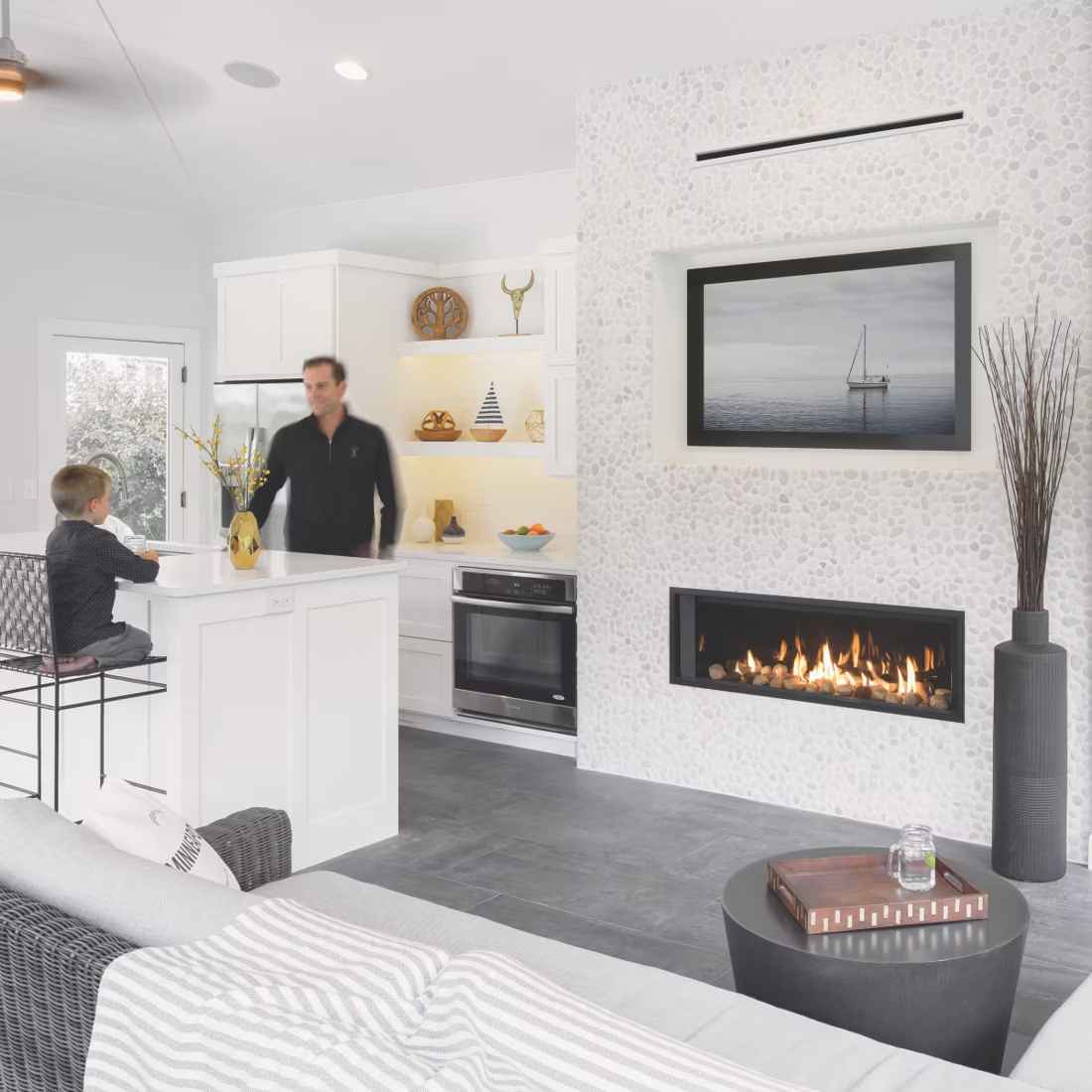
Yes—with an asterisk. Fireplaces are hot and TVs don't like heat. Either put a mantel between them to deflect rising warmth, or choose a fireplace with heat-management technology that creates a cool zone on the wall above—the wall stays around 125 degrees, barely warm, while the room still gets full heat. If you like clean lines and don't want a mantel, heat management is the answer.
What does it take to replace an existing fireplace?
Fireplaces are like icebergs—bigger behind the wall than in front of it. Replacement means removing the surrounding tile or stone (the finish material laps onto the fireplace face), pulling the old unit, setting the new one in the same enclosure, and re-finishing the wall. A hearth professional can determine what's behind your wall without demolition during an in-home preview.
What is an in-home preview and do I need one?
It's a visit where a hearth professional measures your space, confirms the model you picked actually works in your home, and walks the specs—framing, gas line, venting, finish work—before anything is ordered. Some details you just can't know until you see the house. Never make a down payment without one; it's the single most-skipped step that burns buyers.
Does a fireplace add value to my home?
On average, a fireplace adds back to the home about the same amount you spent installing it. Add the monthly savings from heating the rooms you actually use instead of the whole house—often hundreds of dollars a year—and the value case is strong before you even count what a fire does for how your family uses the room.
Start your gas fireplace project in Currituck County.
Tell us about your home—mainland or Outer Banks—and we'll match you with a trusted local dealer and send over a free Project Guide & Parts List: the exact parts, including the vent kit, for your Currituck County gas fireplace project.
Find Your Fireplace →