
Add the glow of a fireplace—no chimney required.
With winter lows averaging just 32°F and a heating season that barely stretches past February, Cumberland County homes from Fayetteville to Hope Mills to Spring Lake don't need a furnace-grade hearth—they need clean, flexible zone heat. Find the right electric unit and connect with a trusted local dealer.
Every Project Starts From One of These Five Situations
Mild winters make electric the practical choice.
Cumberland County sits in climate zone 3A, with a short, mild heating season and winter lows that average around 32°F. That's a fraction of the heating load carried by colder states—most of the county's heating need is concentrated into a handful of cold snaps in December and January rather than a long, grinding winter. It's also why wood and pellet heat, while technically available (oak, hickory, maple, and pine are all common locally, and pellet brands like Lignetics, Hamer Pellet Fuel, and Greenway Renewable Energy do serve the broader region), see very little demand here—hauling cordwood or feeding a hopper for a heating season this short rarely pencils out for most homeowners in Fayetteville, Hope Mills, or Eastover.
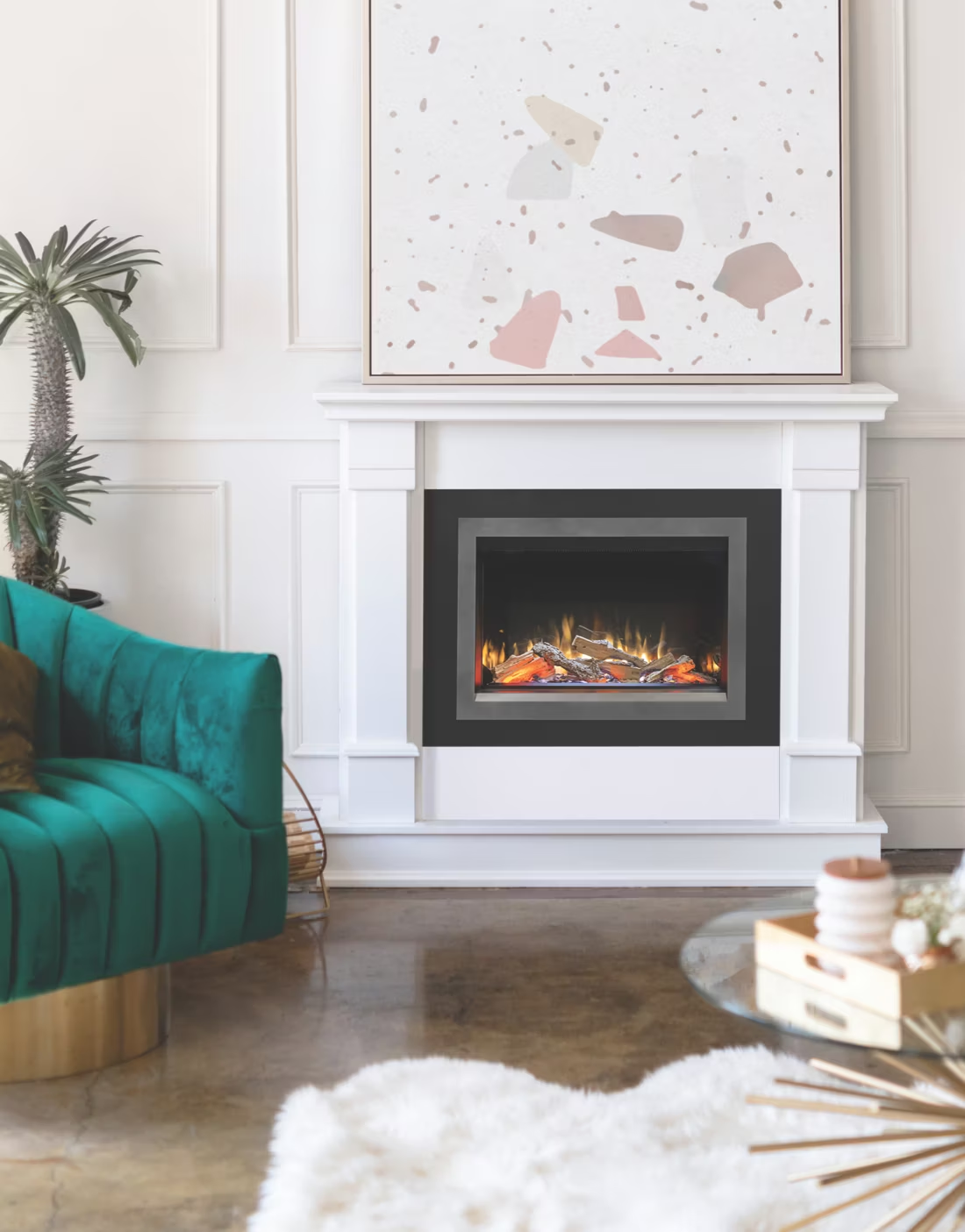
Electric fireplaces fill that gap well. There's no chimney to build, no gas line to run, and no combustion byproduct to vent—which matters in a county with a large renter and military population tied to Fort Liberty, where units turn over often and landlords want something that installs in an afternoon and moves with the tenant if needed. A plug-in insert or a wall-mounted unit gives you real supplemental warmth on the coldest nights and ambient flame the rest of the year, without touching your home's structure or your Duke Energy Progress service panel in most cases.
Three steps. No salesperson until you're ready.
Tell us about your project
Your zip code, your situation, and the fuel you're leaning toward—or let the answers point you to one.
See what's actually available
The brands dealers within 100 miles genuinely carry—real options, never a catalog mirage.
Get your dealer & Project Guide
A trusted local dealer, plus the free Project Guide & Parts List that names every component of the job.
Frequently Asked Questions
How much does an electric fireplace installation cost in Cumberland County?
Most electric fireplace projects in Cumberland County fall into two categories. A plug-in insert or freestanding unit that uses a standard 120V outlet typically runs $150 to $1,200 for the unit itself, with little to no installation labor since it simply plugs in. A built-in wall unit or a larger linear model that needs a dedicated 240V circuit is a bigger project—expect $1,000 to $4,000 once you factor in the unit, framing, and an electrician to run a new circuit. Homes in Fayetteville and Hope Mills with older electrical panels sometimes need a panel assessment first, which a local dealer can flag during an in-home consultation.
What size electric fireplace do I need for my room?
Because Cumberland County's heating load is light—averaging 32°F winter lows rather than the deep cold of northern states—most homeowners size an electric fireplace for the room, not the whole house. A 30- to 40-inch insert or wall unit comfortably supplements heat in a 300- to 400-square-foot living room or den, which covers most single-family layouts in Fayetteville, Spring Lake, and Stedman. Larger linear units (50 inches and up) are more often chosen for visual impact in open-concept great rooms than for raw heat output. A local dealer can walk through your room dimensions and insulation before you buy.
Do I need a permit or an electrician to install an electric fireplace?
It depends on the unit. A plug-in electric fireplace that uses an existing standard outlet doesn't require a permit or an electrician—it's treated like any other appliance. A built-in or wall-mounted unit that requires a new dedicated circuit does require a licensed electrician, and that work typically needs an electrical permit through the City of Fayetteville or Cumberland County, depending on where the home sits. Most local dealers coordinate this as part of the install rather than leaving you to pull the permit yourself.
Will my electric fireplace work during a power outage?
No—and this is worth planning around in Cumberland County, where remnants of Atlantic hurricanes (Florence in 2018, Matthew in 2016) have knocked out Duke Energy Progress service to parts of the county for days at a time. An electric fireplace has no battery backup or standalone heat source; if the grid goes down, so does the unit. For homes that want heat that survives an outage, a gas fireplace on propane or natural gas is the more resilient backup option—many Cumberland County homeowners pair an electric unit for everyday ambiance with a separate outage-ready fuel source.
What's the difference between a plug-in electric insert and a built-in wall unit?
A plug-in electric insert drops into an existing fireplace opening or a media cabinet cutout and runs off a standard outlet—it's the fastest, lowest-cost option and the most common choice for existing masonry fireplaces in older Fayetteville and Hope Mills homes that no longer get used for wood. A built-in wall unit is recessed into new framing, often flush with drywall, and usually needs a dedicated circuit run by an electrician. Built-ins look more like a true architectural fireplace but cost more and take longer to install. For a straightforward upgrade to an existing fireplace opening, most local dealers point homeowners toward the insert first.
Electric vs. gas fireplace—which is right for my Cumberland County home?
Electric wins on install simplicity, upfront cost, and safety—no venting, no gas line, no combustion byproducts, and it works in any room including apartments and rentals near Fort Liberty. Gas wins on heat output and, critically, on power-outage resilience, which matters given the county's hurricane exposure. For a primary living space where you want real backup heat, gas is usually the better fit. For secondary rooms, bedrooms, or rental units where ambiance and easy installation matter more than backup heating capacity, electric is typically the practical choice for Cumberland County's mild climate.
Why isn't wood heat common in Cumberland County, and is a wood stove ever a fit?
With a short, mild heating season and winter lows averaging 32°F, Cumberland County's heating season is short and mild compared to the colder half of the country—there's simply not enough cold-weather demand to make wood a mainstream primary heat source, even though oak, hickory, maple, and pine are all readily available locally. A small number of homeowners in more rural parts of the county, around Eastover or Stedman, still install a wood stove for ambiance, occasional cool-weather use, or as backup heat during hurricane-related outages when the grid is down. But for most Fayetteville-area homes, wood is a niche choice rather than a practical primary heat plan.
How much does it cost to run an electric fireplace with Duke Energy Progress?
Most electric fireplaces draw around 1,500 watts on the heat setting (less on flame-only/ambiance mode with the heater off). Running one for a few hours a night through a Cumberland County winter, at typical Duke Energy Progress residential rates, generally adds somewhere in the range of $10 to $30 a month depending on how much you rely on it and your specific rate plan. Because the county's heating season is short, most homeowners use the unit for a handful of cold weeks rather than running it continuously all winter, which keeps the added cost modest compared to running a whole-home HVAC system.
Are electric fireplaces a good fit for rentals or homes near Fort Liberty?
Yes—this is one of the more common use cases in Cumberland County given the size of the renter and military housing market tied to Fort Liberty. A plug-in electric insert requires no permanent alteration to the home, can be removed or relocated when a lease ends or a family gets reassigned, and doesn't require landlord approval for gas or chimney work. It's also a practical option for off-base rentals in Spring Lake and Fayetteville where property managers want a low-maintenance amenity that won't create liability around open flame or venting.
Can I put a TV above my fireplace?
Yes—with an asterisk. Fireplaces are hot and TVs don't like heat. Either put a mantel between them to deflect rising warmth, or choose a fireplace with heat-management technology that creates a cool zone on the wall above—the wall stays around 125 degrees, barely warm, while the room still gets full heat. If you like clean lines and don't want a mantel, heat management is the answer.
Do electric fireplaces actually produce heat?
Yes—most put out around 4,800–5,000 BTUs from a standard outlet, which comfortably warms a bedroom, office, or den as a comfort-zone heater. What they won't do is carry a whole house the way wood, gas, or pellet can. Think of electric as ambiance-first with honest supplemental heat: flames on with no heat in July, flames plus warmth in January.
How much should I budget for a fireplace?
For an average home—covering the fireplace, the vent pipe, and basic installation—a budget between $3,900 and $5,500 gives you a lot of options across wood, gas, and pellet. By the time you add finish work, gas line, and electrical, the average complete installation lands between $5,000 and $12,000 all-in. In a remodel or new build, a good rule is to put about 2.5% of the total project cost toward the fireplace.
Can a fireplace actually lower my heating bill?
Yes—by creating a comfort zone. A furnace heats every square foot of the house just to warm the one room you're in; a gas fireplace on low burns roughly a sixth of the gas a typical furnace does. Set the furnace around 55–60 degrees as a baseline, then heat the rooms your family actually uses. Families who heat this way commonly save $20–$60 a month.
Stove and Fireplace Dealers in Cumberland County
Listings include WhyFire partner dealers, dealers we have verified as authorized for the brands we recommend, and established local businesses that carry hearth products. Every listing shows which one it is. The ones marked Preferred run on WhyFire's software, so they can show you real pricing and book your appointment right here. No manufacturer pays for placement. How we verify dealers →
Parker Gas
Bobby Taylor Oil Company Inc.
Diversified Energy- Dunn
Find your electric fireplace in Cumberland County.
Tell us a bit about your home and we'll match you with the right electric fireplace or insert—and hand you a free Project Guide & Parts List with your recommended local dealer.
Find Your Fireplace →