
Warmth That Turns On With a Switch.
Piedmont winters in Cramerton are mild, but a gas fireplace still earns its keep on the cold nights and adds year-round ambiance. Find the right unit and get matched with a trusted local dealer.
Every Project Starts From One of These Five Situations
Comfort heat for Piedmont mild winters.
At 592 feet in Gaston County, Cramerton sees a mild Piedmont winter—average lows around 31°F and a winter heating season far shorter and lighter than a place like Bozeman, Montana or Duluth, Minnesota face. That climate means wood heat as a primary necessity isn't really part of daily life here the way it is farther north or at higher elevation. What Cramerton homeowners actually want out of a fireplace is different: instant, clean, controllable warmth for the handful of genuinely cold nights each winter, plus the ambiance of real flame without hauling wood or tending a fire in a converted mill-village bungalow.
Natural gas service reaches many Cramerton neighborhoods through Piedmont Natural Gas, particularly in the older, denser parts of town near Main Street and South New Hope Road. Homes farther out in Gaston County, or in newer subdivisions without a gas main nearby, typically run on propane instead. Either way, Duke Energy Carolinas and the City of Gastonia's municipal electric service power the blowers, fans, and electronic ignition on modern gas units—at Duke's residential rate of about $0.1394/kWh or the city utility's $0.124/kWh, that draw is negligible on a monthly bill.
Three steps. No salesperson until you're ready.
Tell us about your project
Your zip code, your situation, and the fuel you're leaning toward—or let the answers point you to one.
See what's actually available
The brands dealers within 100 miles genuinely carry—real options, never a catalog mirage.
Get your dealer & Project Guide
A trusted local dealer, plus the free Project Guide & Parts List that names every component of the job.
Frequently Asked Questions
How much does a gas fireplace installation cost in Cramerton?
Most Cramerton installations land between roughly $3,500 and $9,000, with the spread driven mostly by venting complexity and whether new gas line work is needed. A direct-vent gas insert dropped into an existing masonry fireplace—common in the older homes near the historic mill village—sits toward the lower end when a gas line is already nearby. A new built-in gas fireplace for a remodel or addition, requiring fresh framing and a longer gas or propane line run, pushes toward the higher end. A local dealer will give you a firm number after seeing the space in person.
Can I convert my existing wood fireplace to gas?
Yes, and it's a common project in Cramerton's older neighborhoods, where many homes built during the mill era still have a working masonry fireplace that rarely gets used for a real wood fire. A gas insert vents through the existing chimney with a stainless liner, so you keep the look of the original fireplace while gaining push-button heat. Given the area's mild winters, most homeowners here treat wood-burning as more trouble than it's worth for the handful of cold nights a year, which is exactly why the wood-to-gas conversion is popular in this climate zone.
Do I need natural gas, or should I use propane?
Both are used around Cramerton. If your home is in one of the older sections of town served by Piedmont Natural Gas, tying into an existing gas line is usually the simplest and cheapest path. If you're farther out in Gaston County or in a newer development without a nearby gas main, propane is the standard fallback—either from an existing tank or a new tank set by a local propane supplier. Nearly every gas fireplace model on the market can be configured for either fuel; your installer just sets the correct orifice and regulator for whichever you have.
Will my gas fireplace work if the power goes out?
Most modern gas fireplaces will, as long as they use IPI (intermittent pilot ignition) with a battery backup—typically a few AA batteries inside the unit that take over automatically when Duke Energy or the City of Gastonia's grid drops. Cramerton doesn't see the extended outages of a harder winter climate, but summer thunderstorms and the occasional ice event do knock out power locally, and a battery-backed unit will still light on demand. Valor fireplaces go a step further: their pilot assembly generates its own electricity through the thermocouple, so there's no battery to remember at all. Ask your local dealer which ignition system is on any model you're considering.
What's the difference between a gas fireplace, gas insert, and gas stove?
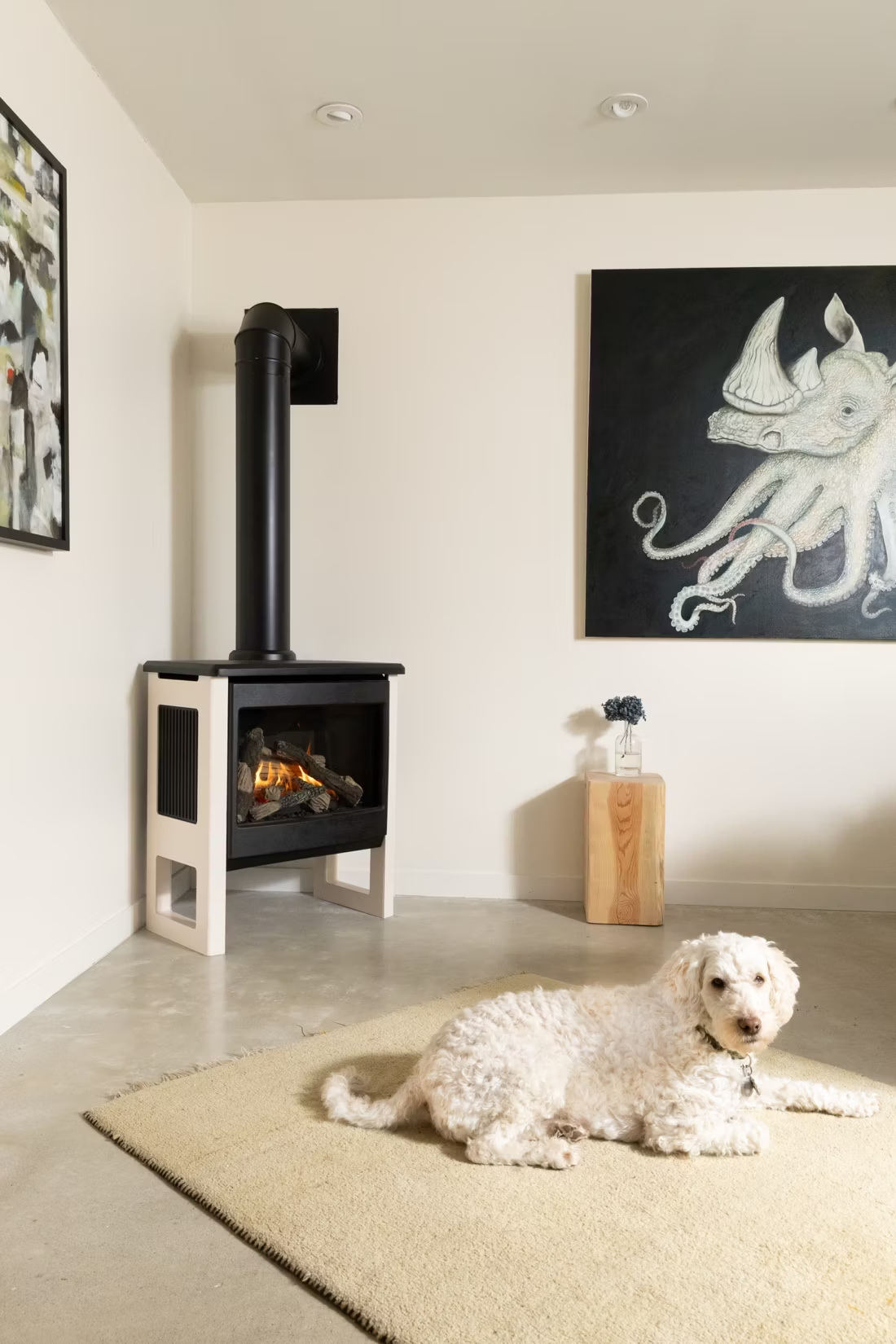
A gas fireplace is a fully built-in unit framed into a wall—the right call for new construction or a remodel without an existing hearth. A gas insert is sized to slide into an existing masonry fireplace opening, which fits a lot of the older housing stock around Cramerton's mill village. A gas stove is a freestanding cabinet unit that sits on the floor, useful in a room with no chimney or fireplace opening at all. Most Cramerton homeowners with an existing fireplace end up choosing an insert; new additions or garage conversions more often go with a built-in unit or freestanding stove.
Do I need a permit to install a gas fireplace in Cramerton?
Yes—Gaston County requires a building permit and a separate gas piping permit for new gas fireplace installations, and any propane tank set also needs sign-off. A licensed gas-fitter has to handle the actual line work, which is one of the main reasons to go through an established hearth dealer rather than a general contractor: they coordinate the gas line, venting, and inspection in one sequence instead of you juggling separate trades.
Are vent-free gas fireplaces allowed in North Carolina?
Vent-free (unvented) gas fireplaces are legal in North Carolina, subject to room-size minimums and oxygen-depletion sensor requirements, but direct-vent units remain the more common and more broadly recommended choice for Cramerton homes. A direct-vent fireplace pulls combustion air from outside and exhausts it back outside through a sealed system, so there's no debate about indoor air quality. Given how many Cramerton homes are smaller mill-village floor plans where room-size minimums for vent-free units can be a tight fit, most local dealers steer customers toward direct-vent models by default.
How often should my gas fireplace be serviced?
Plan on an annual inspection, ideally in early fall before the first cold snap. A technician checks the burner, pilot assembly, venting, and gas connections, and cleans the glass and interior—a much smaller job than a wood chimney sweep, but still important, since a dirty or maladjusted burner is the most common cause of a fireplace that won't stay lit. Local service providers typically charge $125 to $200 for this visit.
Gas vs. electric fireplace—which makes more sense in Cramerton?
Given Cramerton's mild winters and modest heating load, this is a real question here in a way it isn't in colder climates. Gas delivers genuine BTU output, real flame, and works during a power outage if it has battery-backed ignition—worth it if you want a fireplace that can meaningfully heat a room on the occasional 20-degree night. Electric fireplaces cost far less to install (often under $1,000), need no gas line or venting at all, and run efficiently off Duke Energy or City of Gastonia power for ambiance and light supplemental warmth. For a primary living area where you want real heat and real flame, gas usually wins; for a bedroom, sunroom, or accent wall where looks matter more than BTUs, electric is often the simpler, cheaper answer.
Is my gas fireplace wasting gas?
If it was installed more than 15 years ago, probably. Older gas fireplaces keep a standing pilot light burning all the time, and that little flame can cost a couple hundred dollars a year. Newer models use pilot-on-demand ignition—the pilot lights only when you use the fireplace and goes out when you turn it off.
Can I put a TV above my fireplace?
Yes—with an asterisk. Fireplaces are hot and TVs don't like heat. Either put a mantel between them to deflect rising warmth, or choose a fireplace with heat-management technology that creates a cool zone on the wall above—the wall stays around 125 degrees, barely warm, while the room still gets full heat. If you like clean lines and don't want a mantel, heat management is the answer.
How much should I budget for a fireplace?
For an average home—covering the fireplace, the vent pipe, and basic installation—a budget between $3,900 and $5,500 gives you a lot of options across wood, gas, and pellet. By the time you add finish work, gas line, and electrical, the average complete installation lands between $5,000 and $12,000 all-in. In a remodel or new build, a good rule is to put about 2.5% of the total project cost toward the fireplace.
Can I install a fireplace myself?
If you're putting a fire in your house on purpose, it's best to work with an expert. Unless you're genuinely experienced in framing, gas line, vent pipe, and the national code on clearances to combustibles, have a professional do it—and ideally the same company that sells you the fireplace, so warranty, service, and liability all live under one roof.
Nearby Dealers
Hearth shops serving Cramerton and the surrounding area. Every listing shows whether it is a WhyFire partner, a dealer we have verified as authorized for the brands we recommend, or a local business carrying hearth products. No manufacturer pays for placement. How we verify dealers →
High Country Fireplaces
Ron Steel Plumbing
EarthCore Industries
Charlotte Grill Co.
Viridien Patio + Fireplace
Viridien Patio + Fireplace
Home Flame
Queen City Sweeps, LLC
Carolina Fireplace & Granite
Quality Propane
York County Natural Gas
Queen City Fireplace & Outdoor
Piedmont Chimney & HVAC LLC
Kamin Fireplace & Service
Find your gas fireplace in Cramerton.
Tell us about your home and we'll match you with a trusted local dealer and send you a free Project Guide & Parts List—the exact parts, including the vent kit, for your gas fireplace project in Cramerton.
Find Your Fireplace →