
Pellet Heat Isn't Common in Charlotte, But It Still Has a Place.
With winter lows averaging 32°F and roughly 3,058 heating degree days a year, most Charlotte homes lean on gas and electric heat. A pellet stove can still make sense for a specific kind of homeowner—here's who it's for.
Every Project Starts From One of These Five Situations
Charlotte's Mild Winters Don't Call for Biomass Heat, But Some Homes Still Choose It.
Charlotte sits in climate zone 3A at 677 feet of elevation, with winters that rarely produce the sustained cold that makes biomass heating a household staple. Compare Charlotte's roughly 3,058 annual heating degree days to a place like Burlington, VT, which sees over 7,500—the math simply doesn't push Mecklenburg County homeowners toward loading a hopper every day the way it does in genuinely cold climates. Natural gas and electric heat, both rated standard here, cover the vast majority of Charlotte's home heating needs, and that's reflected in how few dedicated pellet stove installers operate in the metro.
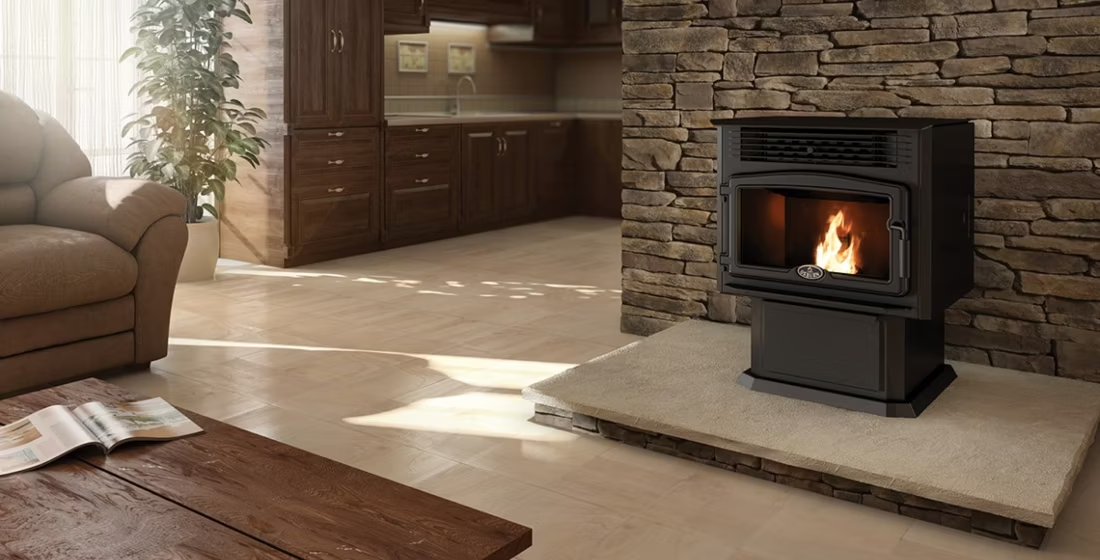
That doesn't mean pellet is off the table. A small number of Charlotte homeowners install pellet stoves or inserts for supplemental zone heat in a sunroom or finished basement, for the low-maintenance ambiance of a real flame without cordwood storage, or because they split time with a mountain property in western North Carolina where pellet heat is far more common. Regional pellet brands—Lignetics, Hamer Pellet Fuel, and Greenway Renewable Energy—do have distribution reaching the Charlotte area, so fuel isn't impossible to find, it's just a smaller, more specialized market than gas or electric.
Three steps. No salesperson until you're ready.
Tell us about your project
Your zip code, your situation, and the fuel you're leaning toward—or let the answers point you to one.
See what's actually available
The brands dealers within 100 miles genuinely carry—real options, never a catalog mirage.
Get your dealer & Project Guide
A trusted local dealer, plus the free Project Guide & Parts List that names every component of the job.
Frequently Asked Questions
How much does a pellet stove installation cost in Charlotte?
Because pellet isn't a mainstream fuel choice in this market, Charlotte doesn't have the dense network of pellet-specific installers you'd find in a colder region. That said, a typical pellet stove or insert installation still runs in the neighborhood of $3,000 to $6,500 nationally, and Charlotte pricing tracks close to that range—venting through an exterior wall is simpler than a full chimney liner job, which helps keep costs down. Expect to work with a hearth dealer who also handles gas and wood, since a pellet-only specialist is uncommon here.
Why isn't pellet heat more common in Charlotte?
It comes down to degree days. Charlotte averages around 3,058 heating degree days a year and winter lows around 32°F—mild enough that a heat pump or gas system handles the season without strain. In a place like Duluth, MN, where winters demand a heating appliance running most of the day for months, pellet stoves earn their keep on fuel cost and BTU output. In Charlotte, the case for hauling and storing bags of pellets is much weaker when gas and electric infrastructure already covers the load efficiently.
Who in Charlotte actually installs a pellet stove?
The homeowners we see pursue pellet in this market tend to fall into a few categories: someone finishing a basement or sunroom who wants supplemental zone heat without running new gas line, someone who likes the look and low ash output of a pellet fire more than the maintenance of cordwood, or someone who splits time between Charlotte and a cabin in the mountains where pellet or wood heat is standard. It's a smaller, more intentional buyer than in a cold-climate market—which is fine, it just means the project benefits from a dealer who can walk through whether pellet is really the right call.
Is pellet fuel easy to find in the Charlotte area?
It's available but not stocked on every corner the way it would be in a state with heavy residential pellet use. Lignetics, Hamer Pellet Fuel, and Greenway Renewable Energy all distribute into the Carolinas, so a local hearth dealer or hardware store can typically source or special-order bags. Because demand is thinner here, it's worth confirming with your installer where you'll restock fuel before committing to a pellet appliance, especially if you're buying for a primary heat source rather than occasional use.
Should I get a pellet stove or a gas fireplace in Charlotte?
For most Charlotte homes, gas is the more practical choice—it's rated standard for this market, requires no fuel storage or hopper refills, and installers who specialize in it are easy to find. Pellet makes more sense if you specifically want the look and feel of a wood-style fire without cordwood handling, or if you're drawn to the lower relative fuel cost pellet offers over propane. If your priority is simplicity and broad installer support, gas is the safer bet in this climate; if you want a biomass fire experience with less mess than cordwood, pellet is worth a look.
Do I need a permit to install a pellet stove in Charlotte?
Yes—a permanently installed pellet stove that vents through an exterior wall or existing chimney generally requires a mechanical permit through the local building department covering the City of Charlotte and Mecklenburg County. A hearth dealer experienced with pellet installs, even if pellet is a smaller share of their business, will typically pull the permit and coordinate inspection as part of the job. Because pellet installs are less frequent here, it's worth confirming your installer has handled one before rather than assuming general HVAC experience covers it.
How much electricity does a pellet stove use, and what will it cost to run?
Pellet stoves rely on an electric auger and blower to feed fuel and circulate heat, typically drawing 100 to 400 watts during operation. At Duke Energy Carolinas' residential rate of roughly 13.94 cents per kWh, that adds up to a modest amount on the power bill—usually a few dollars a month of continuous use. The bigger consideration for Charlotte homeowners is that a pellet stove won't run during a power outage without a battery backup, which matters if you're weighing pellet against wood for storm resilience during one of the area's occasional ice events.
Why are both wood and pellet marked as uncommon fuel choices for Charlotte?
Both fuels are rated not-applicable for this market for the same underlying reason: Charlotte's climate zone 3A and modest heating degree day count don't create the sustained cold-weather demand that drives biomass heating adoption elsewhere. Local wood species like oak, hickory, maple, and pine are common, but they show up here more in decorative or occasional-use wood-burning fireplaces than as a serious primary heat source. If you already have a masonry fireplace and want a low-maintenance upgrade, a gas insert is usually the more common local path than a pellet insert.
Is a pellet stove still a good idea for my Charlotte home?
It can be, depending on what you're solving for. If you want supplemental zone heat, a wood-fire look without cordwood storage, or you're outfitting a second home in a colder part of the state, a pellet stove is a legitimate option even in a market where it's not the default. If you're simply looking for the most cost-effective, best-supported heating upgrade for a Charlotte home, gas or electric will usually serve you better. A local dealer can help you weigh the honest tradeoffs before you commit to a fuel type that's less common in this region.
How often does a pellet stove need cleaning?
A clean pellet stove is a happy pellet stove. Plan on cleaning the burn pot about once a week when you're burning regularly—ash and clinkers gum up the air holes just like a pellet barbecue. Most pellet stove problems trace back to skipped cleaning that nobody explained up front. Some designs make it easy with a trapdoor burn pot: pull a lever and the gunk drops into the ash pan.
Why is my open fireplace making my house colder?
Open fireplaces suck—literally. As the fire burns, it consumes air your furnace already paid to heat and pulls it out through the chimney, so the house is actually colder after the fire goes out than before you lit it. An insert fixes this: it seals the chimney, puts fixed glass across the front, and turns that hole in your house into a real heat source.
Does a fireplace add value to my home?
On average, a fireplace adds back to the home about the same amount you spent installing it. Add the monthly savings from heating the rooms you actually use instead of the whole house—often hundreds of dollars a year—and the value case is strong before you even count what a fire does for how your family uses the room.
Can a fireplace actually lower my heating bill?
Yes—by creating a comfort zone. A furnace heats every square foot of the house just to warm the one room you're in; a gas fireplace on low burns roughly a sixth of the gas a typical furnace does. Set the furnace around 55–60 degrees as a baseline, then heat the rooms your family actually uses. Families who heat this way commonly save $20–$60 a month.
Nearby Dealers
Hearth shops serving Charlotte and the surrounding area. Every listing shows whether it is a WhyFire partner, a dealer we have verified as authorized for the brands we recommend, or a local business carrying hearth products. No manufacturer pays for placement. How we verify dealers →
Charlotte Grill Co.
Ron Steel Plumbing
EarthCore Industries
High Country Fireplaces
Viridien Patio + Fireplace
Viridien Patio + Fireplace
Owens Chimney Systems, Inc
Carolinas Stone Marble And Granite
Tucker Furniture & Appliance Company
Fireplace & Granite Distributors – North Charlotte Showroom
Thomas Gas Company
Queen City Sweeps, LLC
Home Flame
Queen City Fireplace & Outdoor
Contractors Building Supply
Emberstone Chimney Solutions
York County Natural Gas
Carolina Fireplace & Granite
Pellet Brands Stocked Around Charlotte
Manufacturers will point you to the nearest stocking dealer.
Find Your Pellet Stove in Charlotte.
Tell us about your home and how you plan to use the appliance, and we'll match you with a trusted local dealer and send over a free Project Guide & Parts List—a clear plan for your Charlotte pellet project, including the vent kit and parts you'll need.
Find Your Fireplace →