
Find your fireplace in Mecklenburg County.
From uptown Charlotte to the fast-growing suburbs of Huntersville, Matthews, and Pineville, this hub rolls up local hearth retailers, technicians, and fuel suppliers across the county. Tell us your fuel and we'll match you with a trusted local dealer who knows what actually works in a Piedmont climate.
Every Project Starts From One of These Five Situations
Mild Piedmont winters, a modest winter heating season, and a metro built on gas and electric heat.
Mecklenburg County is the anchor of the Charlotte metro and, at roughly 1.6 million residents, the most populous county in North Carolina. Its climate zone 3A profile means winters that are mild by national standards—average lows around 32°F and a winter heating season that's just a fraction of what a home in Duluth, Minnesota logs in a single winter, where the cold season runs far longer and deeper. That heating load shapes the entire local hearth market: homeowners here are choosing a fireplace for ambiance, resale value, and occasional cold snaps far more than for carrying a house through a brutal season. Newer subdivisions across Huntersville, Concord-adjacent Cornelius, and the south Charlotte corridor near Pineville are built with natural gas service from Piedmont Natural Gas already run to the house, which makes a direct-vent gas fireplace or insert the default choice for most new construction and remodels alike.
Wood and pellet appliances are technically available but genuinely uncommon here—many older homes in Charlotte's historic neighborhoods still have a masonry wood fireplace that will occasionally burn oak, hickory, maple, or pine on a cold night, but most owners convert those fireboxes to gas logs rather than run wood as a heat source. Pellet stoves see even less traction: regional brands like Lignetics, Hamer Pellet Fuel, and Greenway Renewable Energy distribute pellets through the Carolinas, but local hearth retailers rarely stock pellet-burning appliances because such a mild winter simply doesn't generate the demand. Gas and electric are the two fuels that are genuinely standard across Mecklenburg County, and this page rolls up retailers, technicians, and suppliers for both, alongside honest guidance on the rare wood or pellet project.
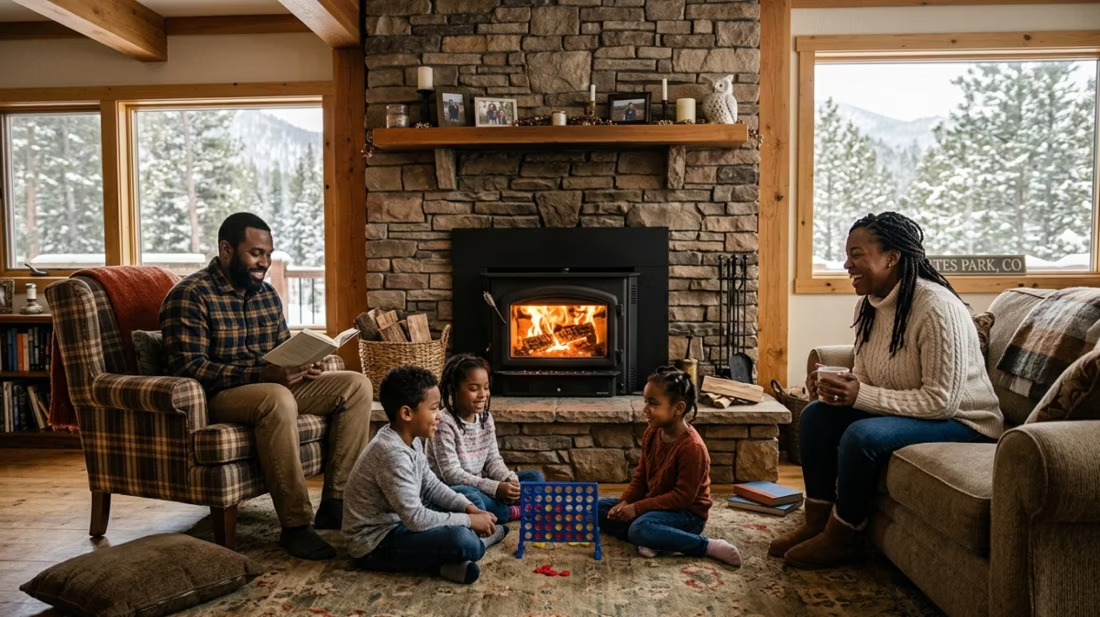
Four fuels. One honest answer for Mecklenburg County.
Wood
81 models available near Mecklenburg County.
Find your wood stove →Gas
365 models available near Mecklenburg County.
Find your gas fireplace →Pellet
See what's available near Mecklenburg County.
Find your pellet stove →Electric
11 models available near Mecklenburg County.
Find your electric fireplace →Three steps. No salesperson until you're ready.
Tell us about your project
Your zip code, your situation, and the fuel you're leaning toward—or let the answers point you to one.
See what's actually available
The brands dealers within 100 miles genuinely carry—real options, never a catalog mirage.
Get your dealer & Project Guide
A trusted local dealer, plus the free Project Guide & Parts List that names every component of the job.
Frequently Asked Questions
Which fireplace fuel makes the most sense in Mecklenburg County?
For the vast majority of homes here, it comes down to gas or electric. With average winter lows around 32°F and such a mild, short winter heating season, nobody in Mecklenburg County needs a fireplace to carry a house through winter the way a home in Bozeman or Fargo would—the appliance is really about ambiance, resale appeal, and taking the edge off the occasional cold snap. A direct-vent gas fireplace or insert is the most common choice in newer construction, since Piedmont Natural Gas already serves most of the metro. Electric fireplaces are a strong option too, especially in condos and townhomes around uptown Charlotte where venting a gas unit isn't practical or where a landlord won't allow gas work. Wood and pellet units exist but are genuinely uncommon; they're worth considering mainly if you already have masonry and want to keep it burning wood rather than convert it.
Are wood-burning fireplaces still installed in Mecklenburg County?
Rarely as a new install, though plenty of older homes in neighborhoods like Dilworth and Elizabeth still have working masonry wood fireplaces that burn local oak, hickory, maple, or pine on cold evenings. When those homeowners renovate, the overwhelming majority convert the firebox to gas logs rather than maintain a wood-burning setup, simply because the mild winters here don't justify the ongoing wood supply, chimney sweeping, and ash cleanup for a fireplace used a handful of nights a year. If you specifically want to keep burning wood, a handful of local dealers can retrofit an insert into an existing masonry opening, but expect a smaller pool of installers and longer lead times than for a comparable gas project.
Can I find a pellet stove dealer in Mecklenburg County?
It's the toughest fuel to source locally. Pellet brands like Lignetics, Hamer Pellet Fuel, and Greenway Renewable Energy all distribute through the Carolinas, so bagged pellets themselves aren't hard to find, but very few Charlotte-area hearth retailers stock pellet-burning stoves or inserts because such a mild climate simply doesn't create enough demand to justify the showroom space. If a pellet stove is genuinely what you want—maybe you split time with a property in a colder region, or you just prefer the look and feel—we can point you toward the handful of regional dealers who still carry them, but expect fewer choices and possibly a longer wait for parts and service than you'd get with a gas or electric unit.
Do I need a permit for a gas fireplace installation in Mecklenburg County?
Yes. Gas fireplace and insert installations require a permit through Mecklenburg County Code Enforcement, or through the City of Charlotte's permitting office if your property is inside city limits, and the gas-line connection itself must be run or verified by a licensed gas fitter. If you're converting an existing wood-burning masonry fireplace to gas logs, that conversion typically needs its own permit and inspection since it involves running a new gas line to the firebox. Electric fireplace installs usually skip the permit process unless you're hardwiring a built-in unit that requires a new dedicated circuit. Most retailers we match homeowners with handle this paperwork directly as part of the installation.
What does a fireplace installation typically cost in Mecklenburg County?
Gas fireplaces, inserts, and log sets generally run $3,500 to $9,000 installed, with the wide range driven mostly by how far the gas line has to travel from your meter to the firebox—a straightforward log-set conversion in an existing masonry fireplace sits at the low end, while a new direct-vent unit in an addition or a home without existing gas service sits at the high end. Electric fireplaces are the more budget-friendly option: $200 to $3,000 for the unit itself, plus $300 to $1,000 in labor unless it's a simple plug-and-play placement. Wood insert retrofits into existing masonry, when a homeowner specifically wants to keep burning wood rather than convert to gas, typically run $4,000 to $8,000 given the smaller pool of installers who still handle that work locally.
How does scheduling and service work across a county this large?
With roughly 1.6 million residents spread from uptown Charlotte out to Huntersville, Cornelius, Matthews, and Pineville, most hearth retailers and service techs run installation and repair crews county-wide rather than sticking to one neighborhood, but the fastest-growing suburbs can see longer lead times simply due to new-construction demand outpacing available installers. Annual gas fireplace inspections are worth booking in late summer or early fall, ahead of the first cold snap, since scheduling tightens up once temperatures drop and everyone wants their pilot light relit at the same time. If you're in a newer subdivision without natural gas service yet, ask your installer whether a propane tank setup or an electric unit makes more sense while you wait on utility expansion.
How much should I budget for a fireplace?
For an average home—covering the fireplace, the vent pipe, and basic installation—a budget between $3,900 and $5,500 gives you a lot of options across wood, gas, and pellet. By the time you add finish work, gas line, and electrical, the average complete installation lands between $5,000 and $12,000 all-in. In a remodel or new build, a good rule is to put about 2.5% of the total project cost toward the fireplace.
What is an in-home preview and do I need one?
It's a visit where a hearth professional measures your space, confirms the model you picked actually works in your home, and walks the specs—framing, gas line, venting, finish work—before anything is ordered. Some details you just can't know until you see the house. Never make a down payment without one; it's the single most-skipped step that burns buyers.
Does a fireplace add value to my home?
On average, a fireplace adds back to the home about the same amount you spent installing it. Add the monthly savings from heating the rooms you actually use instead of the whole house—often hundreds of dollars a year—and the value case is strong before you even count what a fire does for how your family uses the room.
Wood, gas, pellet, or electric—how do I choose?
Match the fuel to your life, not the other way around. Wood: lowest fuel cost and total power-outage independence, but you're hauling and stacking. Gas: press a button, set a thermostat, no maintenance to speak of. Pellet: wood economics with automatic feeding, in exchange for weekly cleaning and a need for electricity. Electric: plugs in anywhere with honest supplemental heat. Nobody regrets the fuel that fits how they actually live.
Stove and Fireplace Dealers in Mecklenburg County
Listings include WhyFire partner dealers, dealers we have verified as authorized for the brands we recommend, and established local businesses that carry hearth products. Every listing shows which one it is. The ones marked Preferred run on WhyFire's software, so they can show you real pricing and book your appointment right here. No manufacturer pays for placement. How we verify dealers →
EarthCore Industries
Ron Steel Plumbing
Charlotte Grill Co.
Viridien Patio + Fireplace
High Country Fireplaces
Fireplace & Granite Distributors – North Charlotte Showroom
Viridien Patio + Fireplace
Queen City Fireplace & Outdoor
Queen City Sweeps, LLC
Thomas Gas Company
Tucker Furniture & Appliance Company
Owens Chimney Systems, Inc
Carolinas Stone Marble And Granite
Carolina Fireplace & Granite
Quality Propane
Home Flame
Contractors Building Supply
Emberstone Chimney Solutions
Get matched with a local Mecklenburg County dealer.
Pick your fuel below and we'll put together a free Project Guide & Parts List—the right unit, the vent kit it needs, and the local dealer we recommend for your project.
Find Your Fireplace →