
Instant Warmth for Cary's Piedmont Winters.
Cary's mild Wake County winters don't call for a woodpile—they call for a gas fireplace that lights instantly and heats efficiently. Find the right unit and connect with a trusted local dealer.
Every Project Starts From One of These Five Situations
Convenient heat for a mild-winter climate.
At 404 feet in the North Carolina Piedmont, Cary sits in Climate Zone 4A with an average winter low around 31°F and a winter heating season that's only a fraction as demanding as what a place like Duluth, MN or Burlington, VT experiences each year. That milder profile is exactly why wood heat never became standard infrastructure here the way it did in colder, more rural regions: most Cary homeowners want supplemental warmth and ambiance for a handful of cold snaps each January, not a primary heat source they have to feed and tend.
Gas fills that gap well. Cary's fast-growing subdivisions—from Preston to MacGregor Downs to the newer developments off Green Level Church Road—are commonly built with gas or gas-log fireplaces as a standard feature, and older neighborhoods with existing wood-burning masonry fireboxes are frequently converted to gas inserts. Electric service here splits between Duke Energy Progress and Duke Energy Carolinas depending on which side of town you're on, with residential rates around 15.5¢ and 13.9¢ per kWh respectively—gas logs and inserts typically cost less to run than electric resistance heat and deliver a real flame instead of a simulated one.
Three steps. No salesperson until you're ready.
Tell us about your project
Your zip code, your situation, and the fuel you're leaning toward—or let the answers point you to one.
See what's actually available
The brands dealers within 100 miles genuinely carry—real options, never a catalog mirage.
Get your dealer & Project Guide
A trusted local dealer, plus the free Project Guide & Parts List that names every component of the job.
Frequently Asked Questions
How much does a gas fireplace installation cost in Cary?
Converting an existing wood-burning masonry fireplace to a gas insert in a Cary home typically runs $3,500 to $8,500, depending on the insert model and whether a new gas line needs to be run to the firebox. A full built-in gas fireplace for new construction or a remodel—with framing, direct-vent piping, and gas line work—usually falls between $6,000 and $12,000. Homes already plumbed for natural gas (common in many newer Cary subdivisions) tend to land on the lower end; homes relying on propane or needing a longer gas line run cost more. A local hearth retailer will give you a firm number after seeing your fireplace and gas access in person.
Can I convert my existing wood-burning fireplace to gas?
Yes, and it's one of the more common projects in Cary's older neighborhoods, where many homes were originally built with traditional wood-burning masonry fireboxes using oak, hickory, or pine as the go-to local firewood. A gas insert drops into that existing masonry opening, uses a stainless liner run through your current chimney, and eliminates the ash, smoke, and wood-handling entirely. Because wood heat sees so little year-round use in Wake County's mild climate, most homeowners find the switch to instant, thermostat-controlled gas heat a clear upgrade rather than a compromise.
Do I need natural gas, or can I use propane?
Either works, and which one makes sense depends on your street. Many established Cary neighborhoods have natural gas service already running to the home for the water heater or furnace, which makes adding a fireplace straightforward. Some newer developments on the outer edges of Wake County—particularly homes on well and septic—aren't on the natural gas grid and rely on propane instead, typically with a buried or above-ground tank. Most gas fireplace models can be set up for either fuel; your installer configures the correct orifice and regulator for whichever you have.
Will my gas fireplace work during a power outage?
Most modern gas fireplaces will, yes. Units with IPI (intermittent pilot ignition) run on a battery backup that kicks in automatically if Duke Energy service drops, which happens periodically in Cary during Piedmont ice storms and summer thunderstorm outages. The fireplace lights and operates normally off the batteries until power is restored—just remember to keep fresh ones in the unit. Valor fireplaces take a different approach: their pilot assembly generates its own electricity through a thermocouple, so there's no battery to maintain or forget. Ask your local dealer which ignition system a given model uses if outage backup matters to you.
What's the difference between a gas fireplace, gas insert, and gas stove?
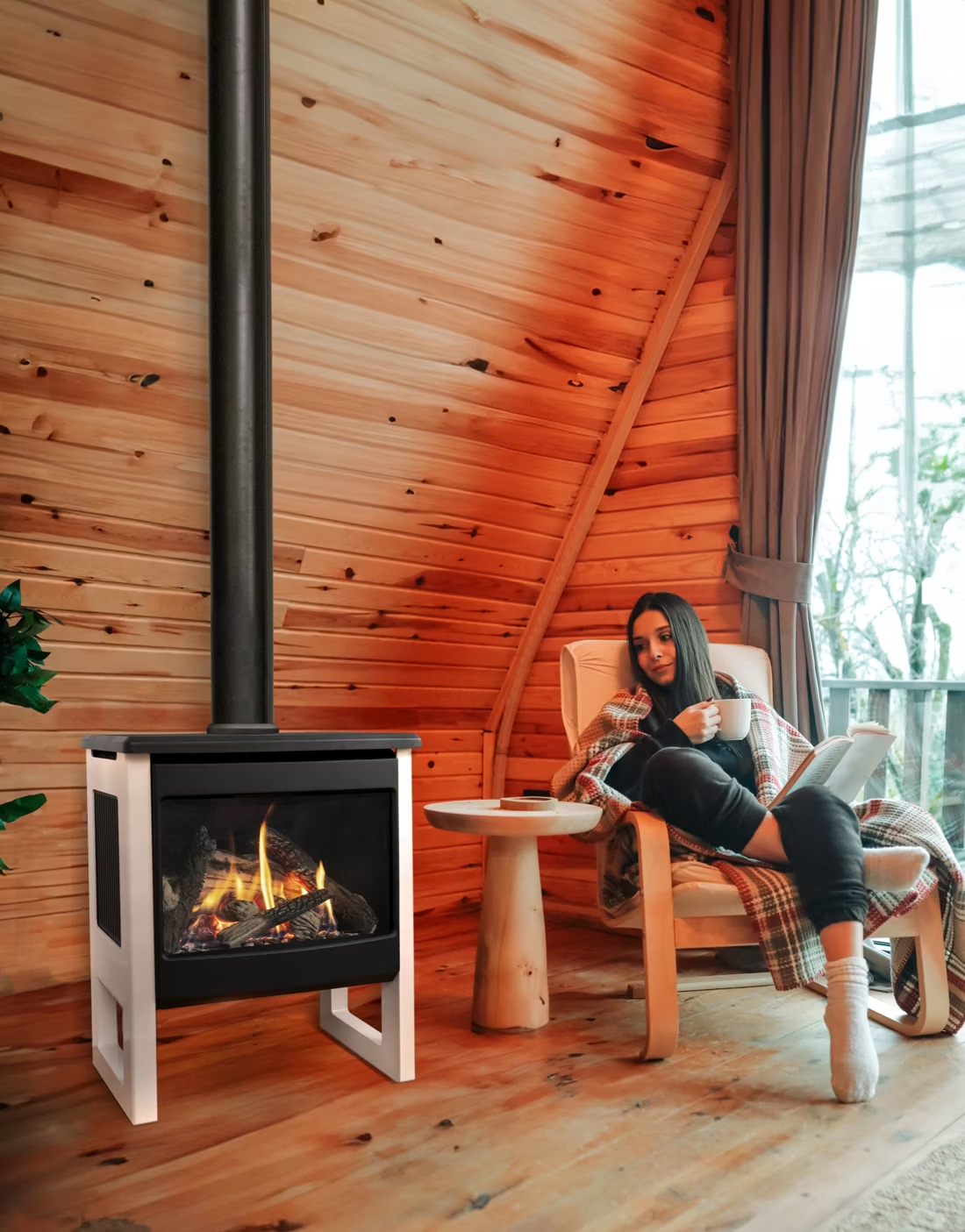
A gas fireplace is a fully built-in unit framed into a wall—the standard choice for new Cary construction or a full remodel. A gas insert is sized to slide into an existing masonry firebox, which is common in Cary's older wood-burning-fireplace homes, and uses the existing chimney as its vent path with a liner. A gas stove is a freestanding cast-iron or steel unit that sits on the floor like a wood stove but runs on gas—a good fit for a room with no existing fireplace and no interest in framing one in. For most Cary homeowners upgrading an existing masonry fireplace, the insert is the simplest and most cost-effective path.
Do I need a permit to install a gas fireplace in Cary?
Yes—new gas fireplace installations require both a building permit and a gas piping permit, handled through the Town of Cary's Development Customer Service Center (or Wake County, for the small pockets of unincorporated area within Cary zip codes). A licensed gas-fitter is required for the line work regardless of who installs the fireplace itself. Established hearth retailers coordinate the permitting, gas line, and venting inspection as one package, which is generally easier than trying to line up separate trades yourself.
What's the difference between vented and vent-free gas fireplaces?
Vented (direct-vent) gas fireplaces pull combustion air from outside and exhaust it back outside through a sealed pipe—they're the cleanest, safest option and the most common choice in Cary installations. Vent-free units burn gas directly into the room without external venting; they're legal in North Carolina under specific room-size and ventilation requirements, but they release some combustion byproducts into the living space and aren't allowed in bedrooms under NC code. Given Cary's mild climate and the fact that most homeowners here want a fireplace for occasional warmth and ambiance rather than sustained heavy use, a direct-vent unit is usually the better long-term choice—a local retailer can walk you through both if you're weighing it.
How often should my gas fireplace be serviced?
Plan on an annual inspection, ideally in early fall before the first cold snap. A certified technician checks the burner, pilot assembly, venting, and gas connections, and cleans the glass and interior—a much lighter job than wood-stove chimney sweeping, but important since gas fireplaces in Cary often sit unused for long stretches through the humid Piedmont summers and can develop pilot or igniter issues by the time cold weather returns. Local gas appliance service providers typically charge $150 to $250 for a standard annual inspection.
Gas vs. wood—which is right for my Cary home?
In Wake County's climate, wood is genuinely uncommon as a heating choice—with a winter heating season that's only a fraction as demanding as colder parts of the country and mild winter lows around 31°F, most Cary homeowners don't need or want to manage firewood, ash, and creosote for the handful of truly cold nights each winter. Where older homes have existing wood-burning fireboxes, many owners still choose to convert to gas for the same reason: instant on-off operation, no wood storage, and a cleaner look with none of the smoke that would otherwise drift through a dense suburban neighborhood. Wood remains an option for households who specifically want the ritual of a real cordwood fire, and oak, hickory, and pine are all available regionally, but for the overwhelming majority of Cary homes, gas is the practical and popular choice.
Is my gas fireplace wasting gas?
If it was installed more than 15 years ago, probably. Older gas fireplaces keep a standing pilot light burning all the time, and that little flame can cost a couple hundred dollars a year. Newer models use pilot-on-demand ignition—the pilot lights only when you use the fireplace and goes out when you turn it off.
Does a gas fireplace work when the power is out?
Yes—modern gas fireplaces have a battery backup for the ignition system that lasts for weeks, so no power equals no problem. Your furnace can't say that: no electricity, no blower, no heat. It's one of the most common reasons families add a fireplace, and worth confirming on any model you're considering.
Does a fireplace add value to my home?
On average, a fireplace adds back to the home about the same amount you spent installing it. Add the monthly savings from heating the rooms you actually use instead of the whole house—often hundreds of dollars a year—and the value case is strong before you even count what a fire does for how your family uses the room.
What is an in-home preview and do I need one?
It's a visit where a hearth professional measures your space, confirms the model you picked actually works in your home, and walks the specs—framing, gas line, venting, finish work—before anything is ordered. Some details you just can't know until you see the house. Never make a down payment without one; it's the single most-skipped step that burns buyers.
Nearby Dealers
Hearth shops serving Cary and the surrounding area. Every listing shows whether it is a WhyFire partner, a dealer we have verified as authorized for the brands we recommend, or a local business carrying hearth products. No manufacturer pays for placement. How we verify dealers →
L.g. Jordan Oil & Gas Co.
Brandco Incorporated
Original Grills - Outdoor Kitchen & Grill Store
Smoke Alert
Fireside Distributors Inc
Pro Source Of Raleigh
Viridien Patio + Fireplace
Oak City Fireplace & Outdoor Living
The Fireplace Depot
Energy United Propane- Creedmoor
Steve Marcom Services
Home Flame
Find your gas fireplace in Cary.
Tell us a bit about your home and we'll match you with a trusted local dealer and a free Project Guide & Parts List—the exact fireplace or insert, vent kit, and installation plan for your Cary home.
Find Your Fireplace →