
Add real warmth to your Apex home without a chimney.
Apex winters rarely demand a wood stove or a gas line. Find the electric fireplace or insert that fits your home, and connect with a trusted local dealer.
Every Project Starts From One of These Five Situations
Mild winters, new-construction neighborhoods, and heat that plugs in.
Apex sits at 415 feet in the Piedmont, with an average winter low of 31°F and a mild, short winter heating season—a fraction of what a place like Burlington, VT or Duluth, MN sees. Nobody here is trying to hold a fire through a subzero night. Instead, most homeowners want a fireplace that adds ambiance to a living room, primary bedroom, or finished basement, plus a bit of supplemental warmth on the handful of nights that dip into the 20s.
Apex has been one of the fastest-growing towns in Wake County for two decades, and that shows in the housing stock: townhomes, HOA-governed subdivisions, and new-construction single-family homes where exterior venting or masonry chimneys were never part of the plan. Electric fireplaces fit that reality—no gas line, no flue, no combustion byproducts to vent outside. Depending on where you live in Apex, your power comes from Duke Energy Progress, Duke Energy Carolinas, or the Town of Apex's own municipal electric utility, with residential rates ranging roughly from 10.5 to 15.5 cents per kWh. At those rates, running a 1,500-watt electric fireplace for a few hours a night costs pennies—this is heat you can afford to use for looks alone.
Three steps. No salesperson until you're ready.
Tell us about your project
Your zip code, your situation, and the fuel you're leaning toward—or let the answers point you to one.
See what's actually available
The brands dealers within 100 miles genuinely carry—real options, never a catalog mirage.
Get your dealer & Project Guide
A trusted local dealer, plus the free Project Guide & Parts List that names every component of the job.
Frequently Asked Questions
How much does an electric fireplace installation cost in Apex?
A plug-in freestanding electric fireplace or a tabletop unit needs no installation at all—you're looking at $150 to $800 for the unit itself. A built-in wall unit or an electric insert set into an existing masonry fireplace, which usually requires a dedicated 120V or 240V circuit run by a licensed electrician, typically runs $1,200 to $4,000 depending on the model, whether new wiring is needed, and any surround or mantel carpentry. Local dealers in Apex will quote a firm number after seeing your wall and existing electrical panel capacity.
Do I need a permit to install an electric fireplace in Apex?
A plug-in unit that uses an existing outlet needs no permit. If your installer is running a new dedicated circuit or hard-wiring a built-in unit into a wall, that electrical work requires a permit through the Town of Apex Permitting and Development Department. Licensed electricians who regularly work with local hearth dealers typically pull this permit as part of the job, so it's rarely something homeowners have to handle themselves.
Which electric utility serves my home, and does it matter for a fireplace?
Apex is split between Duke Energy Progress, Duke Energy Carolinas, and the Town of Apex's own municipal electric service, and which one serves your address depends on your specific neighborhood—older in-town parcels near downtown Apex are more likely to be on the town's own system, while newer subdivisions on the edges of town tend to fall under one of the Duke Energy territories. Rates across the three range from about 10.5 to 15.5 cents per kWh. For a typical electric fireplace running a few hours in the evening, the difference between providers amounts to a few dollars a month—not enough to change the decision, but worth checking your bill if you're curious.
Electric vs. gas—which is right for my Apex home?
Gas fireplaces in Apex run on natural gas or propane, put out more real heat, and can serve as a legitimate backup heat source during a winter power outage—but they require a gas line, venting, and a larger upfront installation. Electric fireplaces skip all of that: no gas line, no venting, no combustion, and a straightforward install in almost any room, including interior walls where a gas unit couldn't vent at all. Given how mild Apex winters run, most homeowners here choose electric for secondary rooms, basements, and bedrooms, and reserve gas (if they have it at all) for the main living space.
Will an electric fireplace actually heat my room, or is it just for looks?
Most electric fireplaces include a built-in heater rated around 1,500 watts, which is enough to comfortably warm a 400 to 600 square foot room—plenty for a bedroom, den, or basement family room. Given that Apex's average winter low is only 31°F and there are relatively few true cold-snap nights, an electric unit can realistically serve as the primary heat source for a room on all but the coldest days, with your central HVAC handling the rest of the house. It's genuinely functional heat, not just a flickering visual effect, though it won't replace a furnace on a 20°F night for a whole house.
What type of electric fireplace works best for Apex homes?
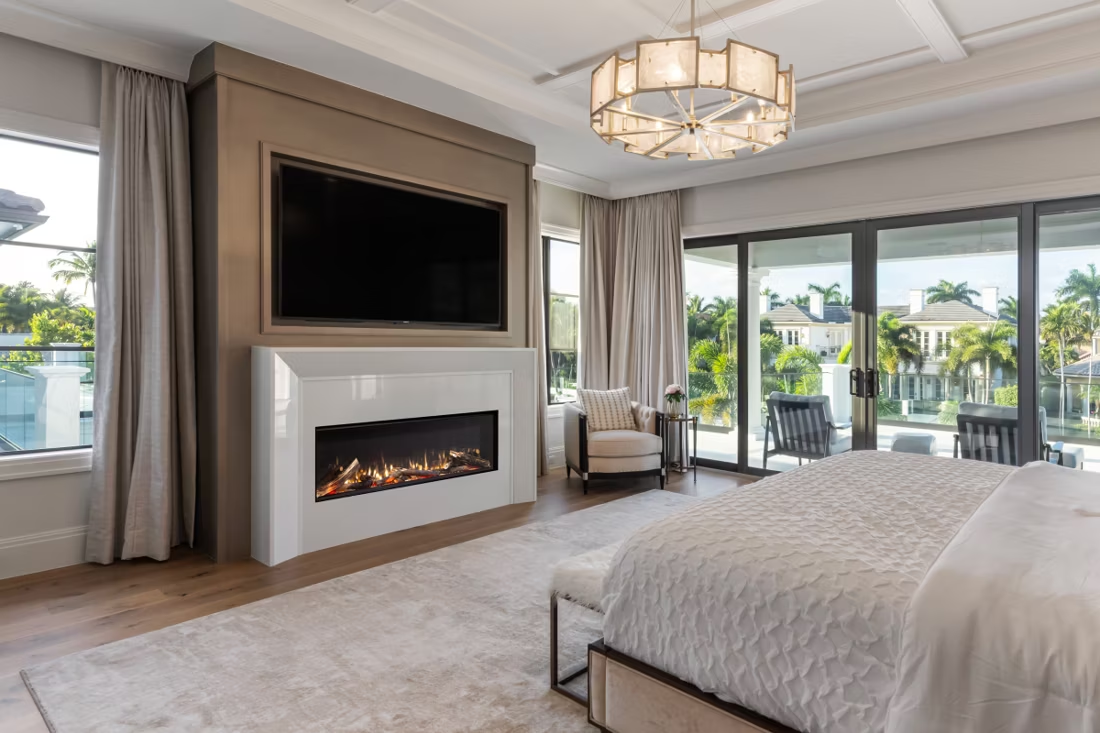
For the townhomes and new-construction subdivisions that make up much of Apex's growth, a built-in linear electric fireplace set into a media wall or mantel surround is the most popular choice—it reads as a real architectural feature rather than an appliance. For older homes near downtown Apex with an existing but unused masonry fireplace, an electric insert that slides into the firebox is often the simpler retrofit, since it uses the opening you already have without any venting work. Local dealers can walk through both options based on your wall construction and whether you want supplemental heat or purely ambiance.
Are electric fireplaces allowed in HOA neighborhoods around Apex?
Yes, and this is actually one of the biggest reasons electric has become the default choice in many of Apex's newer subdivisions. Because electric units require no exterior venting, no chimney, and no gas line penetration through an exterior wall, they typically sail through HOA architectural review where a wood stove or vented gas fireplace might face restrictions. Always check your specific HOA's covenants before any wall modification, but electric fireplaces rarely raise the kind of red flags that solid-fuel or vented appliances do.
Why isn't wood heat common in Apex, even though oak and hickory are everywhere?
The Piedmont around Apex is full of oak, hickory, maple, and pine, and rural pockets of Wake County still see the occasional wood stove installed for backup heat. But inside Apex proper, with such a mild, short winter heating season and winter lows averaging 31°F, most households simply don't need a wood-burning setup to get through the season, and a lot of newer neighborhoods are governed by HOAs that restrict solid-fuel appliances and exterior chimneys outright. Pellet stoves face the same limited appeal here for the same climate reasons. Electric fireplaces fill the ambiance-and-occasional-warmth role that wood heat serves in colder parts of the country.
How much maintenance does an electric fireplace need?
Very little compared to a wood or gas unit—there's no chimney to sweep, no gas line to inspect, and no combustion byproducts to worry about. Most maintenance is limited to occasionally dusting the heating element and vent grille and replacing the LED light strip after several years of use, which most owners can do themselves. If your unit uses a fan-driven heater, keeping the intake and exhaust vents free of dust helps it run quietly and efficiently. Local dealers can handle warranty service if something in the electronics or heater assembly fails.
Can I put a TV above my fireplace?
Yes—with an asterisk. Fireplaces are hot and TVs don't like heat. Either put a mantel between them to deflect rising warmth, or choose a fireplace with heat-management technology that creates a cool zone on the wall above—the wall stays around 125 degrees, barely warm, while the room still gets full heat. If you like clean lines and don't want a mantel, heat management is the answer.
Do electric fireplaces actually produce heat?
Yes—most put out around 4,800–5,000 BTUs from a standard outlet, which comfortably warms a bedroom, office, or den as a comfort-zone heater. What they won't do is carry a whole house the way wood, gas, or pellet can. Think of electric as ambiance-first with honest supplemental heat: flames on with no heat in July, flames plus warmth in January.
How much should I budget for a fireplace?
For an average home—covering the fireplace, the vent pipe, and basic installation—a budget between $3,900 and $5,500 gives you a lot of options across wood, gas, and pellet. By the time you add finish work, gas line, and electrical, the average complete installation lands between $5,000 and $12,000 all-in. In a remodel or new build, a good rule is to put about 2.5% of the total project cost toward the fireplace.
Can a fireplace actually lower my heating bill?
Yes—by creating a comfort zone. A furnace heats every square foot of the house just to warm the one room you're in; a gas fireplace on low burns roughly a sixth of the gas a typical furnace does. Set the furnace around 55–60 degrees as a baseline, then heat the rooms your family actually uses. Families who heat this way commonly save $20–$60 a month.
Nearby Dealers
Hearth shops serving Apex and the surrounding area. Every listing shows whether it is a WhyFire partner, a dealer we have verified as authorized for the brands we recommend, or a local business carrying hearth products. No manufacturer pays for placement. How we verify dealers →
L.g. Jordan Oil & Gas Co.
Original Grills - Outdoor Kitchen & Grill Store
Smoke Alert
Brandco Incorporated
Fireside Distributors Inc
Oak City Fireplace & Outdoor Living
Pro Source Of Raleigh
Viridien Patio + Fireplace
Mr. Smokestack Chimney Service
Blossman Gas And Appliance
Sharp Energy
Steve Marcom Services
Home Flame
Electric Service in Apex
An electric fireplace's heater draws about 1,500 watts—pennies per hour at local rates.
Duke Energy Progress - (Nc)
Duke Energy Carolinas, LLC
Town Of Apex- (Nc)
Find your electric fireplace in Apex.
Tell us a bit about your home and we'll match you with a trusted local Apex dealer and send over a free Project Guide & Parts List—the exact unit, mounting hardware, and electrical requirements for your space.
Find Your Fireplace →