
Warm, low-maintenance heat for Taylorsville and Alexander County homes.
Instant, thermostat-controlled warmth for Alexander County's cool foothill nights—propane in most of the county, natural gas where the lines reach. Find the right unit and get matched with a trusted local dealer.
Every Project Starts From One of These Five Situations
Convenience heat for the Brushy Mountains foothills.
Alexander County sits in the North Carolina Piedmont foothills, climate zone 4A, with a moderate winter heating season and an average winter low near 30°F. That's a fraction of what a place like Duluth, MN sees each winter, but Taylorsville, Hiddenite, Stony Point, and Bethlehem still get plenty of nights in the 20s and 30s where a fireplace earns its keep—not as a survival necessity, but as the thing that makes a cold evening comfortable without running the central system harder than it needs to. With a population under 8,000 spread across mostly rural land, most homes here are single-family with room for a hearth upgrade, and there are no local air quality restrictions on burning of any kind.
Natural gas lines are limited in Alexander County and mostly follow the corridors near larger utility infrastructure—Dominion Energy North Carolina serves some pockets, but the majority of homes here run on propane, delivered and tanked by regional suppliers. That makes gas fireplace installation here a little different than in a fully gas-mained city: your installer will typically be sizing the unit around a propane tank rather than tapping an existing gas meter. Either way, a properly installed gas insert or fireplace gives you push-button heat, no wood handling, and—with the right ignition system—warmth that keeps working even when the power doesn't.
Three steps. No salesperson until you're ready.
Tell us about your project
Your zip code, your situation, and the fuel you're leaning toward—or let the answers point you to one.
See what's actually available
The brands dealers within 100 miles genuinely carry—real options, never a catalog mirage.
Get your dealer & Project Guide
A trusted local dealer, plus the free Project Guide & Parts List that names every component of the job.
Frequently Asked Questions
How much does a gas fireplace installation cost in Alexander County?
A typical gas fireplace or insert installation in Alexander County runs roughly $3,500 to $9,000, depending on the unit, whether you're converting an existing masonry fireplace or building new, and whether propane tank work is involved. Homes already set up with a propane tank and regulator sit toward the lower end. New installs that require a fresh propane tank, a longer gas line run, or venting through an exterior wall push toward the higher end. A local dealer will give you a firm number after seeing your home and existing fireplace or framing.
Can I convert my existing wood fireplace to gas?
Yes—it's a common project for older homes around Taylorsville and Stony Point that still have a masonry wood fireplace. A gas insert slides into the existing firebox and vents through the chimney with a liner, so you keep the look of the original hearth while gaining instant on-off heat. Since most of Alexander County runs on propane rather than piped natural gas, the installer will typically connect to an existing tank or help arrange a new one through a local propane supplier. Costs generally land in the $4,000 to $8,000 range depending on the insert and any tank or line work needed.
Do I need natural gas to install a gas fireplace, or can I use propane?
Propane is the standard fuel for most of Alexander County. Dominion Energy North Carolina's natural gas lines don't extend into most of the county's rural stretches, so the vast majority of installs here run on propane from a tank rather than a piped utility connection. That's not a downgrade—nearly every gas fireplace and insert on the market is available in a propane configuration with the correct orifice and regulator. If your home happens to sit in one of the few areas with natural gas access, either fuel will work; your local dealer will confirm what's actually available at your address before recommending a unit.
Will my gas fireplace work during a power outage?
Most modern gas fireplaces will, provided you choose the right ignition system. Units with intermittent pilot ignition (IPI) include a battery backup that keeps the unit lighting on demand when the power drops—just remember to swap the batteries periodically. Valor fireplaces take a different approach: the pilot's thermocouple generates its own electricity, so there's no battery to maintain or forget. For Alexander County homes on rural power lines where storm outages can run long, that distinction is worth asking your local dealer about directly.
What's the difference between a gas fireplace, gas insert, and gas stove?
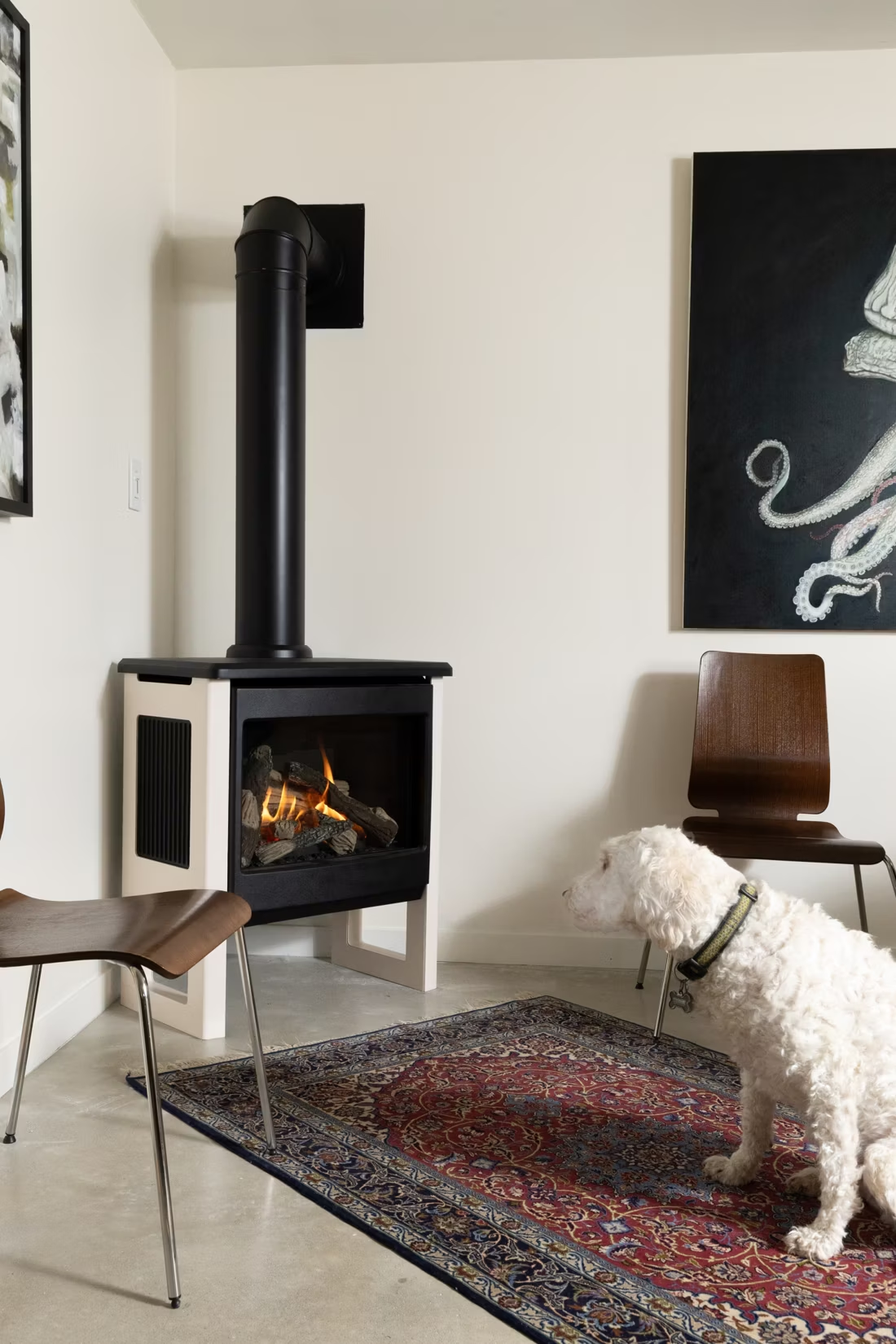
A gas fireplace is a fully built-in unit installed into a framed wall opening—the right choice for new construction or a remodel without an existing fireplace. A gas insert is built to slide into an existing masonry firebox, turning a drafty wood-burning fireplace into a sealed, efficient heat source using the existing chimney as the vent path. A gas stove is a freestanding cabinet-style unit that sits on the floor, similar in footprint to a wood stove. Most Alexander County homeowners with an older brick fireplace go with an insert; homes without one usually choose a built-in fireplace or freestanding stove instead.
Do I need a permit to install a gas fireplace in Alexander County?
Yes—new gas fireplace and insert installations require a building permit through the Alexander County Building Inspections Department, and any propane line or tank work should be done by a licensed gas installer. Most local hearth dealers handle the permitting and inspection scheduling as part of the installation, so you typically don't need to file anything yourself. This also ensures the venting and clearances meet code, which matters for both safety and any future home sale.
What's the difference between vented and vent-free gas fireplaces?
Vented gas fireplaces—direct-vent or B-vent—pull combustion air from outside and exhaust the byproducts back outside through a sealed pipe. Vent-free units burn fuel directly into the room without exterior venting, which makes them easier to install in a room without existing chimney access but means small amounts of water vapor and combustion byproducts stay indoors, so they require correct room sizing and an oxygen depletion sensor. Vent-free units are legal in North Carolina, and they show up in some Alexander County homes where running venting isn't practical, but direct-vent units remain the more universally recommended option for real heat output and indoor air quality. Ask a local dealer which fits your specific room and budget.
How often should my gas fireplace be serviced?
Plan on an annual inspection for any gas fireplace or insert, ideally before the first cold snap in late fall. A technician checks the burner, pilot assembly, venting, and gas connections (propane line and regulator for most Alexander County homes) and cleans the glass and interior. This is a much smaller job than chimney sweeping for wood, but skipping it is how pilot and ignition problems go unnoticed until the coldest night of the year, when you need the fireplace most.
Gas vs. wood—which is right for my home?
Wood is still a strong option in Alexander County—oak, hickory, maple, and pine are all common locally, and cutting permits through the Nantahala-Pisgah National Forests run about $20 per cord during the May-through-October season. Wood also keeps working with no electricity or propane delivery required. Gas, on the other hand, means no splitting or hauling wood, no ash cleanup, and heat at the flip of a switch or a wall thermostat—a real advantage in a county where winters are moderate (average low around 30°F) and most households want convenience more than a daily wood-tending routine. Many homeowners here end up with wood in a den or workshop for backup heat and gas in the main living space for everyday use.
Is my gas fireplace wasting gas?
If it was installed more than 15 years ago, probably. Older gas fireplaces keep a standing pilot light burning all the time, and that little flame can cost a couple hundred dollars a year. Newer models use pilot-on-demand ignition—the pilot lights only when you use the fireplace and goes out when you turn it off.
Why is my open fireplace making my house colder?
Open fireplaces suck—literally. As the fire burns, it consumes air your furnace already paid to heat and pulls it out through the chimney, so the house is actually colder after the fire goes out than before you lit it. An insert fixes this: it seals the chimney, puts fixed glass across the front, and turns that hole in your house into a real heat source.
Can a fireplace actually lower my heating bill?
Yes—by creating a comfort zone. A furnace heats every square foot of the house just to warm the one room you're in; a gas fireplace on low burns roughly a sixth of the gas a typical furnace does. Set the furnace around 55–60 degrees as a baseline, then heat the rooms your family actually uses. Families who heat this way commonly save $20–$60 a month.
Can I install a fireplace myself?
If you're putting a fire in your house on purpose, it's best to work with an expert. Unless you're genuinely experienced in framing, gas line, vent pipe, and the national code on clearances to combustibles, have a professional do it—and ideally the same company that sells you the fireplace, so warranty, service, and liability all live under one roof.
Find your gas fireplace in Alexander County.
Tell us a bit about your home and we'll match you with the right gas fireplace, insert, or stove, plus a free Project Guide & Parts List—your exact parts, vent kit included, and a recommended local dealer to install it.
Find Your Fireplace →