
Instant heat for South Shore winters.
Clean, on-demand warmth for West Babylon homes—no wood pile, no ash, no waiting. Find the right unit and connect with a trusted local dealer.
Every Project Starts From One of These Five Situations
Clean heat that fits Long Island living.
West Babylon sits at just 35 feet above sea level on Long Island's South Shore, in a climate zone (4A) that's cold enough to matter—winters average lows around 25°F and the area logs roughly 5,087 heating degree days a year—but nowhere near the extremes of upstate New York or New England. On tight Suffolk County lot sizes, with homes packed closer together than you'd find further out, wood-burning is genuinely uncommon here; gas has become the default for anyone upgrading an old masonry fireplace or adding heat to a new build.
Most of the Town of Babylon is served by natural gas mains through National Grid, and homeowners who already have gas heat, a gas range, or a gas water heater usually just extend the line to a new fireplace or insert. Homes on the fringes of the service area, or in newer developments still off the main, typically run on propane instead. Either way, gas pairs well with the reality of Long Island Power Authority electric rates—residential electric here runs roughly 24.6 to 38.2 cents per kWh depending on delivery territory, among the highest in the country—which makes a gas fireplace a genuinely useful supplemental heat source on the coldest nights, not just a nice-looking accessory.
Three steps. No salesperson until you're ready.
Tell us about your project
Your zip code, your situation, and the fuel you're leaning toward—or let the answers point you to one.
See what's actually available
The brands dealers within 100 miles genuinely carry—real options, never a catalog mirage.
Get your dealer & Project Guide
A trusted local dealer, plus the free Project Guide & Parts List that names every component of the job.
Frequently Asked Questions
How much does a gas fireplace installation cost in West Babylon?
Most direct-vent gas fireplace or insert installations in West Babylon run somewhere between $4,000 and $10,000, depending on the unit, the venting path, and whether new gas line work is needed. A gas insert dropped into an existing masonry fireplace that already has a gas line nearby tends to land on the lower end. A new built-in gas fireplace for a remodel—with framing, through-wall venting, and a fresh gas line run from the meter—sits toward the higher end. Local retailers will give you a firm number after seeing your chimney or wall condition in person.
Can I convert my existing wood fireplace to gas?
Yes—this is one of the most common projects in West Babylon's older Cape Cod and colonial homes, many of which have a masonry fireplace that's rarely used for actual wood fires anymore. A gas insert typically slides into the existing firebox, using a stainless liner run up the current chimney for venting. Costs usually land in the $4,500 to $9,000 range depending on the insert and whether National Grid service already reaches the fireplace wall. The conversion keeps the original mantel and surround while giving you heat at the flip of a switch instead of a full cord of firewood you don't have room to store on a South Shore lot.
Do I need natural gas, or can I use propane?
Either works, and which one applies depends on where in West Babylon you live. Most of the Town of Babylon has natural gas mains through National Grid, so if your home already has gas heat or a gas stove, adding a fireplace is usually a straightforward tie-in. Homes in newer subdivisions or areas at the edge of the gas territory sometimes run on propane instead, with a tank supplied by a local propane dealer. Most fireplace models can be configured for either fuel—your installer sets the correct orifice and regulator for whichever you have.
Will my gas fireplace work during a power outage?
Most will, with the right ignition system. Units with IPI (intermittent pilot ignition) run on a battery backup that kicks in automatically when the power drops, so the fireplace still lights on demand. That matters on the South Shore, where nor'easters and summer storms can knock out PSEG Long Island service for a day or more at a stretch. Valor's gas fireplaces take a different approach—the pilot's thermocouple generates its own electricity, so there's no battery to remember at all. Ask your local retailer which ignition system is on any unit you're considering.
What's the difference between a gas fireplace, gas insert, and gas stove?
A gas fireplace is a fully built-in unit framed into a wall—the right choice for new construction or a gut remodel. A gas insert is built to fit inside an existing masonry firebox, which describes a lot of the older housing stock in West Babylon and neighboring Suffolk County towns. A gas stove is a freestanding cast-iron or steel unit that sits on the floor and vents through a wall or existing chimney, useful in homes without a fireplace at all—a den addition or a finished basement, for example. For most West Babylon homeowners with an existing fireplace, an insert is the simplest upgrade.
Do I need a permit to install a gas fireplace in West Babylon?
Yes—the Town of Babylon Building Department requires a building permit for the installation, and the gas line connection itself needs to be run or inspected by a licensed plumber. Most established hearth retailers coordinate both pieces—the fireplace install and the gas work—so you're not left managing two separate trades and two separate inspections. Skipping the permit can create real problems later at resale, when a home inspector flags unpermitted gas work.
What's the difference between vented and vent-free gas fireplaces?
Vented (direct-vent) gas fireplaces pull combustion air from outside and exhaust the byproducts back outside through sealed venting. Vent-free units burn gas directly into the room with no external venting at all. New York State restricts vent-free gas appliances in bedrooms and imposes minimum room-size and ventilation requirements elsewhere, and the Town of Babylon's building inspectors will check for compliance before signing off. Given West Babylon's fairly compact home footprints, most retailers steer customers toward direct-vent units anyway—they deliver more real heat and don't force you to work around room-size restrictions.
How often should my gas fireplace be serviced?
Plan on an annual inspection, ideally in early fall before the heating season ramps up. A technician checks the burner, pilot assembly, venting, and gas connections, and cleans the glass and interior—a lot less involved than chimney sweeping for a wood-burning unit, but still important for safe operation. Local gas appliance service providers typically charge $150 to $250 for a standard annual visit, and it's worth doing even in a mild winter, since salt air near the South Shore can accelerate corrosion on vent components over time.
Gas vs. electric—which fireplace makes more sense in West Babylon?
Electric fireplaces plug into a standard outlet, need no venting or gas line, and are the simplest option for a condo, rental, or a room where running gas isn't practical—but they're primarily an ambiance and light-heat product. Given Long Island Power Authority residential rates that run as high as 24.6 to 38.2 cents per kWh depending on your service territory, relying on an electric unit for real supplemental heat gets expensive fast. Gas fireplaces cost more to install upfront but deliver meaningfully more heat per dollar over a winter, which is why gas remains the more common choice for anyone actually trying to offset their heating bill rather than just add a glow to the room.
Why is my open fireplace making my house colder?
Open fireplaces suck—literally. As the fire burns, it consumes air your furnace already paid to heat and pulls it out through the chimney, so the house is actually colder after the fire goes out than before you lit it. An insert fixes this: it seals the chimney, puts fixed glass across the front, and turns that hole in your house into a real heat source.
Are new gas fireplaces really better than old ones?
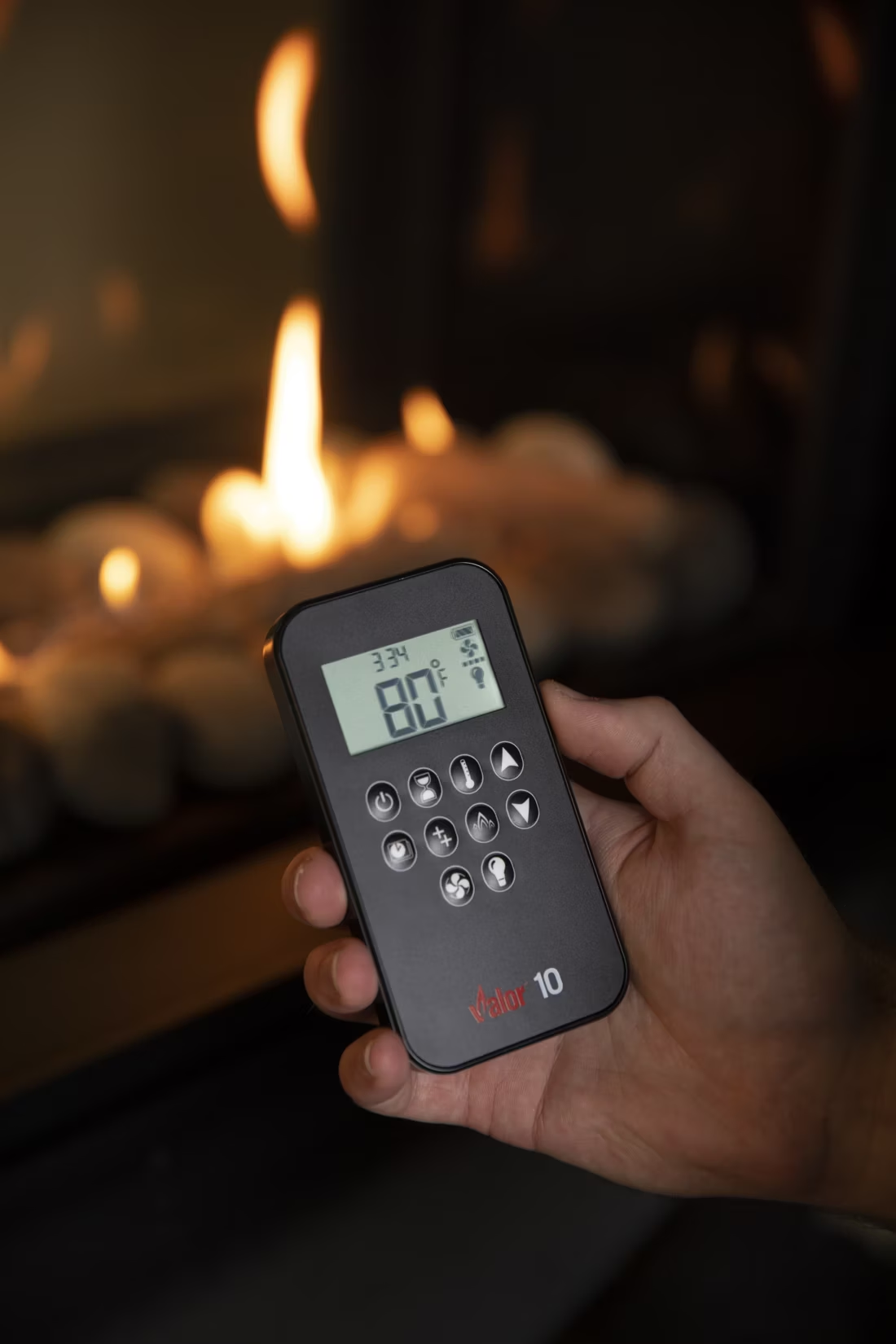
Two ways, and they're both big. Looks: modern gas fireplaces are realistic enough that it's hard to believe they aren't burning wood. Cost: old units burn a standing pilot year-round (roughly $200 a year), while new ones use pilot-on-demand ignition and modern burners. Add remote controls and thermostat operation, and the day-to-day experience isn't close.
What is an in-home preview and do I need one?
It's a visit where a hearth professional measures your space, confirms the model you picked actually works in your home, and walks the specs—framing, gas line, venting, finish work—before anything is ordered. Some details you just can't know until you see the house. Never make a down payment without one; it's the single most-skipped step that burns buyers.
Does a fireplace add value to my home?
On average, a fireplace adds back to the home about the same amount you spent installing it. Add the monthly savings from heating the rooms you actually use instead of the whole house—often hundreds of dollars a year—and the value case is strong before you even count what a fire does for how your family uses the room.
Nearby Dealers
Hearth shops serving West Babylon and the surrounding area.
Find your gas fireplace in West Babylon.
Tell us a bit about your home and we'll put together your free Project Guide & Parts List—the exact parts, including the vent kit, and a trusted local dealer matched to your West Babylon gas fireplace project.
Find Your Fireplace →