
Find the right electric fireplace for your Seneca County home.
No chimney, no gas line, no venting—just plug it in. From the canal-era homes of Seneca Falls to the farmhouses between Seneca Lake and Cayuga Lake, electric fireplaces give Finger Lakes homeowners instant ambiance and supplemental warmth. We'll match you with a trusted local dealer who can size the right unit for your room.
Every Project Starts From One of These Five Situations
Ambiance and supplemental warmth without new venting or gas lines.
Seneca County sits in Climate Zone 5A between Seneca Lake and Cayuga Lake, with the kind of long, snowy Finger Lakes winters that make any extra heat source welcome. A lot of the county's housing stock—the 19th-century canal-era homes around Seneca Falls, the farmhouses scattered through Ovid, Romulus, and Interlaken, the lake cottages near Waterloo—either lacks a working chimney or was never plumbed for gas. That's exactly the gap electric fireplaces fill: a unit that plugs into an existing outlet (or a dedicated 240V circuit for larger built-ins) and heats a room the same afternoon it's installed, no masonry or venting work required.
Electricity in the county comes through NYSEG, and running an electric insert or wall-mount unit costs a fraction of what it takes to heat a whole house—useful in a region where many homes outside the villages still rely on propane or heating oil for primary heat. Because there's no combustion, no flue, and no fuel storage, most Seneca County towns don't require a building permit for a plug-in unit; a hardwired built-in typically just needs an electrician to run the circuit to code. For older homes with an existing but unused masonry fireplace—common throughout Seneca Falls' historic district—an electric insert drops into that opening and restores the look of a working fire without touching the chimney at all.
Three steps. No salesperson until you're ready.
Tell us about your project
Your zip code, your situation, and the fuel you're leaning toward—or let the answers point you to one.
See what's actually available
The brands dealers within 100 miles genuinely carry—real options, never a catalog mirage.
Get your dealer & Project Guide
A trusted local dealer, plus the free Project Guide & Parts List that names every component of the job.
Frequently Asked Questions
How much does it cost to install an electric fireplace in Seneca County?
A freestanding or insert unit that plugs into a standard outlet is the cheapest path—often installed in under an hour with no electrician needed. A built-in wall unit or a larger insert that requires a dedicated 20-amp or 240V circuit adds an electrician's visit, typically a few hundred dollars depending on how far the panel is from the install location. Because there's no chimney work, no gas line, and no venting to size, electric installs in Seneca County are consistently the least expensive and fastest of the four fuel types—a local dealer can usually give you a firm number after seeing the room and the panel.
Do I need a permit for an electric fireplace in Seneca County?
Most of the time, no. A plug-in freestanding or insert unit that runs off an existing outlet doesn't trigger a permit anywhere in Seneca County, whether you're in Seneca Falls, Waterloo, or one of the unincorporated towns. If your installer needs to add a new dedicated circuit—common for larger built-in wall units—that electrical work should be done by a licensed electrician and may require an electrical permit under New York State code, but that's a small step compared to the building and venting permits wood and gas installs require.
Will my electric fireplace still work if the power goes out?
No—and this is worth being honest about. Electric fireplaces have no independent heat source; if NYSEG service drops during a Finger Lakes ice storm or winter outage, the unit goes dark along with everything else on the circuit. Homes that need heat resilience during outages typically keep a wood stove or propane heater as backup, with the electric unit reserved for everyday ambiance and supplemental warmth rather than emergency heat. If outage backup matters to you, ask a local dealer about pairing an electric insert with a small wood stove elsewhere in the house.
What's the difference between an electric insert, a wall-mount unit, and a freestanding stove?
An electric insert is built to slide into an existing masonry fireplace opening—a natural fit for the older homes around Seneca Falls that already have a hearth but no working chimney draft. A wall-mount unit hangs flush on a wall like a large flat-panel TV, popular in newer construction or remodeled living rooms where there's no existing fireplace. A freestanding electric stove sits on the floor and mimics the look of a wood stove, often chosen for cabins or lake houses around Seneca Lake where the aesthetic matters as much as the heat. All three plug in or hardwire without venting.
How much heat does an electric fireplace actually produce?
Most residential units top out around 1,500 watts, which translates to roughly 5,000 BTU—enough to comfortably warm a single room in the 300 to 600 square foot range, less in the drafty older farmhouses common outside the villages. In a Zone 5A winter, that makes electric a supplemental heat source rather than a whole-house solution; it's best paired with your existing furnace, propane system, or wood stove rather than relied on as the sole source of heat on a January night.
What will an electric fireplace add to my NYSEG bill?
A typical 1,500-watt unit run for a few hours an evening adds somewhere in the range of a few cents to around a dollar per day at current NYSEG residential rates, depending on usage. That's substantially cheaper than raising the thermostat on a whole-house propane or oil system, which is part of why electric units are popular as a zone-heating supplement in Seneca County's rural stretches, where many homes aren't on natural gas at all.
Electric vs. wood—which is right for my Seneca County home?
Wood is the traditional choice throughout the county, and for good reason—oak, maple, birch, and ash are all common in the Finger Lakes woodlots, firewood is easy to source locally, and a wood stove keeps working when the power doesn't. Seneca County has no air quality restrictions on wood burning, so that's not a limiting factor here. Electric wins on convenience and cost of installation: no chimney, no ash, no permit hassle, and it's often the only option for a condo, rental, or apartment in Seneca Falls or Waterloo where a solid-fuel appliance isn't allowed. Many county homeowners end up with both—wood for backup heat, electric for everyday ambiance in a room without a chimney.
Electric vs. pellet—which is right for me?
Pellet stoves burn compressed hardwood pellets—regional brands like Energex, Hamer Pellet Fuel, and Greene Team Pellet Fuel are all sold within reach of Seneca County—and put out real, adjustable heat that can serve as a home's primary source in a Zone 5A winter. But pellet stoves still need electricity to run the auger and blower, so they're not a true power-outage backup either, and they require venting and periodic hopper refilling. Electric fireplaces skip the venting and refueling entirely but produce far less heat. If you want meaningful heat output with none of the fuss of wood, pellet is the better fit; if you want instant ambiance with zero maintenance, electric wins.
Can I convert an old fireplace in my historic Seneca Falls home to electric?
Yes, and it's one of the more common projects local dealers see in the county's older housing stock. An electric insert slides into an existing masonry opening—including the fireplaces in many of Seneca Falls' 19th-century canal-era homes—without any chimney relining, gas line, or structural work. That means you keep the original mantle and hearth look while adding real, controllable heat and flame effect. It's a much simpler project than a gas conversion, which would require running a new gas line and lining the flue.
Can I put a TV above my fireplace?
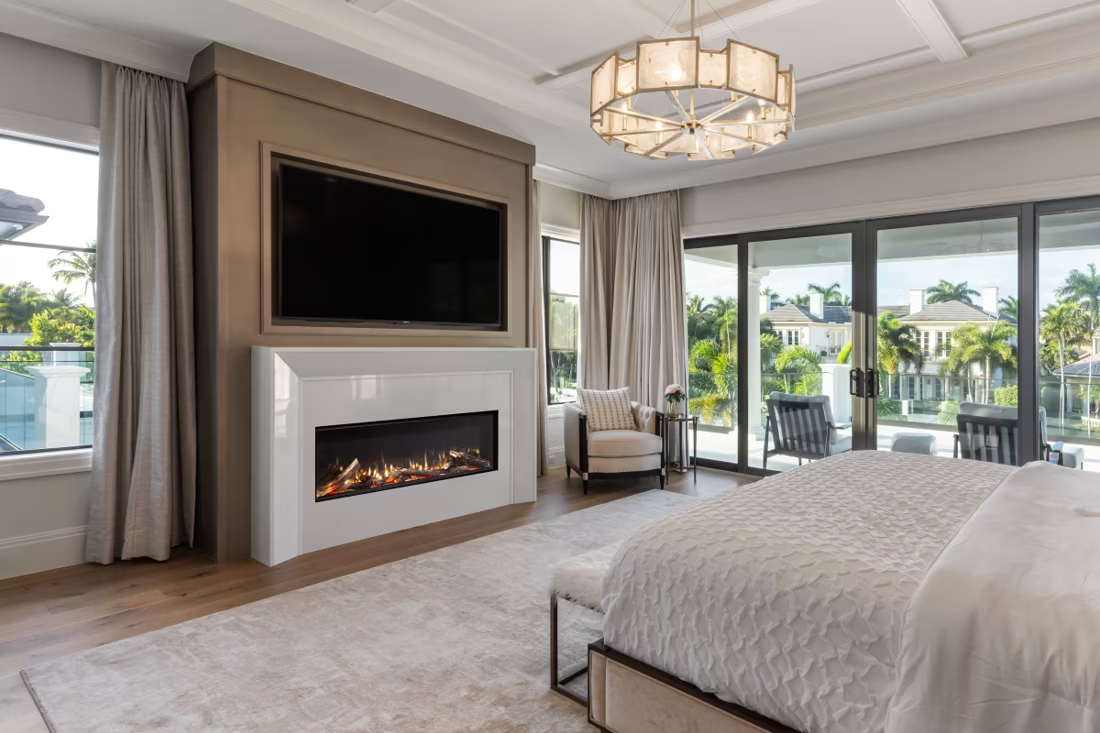
Yes—with an asterisk. Fireplaces are hot and TVs don't like heat. Either put a mantel between them to deflect rising warmth, or choose a fireplace with heat-management technology that creates a cool zone on the wall above—the wall stays around 125 degrees, barely warm, while the room still gets full heat. If you like clean lines and don't want a mantel, heat management is the answer.
Do electric fireplaces actually produce heat?
Yes—most put out around 4,800–5,000 BTUs from a standard outlet, which comfortably warms a bedroom, office, or den as a comfort-zone heater. What they won't do is carry a whole house the way wood, gas, or pellet can. Think of electric as ambiance-first with honest supplemental heat: flames on with no heat in July, flames plus warmth in January.
What is an in-home preview and do I need one?
It's a visit where a hearth professional measures your space, confirms the model you picked actually works in your home, and walks the specs—framing, gas line, venting, finish work—before anything is ordered. Some details you just can't know until you see the house. Never make a down payment without one; it's the single most-skipped step that burns buyers.
Can a fireplace actually lower my heating bill?
Yes—by creating a comfort zone. A furnace heats every square foot of the house just to warm the one room you're in; a gas fireplace on low burns roughly a sixth of the gas a typical furnace does. Set the furnace around 55–60 degrees as a baseline, then heat the rooms your family actually uses. Families who heat this way commonly save $20–$60 a month.
Find your electric fireplace in Seneca County.
Tell us a bit about your home and room, and we'll match you with a trusted local Seneca County dealer and send over a free Project Guide & Parts List—the exact unit, mounting or insert kit, and electrical requirements for your space.
Find Your Fireplace →