
Add warmth and ambiance to any room in Schoharie County—no chimney required.
From Cobleskill to Middleburgh to Sharon Springs, electric fireplaces bring zone heat and real flame-look ambiance to Schoharie County homes without a flue, a woodpile, or a gas line. Get matched with a local dealer who can size and install the right unit for your space.
Every Project Starts From One of These Five Situations
Heat and ambiance without the woodpile or the flue.
Schoharie County sits in the Catskill foothills along the Schoharie Creek valley, a Zone 6A climate with long, hard winters that stretch from November into April. Many homes here—the older farmhouses around Middleburgh and Gilboa, the Victorian-era buildings in Sharon Springs, apartments near SUNY Cobleskill—either never had a working chimney or have one that's decorative and closed off. That's exactly the gap electric fills: a fireplace look and real supplemental heat in a room where running new masonry venting isn't practical or affordable.
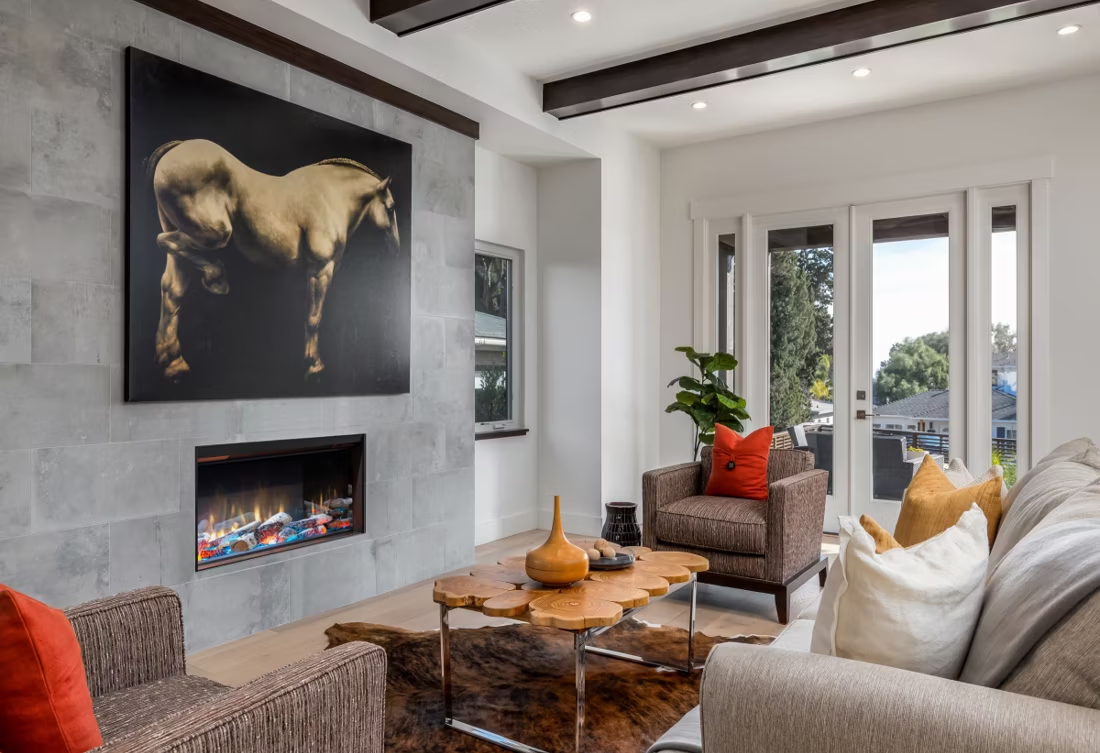
Electric service throughout the county runs through National Grid and NYSEG depending on the town, and since there's no combustion involved, there's no smoke, no chimney to sweep, and none of the winter air-quality concerns that affect wood burning elsewhere. That matters in a county with no reported air quality restrictions but plenty of tightly built old farmhouses where indoor air is a real consideration. An electric fireplace or insert plugs into a standard outlet or a dedicated circuit, gives you instant heat at the flip of a switch, and works just as well in a rental in Cobleskill as it does in a stone farmhouse outside Richmondville.
Three steps. No salesperson until you're ready.
Tell us about your project
Your zip code, your situation, and the fuel you're leaning toward—or let the answers point you to one.
See what's actually available
The brands dealers within 100 miles genuinely carry—real options, never a catalog mirage.
Get your dealer & Project Guide
A trusted local dealer, plus the free Project Guide & Parts List that names every component of the job.
Frequently Asked Questions
How much does an electric fireplace installation cost in Schoharie County?
A plug-in freestanding electric fireplace or mantel package typically runs $150 to $600 for the unit itself and needs no professional installation beyond placement near an outlet. A built-in wall unit or insert into an existing fireplace opening—the more common request in Schoharie County's older farmhouses—usually runs $600 to $2,000 once you factor in a local electrician running a dedicated 20-amp circuit, which many built-in models require. Costs run toward the higher end for stone farmhouses around Middleburgh or Gilboa where wiring has to be fished through older walls, and toward the lower end for newer construction or homes with accessible basement wiring runs.
Do I need a permit to install an electric fireplace in Schoharie County?
Plug-in units that use an existing outlet generally don't require a permit. If your installer is adding a new dedicated circuit or doing any wiring modification—common with built-in units and inserts—that work needs an electrical permit, and Schoharie County doesn't run a unified county building department for this; each town handles its own code enforcement, so you'd go through the local code enforcement officer in Cobleskill, Middleburgh, Schoharie, Richmondville, or whichever town you're in. A licensed electrician working with your hearth dealer will typically pull this for you as part of the install.
Can an electric fireplace actually heat a room in a Zone 6A winter, or is it just for looks?
A quality electric fireplace with a built-in heater can genuinely take the edge off a single room—most units put out 4,000 to 5,000 BTU, enough for a bedroom, den, or living room addition. But in Schoharie County's Zone 6A climate, with sustained cold stretches and single-digit overnight lows in the valley, electric is best understood as zone heat or supplemental heat, not a replacement for your furnace or wood stove. Where it shines is heating the one room you're actually using—the home office, the sunroom, the finished basement—without running the whole-house system harder than it needs to.
What's the difference between an electric fireplace, an electric insert, and an electric stove?
An electric fireplace is typically a built-in or wall-mounted unit designed to look like a framed fireplace, often installed into a media wall or new construction. An electric insert is sized to slide into an existing masonry or wood-fireplace opening—a popular option for Schoharie County's older homes where the original fireplace no longer gets used but the opening is still there. An electric stove is a freestanding unit styled like a wood or pellet stove, useful when you want a stove look without cutting into a wall or an existing hearth. All three plug in or wire to a standard household circuit and need no venting of any kind.
Will my electric fireplace work during a power outage?
No—electric fireplaces need power to run, full stop, which is the one real tradeoff against wood heat in a county that sees its share of ice storms and downed lines, including the extended outages after Tropical Storm Irene hit the Schoharie Valley hard in 2011. Most homeowners here who install an electric fireplace for daily ambiance and convenience still keep a wood stove or a generator hookup as backup for winter outages. If backup heat during storms is a priority, ask your local dealer about pairing an electric unit in the main living space with a wood stove elsewhere in the house.
What's the best electric fireplace option for an older Schoharie County farmhouse without a working chimney?
If the farmhouse still has its original fireplace opening—common in the older homes around Middleburgh, Schoharie village, and Gilboa—an electric insert is usually the cleanest fix, sliding into that existing masonry opening and giving you real flame-look heat without touching the structure. If there's no opening at all, a built-in wall unit or a freestanding electric stove works just as well and gives more flexibility on where in the room it goes. Either way, a local dealer can look at your wall construction and wiring before recommending which type fits best.
Electric vs. propane fireplace—which makes more sense for my Schoharie County home?
Propane is the common alternative to natural gas in much of rural Schoharie County, since piped gas service is limited outside the larger hamlets. A propane fireplace delivers more heat output and can run during a power outage with the right ignition system, but it requires a tank, a gas line, and annual servicing. An electric fireplace skips all of that—no tank, no fuel deliveries, no combustion byproducts—in exchange for lower heat output and a total dependence on grid power. For homeowners who want simple, clean supplemental heat without managing a fuel supply, electric is usually the easier call.
How much does it cost to run an electric fireplace day to day?
Most electric fireplace heaters draw around 1,500 watts on the heat setting. At typical National Grid or NYSEG residential rates in this part of New York, that works out to roughly 20 to 30 cents per hour of heater use—the flame-only, no-heat setting costs almost nothing to run. For a room used a few hours an evening through a Schoharie County winter, that's a modest add to the electric bill compared to running a whole-house furnace harder to compensate for a cold room.
Electric vs. wood—which is right for my home?
Wood is deeply practical in Schoharie County, where oak, maple, birch, and ash are all readily available locally, and a wood stove keeps working when the power doesn't—a real consideration in a valley that's seen its share of ice storms and flood-related outages. Electric can't match that resilience or that heat output, but it wins on convenience: no wood to split or stack, no ash, no chimney sweep, and instant on-off operation with a remote. Many local homeowners land on both—a wood stove for serious winter heat and outage backup, and an electric fireplace or insert for ambiance and easy supplemental warmth in a room where a chimney was never an option.
Can I put a TV above my fireplace?
Yes—with an asterisk. Fireplaces are hot and TVs don't like heat. Either put a mantel between them to deflect rising warmth, or choose a fireplace with heat-management technology that creates a cool zone on the wall above—the wall stays around 125 degrees, barely warm, while the room still gets full heat. If you like clean lines and don't want a mantel, heat management is the answer.
Do electric fireplaces actually produce heat?
Yes—most put out around 4,800–5,000 BTUs from a standard outlet, which comfortably warms a bedroom, office, or den as a comfort-zone heater. What they won't do is carry a whole house the way wood, gas, or pellet can. Think of electric as ambiance-first with honest supplemental heat: flames on with no heat in July, flames plus warmth in January.
Does a fireplace add value to my home?
On average, a fireplace adds back to the home about the same amount you spent installing it. Add the monthly savings from heating the rooms you actually use instead of the whole house—often hundreds of dollars a year—and the value case is strong before you even count what a fire does for how your family uses the room.
What is an in-home preview and do I need one?
It's a visit where a hearth professional measures your space, confirms the model you picked actually works in your home, and walks the specs—framing, gas line, venting, finish work—before anything is ordered. Some details you just can't know until you see the house. Never make a down payment without one; it's the single most-skipped step that burns buyers.
Find your electric fireplace in Schoharie County.
Tell us about your room and your home, and we'll match you with a trusted local dealer and send over a free Project Guide & Parts List—the right unit, the wiring it needs, and who to call in Schoharie County to install it.
Find Your Fireplace →