
Pellet Heat for the Corners Natural Gas Doesn't Reach in Rochester.
In a city where Rochester Gas & Electric runs a line to most blocks, pellet stoves are a specialty choice—we'll help you find the local dealer who still knows how to spec and install one correctly.
Every Project Starts From One of These Five Situations
A cold city where pellet heat stays niche.
Rochester logs about 6,273 heating degree days a year—a heating load in the same range as Madison, WI—with winter lows averaging 19°F and lake-effect snow off Lake Ontario keeping furnaces working from November into March. That's real cold-climate demand. But inside Monroe County, most of that demand is met by natural gas: Rochester Gas & Electric runs service through nearly every established neighborhood in the city, from the 14607 corridor near Highland Park to the older housing stock around 14611 and 14613.
That's why pellet stoves show up here less often than in rural upstate counties or off-grid camps in the Adirondacks. The homeowners who do install one in Rochester are usually solving a specific problem: a home on the edge of the gas service area, a detached garage or workshop without a gas line, a desire for supplemental zone heat in an old Victorian on the East Side, or a hedge against RG&E outages during a lake-effect ice storm. Regional pellet fuel brands like Energex, Hamer Pellet Fuel, and Greene Team Pellet Fuel are sold through farm and hardware stores across the region, so fuel supply isn't the obstacle—it's finding a dealer who installs and services pellet appliances as a regular part of their business rather than an occasional one.
Three steps. No salesperson until you're ready.
Tell us about your project
Your zip code, your situation, and the fuel you're leaning toward—or let the answers point you to one.
See what's actually available
The brands dealers within 100 miles genuinely carry—real options, never a catalog mirage.
Get your dealer & Project Guide
A trusted local dealer, plus the free Project Guide & Parts List that names every component of the job.
Frequently Asked Questions
Are pellet stoves actually common in Rochester?
Not especially, and it's worth saying plainly: with Rochester Gas & Electric's natural gas network covering most of the city, gas fireplaces and furnaces are the default heating upgrade here, and pellet stoves are a specialty install. That doesn't mean they don't work well—a pellet stove in a home without gas access, or in a detached structure like a garage or basement apartment, still makes sense. It just means your pool of local dealers who install and service pellet appliances regularly is smaller than the pool of gas or electric installers, and it's worth confirming a dealer's pellet-specific experience before you buy.
How much does a pellet stove installation cost in Rochester?
Most pellet stove installations run in the $3,000 to $6,000 range once you include the stove, a horizontal through-wall vent kit (the most common venting path for pellet units, since they don't need a full chimney), and a hearth pad if your floor isn't already non-combustible. Homes that need new electrical work run to the unit—pellet stoves require a standard outlet to power the auger and blower—sometimes add a few hundred dollars if the nearest outlet isn't close. A local dealer can give you a firm number after seeing the room.
Where does pellet fuel come from in the Rochester area?
Regional brands like Energex, Hamer Pellet Fuel, and Greene Team Pellet Fuel supply much of what's sold through farm stores, hardware chains, and hearth dealers around Monroe County. Because pellet appliances are less common inside city limits, you'll often find better in-stock selection at stores serving the surrounding rural townships than at retailers focused on Rochester's gas-heavy urban core. Buying a season's supply (typically 100-150 bags for an average home) in late summer or early fall, before cold weather drives up demand, is standard practice here.
Will a pellet stove still work if the power goes out?
Not without a backup power source. Pellet stoves rely on an electric auger to feed fuel and a blower to distribute heat, so a Rochester lake-effect ice storm that knocks out RG&E service will also shut the stove down. Some homeowners pair a pellet stove with a small battery backup or generator specifically to keep it running through outages—worth discussing with your dealer if backup heat during storms is part of why you're considering one. A wood-burning appliance is the more reliable outage option if that's your primary concern.
Do I need a permit to install a pellet stove in Rochester?
Yes—the City of Rochester's Bureau of Buildings requires a permit for new solid-fuel appliance installations, and Monroe County towns outside city limits have their own building departments with similar requirements. The unit itself needs to be EPA-certified, and your installer will need to meet clearance-to-combustible and venting code requirements. Most established hearth dealers handle the permit application as part of the installation, which is one more reason to work with someone who does pellet installs regularly rather than as a rare side job.
What size pellet stove do I need for a Rochester home?
With winter lows averaging 19°F and a heating season that runs from November into March, sizing matters more here than in milder climates. A stove rated for 1,000 to 1,500 square feet works for supplemental heat in one zone of a typical Rochester two-story, while units rated 2,000+ square feet can carry more of the load in a well-insulated ranch or newer build. Older housing stock in neighborhoods like the 14620 and 14621 zip codes—often less insulated and with more air infiltration—may need a stove sized up from the room's raw square footage. A dealer visit to look at your insulation and layout is the most reliable way to size correctly.
Pellet vs. gas—which makes more sense in Rochester?
For most Rochester homes already connected to RG&E's natural gas network, a gas fireplace or insert is the simpler, lower-maintenance choice—no fuel bags to haul, no hopper to fill, and no ash to empty. Pellet makes more sense when gas isn't an option: homes at the edge of the service area, detached garages or workshops, camps, or homeowners who specifically want the ambiance of a real flame with more automation than a wood stove. If gas is already run to your house, it's worth having a dealer walk you through both before committing to pellet.
How much maintenance does a pellet stove need?
More than a gas unit, less than a wood stove. Plan to empty the ash pan every few days during heavy use, clean the burn pot and glass weekly, and have the venting and hopper mechanism professionally serviced once a year—typically before the season starts in October. Because pellet-specific technicians are less common in Rochester than gas service techs, it's worth booking that annual service early; wait times can stretch into the coldest months if you call once the snow's already flying.
What pellet stove brands can I actually get installed in Rochester?
National brands like Harman, Enviro, and Quadra-Fire are the ones most regional dealers can source and service, and Harman in particular has a strong reputation in Northeast cold climates for durability. Because the pellet market here is smaller than the gas market, availability varies more by dealer than by brand—one shop might stock and service Harman regularly while another specializes in Enviro. Matching with the right dealer for your specific model matters more in Rochester's pellet market than in a market where every hearth shop carries everything.
Why is my open fireplace making my house colder?
Open fireplaces suck—literally. As the fire burns, it consumes air your furnace already paid to heat and pulls it out through the chimney, so the house is actually colder after the fire goes out than before you lit it. An insert fixes this: it seals the chimney, puts fixed glass across the front, and turns that hole in your house into a real heat source.
How often does a pellet stove need cleaning?
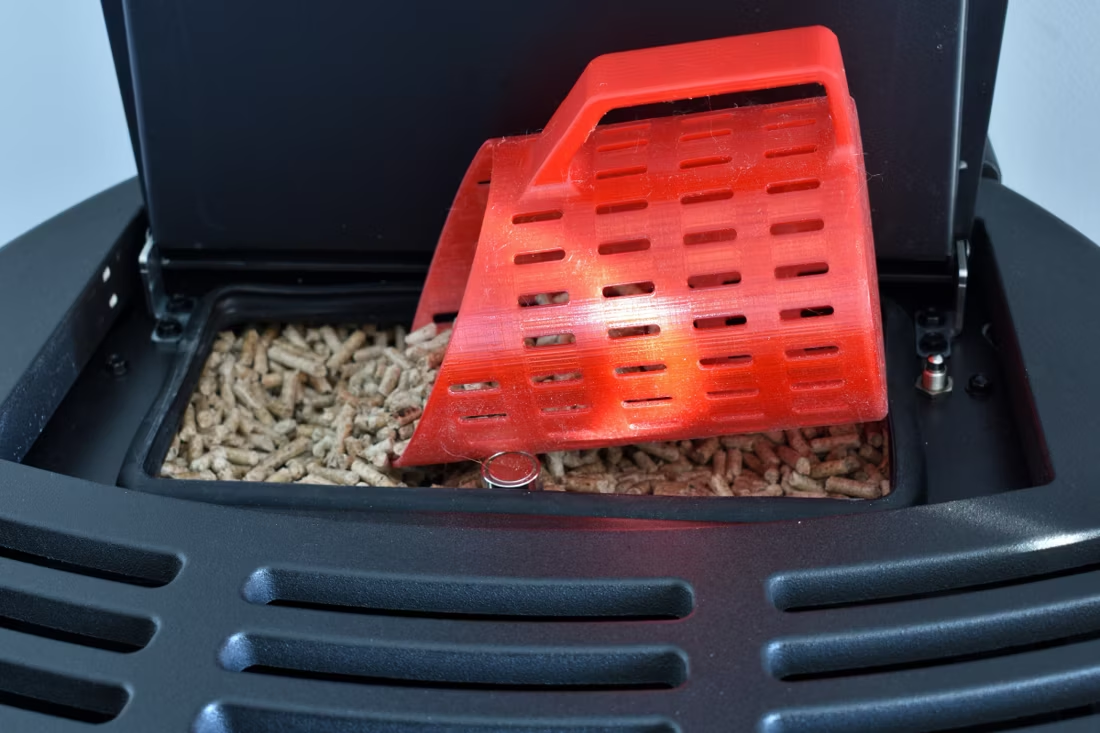
A clean pellet stove is a happy pellet stove. Plan on cleaning the burn pot about once a week when you're burning regularly—ash and clinkers gum up the air holes just like a pellet barbecue. Most pellet stove problems trace back to skipped cleaning that nobody explained up front. Some designs make it easy with a trapdoor burn pot: pull a lever and the gunk drops into the ash pan.
Can a fireplace actually lower my heating bill?
Yes—by creating a comfort zone. A furnace heats every square foot of the house just to warm the one room you're in; a gas fireplace on low burns roughly a sixth of the gas a typical furnace does. Set the furnace around 55–60 degrees as a baseline, then heat the rooms your family actually uses. Families who heat this way commonly save $20–$60 a month.
How much should I budget for a fireplace?
For an average home—covering the fireplace, the vent pipe, and basic installation—a budget between $3,900 and $5,500 gives you a lot of options across wood, gas, and pellet. By the time you add finish work, gas line, and electrical, the average complete installation lands between $5,000 and $12,000 all-in. In a remodel or new build, a good rule is to put about 2.5% of the total project cost toward the fireplace.
Nearby Dealers
Hearth shops serving Rochester and the surrounding area. Every listing shows whether it is a WhyFire partner, a dealer we have verified as authorized for the brands we recommend, or a local business carrying hearth products. No manufacturer pays for placement. How we verify dealers →
Miller Brick Co. Inc
Weckesser Brick Co,inc.
Ace Swim & Leisure - Webster
Sensenig's Landscape Supply
Ace Swim & Leisure- Rochester
David Smart Fireplace Chimney Service
Heritage Fireplace
Shadow Hill Landscape
New Way Home & Pool Center
Crocker's Hardware Inc.
Leroy Hearth And Home
Big Ash Fireplace & Stove
Pellet Brands Stocked Around Rochester
Manufacturers will point you to the nearest stocking dealer.
Find your pellet stove in Rochester.
Tell us about your home and heating goals, and we'll match you with a Rochester-area dealer who actually specializes in pellet installations—plus a free Project Guide & Parts List with the exact vent kit and parts your project needs.
Find Your Fireplace →