
Reliable Warmth for Rochester's Long, Gray Winters.
No chimney, no venting, no fuel storage—just zone heat you can add to almost any room in the city or the suburbs. Find the right unit and connect with a trusted local dealer.
Every Project Starts From One of These Five Situations
Zone heat without the chimney, venting, or fuel storage.
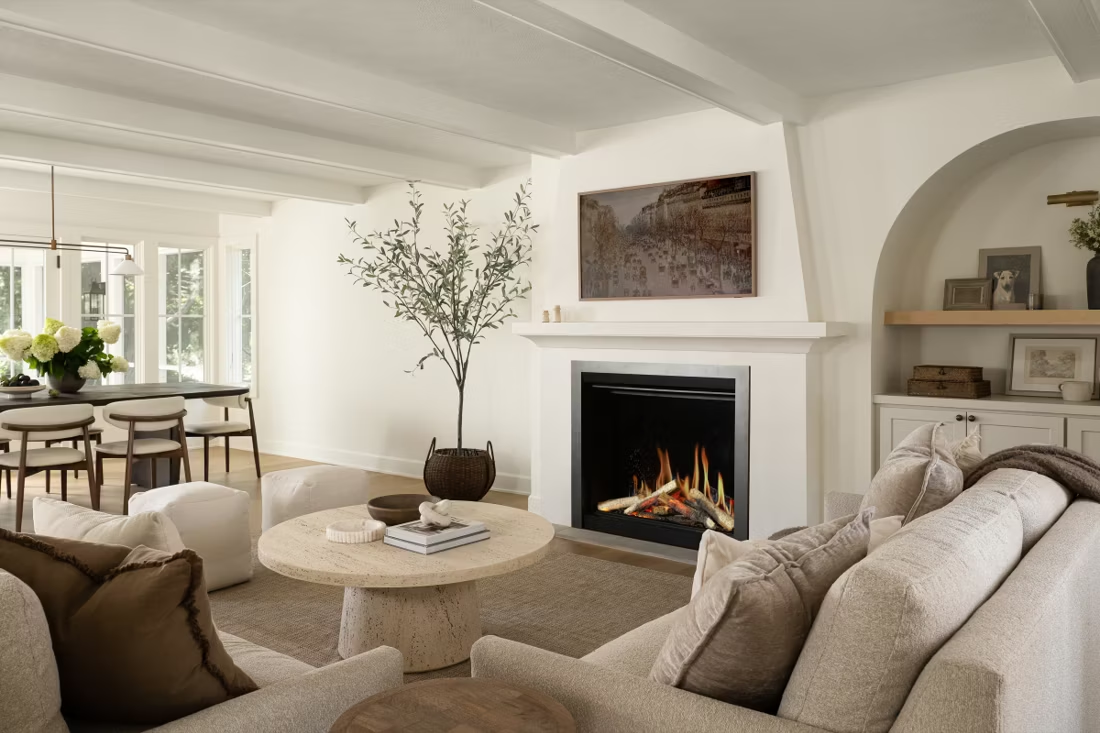
Rochester sits at the southern edge of Lake Ontario at about 495 feet, where lake-effect systems stack on top of an already cold Zone 5A winter—average lows near 19°F and roughly 6,273 heating degree days a season, on par with Duluth, MN for sheer number of heating days. A lot of the city's housing stock, from the brick two-families in the 19th Ward to newer condos downtown and apartments near the East End, either has no masonry chimney at all or has one that's long since been capped. Electric is often the only realistic fireplace option in those homes, and it's a genuinely good one for supplemental warmth in a single room.
Rochester Gas & Electric is the utility here, with residential rates around $0.1776 per kWh—a number worth knowing because it directly determines what an electric fireplace costs to run night after night through a Rochester winter. Electric units also skip the permitting headaches that come with wood or gas: no chimney inspection, no gas line, and in most cases no combustion byproducts to vent at all. The tradeoff is honest and worth saying up front—most electric fireplaces are built for ambiance and zone heat, not for replacing your furnace on a January night, and unlike a wood stove, they go dark the moment the power does.
Three steps. No salesperson until you're ready.
Tell us about your project
Your zip code, your situation, and the fuel you're leaning toward—or let the answers point you to one.
See what's actually available
The brands dealers within 100 miles genuinely carry—real options, never a catalog mirage.
Get your dealer & Project Guide
A trusted local dealer, plus the free Project Guide & Parts List that names every component of the job.
Frequently Asked Questions
How much does an electric fireplace installation cost in Rochester?
Plug-in electric fireplaces and stoves—the kind you set against a wall and plug into a standard 120V outlet—typically run $200 to $1,500 for the unit itself with no installation cost beyond hanging or placing it. Built-in electric fireplaces or inserts that need a recessed wall opening, a dedicated 20-amp circuit, or a licensed electrician to run new wiring generally land in the $1,000 to $3,000 range installed, depending on how much electrical work is involved. Converting an existing masonry fireplace to an electric insert is usually on the lower end of that range since no venting work is needed—you're just fitting the unit into an opening that already exists.
Can an electric fireplace actually heat a room in a Rochester winter?
It can heat a room, but it's not designed to fight a Zone 5A winter on its own. Most electric fireplaces top out around 1,500 watts, which works out to roughly 5,100 BTU—enough to noticeably warm a bedroom, den, or basement family room, but not enough to offset a whole house when outdoor temps sit in the teens and 6,273 heating degree days pile up over the season. Think of it as zone heat that lets you turn the thermostat down a couple of degrees in the rest of the house while keeping the room you're actually using comfortable. For whole-home heat in this climate, it pairs with—not replaces—your furnace or boiler.
What does an electric fireplace cost to run with RG&E rates?
At Rochester Gas & Electric's residential rate of about $0.1776 per kWh, a typical 1,500-watt electric fireplace running on high costs roughly $0.27 per hour to operate. Run it five hours an evening through a cold stretch and you're looking at about $1.33 a day, or $40 a month, if you're using it every night. Most units let you run the flame effect with the heater off, which draws only a few watts—useful if you want the visual without the electric bill.
Do I need a permit to install an electric fireplace in Rochester?
A plug-in, freestanding electric fireplace or stove generally doesn't require a permit—it's treated like any other appliance you plug into an existing outlet. If you're installing a built-in unit that requires a new dedicated circuit, a recessed wall box, or any electrical panel work, that portion of the job needs to be done by a licensed electrician, and depending on the scope you may need to pull an electrical permit through the City of Rochester's building permit office (or the relevant town building department if you're outside city limits in Monroe County). Local hearth dealers who install built-in electric units typically coordinate this for you.
Can I put an electric insert into my existing fireplace?
Yes, and it's one of the more common projects for older Rochester housing stock—plenty of homes in neighborhoods like Park Avenue, Corn Hill, and the 19th Ward have a masonry fireplace opening that hasn't been used in years, sometimes because the flue was capped or the chimney needs expensive repair. An electric insert slides into that existing opening, needs only a standard outlet or a nearby dedicated circuit, and gives you a working, code-simple fireplace again without touching the chimney at all. It's usually the fastest and least expensive way to bring a dead fireplace back to life in this climate.
Will my electric fireplace still work if the power goes out?
No—this is the honest tradeoff of electric heat, and it's worth planning around given how lake-effect storms can knock out power in Monroe County for hours at a stretch. An electric fireplace is entirely dependent on grid power; when RG&E service drops, so does the fireplace, unlike a wood stove or a battery-backed gas unit. If backup heat during outages is a priority for your household, that's a real reason to consider a gas or wood option for at least one room, even if electric is your main choice elsewhere in the house.
What type of electric fireplace fits my Rochester home best?
Wall-mounted electric fireplaces work well in newer condos and apartments downtown or near the East End, where there's no existing hearth and floor space is tight. Electric inserts are the better fit for the city's older brick two-families and colonials that already have a masonry fireplace opening—you get the look of a working hearth without touching the chimney. Freestanding electric stoves suit rooms without any fireplace footprint at all, like a finished basement or a converted sunporch, and can be moved if you rearrange the room later. A local dealer can walk your specific space and tell you which format actually fits.
Electric vs. gas fireplace—which makes more sense in Rochester?
Gas fireplaces put out real, sustained heat—enough to serve as genuine supplemental heat on the coldest Rochester nights—and most models keep working during a power outage with battery backup or a self-powering pilot. Electric fireplaces cost less upfront, need no gas line or venting, and install almost anywhere, but they're weaker heaters and go dark without power. If you already have gas service to the house and want real heat output in a main living area, gas is usually the stronger long-term choice. If you're in a condo, rental, or a room where running a gas line isn't practical, electric is the simpler, lower-cost path. Plenty of Rochester homes end up with both.
Are there rebates available for electric fireplaces in Rochester?
Electric fireplaces themselves don't typically qualify for the heat pump and weatherization rebates NYSERDA offers, since they're supplemental rather than whole-home heating equipment. That said, if your project involves upgrading a home's electrical panel or wiring to support a new built-in unit, it's worth asking a licensed electrician whether any broader NYSERDA or RG&E efficiency incentives apply to that portion of the work. A local dealer can also flag whether a specific manufacturer is running its own seasonal rebate or financing offer.
Does an electric fireplace need a vent or chimney?
No—that's its superpower. An electric fireplace needs a wall and an outlet, period. No vent pipe, no gas line, no clearances to design around, which is why it works in bedrooms, offices, apartments, and walls where venting a gas or wood unit would be impractical or impossible. Installation is typically the simplest and least expensive of any fireplace type.
Can I put a TV above my fireplace?
Yes—with an asterisk. Fireplaces are hot and TVs don't like heat. Either put a mantel between them to deflect rising warmth, or choose a fireplace with heat-management technology that creates a cool zone on the wall above—the wall stays around 125 degrees, barely warm, while the room still gets full heat. If you like clean lines and don't want a mantel, heat management is the answer.
Can I install a fireplace myself?
If you're putting a fire in your house on purpose, it's best to work with an expert. Unless you're genuinely experienced in framing, gas line, vent pipe, and the national code on clearances to combustibles, have a professional do it—and ideally the same company that sells you the fireplace, so warranty, service, and liability all live under one roof.
What is an in-home preview and do I need one?
It's a visit where a hearth professional measures your space, confirms the model you picked actually works in your home, and walks the specs—framing, gas line, venting, finish work—before anything is ordered. Some details you just can't know until you see the house. Never make a down payment without one; it's the single most-skipped step that burns buyers.
Nearby Dealers
Hearth shops serving Rochester and the surrounding area. Every listing shows whether it is a WhyFire partner, a dealer we have verified as authorized for the brands we recommend, or a local business carrying hearth products. No manufacturer pays for placement. How we verify dealers →
Miller Brick Co. Inc
Weckesser Brick Co,inc.
Ace Swim & Leisure - Webster
Sensenig's Landscape Supply
Ace Swim & Leisure- Rochester
David Smart Fireplace Chimney Service
Heritage Fireplace
Shadow Hill Landscape
New Way Home & Pool Center
Crocker's Hardware Inc.
Leroy Hearth And Home
Big Ash Fireplace & Stove
Electric Service in Rochester
An electric fireplace's heater draws about 1,500 watts—pennies per hour at local rates.
Rochester Gas & Electric Corp
Find your electric fireplace in Rochester.
Tell us a bit about your home and we'll send a free Project Guide & Parts List for your Rochester electric fireplace project—the exact parts you need and a trusted local dealer to install it.
Find Your Fireplace →