
Warm up your Plainview home without the wait.
Instant, clean heat built for Nassau County's split-levels and colonials. Find the right gas unit and connect with a trusted local dealer.
Every Project Starts From One of These Five Situations
The natural fit for Long Island's split-levels and colonials.
Plainview sits in climate zone 4A with about 5,087 heating degree days and an average winter low near 25°F—a real but moderate heating season, nowhere near the demands of a place like Burlington, Vermont. That milder profile is exactly why gas fireplaces make so much sense here: homeowners aren't looking for a survival heat source, they're looking for reliable zone heat and ambiance that turns on with a switch on a February evening. Most of Plainview's housing stock—post-war split-levels, ranches, and colonials built through the 1950s and 60s—already has natural gas running to the furnace, water heater, and range, which makes adding a gas fireplace or insert a straightforward retrofit rather than a major infrastructure project.
Wood-burning setups are essentially off the table for most Plainview properties—Nassau County's suburban lot sizes leave little room for cordwood storage, there's no nearby public land or cutting permit office the way there is upstate or out west, and few homes here are built around a wood-heat lifestyle. Electric fireplaces are a legitimate option too, though Long Island Power Authority's residential rate of roughly 24.6 cents per kWh makes electric resistance heat one of the pricier ways to run a unit long-term. For most Plainview households, a direct-vent gas fireplace or insert ends up being the most practical balance of upfront cost, running cost, and real heat output.
Three steps. No salesperson until you're ready.
Tell us about your project
Your zip code, your situation, and the fuel you're leaning toward—or let the answers point you to one.
See what's actually available
The brands dealers within 100 miles genuinely carry—real options, never a catalog mirage.
Get your dealer & Project Guide
A trusted local dealer, plus the free Project Guide & Parts List that names every component of the job.
Frequently Asked Questions
How much does a gas fireplace installation cost in Plainview?
On Long Island, a typical gas fireplace or insert installation runs somewhere between $5,000 and $12,000, with Nassau County labor rates and permitting pushing costs a bit above the national average. A gas insert dropped into an existing masonry fireplace with a nearby gas line already in place lands toward the lower end. A new built-in unit for a remodel—with framing, venting through an exterior wall, and a fresh gas line run from the meter—sits toward the higher end. Local dealers will walk your specific split-level or colonial and give you a firm number after seeing the chimney, gas service, and venting path.
Can I convert my existing wood-burning fireplace to gas?
Yes, and it's one of the most common requests from Plainview homeowners with an older colonial that has a masonry fireplace nobody actually uses for cordwood. A gas insert typically slides into the existing firebox, using a stainless liner run up the original chimney for venting. Because natural gas service already reaches nearly every home in this part of Nassau County, the gas line work is often minimal—usually just a branch line from an existing appliance run. Expect $4,500 to $9,500 depending on the insert and how much of that line work is needed.
Is natural gas available in Plainview, or would I need propane?
Natural gas service is well established throughout Plainview and the rest of Nassau County—the vast majority of homes here are already on the gas main for their furnace, water heater, or stove, which makes natural gas the default choice for a new fireplace. Propane is uncommon in a suburban town this dense; it tends to show up only on the rare property that was never connected to the main. If you're already cooking or heating with gas, adding a fireplace on the same service is the simplest path.
Will my gas fireplace still work if the power goes out?
It can, depending on the ignition system. Long Island has seen its share of extended outages after nor'easters and hurricanes, and LIPA service can take days to restore in a bad storm—so this matters more here than in a lot of places. Units with IPI (intermittent pilot ignition) run on a small battery backup that kicks in automatically when the power drops, letting the fireplace light on demand just like normal. Valor fireplaces go a step further: the pilot's thermocouple generates the small amount of electricity the unit needs, so there's no battery to remember at all. If storm resilience matters to you, ask your local dealer specifically about the ignition type before you buy.
Gas fireplace, gas insert, or gas stove—which fits my house?
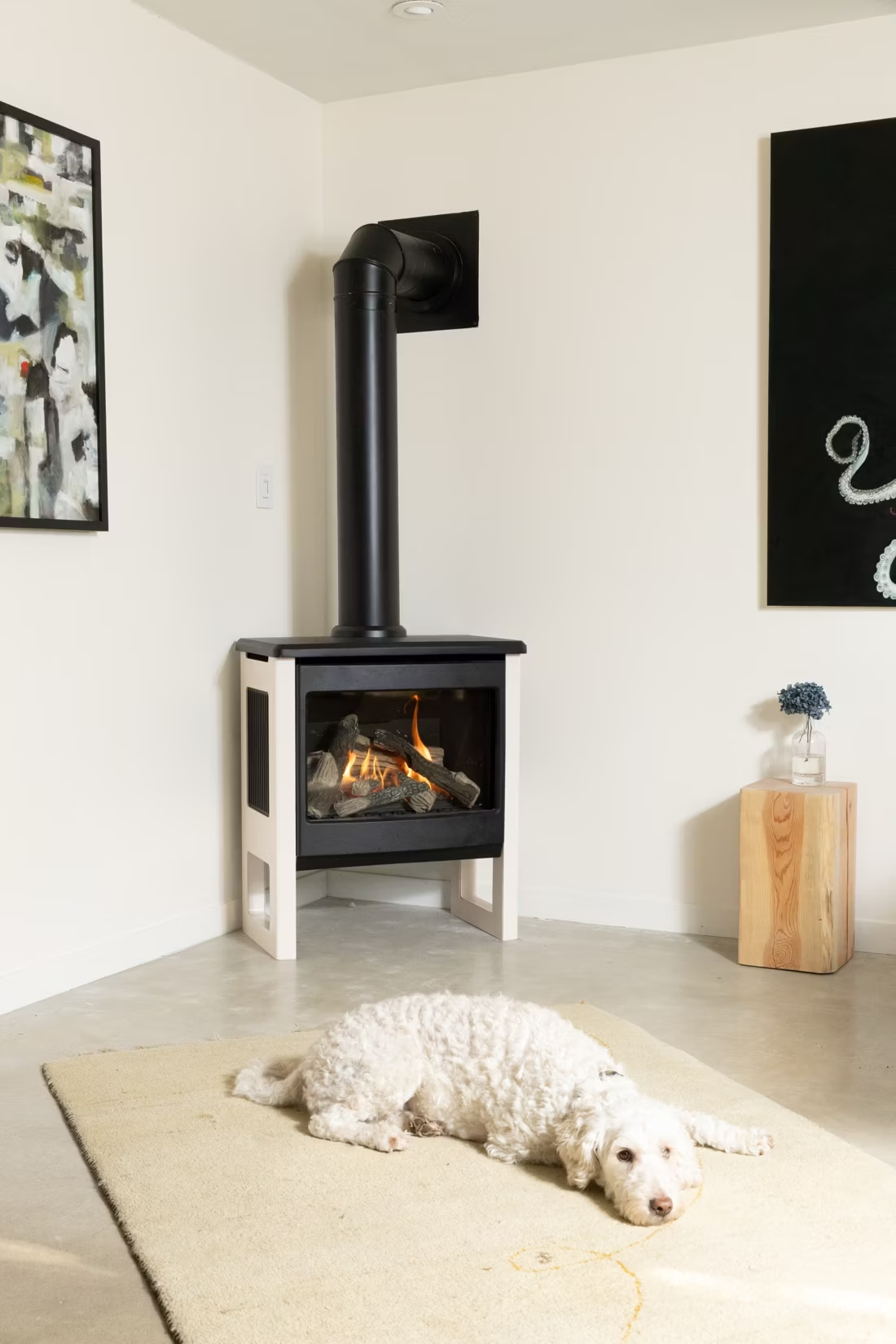
A gas insert is built to drop into an existing masonry firebox and is the natural choice for Plainview's older colonials that already have a fireplace and chimney. A built-in gas fireplace is framed into a wall and makes more sense for a remodel, addition, or a split-level that never had a fireplace to begin with. A gas stove is a freestanding unit on its own hearth pad, which works well in a den, basement, or finished attic space where a full built-in isn't practical. Most requests we see from this area are insert conversions, simply because so much of the housing stock already has a working chimney.
Do I need a permit to install a gas fireplace in Plainview?
Yes—Plainview falls under the Town of Oyster Bay, and gas fireplace installations require both a building permit and sign-off on the gas line work from a licensed plumber or gas fitter. Most certified hearth dealers handle the permit filing and inspection scheduling as part of the installation, so you're not stuck coordinating separately with the town and a gas contractor. It's worth confirming your installer is licensed to work in Nassau County before signing a contract.
Should I get a vented or vent-free gas fireplace?
Vented (direct-vent) units draw combustion air from outside and exhaust it back outside through a sealed pipe—they're the standard choice almost everywhere, including Long Island, because they don't put any combustion byproducts into the living space. Vent-free units burn directly into the room and are legal in New York in limited applications, but they come with strict room-size and ventilation requirements that can be hard to satisfy in a smaller Plainview den or finished basement. Given the tight footprints of a lot of local homes, a direct-vent unit is almost always the more practical and safer recommendation, and it's what most local dealers will steer you toward.
How often does a gas fireplace need to be serviced?
Plan on an annual inspection, ideally before the heating season starts. A technician checks the burner, pilot assembly, venting, gas connections, and any battery backup or electronic ignition components, and cleans the glass and interior. This is a much lighter lift than chimney sweeping for a wood unit, but skipping it is how small gas leaks or venting issues go unnoticed. Local service providers typically charge $150 to $250 for a standard annual visit.
Should I even consider wood heat instead of gas in Plainview?
For most Plainview homeowners, no—wood heat is genuinely uncommon here. There's no nearby public land or cutting permit office the way there is upstate, suburban lot sizes leave little room for stacking cordwood even though oak, maple, birch, and ash are the species you'd find regionally, and the town's moderate 5,087 heating-degree-day climate doesn't demand the kind of all-night burn times wood is best at. A handful of homeowners still install a wood stove for ambiance or as an emergency backup, but for daily zone heat, gas is the far more practical fit for this area's housing stock and lifestyle. Electric fireplaces are a real alternative too if you want zero venting work, though LIPA's rate of roughly 24.6 cents per kWh makes them costlier to run than gas over a full winter.
Why is my open fireplace making my house colder?
Open fireplaces suck—literally. As the fire burns, it consumes air your furnace already paid to heat and pulls it out through the chimney, so the house is actually colder after the fire goes out than before you lit it. An insert fixes this: it seals the chimney, puts fixed glass across the front, and turns that hole in your house into a real heat source.
Why is a fireplace insert so efficient?
An insert does two things: it seals the chimney completely, so you stop losing air you already paid to heat, and it radiates warmth into the room through the firebox and glass. Most add a heat-exchange fan that pulls cool room air underneath, wraps it around the hot firebox, and pushes it back out warm. Your home is more efficient before you've even lit the first fire.
Does a fireplace add value to my home?
On average, a fireplace adds back to the home about the same amount you spent installing it. Add the monthly savings from heating the rooms you actually use instead of the whole house—often hundreds of dollars a year—and the value case is strong before you even count what a fire does for how your family uses the room.
Can I install a fireplace myself?
If you're putting a fire in your house on purpose, it's best to work with an expert. Unless you're genuinely experienced in framing, gas line, vent pipe, and the national code on clearances to combustibles, have a professional do it—and ideally the same company that sells you the fireplace, so warranty, service, and liability all live under one roof.
Nearby Dealers
Hearth shops serving Plainview and the surrounding area.
Costello's Hearth & Spa - Garden City Park
Find your gas fireplace in Plainview.
Tell us a bit about your home and we'll match you with the right gas fireplace or insert—plus a free Project Guide & Parts List and a trusted local Nassau County dealer to install it.
Find Your Fireplace →