
Warmth and ambiance for Orleans County homes—no chimney required.
From the canal towns of Albion and Medina out to the Lake Ontario shoreline in Kendall and Carlton, electric fireplaces give Orleans County homeowners real flame-look warmth without a flue, a gas line, or a demolition project. Find the right unit and connect with a trusted local dealer.
Every Project Starts From One of These Five Situations
The easiest way to add real heat where you need it.
Orleans County sits along the Lake Ontario shoreline in a 5A climate zone with roughly 6,366 heating degree days and average winter lows near 18°F—cold enough that lake-effect snow bands off the water regularly bury Kendall, Carlton, and the northern townships while Albion and Medina inland see slightly milder but still long, gray winters. Much of the county's housing stock is older: canal-era homes in Albion and Medina built well before central heating was standard, farmhouses out among the apple orchards, and ranch homes and mobile homes without a masonry chimney or a place to run gas line. That's exactly the gap electric fireplaces fill.
National Grid serves electric accounts across most of Orleans County, and a 120V or 240V electric fireplace plugs into (or is wired into) that existing service with no new gas infrastructure and, in most cases, no building permit at all. Given the county's heating degree day load, electric resistance heat isn't the most efficient way to warm a whole farmhouse through a January in Orleans County—most homeowners here pair an electric fireplace with an existing furnace, propane system, or wood stove, using the electric unit for zone heat in a bedroom, den, or finished basement, and for the ambiance a real furnace can't provide. Installed correctly by a local dealer, it's the fastest, least invasive fireplace project available in the county.
Three steps. No salesperson until you're ready.
Tell us about your project
Your zip code, your situation, and the fuel you're leaning toward—or let the answers point you to one.
See what's actually available
The brands dealers within 100 miles genuinely carry—real options, never a catalog mirage.
Get your dealer & Project Guide
A trusted local dealer, plus the free Project Guide & Parts List that names every component of the job.
Frequently Asked Questions
How much does an electric fireplace cost to install in Orleans County?
Plug-in electric inserts and freestanding stoves are the least expensive option—often $300 to $900 installed, since no new wiring or permit is typically required if you're using an existing outlet. Built-in wall units and mantel-style fireplaces that require a dedicated 240V circuit run higher, often $1,500 to $3,500 once an electrician is involved, especially in older Albion or Medina homes where panel capacity may need to be checked first. Local dealers serving Orleans County will size the unit to your room and tell you upfront whether your existing electrical service can handle it or whether an electrician needs to be part of the project.
Do I need a permit for an electric fireplace in Orleans County?
In most cases, no—a plug-in electric fireplace or insert that uses an existing outlet doesn't require a permit anywhere in Orleans County. If your project involves running a new dedicated circuit or altering wiring, an electrical permit is typically required through your town's building or code enforcement office—Albion, Medina, Holley, and the other townships each handle their own permitting rather than routing through a single county office. A reputable local dealer will tell you which category your project falls into before work starts.
Will an electric fireplace heat my whole house in a cold Orleans County winter?
No, and it's worth being direct about that. With roughly 6,366 heating degree days and winter lows regularly in the high teens, especially in lake-effect snow bands near Kendall and Carlton, most electric fireplaces top out around 5,000 to 6,000 BTU—enough to comfortably heat a single room, not a whole farmhouse. Orleans County homeowners typically use electric units to supplement a furnace, propane system, or wood stove, warming the room they're actually sitting in without running the whole-house heat higher. If you're looking for a primary heat source for a drafty older home, a wood or pellet stove is usually the better fit alongside the electric unit for ambiance.
What's the difference between an electric insert, a wall-mount unit, and an electric stove?
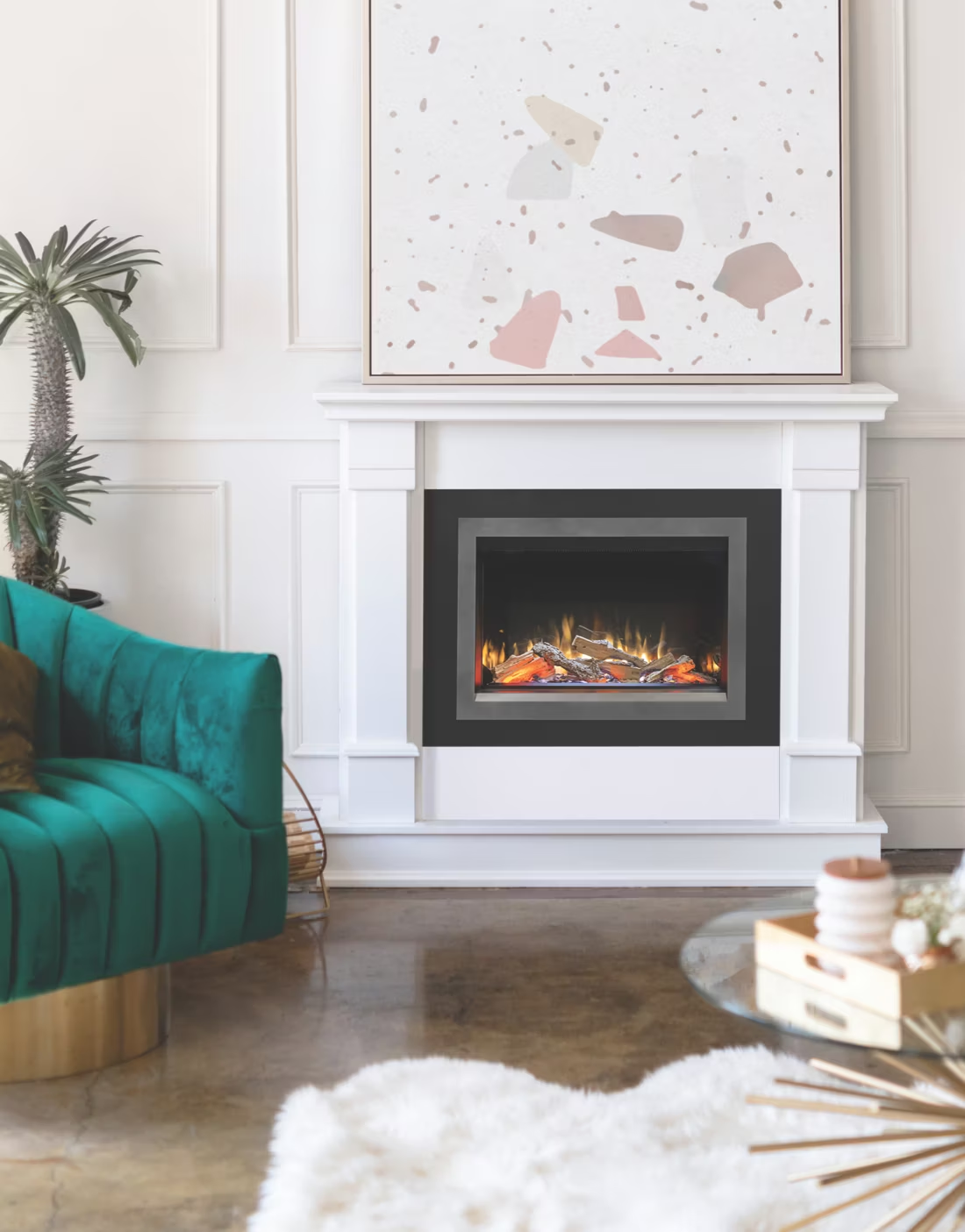
An electric insert is built to slide into an existing masonry fireplace opening—a common project in Orleans County's older canal-town homes in Albion and Medina that already have a fireplace opening but no working chimney or don't want to deal with one. A wall-mount unit hangs flush against a wall like a large television and works well in newer construction or finished basements without an existing fireplace. A freestanding electric stove sits on the floor and mimics the look of a wood stove—a popular choice for farmhouses and rural properties in the county where that aesthetic fits the house. All three plug in or wire in with no venting, no chimney, and no combustion byproducts to worry about.
Will my electric fireplace work if the power goes out?
No—unlike a wood stove or a properly equipped gas fireplace with battery-backed ignition, an electric fireplace stops working the moment power drops, since the heating element and flame effect both run on household current. That matters in Orleans County, where lake-effect snowstorms off Ontario have knocked out National Grid service for extended stretches in the northern townships. If backup heat during outages is a priority for your household, plan on pairing the electric fireplace with a wood stove, propane heater, or generator rather than relying on it as your only heat source.
How much does it cost to run an electric fireplace?
A typical electric fireplace draws around 1,500 watts on the heat setting. Running it for a few hours a day at National Grid's residential rates adds a modest amount to a monthly bill—usually in the range of $10 to $30 a month depending on how many hours it runs and your specific rate plan. That's considerably cheaper than running central electric resistance heat for the whole house, which is part of why most Orleans County homeowners use these units for supplemental zone heat rather than as a primary furnace replacement.
Can I put an electric fireplace into an existing wood-burning fireplace?
Yes, and it's one of the more common projects local dealers see in Orleans County's older housing stock. An electric insert slides into the existing firebox opening in canal-era homes throughout Albion and Medina, giving you flame-look ambiance without maintaining a chimney, cleaning ash, or sourcing firewood. It won't replace the heat output of an active wood-burning setup using local oak, maple, or ash, but for homeowners who inherited an unused fireplace and don't want the upkeep, it's a straightforward, low-cost conversion.
How do I size an electric fireplace for my room?
Electric fireplaces are sized by room square footage rather than by whole-home heat load—as a rough guide, most units rated at 4,000 to 5,000 BTU comfortably supplement heat in rooms up to 400 square feet, which covers most bedrooms, dens, and finished basement rooms common in Orleans County homes. Larger open-concept rooms may need a higher-output unit or won't be fully heated by electric alone, in which case the fireplace functions more as an ambiance feature with mild supplemental warmth. A local dealer will walk your specific room before recommending a model.
Electric vs. wood—which makes sense for my Orleans County home?
Wood is deeply practical in Orleans County—oak, maple, birch, and ash are all common local species, and a wood stove or insert can serve as genuine primary heat during a lake-effect cold snap, with or without power. Electric can't do that; it needs the grid running and it's built for convenience and ambiance rather than whole-home heat load in a 6,366-HDD climate. For a farmhouse or rural property where backup heat matters, wood or a wood-electric combination is often the practical answer. For a bedroom, den, or a home that already has adequate central heat and just wants flame-look warmth with none of the mess, electric is hard to beat. Many local homes end up with both.
Does an electric fireplace need a vent or chimney?
No—that's its superpower. An electric fireplace needs a wall and an outlet, period. No vent pipe, no gas line, no clearances to design around, which is why it works in bedrooms, offices, apartments, and walls where venting a gas or wood unit would be impractical or impossible. Installation is typically the simplest and least expensive of any fireplace type.
Do electric fireplaces actually produce heat?
Yes—most put out around 4,800–5,000 BTUs from a standard outlet, which comfortably warms a bedroom, office, or den as a comfort-zone heater. What they won't do is carry a whole house the way wood, gas, or pellet can. Think of electric as ambiance-first with honest supplemental heat: flames on with no heat in July, flames plus warmth in January.
Does a fireplace add value to my home?
On average, a fireplace adds back to the home about the same amount you spent installing it. Add the monthly savings from heating the rooms you actually use instead of the whole house—often hundreds of dollars a year—and the value case is strong before you even count what a fire does for how your family uses the room.
Can a fireplace actually lower my heating bill?
Yes—by creating a comfort zone. A furnace heats every square foot of the house just to warm the one room you're in; a gas fireplace on low burns roughly a sixth of the gas a typical furnace does. Set the furnace around 55–60 degrees as a baseline, then heat the rooms your family actually uses. Families who heat this way commonly save $20–$60 a month.
Find the right electric fireplace for your Orleans County home.
Tell us about your room, your existing electrical service, and what you're hoping to add—and we'll match you with a trusted local dealer and a free Project Guide & Parts List covering the exact unit specs and wiring needs for your Orleans County home.
Find Your Fireplace →