
Real flame-look ambiance, zero venting, anywhere in Orange County.
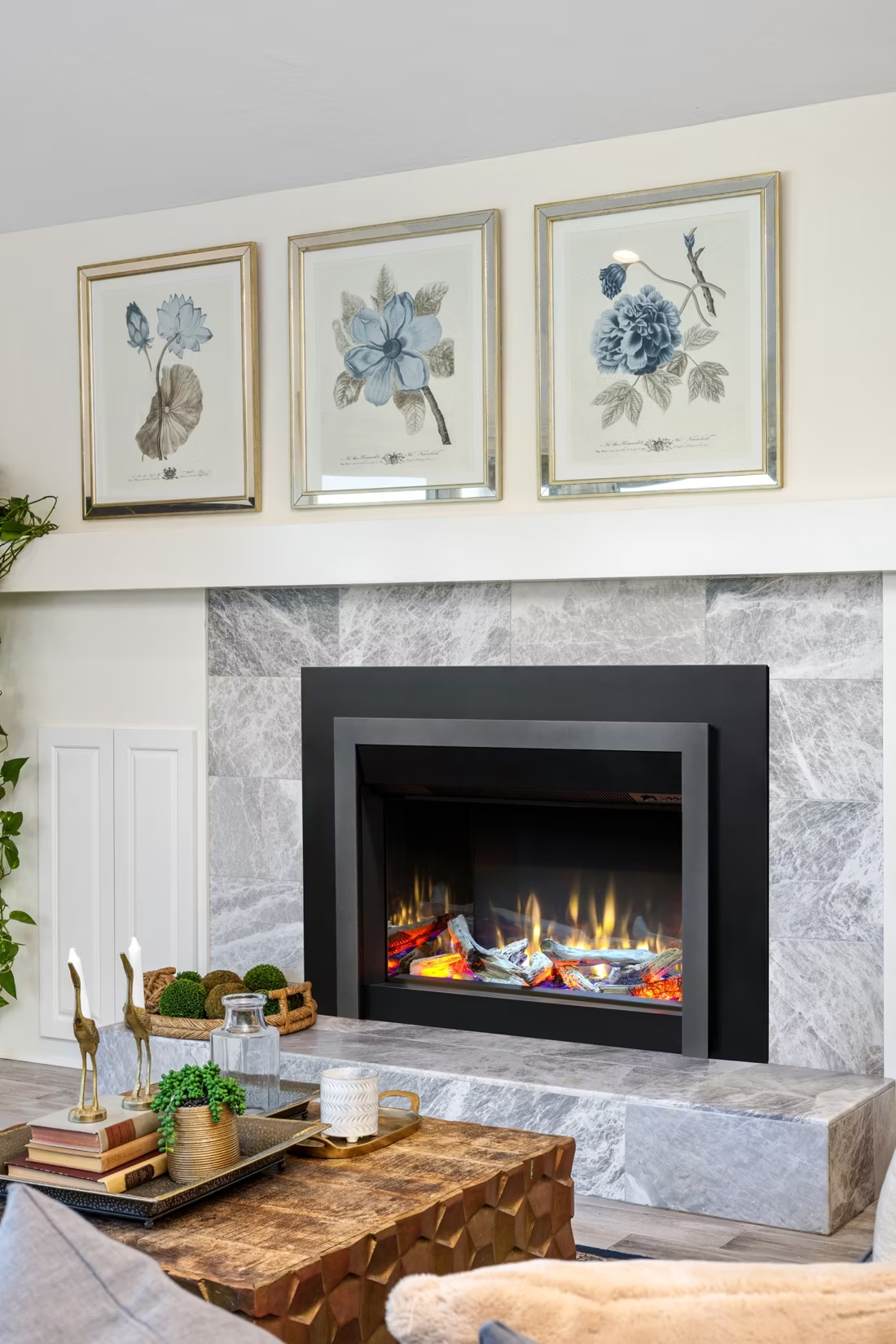
From Newburgh waterfront condos to Warwick farmhouses, electric fireplaces plug into your home's existing wiring and add instant ambiance and zone heat—no chimney, no gas line, and no fuel to haul. Find the right model and connect with a trusted local dealer.
Every Project Starts From One of These Five Situations
Ambiance and supplemental warmth without the retrofit.
Orange County sits in the mid-Hudson Valley with a genuine but moderate cold-climate profile—climate zone 5A, a solidly cold winter heating season, and winter lows averaging around 21°F. That's a real winter, but it's well short of places like Burlington, VT, where the winter heating load runs nearly 40% higher. Orange County homeowners need reliable heat from November through March, but they're not fighting sustained sub-zero stretches, which is exactly the kind of climate where a well-chosen electric fireplace earns its keep as everyday supplemental heat rather than a struggle to keep a whole house warm.
The county's housing stock plays a big role here. Older homes around Goshen, Warwick, and Montgomery often have decorative fireplaces or no chimney at all, while newer construction in Middletown, Chester, and the Newburgh waterfront favors open floor plans without masonry openings. Electric units solve both problems: an insert can drop into an existing but non-functional firebox, and a wall-mount or built-in linear unit can go into a new-construction great room with nothing more than standard household wiring—or a dedicated 240V circuit for larger units. Whether your power comes from Central Hudson Gas & Electric or Orange & Rockland Utilities, there's no utility coordination or gas hookup required, which keeps the project simple and the timeline short.
Three steps. No salesperson until you're ready.
Tell us about your project
Your zip code, your situation, and the fuel you're leaning toward—or let the answers point you to one.
See what's actually available
The brands dealers within 100 miles genuinely carry—real options, never a catalog mirage.
Get your dealer & Project Guide
A trusted local dealer, plus the free Project Guide & Parts List that names every component of the job.
Frequently Asked Questions
How much does an electric fireplace installation cost in Orange County?
A simple plug-in insert or freestanding stove runs $300 to $800 installed, since it just needs a standard 120V outlet—often a same-day project. A built-in wall-mount or linear unit with a custom mantel or surround typically runs $1,000 to $2,500, and if it needs a new dedicated 240V circuit, add an electrician's labor for running that line. Costs in Orange County track pretty closely with the rest of the Hudson Valley; the biggest cost swing comes from surround carpentry and whether existing wiring can be reused versus a new circuit run from the panel.
Can an electric fireplace actually heat a room in Orange County's winters?
Most electric fireplaces are rated around 4,600 to 5,200 BTU (roughly 1,500 watts), which is enough to noticeably warm a 400- to 500-square-foot room—a den, finished basement, or bonus room. Given the county's solidly cold winter heating season and occasional single-digit nights, an electric unit works well as zone heat you run in the room you're actually using, letting you turn down the thermostat elsewhere. It's not designed to replace whole-home heating in a Hudson Valley winter, and no reputable local dealer will size one that way.
Do I need a certified electrician to install an electric fireplace?
A basic plug-in insert or stove that uses an existing outlet doesn't require an electrician—most homeowners handle that themselves. A built-in wall-mount or linear unit that needs a new dedicated circuit does require a licensed electrician, particularly if it's a 240V unit or the wiring has to run through finished walls in an older Warwick or Goshen farmhouse. Local hearth dealers in Orange County typically coordinate this as part of the install so you're not managing two separate contractors.
What's the difference between an electric insert, a wall-mount unit, and a freestanding stove?
An electric insert is built to slide into an existing masonry fireplace opening—a common fit for older Orange County homes with a decorative or non-functional wood fireplace that's never going to be used for real fires again. A wall-mount or built-in linear unit hangs on or is framed into a wall, popular in newer Middletown and Newburgh construction with open floor plans and no existing hearth. A freestanding electric stove mimics the look of a cast-iron wood stove and works well in farmhouse-style homes around Chester and Montgomery where that aesthetic fits the house.
Do I need a permit to install an electric fireplace in Orange County?
A simple plug-in unit generally doesn't require a permit since it's not altering your home's electrical system. A built-in unit that requires a new circuit typically does need an electrical permit from your local building department—Orange County permitting runs through each town or city (City of Middletown, Town of Newburgh, Town of Warwick, and so on), not a single county office, so requirements vary slightly by municipality. Your electrician or local dealer can confirm what's needed before work starts.
Will my electric fireplace work during a power outage?
No—and this is worth being direct about. Unlike a gas fireplace with battery-backed ignition, an electric fireplace is entirely dependent on grid power, so it shuts off the moment Central Hudson or O&R service drops during a winter storm. If backup heat during an outage is a priority for your household, an electric unit shouldn't be your only heat source; pair it with a wood stove or generator-backed system. For everyday ambiance and supplemental warmth when the power is on, though, electric is hard to beat for convenience.
What's the best electric fireplace for actual heat output versus pure ambiance?
If you want real supplemental heat, look at higher-wattage infrared or quartz models from brands like Dimplex or ClassicFlame—these push closer to the 5,000 BTU ceiling and use infrared elements that heat objects and people in the room rather than just the air. If you mainly want the visual of a fire—flickering flame effect, glowing ember bed—with heat as a bonus, a lower-wattage or heat-optional model works fine and costs less to run. Local dealers can walk you through both categories based on which room you're outfitting.
How much does it cost to run an electric fireplace in Orange County?
At a typical 1,500-watt setting, an electric fireplace costs roughly $0.20 to $0.30 per hour to run at current Central Hudson and O&R residential electric rates in the Hudson Valley. Run a few hours an evening through a cold month and you're looking at somewhere around $20 to $40 in electricity—generally cheaper than heating that same room by running your central furnace or heat pump longer, which is the whole point of using it as zone heat.
Electric vs. wood vs. gas—which is right for my Orange County home?
Wood—burned in local oak, maple, birch, or ash—offers the highest heat output and keeps working when the power's out, but means hauling and stacking firewood and annual chimney maintenance. Gas delivers strong, consistent heat on demand but requires a gas line or propane tank and professional venting work. Electric is the simplest option: no venting, no fuel deliveries, no emissions, and it drops into almost any room in minutes—the tradeoff is that it's supplemental heat only and won't run without power. Many Orange County homeowners end up with gas or wood in the main living space and electric in a bedroom, basement, or sunroom where simplicity matters more than raw BTUs.
Can I put a TV above my fireplace?
Yes—with an asterisk. Fireplaces are hot and TVs don't like heat. Either put a mantel between them to deflect rising warmth, or choose a fireplace with heat-management technology that creates a cool zone on the wall above—the wall stays around 125 degrees, barely warm, while the room still gets full heat. If you like clean lines and don't want a mantel, heat management is the answer.
Does an electric fireplace need a vent or chimney?
No—that's its superpower. An electric fireplace needs a wall and an outlet, period. No vent pipe, no gas line, no clearances to design around, which is why it works in bedrooms, offices, apartments, and walls where venting a gas or wood unit would be impractical or impossible. Installation is typically the simplest and least expensive of any fireplace type.
Does a fireplace add value to my home?
On average, a fireplace adds back to the home about the same amount you spent installing it. Add the monthly savings from heating the rooms you actually use instead of the whole house—often hundreds of dollars a year—and the value case is strong before you even count what a fire does for how your family uses the room.
Can I install a fireplace myself?
If you're putting a fire in your house on purpose, it's best to work with an expert. Unless you're genuinely experienced in framing, gas line, vent pipe, and the national code on clearances to combustibles, have a professional do it—and ideally the same company that sells you the fireplace, so warranty, service, and liability all live under one roof.
Stove and Fireplace Dealers in Orange County
Find your electric fireplace in Orange County.
Tell us about your room and your goals—ambiance, supplemental heat, or both—and we'll match you with a trusted local Orange County dealer and send over a free Project Guide & Parts List, including the exact unit, surround, and any circuit work your electrician will need.
Find Your Fireplace →