
No Chimney Required for Oceanside's South Shore Homes.
A plug-in or built-in electric unit that adds real ambiance and zone heat to a Reynolds Channel-area home without a flue, a gas line, or a permit headache. Find the right unit and connect with a trusted local dealer.
Every Project Starts From One of These Five Situations
Zone heat and ambiance without altering your home.
Oceanside sits at just 8 feet above sea level in the Town of Hempstead, hugging the marshes and channels off the South Shore of Nassau County. Winters here are moderate by Northeast standards—Climate Zone 4A, an average winter low around 26°F, and a winter heating load closer to a mild coastal pattern than the deep cold of interior New York. That's a very different climate profile than places like Burlington, VT, where whole-home wood heat is a necessity rather than an option.
Wood stoves and pellet stoves are essentially a non-factor in Oceanside's housing stock—tight South Shore lots, attached garages, and a mix of capes, ranches, and post-Sandy elevated homes leave little room for a masonry chimney or a hopper of pellets, and there's no local cutting-permit infrastructure the way there is near national forest land upstate. What Oceanside homeowners actually want is simpler: a real-looking flame with instant zone heat that doesn't require venting, doesn't touch your homeowner's insurance the way a wood appliance can, and works whether you own a single-family home or a condo unit. Long Island Power Authority serves electric here at a residential rate around $0.2457/kWh—noticeably higher than the national average—but a standard 1,500-watt electric fireplace only costs about $0.37 an hour to run on heat mode, and pennies an hour in flame-only ambiance mode, which is why most units here supplement a room rather than replace central heat.
Three steps. No salesperson until you're ready.
Tell us about your project
Your zip code, your situation, and the fuel you're leaning toward—or let the answers point you to one.
See what's actually available
The brands dealers within 100 miles genuinely carry—real options, never a catalog mirage.
Get your dealer & Project Guide
A trusted local dealer, plus the free Project Guide & Parts List that names every component of the job.
Frequently Asked Questions
How much does an electric fireplace cost to install in Oceanside?
A basic plug-in electric insert or freestanding electric stove runs $300 to $900 installed, since it typically just needs an existing standard outlet—no electrician required. A built-in wall unit or a linear electric fireplace set into a custom mantel and surround runs $1,500 to $4,500 once carpentry, a dedicated 20-amp circuit, and finish work are factored in. Because Oceanside lots and homes tend to be compact, a lot of local installs are wall-mounted linear units in a family room or finished basement rather than large masonry-style builds.
Do I need a permit to install an electric fireplace in Oceanside?
A simple plug-in unit that draws from an existing outlet doesn't require a permit. If you're installing a built-in unit that needs a new dedicated circuit or any electrical panel work, that requires a permit and inspection through the Town of Hempstead Building Department, since Oceanside is unincorporated and falls under town jurisdiction rather than a village building office. Any electrician pulling that permit should be licensed in Nassau County—most local hearth and electrical retailers handle the paperwork as part of the install.
How much does it actually cost to run an electric fireplace at Long Island rates?
LIPA's residential rate runs around $0.2457 per kWh, one of the higher rates in the country, so it's a fair question. A typical 1,500-watt unit on full heat costs roughly $0.37 an hour to run—about $3 to $4 for a full evening. In flame-only mode, with the heater off, most units draw under 100 watts, so ambiance alone costs a couple of cents an hour. Because Oceanside's winters are relatively mild (Zone 4A, average low 26°F), most owners use the unit as supplemental heat in one room a few hours a night rather than running it continuously, which keeps the LIPA bill impact modest.
What size electric fireplace do I need for my Oceanside home?
Most standard electric fireplace inserts and linear units are rated to supplement heat for 400 to 1,000 square feet—enough for a family room, den, or finished basement, which describes a lot of Oceanside's South Shore floor plans. They're not designed to replace whole-home heating, so sizing here is less about square footage math and more about matching the unit's width to your wall or mantel opening. A local dealer can measure your space and recommend wattage and dimensions during a quick in-home visit.
What's the difference between an electric insert, a wall-mount, and a mantel unit?
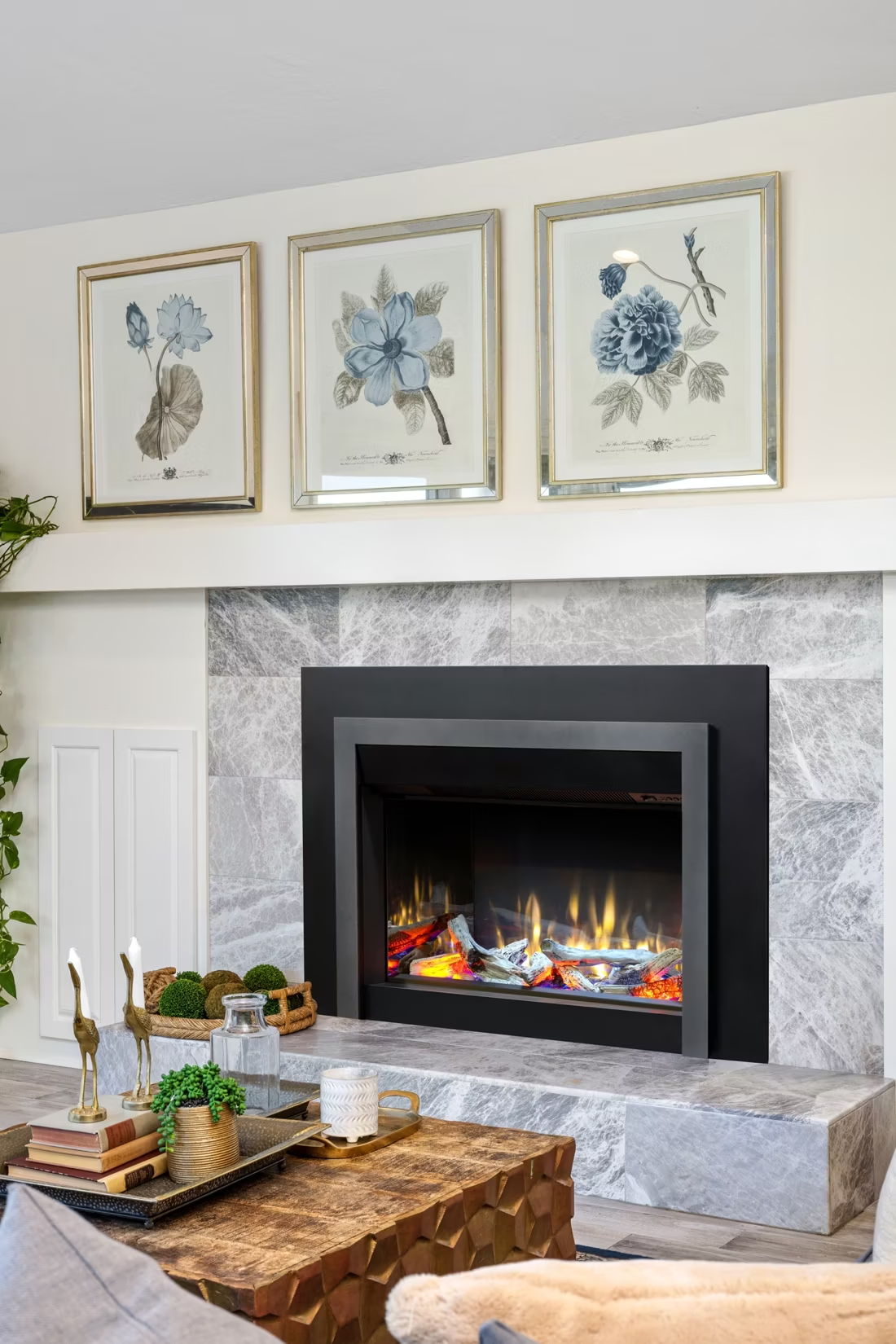
An electric insert is built to slide into an existing fireplace opening—a common choice if your Oceanside home has an old, rarely-used wood-burning fireplace you want to convert to instant, no-mess heat. A wall-mount or linear unit hangs flush on a wall like a TV, popular in newer renovations and finished basements. A mantel or freestanding unit is a self-contained cabinet with the firebox built in—no wall modification needed at all, which makes it the easiest option for renters or homes where you don't want to alter existing trim.
Can I install an electric fireplace in a finished basement, given Oceanside's flood risk?
Yes, and it's one of the more common installs locally given how many Oceanside basements were refinished after Superstorm Sandy. The main consideration is placement: mount linear or wall units above expected flood lines rather than at floor level, and make sure any outlet or dedicated circuit serving the unit is GFCI-protected, which is standard practice in below-grade rooms anyway. Unlike a gas or wood appliance, there's no venting or gas line to reroute if you ever need to raise the unit higher on the wall.
Electric vs. gas—which fits my Oceanside home better?
Gas fireplaces are common in Oceanside for homes already on natural gas service, and they put out more real heat—useful if you want a fireplace to meaningfully offset your furnace on a cold night. Electric skips the gas line, the venting, and the annual gas appliance inspection entirely, which matters in a town where many homes sit on small lots or in attached/semi-attached configurations where running new gas line or venting is impractical or restricted. If you want genuine supplemental heat and already have gas at the house, gas is worth a look. If you want flexibility, easy installation, and a unit that works in a condo, co-op, or rental, electric is the simpler answer.
Why don't more Oceanside homes use wood or pellet stoves?
It comes down to geography and housing stock rather than any air quality restriction—Oceanside has no non-attainment designation or wood-smoke advisories the way inland burning regions do. The issue is practical: this is a dense South Shore hamlet of small lots, attached garages, and homes without existing masonry chimneys, and there's no nearby public forest land offering cutting permits the way there is in upstate or Western states. A small number of homeowners with older homes and existing chimneys still burn oak, maple, or ash occasionally, but it's the exception here, not the norm—which is a big part of why electric and gas dominate local fireplace projects.
How long does an electric fireplace installation take in Oceanside?
A plug-in insert or freestanding unit can be placed and running the same day—there's no permitting delay since no electrical work is involved. A built-in wall unit with a new dedicated circuit typically takes one to two days: one for the electrical rough-in and Town of Hempstead inspection scheduling, and a second for the finish carpentry and final hookup. Compare that to a gas fireplace conversion, which often takes a week or more once gas line work and inspections are factored in—it's one of the reasons electric is popular for homeowners who want the update done before a holiday or a home sale.
Do electric fireplaces actually produce heat?
Yes—most put out around 4,800–5,000 BTUs from a standard outlet, which comfortably warms a bedroom, office, or den as a comfort-zone heater. What they won't do is carry a whole house the way wood, gas, or pellet can. Think of electric as ambiance-first with honest supplemental heat: flames on with no heat in July, flames plus warmth in January.
Can I put a TV above my fireplace?
Yes—with an asterisk. Fireplaces are hot and TVs don't like heat. Either put a mantel between them to deflect rising warmth, or choose a fireplace with heat-management technology that creates a cool zone on the wall above—the wall stays around 125 degrees, barely warm, while the room still gets full heat. If you like clean lines and don't want a mantel, heat management is the answer.
How much should I budget for a fireplace?
For an average home—covering the fireplace, the vent pipe, and basic installation—a budget between $3,900 and $5,500 gives you a lot of options across wood, gas, and pellet. By the time you add finish work, gas line, and electrical, the average complete installation lands between $5,000 and $12,000 all-in. In a remodel or new build, a good rule is to put about 2.5% of the total project cost toward the fireplace.
Can a fireplace actually lower my heating bill?
Yes—by creating a comfort zone. A furnace heats every square foot of the house just to warm the one room you're in; a gas fireplace on low burns roughly a sixth of the gas a typical furnace does. Set the furnace around 55–60 degrees as a baseline, then heat the rooms your family actually uses. Families who heat this way commonly save $20–$60 a month.
Nearby Dealers
Hearth shops serving Oceanside and the surrounding area.
Costello's Hearth & Spa - Garden City Park
Electric Service in Oceanside
An electric fireplace's heater draws about 1,500 watts—pennies per hour at local rates.
Long Island Power Authority
Find your electric fireplace in Oceanside.
Tell us about your room and your home, and we'll match you with a trusted local Oceanside dealer and send over a free Project Guide & Parts List—the exact unit, mounting or insert kit, and electrical requirements for your space.
Find Your Fireplace →