
Real flame ambiance for Madison County homes—no chimney needed.
Electric fireplaces and inserts for Oneida, Canastota, Cazenovia, Hamilton, Morrisville, and every corner of Madison County—supplemental warmth and real-looking flame without venting, masonry work, or wood handling. Find the right unit and get matched with a trusted local dealer.
Every Project Starts From One of These Five Situations
Real flame look, zero venting, honest about what it can heat.
Madison County stretches from the shoreline of Oneida Lake through rolling hills around Cazenovia and Morrisville to the college town of Hamilton, with winters that average 14°F on the coldest nights and bring a long, cold heating season—solidly Climate Zone 6A, in the same range as Madison, Wisconsin. Many homes here are older: 19th-century farmhouses, brick Federal-style houses in Cazenovia and Hamilton, and village homes in Chittenango and Canastota that were never built with a second chimney flue to spare. For those homes, and for the apartments and condos scattered through Oneida and Wampsville, an electric fireplace is often the only realistic way to add a real-looking fire without cutting into a wall or running new masonry.
National Grid is the electric utility across nearly all of Madison County, and running an electric fireplace or insert is inexpensive compared to the appliance itself—most units draw about what a hair dryer does. But I'll be straightforward about capacity: with average winter lows around 14°F and a long, demanding heating season, a typical 5,000-to-9,000 BTU electric unit will take the chill off a bedroom or den, but it won't replace your furnace on the coldest nights. Think of it as zone heat and ambiance layered on top of your existing heating system, not a primary heat source—that's true anywhere in this climate, not a knock on any particular model.
Three steps. No salesperson until you're ready.
Tell us about your project
Your zip code, your situation, and the fuel you're leaning toward—or let the answers point you to one.
See what's actually available
The brands dealers within 100 miles genuinely carry—real options, never a catalog mirage.
Get your dealer & Project Guide
A trusted local dealer, plus the free Project Guide & Parts List that names every component of the job.
Frequently Asked Questions
How much does an electric fireplace installation cost in Madison County?
Plug-in electric inserts and freestanding stoves are the cheapest route—typically $250 to $600 installed, since most just need an existing 120-volt outlet and no permit at all. Built-in wall units and mantel packages that require a dedicated circuit run $1,500 to $3,000 once you factor in an electrician to pull a 20-amp line, especially in older Madison County homes in Cazenovia, Hamilton, or Chittenango where the existing wiring wasn't built for a fixed appliance. Local dealers will tell you which category your project falls into during an in-home look.
What size electric fireplace do I need for my Madison County home?
Most electric fireplaces top out around 5,000 to 9,000 BTU regardless of the cabinet size, so sizing is really about matching the unit to the room, not the whole house. A 30-to-40-inch insert or wall-mount comfortably takes the edge off a bedroom or den (roughly 200-400 sq ft). For a great room or open living/kitchen layout common in newer builds around Oneida and Canastota, you'll want a 50-to-60-inch unit and should still expect it to work alongside your furnace, not replace it—Madison County's average 14°F overnight lows are more than a single electric unit can cover on its own.
Can an electric fireplace heat my whole Madison County house?
No—and any dealer worth trusting will tell you the same thing. Electric fireplaces are capped by design at around 1,500 watts of heat output (roughly 5,000 BTU), which is enough for one room, not a house facing a long, demanding heating season. In a climate this cold—comparable to Madison, Wisconsin or Burlington, Vermont—electric fireplaces work best as supplemental zone heat: warming the room you're actually sitting in so you can turn the thermostat down elsewhere, while your furnace or boiler still carries the load on genuinely cold nights.
Do I need a permit to install an electric fireplace in Madison County?
Usually not for a plug-in insert or freestanding unit—since there's no gas line, no chimney, and no structural work, most towns treat it like any other appliance. If you're installing a hardwired built-in that requires a licensed electrician to add a new circuit, that work typically needs an electrical permit through your town's code enforcement office—Cazenovia, Oneida, Hamilton, and Canastota each maintain their own, and unincorporated areas fall under Madison County Code Enforcement in Wampsville. Your electrician or the dealer handling the install can tell you in five minutes whether your specific project needs one.
What's the difference between an electric insert, an electric stove, and a wall-mount unit?
An electric insert is built to slide into an existing masonry fireplace opening, instantly converting a drafty, rarely-used wood fireplace into usable heat and flame—a common upgrade for the older farmhouses and Victorian homes around Cazenovia and Hamilton. An electric stove is a freestanding cabinet styled like a wood stove, useful anywhere you have a standard outlet and want the look without a fireplace opening. A wall-mount or built-in unit hangs on or recesses into a wall, popular in newer homes in Canastota and Oneida where there's no existing fireplace at all. All three plug into standard outlets in most sizes, though larger built-ins may need a dedicated circuit.
Electric vs. gas fireplace—which makes more sense in Madison County?
Gas requires either a natural gas line—available in the villages of Oneida and Canastota but not most of rural Madison County—or a propane tank, plus venting and a gas-fitter for installation. Electric needs none of that: it plugs in (or connects to a standard circuit), works in any home whether or not gas service reaches it, and installs in an afternoon rather than a weekend. What you give up is heat output—gas units genuinely warm a room on a cold night, where electric is closer to ambiance with a supplemental heat boost. For renters, apartments in Oneida, or historic homes in Chittenango without a flue to spare, electric is usually the practical answer.
How much does it cost to run an electric fireplace in Madison County?
At National Grid's typical residential rate, running a standard 1,500-watt electric fireplace on the heat setting costs roughly 20 to 30 cents an hour—a few dollars for an evening of use. Running it on flame-only mode without heat draws a small fraction of that, since the LED or optical flame effect uses only a small percentage of the unit's total wattage. It's genuinely inexpensive to operate compared to running your furnace longer, which is part of why electric units are popular for supplemental zone heating in Madison County's cold winters.
What's the best electric fireplace for an older Madison County home?
For farmhouses and Federal-style homes around Cazenovia, Hamilton, and Chittenango with an existing masonry fireplace opening but no interest in reopening the flue, an insert-style electric unit is the cleanest fix—it slides into the existing opening, needs no chimney liner, and can usually run off a nearby outlet. For homes with no fireplace at all, a mantel package or wall-mount unit avoids any masonry work entirely. Because there's no combustion, no venting, and no clearance-to-combustible rules like a wood stove requires, electric is generally the least invasive option for a historic home's walls and woodwork.
Electric vs. wood—which is right for my Madison County home?
Wood—burning local oak, maple, birch, or ash—provides real radiant heat and, importantly, keeps working during a power outage, which matters in a county that sees its share of winter storms. Electric fireplaces need power to run, so they go dark exactly when a wood stove would matter most. What electric offers instead is convenience: no chimney, no ash, no wood stacked in the yard, and instant on-off operation that works in condos and apartments where a wood stove isn't an option. Many Madison County homeowners land on both—wood for backup heat and cold-night reliability, electric for easy ambiance in a room where running a chimney isn't practical.
Can I put a TV above my fireplace?
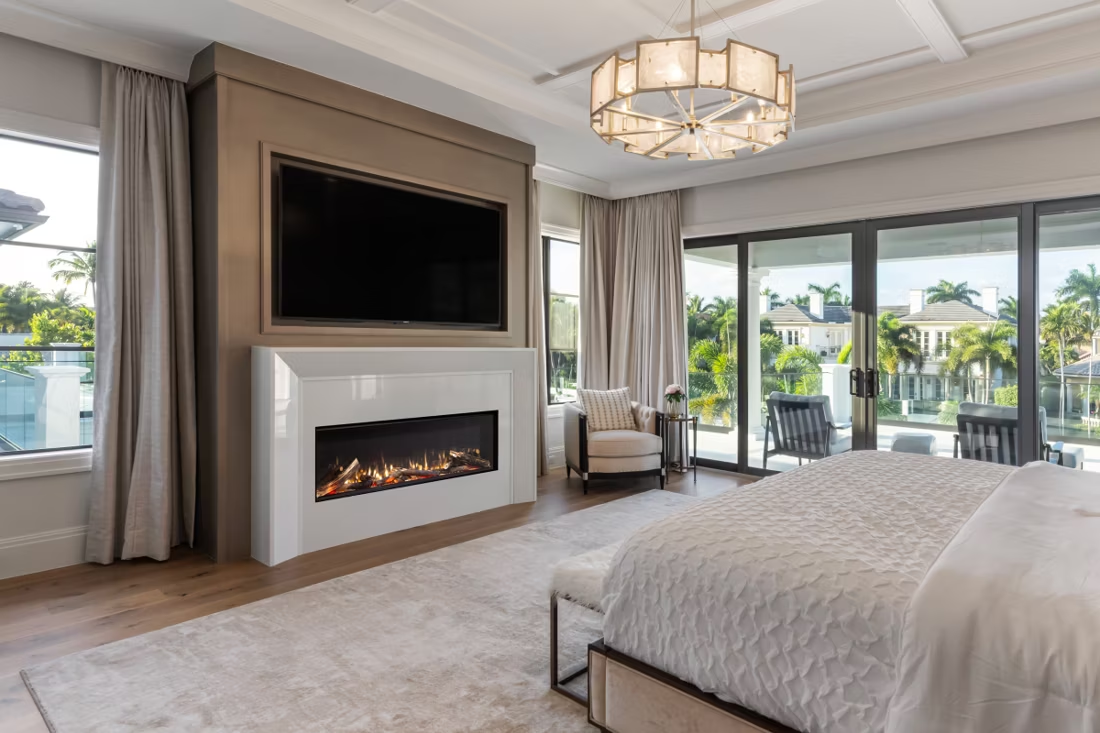
Yes—with an asterisk. Fireplaces are hot and TVs don't like heat. Either put a mantel between them to deflect rising warmth, or choose a fireplace with heat-management technology that creates a cool zone on the wall above—the wall stays around 125 degrees, barely warm, while the room still gets full heat. If you like clean lines and don't want a mantel, heat management is the answer.
Does an electric fireplace need a vent or chimney?
No—that's its superpower. An electric fireplace needs a wall and an outlet, period. No vent pipe, no gas line, no clearances to design around, which is why it works in bedrooms, offices, apartments, and walls where venting a gas or wood unit would be impractical or impossible. Installation is typically the simplest and least expensive of any fireplace type.
How much should I budget for a fireplace?
For an average home—covering the fireplace, the vent pipe, and basic installation—a budget between $3,900 and $5,500 gives you a lot of options across wood, gas, and pellet. By the time you add finish work, gas line, and electrical, the average complete installation lands between $5,000 and $12,000 all-in. In a remodel or new build, a good rule is to put about 2.5% of the total project cost toward the fireplace.
Can I install a fireplace myself?
If you're putting a fire in your house on purpose, it's best to work with an expert. Unless you're genuinely experienced in framing, gas line, vent pipe, and the national code on clearances to combustibles, have a professional do it—and ideally the same company that sells you the fireplace, so warranty, service, and liability all live under one roof.
Stove and Fireplace Dealers in Madison County
Find your electric fireplace in Madison County.
Tell us about your home and we'll match you with a trusted local dealer and send over a free Project Guide & Parts List—the exact unit, mounting or insert kit, and electrical requirements for your Madison County project.
Find Your Fireplace →