
Instant warmth, zero venting, anywhere in Fulton County.
From historic Gloversville rowhouses to camps along the Great Sacandaga Lake, electric fireplaces add real supplemental heat and ambiance without a chimney, a gas line, or a permit hassle. Find the right unit and get matched with a trusted local dealer.
Every Project Starts From One of These Five Situations
The easiest way to add heat without adding a chimney.
Fulton County sits in the Adirondack foothills of upstate New York, and its winters are genuinely harsh—an average winter low around 7°F and roughly 8,675 heating degree days a year, a cold-climate profile in the same league as Burlington, Vermont. Most homes here rely on wood, propane, or oil as primary heat, but electric fireplaces have carved out a real role as zone heat: warming a single bedroom, den, or finished basement in Gloversville or Johnstown without running new gas lines or opening up a chimney.
That flexibility matters a lot in a county with a lot of older housing stock. Gloversville's historic glove-district homes often have plaster-and-lath walls and existing but unused masonry fireplace openings—a zero-clearance electric insert drops in without touching the brick. Out at Great Sacandaga Lake, seasonal camps that already have electric service but no gas hookup or wood-storage space get instant, on-demand warmth with an electric stove or wall unit. It won't replace your furnace on a January night at 7°F, but it's the simplest way to add heat and a real-looking flame exactly where you want it.
Three steps. No salesperson until you're ready.
Tell us about your project
Your zip code, your situation, and the fuel you're leaning toward—or let the answers point you to one.
See what's actually available
The brands dealers within 100 miles genuinely carry—real options, never a catalog mirage.
Get your dealer & Project Guide
A trusted local dealer, plus the free Project Guide & Parts List that names every component of the job.
Frequently Asked Questions
How much does it cost to install an electric fireplace in Fulton County?
Plug-in electric fireplace inserts and mantels that run on a standard 120-volt outlet typically run $300 to $1,500 installed, since there's no venting, gas line, or masonry work involved—often just setting the unit into an existing fireplace opening or mounting it on a wall. Larger built-in units that need a dedicated 240-volt circuit run by an electrician land closer to $1,500 to $3,500 once wiring is included. Compare that to the $6,000-plus a wood or gas installation can run once chimney or venting work is factored in, and the cost gap is a big reason electric is popular for secondary rooms in Fulton County homes.
Can an electric fireplace actually heat a room in Fulton County's cold winters?
It can heat a single room, but it's not designed to replace your primary heat source. Most electric fireplaces top out around 5,000 to 9,000 BTU, enough to comfortably warm 300 to 500 square feet—a den, bedroom, or finished basement. With an average winter low around 7°F and heating degree days pushing 8,675 a year, Fulton County homes need a real furnace or wood/propane system doing the heavy lifting; the electric unit is there for zone heat and ambiance in the room you're actually using, without running the whole-house system harder than it needs to.
Electric insert vs. freestanding electric stove—which fits my home?
An electric insert is built to slide into an existing masonry fireplace opening, which is common in older homes around Gloversville and Johnstown—you get the look of a working fireplace back without touching the chimney or flue. A freestanding electric stove sits anywhere with an outlet, which makes it the better fit for camps around Great Sacandaga Lake or Northville that don't have an existing fireplace at all. Both plug into standard household power; the choice usually comes down to whether you're upgrading an old opening or adding heat to a room that never had one.
Do I need a permit to install an electric fireplace in Fulton County?
Most plug-in electric fireplaces under 1,500 watts don't require a permit since they use an existing standard outlet—no different than plugging in a space heater. If you're adding a built-in unit that needs a new dedicated 240-volt circuit, that electrical work typically does require a permit through your local building department—Gloversville, Johnstown, and Northville each handle their own, while unincorporated areas go through the Fulton County building office. A licensed electrician pulling the permit as part of the install is the standard approach and keeps everything code-compliant.
What's the best electric fireplace for Fulton County's cold climate?
For a room that actually needs meaningful supplemental heat, look at units from Dimplex or Touchstone rated in the 5,000 to 9,000 BTU range with a true heater fan, not just a decorative flame effect. Given Fulton County's roughly 8,675 heating degree days—comparable to Burlington, Vermont—an electric fireplace should be treated as a heat boost for one room, paired with your home's primary system, rather than a standalone solution. A local dealer can match wattage to your specific room size and insulation level.
Is electric heat a good fit for a camp at Great Sacandaga Lake without gas service?
It depends on whether the camp has reliable electric service and whether you're there in winter. Many lake camps already have power run to them, which makes an electric fireplace or stove an easy add—no propane tank, no wood storage, no venting through an often-seasonal structure. But if the camp loses power during storms or sits unheated much of the winter, wood or propane remains the more reliable choice for actual heat when you need it, since electric units go dark with the grid. Plenty of camp owners run electric for shoulder-season ambiance and rely on wood or propane for deep winter.
How much does it cost to run an electric fireplace in Fulton County?
National Grid serves most of Fulton County, and at typical residential rates, a 1,500-watt electric fireplace running on high costs roughly 25 to 35 cents per hour to operate. Most owners run the heater setting only when they're in the room and switch to flame-only mode (using just a few watts) the rest of the time. Compare that to a pellet stove burning fuel from regional suppliers like Energex, Hamer Pellet Fuel, or Greene Team Pellet Fuel—pellet costs more per hour of real heat output but delivers far more BTU for whole-room or primary heating in the county's cold winters.
Are electric fireplaces a good option for older Gloversville homes or finished basements?
Yes—this is one of the strongest use cases in the county. Gloversville's historic glove-district housing stock often has plaster-and-lath walls, tight floor plans, and unused masonry fireplace openings that were never converted for gas. An electric insert drops into that existing opening without any chimney work, masonry modification, or new venting. Finished basements are similar: no flue access, but a wall-mounted or built-in electric unit adds real ambiance and a bit of heat without cutting into framing or running new gas.
Electric vs. pellet—which is right for my Fulton County home?
Electric fireplaces are simpler to install, need no fuel storage or ash cleanup, and work well for zone heat in a bedroom, den, or finished space—but they max out around 9,000 BTU and go dark in a power outage. Pellet stoves, running on regional fuel from Energex, Hamer Pellet Fuel, or Greene Team Pellet Fuel, put out real primary or supplemental heat (often 40,000-plus BTU) and can be a serious heat source through Fulton County's long, cold winters, though they need a hopper refill routine and proper venting. If you want a low-maintenance heat boost in one room, electric wins. If you want to meaningfully offset your furnace or heating oil use through the season, pellet is the better fit.
Can I put a TV above my fireplace?
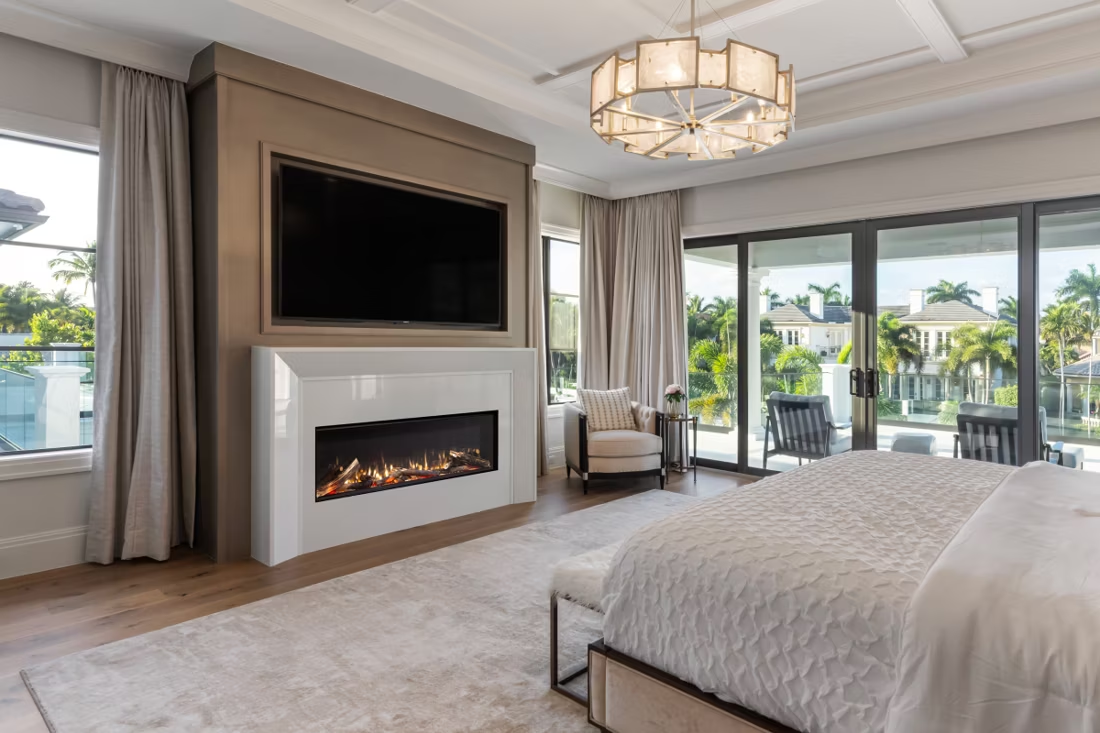
Yes—with an asterisk. Fireplaces are hot and TVs don't like heat. Either put a mantel between them to deflect rising warmth, or choose a fireplace with heat-management technology that creates a cool zone on the wall above—the wall stays around 125 degrees, barely warm, while the room still gets full heat. If you like clean lines and don't want a mantel, heat management is the answer.
How much does an electric fireplace cost to run?
With the heater on, a typical unit draws about 1,500 watts—at average electric rates that's roughly 20 cents an hour. Run the flame effect alone and it costs pennies; the flames are LED-driven and use about as much power as a light bulb. There's no pilot light, no fuel delivery, and essentially no maintenance.
What is an in-home preview and do I need one?
It's a visit where a hearth professional measures your space, confirms the model you picked actually works in your home, and walks the specs—framing, gas line, venting, finish work—before anything is ordered. Some details you just can't know until you see the house. Never make a down payment without one; it's the single most-skipped step that burns buyers.
Does a fireplace add value to my home?
On average, a fireplace adds back to the home about the same amount you spent installing it. Add the monthly savings from heating the rooms you actually use instead of the whole house—often hundreds of dollars a year—and the value case is strong before you even count what a fire does for how your family uses the room.
Stove and Fireplace Dealers in Fulton County
Find your electric fireplace in Fulton County.
Tell us a bit about your home—or your camp on the lake—and we'll put together a free Project Guide & Parts List: the right electric fireplace or insert for your space, the exact electrical requirements, and a trusted local dealer to handle the install.
Find Your Fireplace →