
Ambient heat that plugs in, built for a long, demanding winter heating season.
Endwell sits in the Southern Tier at 920 feet with winter lows averaging 15°F and a long six-month heating stretch. I'll match you with a trusted local dealer who can size a unit for real zone-heating use, not just a mantel accessory.
Every Project Starts From One of These Five Situations
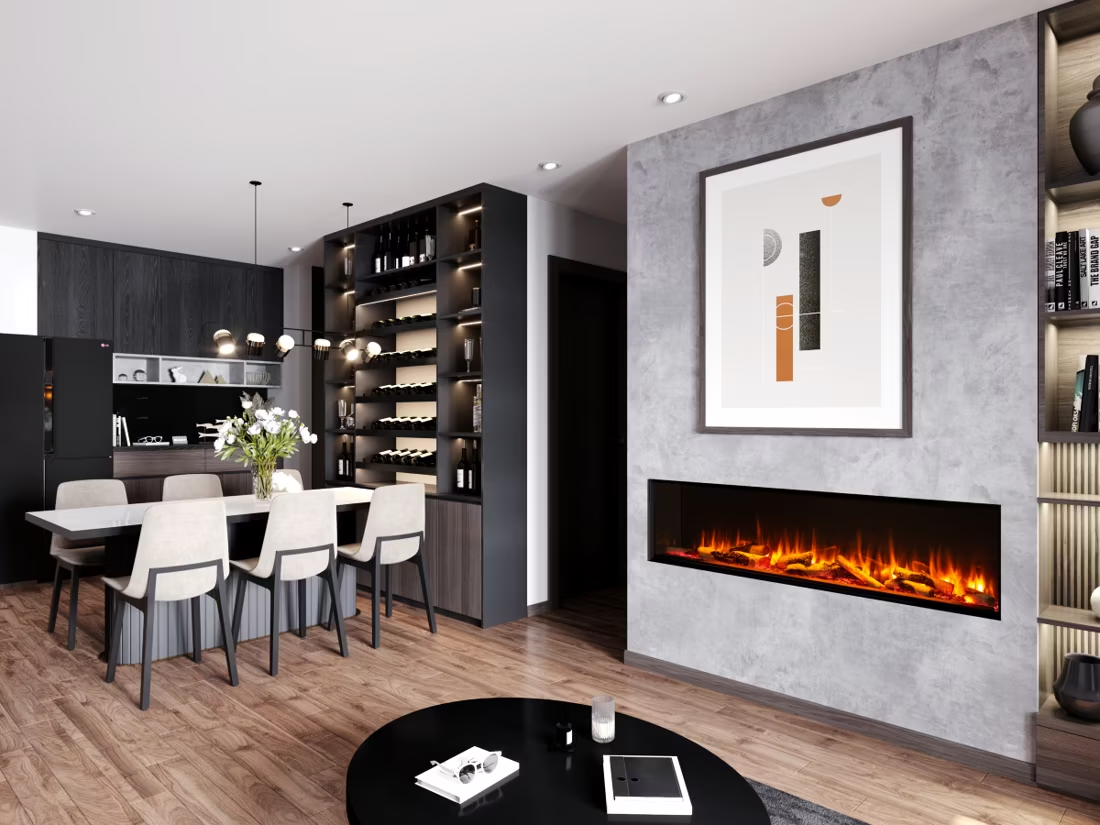
No chimney, no gas line, no wood to split—just a breaker and a wall.
Endwell runs cold and long—its winter heating demand puts it closer to Burlington, VT than to most of the mid-Atlantic, and winter lows averaging 15°F mean supplemental heat gets real use here, not occasional use. With Broome County's air quality unclassified for any wood-burning concerns, the usual driver toward electric in Endwell isn't smoke restrictions—it's simplicity. Plenty of homes in this part of the Town of Union are colonials and split-levels built without a masonry chimney, and retrofitting one just to add ambiance doesn't pencil out next to a unit that plugs into an existing 120-volt outlet or ties into a dedicated 240-volt circuit for a larger built-in.
New York State Electric & Gas serves Endwell at a residential rate around $0.1775 per kWh, which makes a typical 1,500-watt electric fireplace cost roughly 27 cents an hour to run—cheap enough for daily use in a bedroom, den, or finished basement, but not a substitute for a whole-house furnace during a Southern Tier cold snap. Most local buyers treat electric as zone heat: warming the room people are actually sitting in so the furnace can idle back, with the fireplace itself installable in an afternoon rather than a multi-day venting project.
Three steps. No salesperson until you're ready.
Tell us about your project
Your zip code, your situation, and the fuel you're leaning toward—or let the answers point you to one.
See what's actually available
The brands dealers within 100 miles genuinely carry—real options, never a catalog mirage.
Get your dealer & Project Guide
A trusted local dealer, plus the free Project Guide & Parts List that names every component of the job.
Frequently Asked Questions
How much does an electric fireplace installation cost in Endwell?
A plug-in insert or freestanding unit that uses an existing 120-volt outlet is the cheapest path, often landing under $1,500 installed including a mantel or surround. A built-in wall unit that needs a dedicated 240-volt circuit run by a licensed electrician—common when homeowners want a linear unit centered on a living room wall rather than tucked into an old fireplace opening—typically pushes total cost toward $2,000 to $4,000 once framing, trim work, and the electrical run are included. Because there's no venting or chimney work involved, electric stays well below what a gas or wood project runs in the same house.
Will an electric fireplace actually heat my Endwell home?
It will heat the room it's in, not the house. With a long, cold winter season and winter lows averaging 15°F, Endwell's heating season is long enough that most households already run a furnace as primary heat—the electric fireplace's job is supplemental, warming a den, bedroom, or basement rec room so the thermostat can be nudged down elsewhere. Most residential units are rated around 4,600 to 5,100 BTU (roughly 1,500 watts), enough for a single room in the 300 to 400 square foot range, not a whole floor.
Do I need a permit to install an electric fireplace in Endwell?
A plug-in unit that uses an existing outlet generally doesn't require a permit. If your install needs a new dedicated circuit or panel work—typical for larger built-in wall units—that electrical work should be pulled through the Town of Union Building Department, since Endwell is an unincorporated hamlet within the town. Licensed electricians who do this work regularly in the area usually handle the permit and the final inspection as part of the job.
What does it cost to run an electric fireplace on NYSEG rates?
At NYSEG's residential rate of roughly $0.1775 per kWh, a standard 1,500-watt electric fireplace running on high costs about 27 cents an hour, or a little over $6 for a full 24-hour day of continuous use. Most households don't run one around the clock—using it for a few hours in the evening in a den or bedroom during the coldest months typically adds $10 to $20 a month to a NYSEG bill, which is why it works well as zone heat rather than a furnace replacement.
What's the difference between an electric insert, a wall-mount, and a mantel package?
An electric insert drops into an existing masonry or built-in firebox, which suits older Endwell homes on the west side of the village that already have a fireplace opening but want to retire an old wood-burning setup. A wall-mount or built-in linear unit gets framed into new construction or a remodel and needs that dedicated 240-volt circuit for larger sizes. A mantel package is the simplest option—a freestanding electric firebox inside a cabinet-style surround that just needs a nearby outlet, popular for renters or homeowners who don't want to touch the wall at all.
Will my electric fireplace work if the power goes out?
No—unlike a wood stove, an electric fireplace is entirely dependent on power, and Southern Tier winter storms occasionally do knock out NYSEG service for a few hours at a time. If backup heat during outages is a real concern for your household, that's worth discussing with your dealer up front; some homeowners pair an electric fireplace for everyday ambiance and zone heat with a separate propane or battery-backed heating plan for outage resilience, since wood isn't a common fallback fuel in this area.
Are electric fireplaces safe to run for long stretches during an Endwell winter?
Yes, provided the unit is UL-listed and installed on a properly rated circuit—look for that certification on anything a local dealer sells. Because there's no open flame or combustion byproducts, electric units don't carry the carbon monoxide or creosote concerns that come with wood or gas, which is part of why they're a low-maintenance option for a heating season that runs a full six months or more here. The main thing to check periodically is that the outlet or circuit isn't overloaded if you're running the fireplace alongside space heaters on the same line.
What electric fireplace brands are available through local dealers?
Dealers serving the Endwell and greater Binghamton area typically carry lines like Dimplex, Napoleon, and Amantii, which cover everything from simple mantel packages to larger linear wall units with adjustable flame effects and heat output. A trusted local dealer can tell you which models are actually in stock or quickly orderable rather than just what's listed on a manufacturer's national site.
Electric vs. gas—which makes more sense for an Endwell home?
Gas is the better primary or near-primary heat source for a Southern Tier winter—it puts out real BTUs and keeps running efficiently through the coldest stretches, which matters given how long and cold the area's winters run. Electric costs less to install, needs no gas line or venting, and works well for supplemental warmth in a specific room, but its output and NYSEG-rate operating cost make it a poor substitute for whole-room heat on the coldest nights. Many homeowners here choose gas for the main living space and add an electric unit in a bedroom or basement where running a gas line isn't practical.
Does an electric fireplace need a vent or chimney?
No—that's its superpower. An electric fireplace needs a wall and an outlet, period. No vent pipe, no gas line, no clearances to design around, which is why it works in bedrooms, offices, apartments, and walls where venting a gas or wood unit would be impractical or impossible. Installation is typically the simplest and least expensive of any fireplace type.
Can I put a TV above my fireplace?
Yes—with an asterisk. Fireplaces are hot and TVs don't like heat. Either put a mantel between them to deflect rising warmth, or choose a fireplace with heat-management technology that creates a cool zone on the wall above—the wall stays around 125 degrees, barely warm, while the room still gets full heat. If you like clean lines and don't want a mantel, heat management is the answer.
Does a fireplace add value to my home?
On average, a fireplace adds back to the home about the same amount you spent installing it. Add the monthly savings from heating the rooms you actually use instead of the whole house—often hundreds of dollars a year—and the value case is strong before you even count what a fire does for how your family uses the room.
Can I install a fireplace myself?
If you're putting a fire in your house on purpose, it's best to work with an expert. Unless you're genuinely experienced in framing, gas line, vent pipe, and the national code on clearances to combustibles, have a professional do it—and ideally the same company that sells you the fireplace, so warranty, service, and liability all live under one roof.
Nearby Dealers
Hearth shops serving Endwell and the surrounding area. Every listing shows whether it is a WhyFire partner, a dealer we have verified as authorized for the brands we recommend, or a local business carrying hearth products. No manufacturer pays for placement. How we verify dealers →
TAll Pines Farm Store & Fireplaces
Johnson's Pools & Spas, LLC
Electric Service in Endwell
An electric fireplace's heater draws about 1,500 watts—pennies per hour at local rates.
New York State Elec & Gas Corp
Get your free Project Guide & Parts List for an Endwell electric fireplace.
Tell me about your home, your wall or outlet situation, and where you're hoping to add heat, and I'll match you with a trusted local dealer and send a free Project Guide & Parts List with the exact unit and circuit requirements your project needs.
Find Your Fireplace →